Key takeaways
- Discover the best trail camera remote areas picks with cellular signal, long battery life, solar power and rugged weather-sealed build for off-grid scouting.
The best trail camera remote areas hunters and landowners rely on is one that keeps working long after you drive away. In a remote area, there is no nearby outlet, no Wi-Fi router on the fence post, and often no cell signal worth counting on. A camera that is perfect for a backyard feeder can go silent within days when it is strapped to a tree miles from the nearest road, and you may not find out until your next visit weeks later.


The short answer is to choose a cellular trail camera with multi-carrier signal, a power plan that lasts for months, and a rugged, weather-sealed body. The Tactacam Reveal X 3.0 stands out for battery life, the Moultrie Edge 3 stands out for signal reach across four carriers, and solar two-camera kits from SEHMUA and VOOPEAK cover wide ground without repeat trips for battery swaps. The right pick depends on how far your ground sits from coverage, how often you can visit, and whether you need live viewing or simple photo delivery.
This guide walks through the features that matter most when a camera has to survive on its own, compares four strong options, and answers the questions that come up before a remote deployment.
Quick Picks
Our Short List of 3
All 4 Picks at a Glance
| Product | Specs | Action |
|---|---|---|
| SEHMUA 4G LTE Cellular Trail Camera (B0GWMLB3QK) | Check price on Amazon | |
| Moultrie Edge 3 Cellular Trail Camera (B0FJBNWRZT) | Check price on Amazon | |
 Tactacam Reveal X 3.0 Cellular Trail Camera (B0D7FQNM38) | Check price on Amazon | |
 VOOPEAK 4G LTE Cellular Trail Camera 2 (B0HMVKBVXZ) | Check price on Amazon |
How to Choose
Cellular Signal and Carrier Flexibility
Signal is the first thing to check for any remote deployment, because a camera that cannot connect cannot send you anything. Single-carrier cameras work well near towns, but coverage in valleys, dense timber, and ridge country is uneven, and the carrier that works at the trailhead may vanish a mile deeper into the property. Multi-carrier cameras that auto-connect to the strongest available network solve much of this problem. The Moultrie Edge 3 connects across four major United States networks without a SIM card, while the Tactacam Reveal X 3.0 auto-connects across two major networks with a pre-installed SIM. Cameras from SEHMUA and VOOPEAK use built-in SIM cards that work across three major networks without Wi-Fi. Before you buy, check coverage maps for your exact location, ask neighbours what works on nearby ground, and favour a camera that can switch networks on its own rather than one locked to a single carrier.
Battery Life and Solar Power
Battery life decides how often you must hike back to a camera, and in remote areas every visit costs time and fuel and leaves scent and disturbance behind. Look for cameras rated for months of standby on one set of batteries, and treat manufacturer battery claims as best-case figures that drop with cold weather, heavy triggering, and frequent photo transmission. Solar power changes the equation entirely. A camera with a bundled solar panel can top up its battery through the season, and kits such as the SEHMUA two-camera bundle include a 6W panel per camera. If you choose a battery-only model such as the Tactacam Reveal X 3.0, pair it with a compatible solar panel or carry spare batteries, and set transmission to a sensible schedule so the camera is not sending images all night. Lithium batteries handle cold far better than alkaline cells, so they are the sensible choice for winter deployments in remote country.
Detection Range and Trigger Speed
A remote camera has one chance to catch an animal crossing a trail, so detection range and trigger speed matter more here than in a garden. Trigger speed is the delay between motion being detected and the photo being taken. Anything under half a second is solid for game trails, and the SEHMUA kit fires in 0.2 seconds, which leaves little room for a fast-moving animal to clear the frame. Detection range tells you how far out the sensor can pick up movement. A 100 ft range, as found on the Moultrie Edge 3 and the SEHMUA kit, covers a wide trail crossing or a food plot edge, while shorter ranges suit narrow trails and funnels. Field of view matters too. A narrow field of view frames a trail tightly, while a wide field of view or a pan-and-tilt camera covers open ground. Pan-and-tilt models let you sweep a field from your phone, which is valuable when one camera must watch a large area.
Night Vision and Stealth
Most remote activity happens after dark, so night vision quality is not a minor detail. No-glow infrared LEDs are invisible to animals and to people passing by, while low-glow LEDs give a faint red glow that most game ignores. The Tactacam Reveal X 3.0 and the Moultrie Edge 3 both use discreet infrared illumination with a 100 ft night range. Full-colour night modes, available on some VOOPEAK models, use a white light that produces colour footage after dark but is far more visible, so they suit property monitoring better than wary game. Camouflage housings, quiet shutters, and a small profile all help a camera stay unnoticed, which matters both for not spooking animals and for keeping the camera itself safe from theft in places where nobody passes for weeks.
Rugged Build and Weather Sealing
Remote cameras sit outside through rain, dust, snow, and summer heat, often for months without attention. Check the weather-sealing rating before you buy. An IP66 housing, as on the Tactacam Reveal X 3.0, resists powerful water jets and dust, while IP65 housings, as on the SEHMUA kit, handle rain and dust in normal field use. Temperature range matters as well. Some solar cameras are rated from well below freezing to high summer heat, which covers most North American seasons. A sturdy mount, a lockable case or security box, and a cable lock are worth adding, because a camera left alone for months is an easy target. Built-in GPS, found on the Tactacam and Moultrie models, helps you find a camera again on large properties and can help locate it if it is moved.
Storage, Plans, and App Control
A remote camera is only useful if you can actually get its images. Cellular cameras send photos to an app, so you need a data plan for each camera, and the monthly cost adds up across several units. Some brands include a small number of photos each month at no charge, which suits a single camera on a quiet trail. Others charge from the first photo. Onboard storage matters as a backup. The Tactacam Reveal X 3.0 stores photos on 32GB of built-in memory with no memory card to buy, and the Moultrie Edge 2 and Edge 3 keep images in internal memory and cloud storage. Other cameras need a memory card, so check the maximum card size before you buy. App control is the other half of the equation. A good app lets you change settings, request a live view, check battery and signal, and view a map of camera locations without visiting the site. That remote control is what turns a trail camera into a genuine remote-area tool rather than a box you hope is working.
The Best Best Trail Camera Remote Areas Reviewed
SEHMUA 4G LTE Cellular Trail Camera (B0GWMLB3QK)
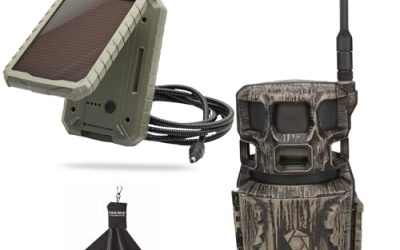
The SEHMUA kit is the strongest choice for covering large remote acreage, because it puts two solar cameras on the ground in a single purchase. Each camera carries its own 6W solar panel and a pre-installed SIM that works across three major networks without Wi-Fi, so the pair can watch a food plot and a bedding area at the same time. The cameras pan 355 degrees and tilt 100 degrees from the phone app, with 4X zoom for checking detail, and the 0.2-second trigger with PIR filtering cuts down on alerts from wind-blown branches. Night vision runs in 2K low-glow infrared out to 100 ft, and the IP65 housing handles rain and dust. Two cameras in one kit also means two mounting spots and two data plans, and the built-in SIM cannot be removed, so factor the running cost of two subscriptions into your decision.
This kit suits a hunter or landowner with wide, off-grid ground who wants to cover two hot spots without repeat trips for batteries. Skip it if you only need a single camera, or if you would rather manage one data plan instead of two.
Moultrie Edge 3 Cellular Trail Camera (B0FJBNWRZT)
The Moultrie Edge 3 is the pick when signal is the main worry. It auto-connects to the strongest of four major United States networks with no SIM cards and no manual setup, so photo delivery keeps working when one carrier fades on a ridge or in a hollow. It shoots 40MP photos and 1080p video with audio, and Moultrie AI flags buck images in high resolution while trimming false alerts. The 0.5-second trigger and 100 ft detection range cover a game trail cleanly, and Live Aim lets you preview the camera view before you commit to a tree. Built-in GPS maps every camera on your property in the app, and the app also controls compatible Moultrie feeders. The 50-degree field of view keeps the frame tight on a trail, which is ideal for identification but less suited to watching a wide open field from one position.
This camera suits serious hunters who want reliable photo delivery and AI filtering on ground where coverage is patchy. Skip it if you want the fastest trigger in this guide, or if you would rather avoid a data plan altogether and check a memory card in person.
Tactacam Reveal X 3.0 Cellular Trail Camera (B0D7FQNM38)
The Tactacam Reveal X 3.0 is the pick for hunters who hate returning to a camera just to change batteries. Tactacam rates it for more than six months of battery life, the longest in this guide, and it stores photos on 32GB of built-in memory, so there is no memory card to buy, format, or lose. It auto-connects across two major networks with a pre-installed SIM and antenna, and the sub-half-second trigger with a three-shot burst catches an animal before it clears the frame. Built-in GPS finds the camera in the REVEAL app, and the IP66 housing stands up to harsh weather. The 60-degree field of view frames game trails well, and setup runs quickly because the antenna and SIM ship pre-installed. Batteries are not included, so add a set or pair the camera with a compatible solar panel, and remember that a data plan is needed for cellular photo transmission.
This camera suits anyone whose ground is a long drive away and who wants the longest stretch between visits. Skip it if you need a live pan-and-tilt view, or if you want the widest carrier choice in this guide.
VOOPEAK 4G LTE Cellular Trail Camera 2 (B0HMVKBVXZ)
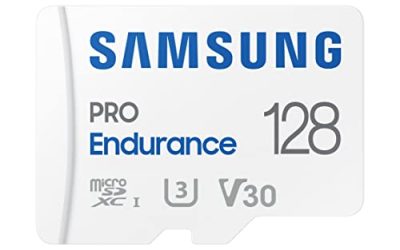
The VOOPEAK two-pack suits a property with two hot spots, such as a food plot and a creek crossing. Each camera comes with its own solar panel, so the pair runs without battery swaps, and the 2.5K live feed with 355-degree pan and 90-degree tilt lets you steer each view from the phone. Human auto-tracking locks onto and follows movement, and the companion app shows four feeds on one screen for multi-location monitoring. Infrared mode keeps night viewing discreet, while a white-light mode gives full-colour footage after dark. Stills run at 20MP with audio on video, and the dome form factor mounts firmly. Two catches deserve attention. The memory card is not included and must be 32GB or smaller, and each camera needs its own data plan, so the running cost of two units should be part of the decision.
This kit suits landowners who want live viewing across two locations and a solar setup that needs little attention. Skip it if you want the highest still resolution in this guide, or if a single-camera setup with built-in storage fits your ground better.
What to Check Before You Buy
Start with coverage. Check carrier maps for your exact camera locations, not just the nearest town, and remember that a camera high on a ridge may connect while one in a hollow does not. Next, work out the true running cost. Add the data plan for each camera across the full season, and compare that with how often you can realistically visit to pull a memory card. A non-cellular camera costs less to run, but it only pays off if you can reach it regularly.
Think about power as a system, not a single battery. Solar panels need sun, so a camera in deep shade will not charge well, and a south-facing panel position matters in northern country. Carry spare batteries and a spare memory card on every visit, and test the camera at home before you deploy it. Set the date, time, and location correctly, format the card in the camera, and confirm that photos arrive in the app before you leave it in the woods. Mount the camera at the right height, usually around knee to waist height for deer, angled slightly down a trail rather than straight across it, so the sensor has time to wake and fire. Finally, secure the camera with a lock and a sturdy strap or mount, note its GPS position, and mark the location on a map so you can find it again months later.
FAQ
Do trail cameras work without cell signal?
Yes. A trail camera still records photos and video to its internal memory or memory card without any signal, and you collect the images when you visit. What you lose without signal is remote delivery. If your ground has no coverage at all, choose a camera with long battery life, large storage, and a fast trigger, and plan regular visits to swap cards and batteries.
How long do trail camera batteries last in remote areas?
Battery life varies widely with temperature, trigger frequency, and how often the camera transmits. A camera rated for six months of standby may last far less on a busy trail in winter, especially with alkaline batteries. Lithium batteries handle cold better and last longer, and a solar panel can extend deployment almost indefinitely in a sunny spot. Check battery level in the app before a long gap between visits.
Is a cellular trail camera worth it for remote land?
For most remote setups, yes. A cellular camera sends images to your phone, so you learn about activity without driving out, leaving scent, or disturbing game. The trade-off is the data plan for each camera and higher battery use. If you visit weekly anyway, a non-cellular camera with a large memory card may serve just as well at a lower running cost.
Can I use a solar panel with any trail camera?
No. Only cameras designed for external power accept a solar panel, and the panel must match the camera brand and model. Check the camera specifications for solar compatibility and the correct connector before you buy a panel. Some kits bundle a panel per camera, which removes the guesswork and keeps the whole setup matched.
How do I keep a remote trail camera from being stolen?
Mount it high or well hidden, use a camouflage housing, and add a steel security box and cable lock. Avoid obvious trails used by other people, and do not leave the camera at eye level beside a path. Built-in GPS helps you relocate a camera and can help track it if it is moved, but a lock and a discreet position remain the best protection.
Bottom Line
The best trail camera remote areas use comes down to three things: signal that holds, power that lasts, and a body that survives the season alone. The Tactacam Reveal X 3.0 is the best choice when long battery life and few visits matter most. The Moultrie Edge 3 is the best choice when signal is patchy and you need four-carrier auto-connect with AI filtering. The SEHMUA and VOOPEAK two-camera solar kits are the best choices when you need to watch two spots at once without battery swaps. Pick the camera that matches your coverage, your visit schedule, and the ground you need to watch, test it before deployment, and it will keep working long after you have driven home.
Disclosure: As an Amazon Associate, we may earn from qualifying purchases.
More from Amazon
Programs that pair well with the guide above. Offers and eligibility are set by Amazon and may change.
Free shipping on eligible items, Prime Video and more. Eligible new members can start with a free trial.
Start a Prime free trialAudiobooks and podcasts to listen to on the go. Eligible new members can start with a free trial.
Try Audible freeAd-free music streaming. Eligible new subscribers can start with a free trial.
Try Music Unlimited freeA free business account with business pricing and bulk-buying tools for work, shop or home office.
Create a business accountAs an Amazon Associate we earn from qualifying purchases.