Key takeaways
- Can you use rechargeable batteries in a Canon Speedlite flash? Learn which NiMH and lithium types are safe, which to avoid, and how to get faster recycle times.
As an Amazon Associate we earn from qualifying purchases.
If you are asking can we use rechargeable battery for canon flash, the short answer is yes, in most cases you can. Most Canon Speedlite flashes that take AA cells are designed to work with rechargeable nickel-metal hydride cells, and Canon manuals list them as a supported power source alongside alkaline cells. The longer answer depends on which Speedlite you own and which rechargeable chemistry you choose.
A flash is one of the most demanding devices a AA cell will ever power, drawing a large burst of current to charge its capacitor, then doing the same thing again seconds later, sometimes hundreds of times in a shoot. This guide explains which rechargeable types are safe, which to avoid, and how to charge and store cells correctly.
How to Choose the Right Rechargeable Battery for a Canon Flash
Choosing a rechargeable battery for a Canon flash starts with three checks: size, voltage, and chemistry. Most AA Speedlites take four AA cells that must fit the compartment without force and sit firmly against the contacts.
The second check is voltage. Alkaline and lithium primary cells start near 1.5 volts, while nickel-metal hydride cells run near 1.2 volts. That lower figure is normal for NiMH cells and does not mean the cell is weak. Canon designed its AA Speedlites with that difference in mind, and NiMH cells often recycle faster than alkaline cells, because they deliver high current with less voltage sag under load.
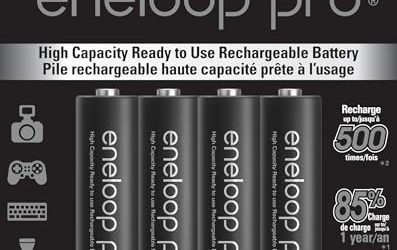
The third check is chemistry. Nickel-metal hydride is the standard rechargeable choice for AA flashes. Low self-discharge NiMH cells, which arrive pre-charged and hold most of their charge after months on a shelf, are the most practical option for most photographers. Newer 1.5 volt lithium-ion AA cells are a second option, but they need a charger made for that exact type. Lithium primary AA cells and alkaline AA cells are single-use cells, and they must never go into a charger.
Capacity, printed in milliamp-hours, is useful but it is not the whole story. A higher number usually means more flashes per charge, but only within the same chemistry. Look for high-drain or low self-discharge cells, pair them with a smart charger, and keep cells in matched sets of four.
Top Picks at a Glance
The table below compares the main battery types for a Canon Speedlite.
| Battery type | Voltage | Rechargeable | Recycle speed | Flash count | Best use | Main caution |
|---|---|---|---|---|---|---|
| Low self-discharge NiMH AA | 1.2 V | Yes | Fast | High | Everyday flash work and events | Needs a NiMH charger |
| Standard NiMH AA | 1.2 V | Yes | Fast | High when fresh | Frequent shooting | Loses charge faster on the shelf |
| 1.5 V lithium-ion AA | 1.5 V | Yes, own charger | Fast | High | Steady voltage to the end | Must use the matching charger |
| Lithium primary AA | 1.5 V | No | Fast | High | Emergency spare set | Never recharge |
| Alkaline AA | 1.5 V | No | Slow | Moderate | Backup set only | Poor under heavy load |
| Nickel-cadmium AA | 1.2 V | Yes | Moderate | Low | Not recommended | Low capacity, toxic metal |
| Zinc-carbon AA | 1.5 V | No | Very slow | Very low | Not recommended | Cannot sustain flash current |
| Unregulated 3.7 V lithium-ion AA | 3.7 V | Yes, other devices | Not applicable | Not applicable | Not for Speedlites | Wrong voltage, can damage the flash |
Low self-discharge NiMH AA cells are the safe default for almost every AA Canon Speedlite.
The Short Answer: Yes, With the Right Type
Yes, you can use rechargeable batteries in a Canon flash, provided your Speedlite takes AA cells and you use the correct chemistry. Models such as the 430EX III-RT, the 470EX-AI, the 600EX II-RT, the 580EX II, the 270EX II, and the 320EX all run on AA cells, and Canon lists NiMH cells as a usable power source for them. A set of four good NiMH cells can be recharged hundreds of times and recycles quickly.
The exception is a Speedlite that does not take AA cells at all. The Canon Speedlite EL-1 and the Speedlite EL-5 use a built-in lithium-ion pack, the LP-EL, and they have no AA compartment. The Speedlite EL-10 also uses a built-in lithium-ion pack. For those models, use a spare Canon LP-EL pack and the Canon charger made for it, not AA cells of any kind. Some AA Speedlites can also accept an external pack, such as the CP-E4N, which takes eight AA cells, and the same rules apply inside that pack.
Why NiMH Is the Standard Choice for Canon Speedlites
Nickel-metal hydride cells became the standard rechargeable choice for flashes because they handle high current well. When a Speedlite fires, its capacitor needs a strong surge of current. An alkaline cell has a higher starting voltage, but its voltage sags under that load, so recycle time stretches out. A NiMH cell starts lower, but it holds its voltage steadier, so the flash recycles faster and more consistently.
Low self-discharge NiMH cells add a second advantage. Older NiMH cells could lose much of their charge within a few weeks on a shelf, while low self-discharge cells hold most of their charge for months. Their capacity usually sits between 1900 and 2500 milliamp-hours, but that number is measured under gentle test conditions, so treat it as a rough guide. When one cell in a set starts to behave differently from the others, retire the whole set together, because mixing a tired cell with fresh cells can cause the flash to stop early.
1.5 Volt Lithium-Ion AA Cells: A Newer Option With Strict Rules
A newer rechargeable AA cell uses a lithium-ion cell inside an AA shell, with a small circuit that steps the voltage down to a steady 1.5 volts. Its main attraction is a flat voltage curve: it holds close to 1.5 volts for most of the discharge, then drops off sharply near the end. That can mean fast recycle times and consistent output right up to the point where the cell stops.
The strict rule for this type is the charger. A 1.5 volt lithium-ion AA cell must be charged only in a charger made for that exact type. A NiMH charger will not charge it correctly, and a charger made for 3.7 volt cells is the wrong tool as well. Using the wrong charger can damage the cell or the charger. Because the voltage stays flat and then falls quickly, this type also gives less warning before it runs out, so carry a spare charged set and change sets on a schedule.
Lithium Primary AA Cells: Useful as a Spare, Not Rechargeable
Lithium primary AA cells are sometimes confused with rechargeable lithium-ion cells because both use the word lithium. They are not the same thing. A lithium primary cell is a single-use cell that starts near 1.5 volts, holds its voltage well under load, works well in cold weather, and has a very long shelf life. Those traits make it an excellent emergency spare set to keep in a camera bag.
A lithium primary cell must never be recharged. Putting one in a charger can cause it to leak, heat up, or rupture. Keep these cells in their original packaging, keep them apart from your rechargeable sets, and never mix them with NiMH or alkaline cells in the same flash. Mixing chemistries means one cell drains faster than the others, the flash stops early, and the weakest cell may be driven into reverse, which can cause leaking.
Alkaline AA Cells: They Work, but They Are a Poor Main Choice
Alkaline AA cells will power a Canon Speedlite, and Canon manuals list them as a usable power source. They are easy to buy, they work straight out of the pack, and they are a sensible backup when you have no charged rechargeable set. As a main power source, however, they have real limits. Under the heavy current a flash demands, alkaline cells lose voltage quickly, so recycle times grow longer with every burst of shots. They also carry a higher risk of leaking if left inside a flash for weeks, so take them out when the shoot is over.
Battery Types to Avoid in a Canon Speedlite
Some cells should never go into a Canon Speedlite. Zinc-carbon AA cells cannot sustain the current a flash needs, so they give very few flashes and recycle very slowly. Nickel-cadmium cells have low capacity by modern standards, suffer from a memory effect, and contain a toxic metal, so they are not a good choice for modern flash work.
The most important type to avoid is any unregulated 3.7 volt lithium-ion cell in an AA size. Some lithium-ion cells are made in the 14500 size, which is close to AA size, and they run at about 3.7 volts. Four of those cells would give a flash far more voltage than it was designed for, and they can damage the flash electronics. Never put a 14500 cell, or any cell labelled 3.7 volts, into a Canon Speedlite. Also avoid damaged cells of any type. A cell with a torn wrapper, a dent, a corroded terminal, or a swollen shape should not go into a flash or a charger. Never mix old and new cells, different brands, or different capacities in the same set of four, because the weakest cell sets the limit for the set.
Voltage, Recycle Time, Charging, and Storage
What matters in a flash is voltage under load, not voltage at rest. An alkaline cell starts near 1.5 volts and falls steadily, while a NiMH cell starts near 1.2 volts and holds near that level. When the capacitor charges, it pulls a large current, and the voltage loss is larger for alkaline cells, so the NiMH cell may deliver more voltage during the charge cycle, and the flash recycles faster.
Recycle time is the pause between one flash and the next full-power flash. With fresh NiMH cells, a mid-range Speedlite at full power will usually recycle in a few seconds, and at half power or lower the pause is much shorter. Flash count depends on the flash model, the power setting, the cell capacity, the age of the cells, and the temperature. A fresh set of good NiMH cells in a 430EX III-RT will give several hundred flashes at moderate power, and fewer at full power. Cold weather shortens the count, so keep spare sets in an inside pocket in winter.
A good charger matters as much as a good cell. For NiMH cells, use a smart charger that charges each cell on its own channel, senses when each cell is full, and then stops. Avoid chargers that charge cells in pairs and stop on a timer. Charge at a moderate rate when you have time, since a slow overnight charge is gentler than a very fast charge. Never charge a cell that is hot, swollen, leaking, or damaged, and use only the matching charger for 1.5 volt lithium-ion AA cells.
Store NiMH cells in a case that keeps the four cells of a set together and keeps the terminals from touching metal objects, keys, or other cells. A loose cell in a bag pocket can short against a coin, heat up, and leak. Store cells at room temperature in a dry place, away from direct sun and heat. For long-term storage, keep NiMH cells partly charged and recharge them before the next shoot. Take cells out of the flash when you will not use it for weeks, especially alkaline cells, which are the most likely to leak.
Model-Specific Notes for Canon Speedlite Owners
The Speedlite 430EX III-RT takes four AA cells, and NiMH cells are the best main choice for it, with lithium primary cells as a spare set. The Speedlite 470EX-AI also takes four AA cells, and its auto bounce motor draws extra current, so a fresh set matters more when you use that feature heavily. The Speedlite 600EX II-RT is a larger flash that also takes four AA cells, and it benefits the most from good NiMH cells and an external pack such as the CP-E4N. The older Speedlite 580EX II also takes four AA cells. The compact Speedlite 270EX II takes two AA cells and the Speedlite 320EX takes four, and the matched-set rule still applies.
The Speedlite EL-1, EL-5, and EL-10 use the Canon LP-EL lithium-ion pack, charged in a Canon charger, and it cannot be replaced with AA cells. If the flash does not fire at all, check cell polarity, that the battery door is fully closed, and that the flash is seated firmly on the hot shoe. If the compartment shows any sign of leaking, clean it carefully and do not load fresh cells until the contacts are clean and dry.
Which One Is Right for You?
If you shoot events, weddings, or portraits with a Canon Speedlite every week, low self-discharge NiMH cells are the right choice. Buy three or four matched sets of four, label each set, and rotate them through a smart NiMH charger. That system gives you fast recycling and a spare set always ready to go. Keep one set of lithium primary cells in your bag as an emergency backup.
If you shoot occasionally, perhaps once a month or on holidays, low self-discharge NiMH cells are still the right choice, because they hold their charge between sessions. Charge a set the night before a shoot, even if the set was charged weeks ago. If you shoot in cold weather, lithium primary cells deserve a place in your bag alongside NiMH cells, since they hold up better in the cold and have a long shelf life.
If you own a Speedlite EL-1, EL-5, or EL-10, the right choice is a spare LP-EL pack and the Canon charger. AA cells of any kind do not fit those models. If you are tempted by 1.5 volt lithium-ion AA cells, they can work well, but only if you commit to the full kit: the cells, the matching charger, and the habit of changing sets before they run out. If you do not want to manage a second charger, stay with NiMH cells.
Frequently Asked Questions
Can I use rechargeable batteries in any Canon Speedlite?
No, not in every model. You can use rechargeable AA cells in Speedlites that take AA cells, such as the 430EX III-RT, 470EX-AI, 600EX II-RT, 580EX II, 270EX II, and 320EX. You cannot use AA cells in the EL-1, EL-5, or EL-10, because those models use a built-in LP-EL lithium-ion pack instead.
Are NiMH batteries safe for Canon flashes?
Yes, NiMH cells are safe for AA Canon Speedlites when they are in good condition, loaded with the correct polarity, and charged in a NiMH charger. Use matched sets and do not mix NiMH cells with alkaline or lithium primary cells in the same flash.
Will rechargeable batteries damage my Canon flash?
Rechargeable NiMH cells and regulated 1.5 volt lithium-ion AA cells used with their matching charger will not damage an AA Canon Speedlite. Damage comes from the wrong type: unregulated 3.7 volt lithium-ion cells, damaged cells, leaking cells, or a charger that does not match the cell type.
How many flashes will I get from one set of rechargeable batteries?
It depends on the flash model, the power setting, the cell capacity, the age of the cells, and the temperature. A fresh set of good NiMH cells will give several hundred flashes at moderate power, and fewer at full power. Carry a spare charged set.
Final Thoughts
So, can we use rechargeable battery for canon flash? For most Canon Speedlite owners, the answer is a clear yes, and rechargeable NiMH cells are the practical choice for everyday flash work. They recycle faster than alkaline cells under load, they can be recharged hundreds of times, and they hold a charge well when you choose low self-discharge types. Keep them in matched sets, charge them in a smart NiMH charger, and carry a spare set plus a set of lithium primary cells for emergencies.
The exceptions are easy to remember. If your Speedlite uses a built-in LP-EL pack, use that pack and its Canon charger, not AA cells. If you choose 1.5 volt lithium-ion AA cells, use only their matching charger. Never recharge a single-use cell, never put a 3.7 volt lithium-ion cell into a Speedlite, and never mix chemistries in the same set.
More from Amazon
Programs that pair well with the guide above. Offers and eligibility are set by Amazon and may change.
Free shipping on eligible items, Prime Video and more. Eligible new members can start with a free trial.
Start a Prime free trialAudiobooks and podcasts to listen to on the go. Eligible new members can start with a free trial.
Try Audible freeAd-free music streaming. Eligible new subscribers can start with a free trial.
Try Music Unlimited freeA free business account with business pricing and bulk-buying tools for work, shop or home office.
Create a business accountAs an Amazon Associate we earn from qualifying purchases.