Key takeaways
- Find the best tripods for birding scopes for steady, shake-free views at high magnification. Compare height, load capacity, pan heads, and pack weight.
Introduction
The best tripods for birding scopes are the ones that hold a spotting scope perfectly still at high magnification, let you follow a moving bird without jerking the view, and still pack down small enough to carry to a hide, a shoreline, or a woodland trail. A spotting scope magnifies every tremor along with the bird, so the support underneath it matters at least as much as the glass on top of it.
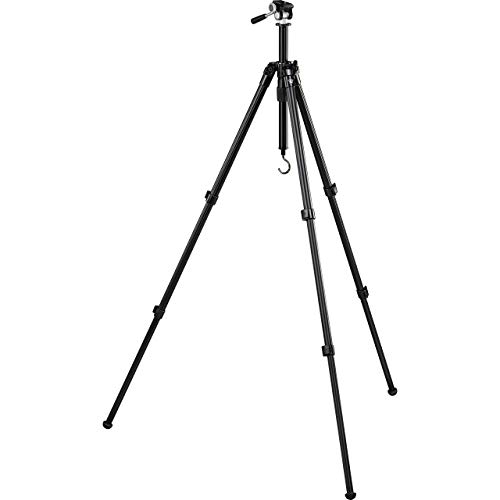
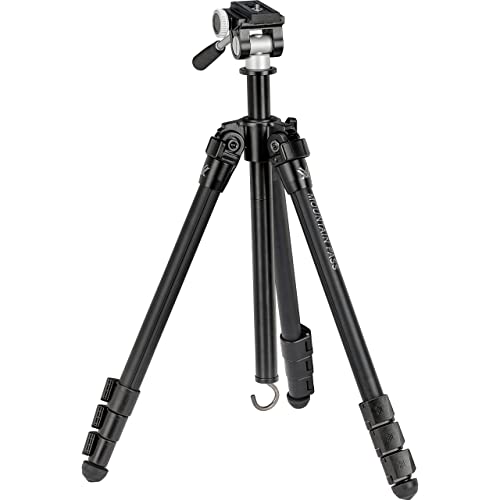
Quick answer: for most birdwatchers, the Vortex High Country II Tripod Kit is the strongest all-round choice, with a 22-pound load capacity, a 62.5-inch maximum height, and a two-way pan head made for tracking birds. If you mostly watch from a seated position or a hide and want a shorter, more packable kit, the Vortex Mountain Pass Tripod Kit is the compact alternative. If you are tall and glass standing up for long sessions, the Celestron TrailSeeker Tripod reaches 70.5 inches and keeps the eyepiece at a comfortable height. The rest of this guide explains how to match height, load capacity, head type, and weight to the way you bird, then looks at each of these three tripods in detail.
Quick Picks
Our Short List of 3
All 3 Picks at a Glance
| Product | Specs | Action |
|---|---|---|
| Vortex High Country II Tripod Kit (B08SBW5CZ1) | Check price on Amazon | |
| Vortex Mountain Pass Tripod Kit (B0BRNS143M) | Check price on Amazon | |
 Celestron TrailSeeker Tripod (B00K8U2EBK) | Check price on Amazon |
How to Choose the Best Tripods for Birding Scopes
Load Capacity and High Magnification
A spotting scope is a long, front-heavy optic, and magnification multiplies movement. At 40x or 60x, a tiny vibration at the tripod becomes a large shake in the eyepiece, and a head that slowly creeps under load will drift off a perched bird while you are still looking at it. Choose a tripod rated for well above the weight of your scope, not just at it. A common rule is to look for a rating of at least two to three times the weight of the scope itself, so the head locks firmly and the view stays where you put it. Compact 50 to 65 mm scopes are light enough for most sturdy tripods, while large 80 to 95 mm scopes need a higher-capacity platform with thicker leg sections. If you plan to add a camera for digiscoping, count that weight as well, along with the adapter and the head.
Maximum Height and Your Viewing Position
Maximum height decides whether you can stand comfortably behind the scope or have to stoop over it for hours. For an angled scope, the eyepiece sits below the top of the tripod, so a tripod that reaches roughly 60 to 62 inches suits many adults standing. Taller birders often need 65 inches or more, especially with a straight-through scope, where the eyepiece sits higher. Think honestly about how you actually watch birds. If you mostly sit in a hide, on a folding stool, or on a hillside, a shorter tripod is lighter to carry and quicker to set low. If you stand on a seawall, a marsh boardwalk, or an open field for a full morning, height becomes the most important comfort feature, and a tripod that is too short will tire your neck and back long before the birds stop moving.
Minimum Height and Low-Level Watching
Minimum height matters just as much when the birds are low. Waders on a mudflat, ducks on a pond, or a bird feeding on the ground are often best watched from a low, seated position, and a tripod that only goes down to waist height forces you to raise the scope and look down at a steep angle. Look for a tripod that drops to around 11 inches or lower, either by splaying the legs wide or by removing or reversing the center column. Three-position leg angle locks are useful here, because they let each leg sit at a different angle on uneven ground, a slope, or a crowded hide shelf. A low minimum height also helps in a hide, where a tall tripod can be awkward and can block the viewing slots.
Pan Heads Versus Ball Heads
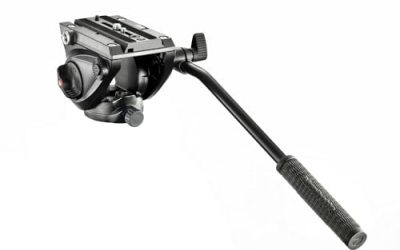
The head is what you touch every time a bird moves, so its design shapes the whole experience. A two-way pan head is the classic choice for a birding scope: pan and tilt lock separately, so you can sweep smoothly along a treeline or a shoreline while staying level, then lock the tilt and follow with pan alone. A fluid pan head adds damping, which makes slow, controlled tracking smoother and is a real advantage for digiscoping video. A ball head is faster to point in any direction, which suits a camera, but it can be fussier for level panning with a scope, because loosening the ball frees every axis at once. Whichever head you choose, check that it uses a standard quick-release plate, ideally Arca-Swiss compatible, so the scope mounts securely and can move between tripods or onto a binocular adapter without a hunt for parts.
Weight, Folded Length, and Carrying
Birding tripods are carried, often a long way, so weight and folded length are practical limits, not minor details. Carbon fiber legs are lighter and damp vibration well, while aluminum legs are heavier, generally more affordable, and add mass that can help stability in wind when the tripod is standing still. A tripod around 4 pounds is a reasonable field weight for most birders. Folded length decides whether the tripod straps to the outside of a daypack, fits inside it, or needs its own carry case. A folded length near 19 to 24 inches travels well, while longer folded tripods are better suited to car-based birding, where the tripod rides in the boot and only walks a short distance.
Leg Locks, Feet, and Wind Stability
Leg locks decide how fast you can set up when a bird appears and how well the tripod behaves in cold, wet, or muddy conditions. Flip-lever locks are quick and work well with gloves, while twist locks seal out grit and fold more compactly but take a little longer to operate. Either design works for birding if it locks firmly and does not slip under load. Feet matter on different surfaces: rubber feet grip boardwalks, hides, and rock, while spiked feet bite into soft ground and mud. A counterweight hook under the center column is a genuinely useful feature on a windy estuary or clifftop: hanging a daypack or a small bag from it lowers the center of gravity and steadies the view. Keeping the center column down also helps, because a fully raised column acts like a lever and magnifies shake.
The Best Tripods for Birding Scopes Reviewed
Vortex High Country II Tripod Kit (B08SBW5CZ1)
The Vortex High Country II Tripod Kit is the all-round pick for most birdwatchers, and the reason is the balance of its specification: a 22-pound load capacity, a maximum height of 62.5 inches, and a minimum height of 11.3 inches, all in a machined aluminum kit that weighs around 4 pounds. That capacity is far more than any birding scope needs on its own, and the surplus is exactly the point. A head rated for several times the load sitting on it does not creep when locked, so you can find a bird, tighten the head, and look away to check a field guide without the view drifting off the bird.
The two-way pan head is built for this job. Pan and tilt lock separately, so you can sweep along a hedgerow or a shoreline and stay level, then follow a flying bird with a smooth pan while the tilt stays fixed. The Arca-Swiss compatible quick-release plate makes mounting and removing the scope a quick, secure action, and the same plate system lets you swap the scope for binoculars on an adapter. Three-section legs with flip-lever locks adjust to three angles, which helps on slopes, in hides, and on uneven marsh edges, and a detachable counterweight hook lets you hang a bag underneath for extra steadiness in wind. A carry case is included, and the kit is backed by the Vortex VIP lifetime warranty.
Who it suits: birdwatchers who want one tripod for hides, shorelines, woodland, and open fields, including those with mid-size to large scopes up to 80 mm and beyond. Who should skip it: birders who walk long distances with a pack and count every ounce, or very tall birders who need more than 62.5 inches to stand fully upright behind a straight scope. For those users, a lighter carbon kit or a taller tripod will be a better fit.
Vortex Mountain Pass Tripod Kit (B0BRNS143M)
The Vortex Mountain Pass Tripod Kit is the compact member of the same family, and it suits birders who mostly watch sitting down. It shares the High Country II formula: a 22-pound load capacity, the same two-way pan head, the same Arca-Swiss compatible quick-release plate, aluminum legs, and flip-lever locks. The difference is size. It reaches a maximum height of 56 inches and folds down to 19 inches, so it packs smaller and rides more easily on a daypack or in a travel bag.
That height is a deliberate trade rather than a shortcoming, provided you buy it for the right kind of birding. From a folding chair in a hide, a stool on a reservoir bank, or a seated position on a hillside, 56 inches puts an angled eyepiece right where you want it, and you are not collapsing a taller tripod down to get there. The pan head moves smoothly enough to track a bird along a fence line without overshooting, which is the movement that cheaper compact tripods most often get wrong. Independent leg adjustment and the same counterweight hook as its taller sibling help it stay planted on uneven ground.
Who it suits: birders who watch mainly seated or from hides, travelers who need a short folded length, and anyone with a compact or mid-size scope who wants the same head and mounting system as the larger Vortex kit in a smaller package. Who should skip it: birders who stand to glass for long periods, and taller users who need a full standing height. For standing use, the High Country II or the taller Celestron below will be more comfortable over a long session.
Celestron TrailSeeker Tripod (B00K8U2EBK)
The Celestron TrailSeeker Tripod is the pick for tall birders and for anyone who spends long sessions glassing on their feet. It reaches 70.5 inches, the tallest maximum height in this roundup, while still weighing around 4 pounds and folding to 24 inches. That height means most adults can stand upright behind a straight or angled eyepiece with room to spare, instead of stooping over the scope for hours. It ships with a carry case and a shoulder strap, which makes the taller frame easier to move between viewpoints.
The head is a two-way fluid pan head, which is a good match for birding. The fluid damping makes slow pans smoother than a standard pan head, so tracking a bird in flight or scanning a distant treeline feels controlled rather than jerky. Four-section legs lock with flip levers and splay to three angles, and a retractable hook under the center column takes a ballast bag for windy days. The trade to understand is load capacity: at 8.8 pounds it is the lowest rating in this roundup, so it suits compact and mid-size scopes rather than the heaviest large-objective models. With a typical 65 to 80 mm birding scope it holds steady, but birders with a very heavy scope and a digiscoping camera attached should favor a higher-capacity tripod.
Who it suits: tall birders, anyone who watches standing for hours, and birders who want smooth fluid-head panning for following birds in flight. Who should skip it: birders with the heaviest large scopes, and anyone who needs maximum stability at high magnification in strong wind with a heavy optic on top. For those users, a 22-pound capacity kit is the safer choice.
What to Check Before You Buy
Before you buy, check the mounting thread and plate on your own scope. Most spotting scopes use a standard quarter-inch thread on the foot, and most birding tripods accept that directly, but an adapter or a different plate can turn a simple purchase into a frustrating one, so confirm the fit rather than assuming it. Check the folded length against your pack or your car boot, and check the weight against the distance you actually walk. A tripod that is perfect on paper but stays at home because it is too heavy or too long does no birding at all.
Check the head separately from the legs. A tripod sold as legs only needs a head bought to match, and the head must be rated for your scope. A complete kit removes that matching problem, which is one reason kits are a good choice for a first birding tripod. Check the warranty and the availability of spare parts, too. A tripod lives outdoors in rain, salt air, mud, and dust, and a maker with a strong lifetime warranty is worth more over years of use than a slightly lighter frame with no support behind it. Finally, set the tripod up at home before a trip: practice the leg locks with gloves on and learn how the pan and tilt locks feel, so the first time you use it in the field is not the first time a rare bird is in view.
Frequently Asked Questions
What size tripod do I need for a birding scope?
Match the tripod to your scope and your height. A compact 50 to 65 mm scope works well on a sturdy tripod rated for at least 15 pounds, while a large 80 to 95 mm scope deserves a tripod rated for 20 pounds or more. For height, look for a maximum of around 60 to 62 inches for most adults standing with an angled scope, and 65 inches or more if you are tall or use a straight scope. Also check the minimum height if you watch from a hide or a seated position.
Is a pan head or a ball head better for birding scopes?
A pan head is usually better for a birding scope. It lets you pan and tilt separately, so you can follow a bird smoothly while staying level, and lock one axis while moving the other. A fluid pan head adds damping for even smoother tracking and for digiscoping video. A ball head is faster to aim in any direction, which suits a camera, but it is fussier for level panning with a long scope.
Can I use a camera tripod for a spotting scope?
You can, provided it is sturdy enough, tall enough, and fitted with a suitable head. Many camera tripods are built for a light camera and a short lens, not for a long, front-heavy scope at high magnification, so check the load capacity and the head type first. A tripod made for spotting scopes, with a pan head and a generous load rating, is usually a better choice than a general camera tripod of the same weight.
How do I keep a birding scope steady in wind?
Keep the center column down, spread the legs wide, and hang weight from the counterweight hook if your tripod has one. A heavier tripod and thicker leg sections resist wind better than an ultralight one, and a sheltered position behind a hedge, a wall, or a vehicle helps more than any single feature. Avoid extending the thinnest leg sections fully in a strong wind.
Do I need carbon fiber legs for birding?
Carbon fiber is lighter and dampens vibration well, which is a real advantage on long walks and in cold weather, when aluminum legs feel cold to handle. Aluminum is heavier and generally more affordable, and its extra mass can help stability in a fixed position. For car-based birding and hide work, aluminum is often the sensible choice; for long hikes, carbon fiber earns its place.
Bottom Line
The best tripods for birding scopes are chosen by matching the tripod to the scope, the birder, and the ground. The Vortex High Country II Tripod Kit is the strongest all-round choice for most birdwatchers, with its 22-pound capacity, 62.5-inch height, and scope-first pan head. The Vortex Mountain Pass Tripod Kit is the compact choice for seated watching, hides, and travel. The Celestron TrailSeeker Tripod is the choice for tall birders and long standing sessions, with its 70.5-inch reach and smooth fluid pan head. Pick the one that fits how you actually watch birds, keep the center column down in wind, and the view at high magnification will stay steady enough to enjoy the bird instead of fighting the tripod.
Disclosure: As an Amazon Associate, we may earn from qualifying purchases.
More from Amazon
Programs that pair well with the guide above. Offers and eligibility are set by Amazon and may change.
Free shipping on eligible items, Prime Video and more. Eligible new members can start with a free trial.
Start a Prime free trialAudiobooks and podcasts to listen to on the go. Eligible new members can start with a free trial.
Try Audible freeAd-free music streaming. Eligible new subscribers can start with a free trial.
Try Music Unlimited freeA free business account with business pricing and bulk-buying tools for work, shop or home office.
Create a business accountAs an Amazon Associate we earn from qualifying purchases.