For most people, the DJI Osmo Pocket 3 is the best vlogging camera in 2026 if you film on the move, and the Sony ZV-E10 II is the best choice if you want interchangeable lenses and a flip-out screen for sitting-down talking-head video. A good vlogging camera is defined less by megapixels than by four things: autofocus that stays on your face, stabilization that smooths walking shots, a screen you can see while filming yourself, and a real microphone input. The six picks below cover pocket, compact, and interchangeable-lens options based on manufacturer specifications and published reviews.
Our top picks


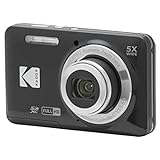
 KODAK PIXPRO FZ55 16MP Compact Digital Camera
- 16MP Sensor: Captures detailed photos with a CMOS…
- Optical Zoom: 5x optical zoom with a 28mm…
- Full HD Video: Records 1080p video for travel…

As an Amazon Associate we earn from qualifying purchases at no extra cost to you.
Quick comparison
| Pick | Best for | Sensor | Stabilization | Mic input | Price range |
|---|---|---|---|---|---|
| DJI Osmo Pocket 3 | Walking and travel vlogs | 1-inch type | 3-axis mechanical gimbal | Via adapter or wireless DJI Mic | Mid |
| Canon PowerShot V1 | Pocketable zoom vlogging | 1.4-inch type | Optical lens shift plus digital | 3.5 mm | Mid to upper-mid |
| Sony ZV-E10 II | Lens flexibility | APS-C, 26 MP | Electronic only | 3.5 mm | Mid |
| Sony ZV-1F | Budget and ultra-wide selfie framing | 1-inch type | Electronic | 3.5 mm | Budget to mid |
| Canon EOS R50 V | Beginners who want a creator body | APS-C, 24 MP | Electronic | 3.5 mm | Mid |
| Nikon Z50 II | Photos and video from one camera | APS-C, 20.9 MP | Electronic | 3.5 mm | Mid |
Best overall for on-the-go vlogs: DJI Osmo Pocket 3
The Osmo Pocket 3 puts a 1-inch type sensor on a three-axis gimbal, which is why its walking footage looks smoother than anything a stabilized-lens camera produces. The 2-inch touchscreen rotates between horizontal and vertical orientation, so you can shoot for YouTube or short-form platforms without cropping. It records 4K up to 120 frames per second for slow motion, per DJI’s spec sheet.
The trade-off is flexibility: the lens is fixed, there is no zoom beyond a digital crop, and battery runs are measured in roughly an hour or two of heavy recording rather than a full day. Pair it with a wireless microphone system if you talk to the camera, since its built-in mics pick up wind and room echo.
Best pocket compact with a zoom: Canon PowerShot V1
The PowerShot V1 is Canon’s vlog-first compact. Its 1.4-inch type sensor is larger than the 1-inch type used by most rivals, and the wide lens (roughly 16 to 50 mm in full-frame terms) keeps your face and background in the frame at arm’s length. A built-in ND filter helps you keep a natural shutter speed outdoors. It has a 3.5 mm microphone input and a hot shoe, so it behaves like a small camera rig. Expect 4K at 30 fps across the full sensor width, with a crop applied for higher frame-rate modes.
The downsides are a small battery, availability that has been inconsistent since launch, and a price that sits above basic vlogging compacts.
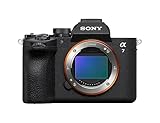
Best interchangeable-lens vlogging camera: Sony ZV-E10 II
The ZV-E10 II uses a 26 MP APS-C sensor and Sony’s real-time subject tracking, with product-showcase and background-defocus buttons aimed at creators. The side-hinged screen flips fully out so it never blocks a shotgun mic on the hot shoe, and the larger NP-FZ100 battery gives it far better endurance than the first ZV-E10. It records 4K with 10-bit options per Sony’s specs.
The trade-off is stabilization. There is no sensor-shift stabilization, so you rely on electronic stabilization (which crops the image) or a stabilized lens. Budget for a wide lens such as an 11 mm or 16 mm prime or a power zoom if you intend to hold the camera at arm’s length.
Best budget fixed-lens pick: Sony ZV-1F
The ZV-1F uses a 1-inch type sensor behind a very wide 20 mm equivalent f/2 lens, meaning your face and surroundings fit in the frame without a gimbal or wide-angle adapter. Face autofocus and a background-defocus button make it easy for first-time creators. It lacks a zoom lens and has limited low-light stabilization, so it works best for talking-head, desk, and travel-selfie content rather than distant subjects.
Best for beginners who want a creator body: Canon EOS R50 V
The EOS R50 V takes the 24 MP APS-C sensor family of the R50 and reshapes it for video, with tally lights, simple vertical shooting, and Canon’s Dual Pixel autofocus. It is a sensible entry point if you want to add lenses later from Canon’s RF-S line. Like other entry bodies, it relies on digital stabilization, so a stabilized lens or a handheld grip is worth considering.
Best for photos and video together: Nikon Z50 II
The Z50 II is the best fit if you plan to shoot as many photos as videos. Its 20.9 MP APS-C sensor delivers full-width 4K up to 30 fps, subject-detection autofocus, and a compact body with a good viewfinder, per Nikon’s specifications. The flip-down screen can be hidden behind a hot-shoe mic, so test whether you can still see yourself before you buy accessories.
How to choose a vlogging camera
Match the form factor to how you film
If you walk and talk, choose a gimbal or a camera with a strong lens stabilizer. If you film at a desk or tripod, choose the best autofocus and a flip-out screen, and ignore stabilization. If you record events, choose an interchangeable-lens body so you can add a longer lens.
Check the 4K and crop details
Many cameras advertise 4K at 60 fps but crop the image to do it. A 1.5x crop on a wide lens makes arm’s-length vlogging tight. Look for uncropped 4K at 24 or 30 fps, then treat 60 fps as a bonus.
Plan the storage
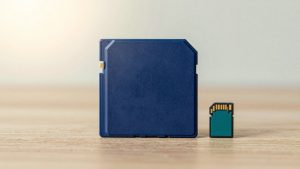
A worked example shows why card size matters. At an assumed 100 Mbps bitrate, 4K video uses about 12.5 MB per second, or roughly 45 GB per hour. A 128 GB card therefore holds about 2.8 hours of footage, and a 256 GB card about 5.7 hours. If you shoot 10-bit at 200 Mbps, halve those numbers. Use cards rated V30 or faster.
Audio is half the video
A 3.5 mm input or a wireless receiver system matters more than a slightly better sensor. Built-in microphones struggle outdoors, and a small shotgun or lavalier improves speech noticeably.
Frequently Asked Questions
Is a gimbal camera better than a mirrorless camera for vlogging?
A gimbal camera is better for walking shots and travel because its stabilization is mechanical. A mirrorless camera is better for low light, depth of field, and lens choice. Many creators own both for different jobs.
Do I need 4K for YouTube vlogs?
No, but 4K gives you room to crop or reframe in editing and holds up better on large screens. If your edit stays in 1080p, a camera with sharp oversampled 1080p still works well, but 4K is standard on current models.
What size sensor is best for vlogging?
A 1-inch type sensor is the practical minimum for good low-light vlogging in a pocket body. APS-C sensors give shallower depth of field and cleaner high-ISO footage but require larger bodies and lenses.
Do vlogging cameras need a flip screen?
Yes, a side-hinged or rotating screen lets you frame yourself and is the most common feature separating vlogging cameras from standard stills cameras.
Can a smartphone replace a vlogging camera?
Recent phones film excellent 4K, but a dedicated camera offers optical zoom, larger sensors, better audio connections, and no thermal throttling during long takes.
More from Amazon
Programs that pair well with the guide above. Offers and eligibility are set by Amazon and may change.
Free shipping on eligible items, Prime Video and more. Eligible new members can start with a free trial.
Start a Prime free trialAudiobooks and podcasts to listen to on the go. Eligible new members can start with a free trial.
Try Audible freeAd-free music streaming. Eligible new subscribers can start with a free trial.
Try Music Unlimited freeA free business account with business pricing and bulk-buying tools for work, shop or home office.
Create a business accountAs an Amazon Associate we earn from qualifying purchases.