Our Top Picks


Introduction
The Nikon Z6 III and the Canon EOS R6 II sit in the same middle ground of full-frame hybrid cameras, and both aim at the same kind of shooter: someone who wants strong stills and serious video in one body, without moving up to a flagship body and its bulk. Both use a sensor close to 24 megapixels, both offer 4K video at 60 frames per second, both promise up to 8 stops of stabilization, and both track people, animals and vehicles with modern subject detection. Nikon built the Z6 III around a partially stacked sensor, a first for this class, and that single choice shapes almost everything the camera does well.
As an Amazon Associate, we earn from qualifying purchases.
Sensor and Image Quality
Resolution is effectively a tie. The Nikon offers 24.5 megapixels and the Canon offers 24.2 megapixels, a gap so small that it has no visible effect on prints, crops or file sizes in normal use. Both sensors are full-frame, so both deliver clean low-light files, pleasing background blur and a wide dynamic range for landscape, portrait and event work.
Where the sensors differ is readout speed. The partially stacked design in the Z6 III reads data from the sensor much faster than a conventional sensor, so rolling shutter distortion is reduced when you pan quickly or photograph fast-moving subjects with the electronic shutter. The camera can also capture pre-release frames, holding a short buffer of images from before you fully press the shutter. The Canon sensor is a conventional design, so it shows more rolling shutter in electronic shutter mode. Its color rendering is warm and flattering for skin tones, and its JPEG output needs very little adjustment for direct delivery.
Autofocus
Autofocus is where the Canon has traditionally led, and the R6 II keeps that reputation. Its Dual Pixel CMOS AF II system covers almost the whole frame, locks onto eyes with confidence, and holds onto subjects through obstructions, turns and changes in direction. People, animals and vehicles are all detected reliably, and the camera is especially strong with human subjects, picking out eyes even when a face is partly turned away or partly hidden.
The Nikon Z6 III closes much of that gap. Its EXPEED 7 processor brings subject detection inherited from the Z8 and Z9, including people, animals, birds, vehicles and aircraft, and its autofocus works down to very low light levels. In dim light and with fast, erratic subjects, the Canon still feels a little more certain, with fewer moments of hunting and fewer frames where focus lands on the wrong subject. The difference is smaller than it was a generation ago, and many shooters will never feel it, but for paid work where every frame counts, the Canon keeps a narrow lead.
Video
Video is where the two cameras diverge most clearly, and the Nikon takes the lead for serious video work. The Z6 III records 6K at 60 frames per second in N-RAW internally, along with ProRes RAW HQ, oversampled 4K, 4K at 120 frames per second and Full HD at 240 frames per second for slow motion.
The Canon R6 II records uncropped 4K at up to 60 frames per second oversampled from 6K, which gives very sharp and detailed footage, plus Full HD at up to 180 frames per second. It offers Canon Log 3, 10-bit 4:2:2 internal recording, and 6K ProRes RAW output to a compatible external recorder over HDMI. The Canon also runs cooler in long takes. The Nikon video advantage comes with a trade-off: raw video files are large, and they demand fast CFexpress cards and a capable computer for editing. The Canon workflow is lighter, with smaller files and a simpler path from card to edit.
Stabilization
Both cameras claim up to 8 stops of stabilization, and both deliver genuinely useful handheld performance, but the numbers depend on the lens and the test method, so treat the headline figure as a guide rather than a guarantee. The Nikon pairs its in-body stabilization with a sensor that can shift to correct for movement, and it works with Z-mount lenses that have their own stabilization for a combined effect. The Canon system works in a similar way, combining in-body stabilization with RF lenses that have stabilization. Both are excellent for static handheld shots and for panning from a fixed position. In practice, the difference is small, and lens choice matters more than the body.
Battery Life and Power
Battery life favors the Canon by a clear margin. The R6 II uses the LP-E6NH battery and is rated for around 580 shots with the rear screen and around 450 shots with the viewfinder under standard test conditions. The Nikon Z6 III uses the EN-EL15c battery and is rated for around 380 shots with the viewfinder and around 400 shots with the rear screen under the same kind of test. Video recording, especially raw video at high frame rates, draws power faster on both cameras, and the Nikon draws more when it records 6K raw. Both cameras charge and run over USB-C, so a compact USB-C charger and a good cable can top up a battery during a break or power the camera for a long studio session.
Handling, Build and Viewfinder
Handling is a matter of taste, and the two cameras feel different in the hand. The Nikon Z6 III is the larger and heavier body, at around 760 grams with battery and card, with a deep grip, a solid magnesium alloy build and a viewfinder that stands out as one of the best in this class. The Canon R6 II is lighter, at around 670 grams with battery and card, with a slimmer body that packs well and feels less tiring on a long day. Its 3.69 million dot viewfinder is good but not as detailed as the Nikon panel, and its rear screen is a 1.62 million dot vari-angle touch panel that flips out for video and self-recording. The Nikon has a full-size HDMI port, which is more robust for video rigs, while the Canon has a micro HDMI port that needs a more careful cable and a clamp or cage to protect it on a rig.
Card Slots and Workflow
Card slots are a practical difference that affects cost and workflow. The Nikon Z6 III has one CFexpress Type B slot and one SD UHS-II slot. The trade-off is that you need two kinds of cards and two kinds of readers, and CFexpress cards cost more than SD cards of the same capacity. The Canon R6 II has two SD UHS-II slots. That setup is simpler and cheaper, because one kind of card covers every slot, and SD readers are built into many laptops. The trade-off is that SD cards top out below CFexpress speeds, so the Canon cannot record the same raw video formats internally. For stills and for standard video, the Canon slot setup is more convenient and more affordable. For raw video and for the fastest bursts, the Nikon slot setup is the right tool.
Who Should Choose Which
Choose the Nikon Z6 III if video is a major part of your work, if you want internal raw video, slow motion at 4K 120p, a brighter and more detailed viewfinder, and a partially stacked sensor that reduces rolling shutter and enables pre-release capture. Choose the Canon EOS R6 II if autofocus confidence and battery life matter most, if you shoot weddings, events, portraits and people, if you want a lighter body with a simpler dual SD workflow, and if you already own RF lenses or plan to build an RF kit. If you own no lenses from either brand, the lens system should weigh heavily in your choice.
The 5 Products
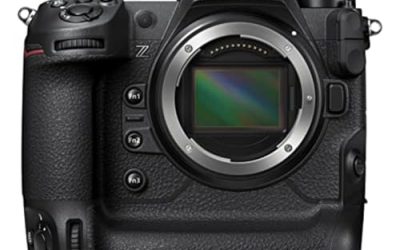
1. Nikon Z6 III Mirrorless Camera Body Only
The Nikon body is the video-first pick, with a partially stacked sensor and internal 6K raw video.
Specs
- 24.5 megapixel partially stacked full-frame sensor; EXPEED 7 processor; 6K 60p N-RAW internal video; 4K 120p; 5.76 million dot viewfinder; CFexpress Type B plus SD UHS-II slots; around 760 grams with battery and card.
2. Canon EOS R6 II Mirrorless Camera Body Only
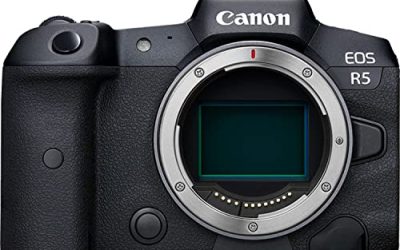
The Canon body is the autofocus and battery life pick, with fast burst shooting and confident subject tracking.
Specs
- 24.2 megapixel full-frame CMOS sensor; DIGIC X processor; uncropped 4K 60p oversampled from 6K; Full HD 180p; up to 40 frames per second electronic shutter; Dual Pixel CMOS AF II; dual SD UHS-II slots; LP-E6NH battery; around 670 grams with battery and card.
3. SanDisk Extreme PRO SDXC UHS-II V90 64GB Memory Card
This card fits both cameras, since each has at least one SD UHS-II slot, and its V90 speed class supports high-bitrate video and fast bursts.
Specs
- 64GB capacity; SDXC UHS-II; V90 video speed class; up to 300 MB per second read and write speeds; model SDSDXDM-064G-GN4IN.
4. NEEWER 660 PRO RGB LED Video Light
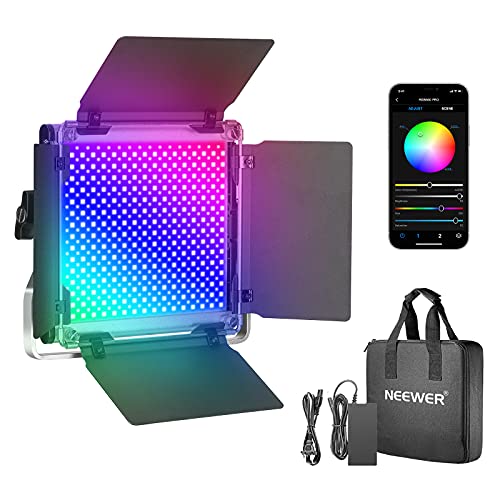
A compact LED panel adds clean, adjustable light for interviews, product shots and indoor video with either camera.
Specs
- 50W LED panel; 360-degree full-color RGB output; CRI 97 plus; app control; barn door and U bracket included; 3200K to 5600K bi-color range.
5. Anker Prime 100W USB-C GaN Charger

Both cameras charge over USB-C, so one compact GaN charger can top up a camera battery, a laptop and a phone from a single outlet.
Specs
- 100W total output; two USB-C ports plus one USB-A port; GaN design; model A2343; foldable prongs; single USB-C port up to 100W at 20V 5A.
Frequently Asked Questions
Which camera is better for video, the Nikon Z6 III or the Canon EOS R6 II?
The Nikon Z6 III is better for serious video work, thanks to internal 6K 60p N-RAW recording and 4K at 120 frames per second. The Canon R6 II is better for simple client video, thanks to sharp oversampled 4K and smaller files.
Which camera has better autofocus for people and events?
The Canon EOS R6 II has a small lead for people and events, with Dual Pixel CMOS AF II that locks onto eyes and holds tracking through turns and obstructions. The Nikon Z6 III is close behind and works well for most subjects.
Can I use the same memory cards and accessories with both cameras?
Yes, in part. Both cameras accept SD UHS-II cards and both charge over USB-C. The Nikon also needs a CFexpress Type B card for its fastest video modes, while the Canon uses a second SD card instead.
Which camera should a first-time full-frame buyer choose?
A first-time buyer should choose based on lenses and handling first, then on video needs. Pick the Nikon if raw video and slow motion matter to you, and pick the Canon if autofocus confidence, battery life and a simpler dual SD workflow matter more.
Verdict
The Nikon Z6 III and the Canon EOS R6 II are both excellent hybrid cameras, and the winner depends on your work rather than on a single specification. The Nikon wins on video ambition, sensor speed and viewfinder quality. The Canon wins on autofocus confidence, battery life, weight and workflow simplicity. Either body, paired with good lenses and the shared accessories above, will serve you well for years.
More from Amazon
Programs that pair well with the guide above. Offers and eligibility are set by Amazon and may change.
Free shipping on eligible items, Prime Video and more. Eligible new members can start with a free trial.
Start a Prime free trialAudiobooks and podcasts to listen to on the go. Eligible new members can start with a free trial.
Try Audible freeAd-free music streaming. Eligible new subscribers can start with a free trial.
Try Music Unlimited freeA free business account with business pricing and bulk-buying tools for work, shop or home office.
Create a business accountAs an Amazon Associate we earn from qualifying purchases.