Our Top Picks
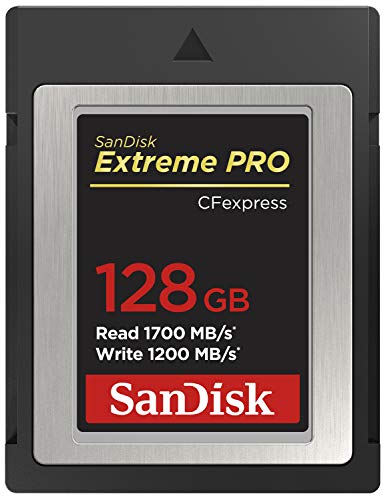 SANDISK 128GB Extreme PRO CFexpress Card Type B128GB0.15 x 1.17 x 1.52 inches0 poundsCheck on Amazon

Canon EOS R3 vs Nikon Z9: Two Flagships, Two Very Different Ideas
The Canon EOS R3 and the Nikon Z9 arrived within weeks of each other, built for professionals who shoot sports, wildlife, news, weddings and commercial assignments. Both carry an integrated vertical grip, a stacked full-frame sensor, blackout-free shooting and deep-learning subject detection. Yet they take very different routes to the same destination. Canon chose speed, low-light sensitivity and a lighter body built around a 24.1-megapixel sensor. Nikon chose resolution, video ambition and a heavier, fully electronic-shutter body built around a 45.7-megapixel sensor. Neither choice is wrong; the right pick depends on your subjects, your delivery formats and the weight you will carry.
As an Amazon Associate, we earn from qualifying purchases.
At a Glance
The Canon EOS R3 uses a 24.1-megapixel stacked full-frame sensor, DIGIC X processor, native ISO 100 to 102400, 6K RAW video at up to 60 frames per second, 30 frames per second bursts, a 5.76-million-dot viewfinder, a fully articulating screen, one CFexpress Type B slot and one SD UHS-II slot, and a body weighing 1015 grams. The Nikon Z9 uses a 45.7-megapixel stacked full-frame sensor, EXPEED 7 processor, native ISO 64 to 25600, 8K video at up to 30 frames per second, 20 frames per second RAW bursts, a 3.69-million-dot viewfinder, a four-axis tilting screen, two CFexpress Type B slots, no mechanical shutter, and a body weighing 1340 grams. On paper, Nikon wins on resolution and video, while Canon wins on burst speed, low light and weight.
Resolution and Image Quality
Resolution is the single biggest difference between these two cameras. The Nikon Z9 records 8256 by 5504 pixel files from its 45.7-megapixel sensor, giving you enormous freedom to crop. A wildlife photographer can frame loosely and still crop down to a tight composition. The larger files also demand more from your computer, storage and backup routine, and they fill memory cards faster. The Canon EOS R3 records 6000 by 4000 pixel files from its 24.1-megapixel sensor, which is more than enough for magazine spreads, large prints and every common form of online delivery. Its larger pixels also help the R3 in low light, where its native ISO range reaches 102400 against 25600 for the Z9. If cropping and large prints matter most, take the Z9. If speed and low light matter most, take the R3.
Autofocus
Both cameras use advanced autofocus trained with deep learning to recognise people, animals and vehicles. The Canon EOS R3 uses Dual Pixel CMOS AF II with 1053 selectable areas, eye, face, head and body detection for people, and detection for animals including birds, plus cars and motorcycles. Its headline feature is Eye Control AF, which moves the initial focus point to wherever you are looking in the viewfinder. It takes a short calibration for each user. The R3 autofocus is sensitive down to minus 7.5 EV with an f/1.2 lens, and it calculates focus 60 times per second. The Nikon Z9 uses a hybrid phase and contrast detection system with 493 focus points and 3D tracking, and it calculates focus 120 times per second, twice as often as the Canon. Its subject detection covers people, animals and vehicles, including aircraft and trains. The Z9 autofocus is sensitive down to minus 6.5 EV with an f/1.2 lens. The Canon wins for Eye Control AF and low-light sensitivity; the Nikon wins for calculation speed and vehicle detection.
Video
Video is where the two flagships diverge most sharply in philosophy. The Nikon Z9 is the more ambitious video camera on paper, recording 8K video internally at up to 30 frames per second, 4K video at up to 120 frames per second for slow motion, and Full HD at up to 120 frames per second, It records Apple ProRes 422 HQ internally, and later firmware added N-RAW recording at up to 8.3K and 60 frames per second, plus 12-bit N-Log for grading latitude. The Canon EOS R3 does not reach 8K, but its video capability is still formidable. It records 6K RAW video internally at up to 60 frames per second, 4K video at up to 120 frames per second, and Full HD at up to 240 frames per second, with 12-bit Canon RAW Light and Canon Log 3 for grading. The 6K RAW files are smaller and easier to handle than 8K, and the R3 Dual Pixel autofocus is superb for video. If you need 8K masters or ProRes delivery, take the Z9. If you deliver in 4K, take the R3.
Burst Speed and Buffer
For action photographers, burst speed and buffer depth decide whether you catch the decisive moment or watch it slip past while the camera writes to the card. The Canon EOS R3 shoots up to 30 frames per second with the electronic shutter in RAW and JPEG, and up to 12 frames per second with the mechanical shutter or first-curtain electronic shutter. Its buffer handles around 150 RAW frames in a single burst at 30 frames per second. The Nikon Z9 shoots up to 20 frames per second in RAW, up to 30 frames per second in JPEG, and up to 120 frames per second in 11-megapixel JPEG files. The Z9 buffer handles more than 1000 RAW frames in a single burst with high-efficiency RAW compression. The Canon wins on RAW burst speed; the Nikon wins on buffer depth.
Battery Life and Power
Both cameras use large, high-capacity batteries built for a full day of professional work, but their endurance differs. The Canon EOS R3 uses the LP-E19 battery, and it is rated for around 860 shots per charge with the rear screen and around 620 shots with the viewfinder under standard test conditions. In real shooting, most photographers will get well beyond those figures. The Nikon Z9 uses the EN-EL18d battery, and it is rated for around 740 shots per charge with the rear screen and around 700 shots with the viewfinder under standard test conditions. Those figures understate real-world performance, and many photographers report well over a thousand frames per charge. The Z9 also charges over USB-C, and it can be powered continuously from a USB-C source while shooting.
Handling, Build and Viewfinder
Both cameras are built like professional tools, with magnesium alloy bodies, extensive weather sealing and integrated vertical grips. The Canon EOS R3 weighs 1015 grams with battery and card, noticeably lighter than the Z9 at 1340 grams. Its fully articulating 4.15-million-dot touch screen flips out for low angles and self-filming, and its 5.76-million-dot viewfinder is the sharper of the two. Its four-axis tilting 2.1-million-dot screen tilts for vertical shooting and low-angle work, though it cannot flip forward for self-filming. Its 3.69-million-dot viewfinder is very bright, at up to 3000 nits, and genuinely blackout-free. The Z9 has no mechanical shutter, so it shoots silently, a real advantage for weddings, theatre and golf.
Lenses and Ecosystems
Both Canon and Nikon now offer deep, mature mirrorless lens systems. Canon RF mount offers superb super-telephoto lenses, including the RF 400mm f/2.8L and the RF 600mm f/4L, plus excellent fast primes and zooms. Nikon Z mount offers its own superb super-telephoto range, including the Z 400mm f/2.8 TC VR S and the Z 800mm f/6.3 VR S, plus compact primes and fast zooms. Both systems offer adapters for older DSLR lenses, so photographers moving from a DSLR can bring much of their existing kit.
Which Camera Should You Buy
Choose the Canon EOS R3 if you shoot fast action, work in low light, value Eye Control AF and the sharpest viewfinder, want the lighter body, and deliver video in 4K. It is the better pick for sports, news, wedding and hybrid shooters who put autofocus and handling first. Choose the Nikon Z9 if you need the highest resolution and the freedom to crop deeply, deliver video in 8K, shoot long sustained bursts, want dual CFexpress Type B slots and a silent shutter, and value the brightest viewfinder. It is the better pick for wildlife, landscape, commercial and hybrid shooters who put image quality and video formats first.
Our Picks
1. Canon EOS R3 Mirrorless Camera Body

The Canon EOS R3 is the speed flagship of the Canon RF system, with a 24.1-megapixel stacked sensor, Eye Control AF, 30 frames per second bursts and 6K RAW video at up to 60 frames per second. It suits sports, news, weddings and action work in difficult light.
Specs
- 24.1-megapixel stacked full-frame CMOS sensor; DIGIC X processor; native ISO 100 to 102400; 30 fps electronic-shutter bursts; 6K RAW video up to 60 fps; 4K video up to 120 fps; 5.76-million-dot EVF; fully articulating touch screen; CFexpress Type B plus SD UHS-II slots; 1015 g with battery and card.
2. Nikon Z9 Mirrorless Camera Body

The Nikon Z9 is the resolution and video flagship of the Nikon Z system, with a 45.7-megapixel stacked sensor, 8K video at up to 30 frames per second and a fully electronic shutter with no blackout. Its cropping freedom, buffer depth and video formats suit wildlife, landscape, commercial and hybrid work.
Specs
- 45.7-megapixel stacked full-frame CMOS sensor; EXPEED 7 processor; native ISO 64 to 25600; 20 fps RAW bursts; 30 fps JPEG bursts; 120 fps 11-megapixel JPEG bursts; 8K video up to 30 fps; 4K video up to 120 fps; 3.69-million-dot EVF; four-axis tilting touch screen; dual CFexpress Type B slots; 1340 g with battery and card.
3. SanDisk Extreme PRO CFexpress Type B 128GB Memory Card
Both cameras here use CFexpress Type B cards, and this SanDisk Extreme PRO card is a fast, reliable choice for either body. It handles 30 frames per second RAW bursts on the R3 and 8K video on the Z9, and 128GB gives you room for a long session.
Specs
- 128GB capacity; CFexpress Type B format; up to 1700 MB/s read speed; up to 1200 MB/s write speed; fits Canon EOS R3 and Nikon Z9; rugged build for field use.
4. Lexar Professional CFexpress Type B and SD USB 3.2 Gen 2 Reader
A fast card is only half the workflow, and this Lexar reader moves your files to the computer quickly after a shoot. It takes one CFexpress Type B card and one SD card at the same time, and its USB 3.2 Gen 2 connection transfers at up to 10 Gbps.
Specs
- CFexpress Type B slot plus SD UHS-II slot; USB 3.2 Gen 2 interface up to 10 Gbps; simultaneous transfer from both slots; USB-C cable and USB-A adapter included; compact metal housing.
5. Think Tank StreetWalker V2 Camera Backpack

A flagship body with a heavy telephoto lens needs a bag that protects it and carries it comfortably, and the Think Tank StreetWalker V2 is built for exactly that job. It holds a gripped body with a lens attached, plus extra lenses, cards, batteries and a laptop, and its padded harness spreads the weight for long walks. The rear-access design keeps your gear secure, and the rain cover keeps it dry.
Specs
- Fits a gripped mirrorless body with lens attached; padded dividers for extra lenses and accessories; laptop compartment; adjustable harness and waist belt; rear-access main compartment; rain cover included.
Frequently Asked Questions
Which camera has higher resolution, the Canon EOS R3 or the Nikon Z9?
The Nikon Z9 has higher resolution, with a 45.7-megapixel sensor against 24.1 megapixels for the Canon EOS R3. That gap gives the Z9 much more freedom to crop and to make very large prints.
Which camera is better for sports photography, the R3 or the Z9?
The Canon EOS R3 has the edge for short, explosive action, shooting RAW at up to 30 frames per second against 20 for the Nikon Z9. The Z9 has the edge for long, sustained sequences, because its buffer handles far more frames in a single burst.
Can both cameras record 4K video at 120 frames per second?
Yes, both cameras record 4K video at up to 120 frames per second for smooth slow motion. The Nikon Z9 goes further in resolution with 8K video at up to 30 frames per second, while the Canon EOS R3 records 6K RAW video at up to 60 frames per second.
Do the Canon EOS R3 and Nikon Z9 use the same memory cards?
Both cameras use CFexpress Type B cards, so a card bought for one body works in the other. The Nikon Z9 has two CFexpress Type B slots, while the Canon EOS R3 has one CFexpress Type B slot and one SD UHS-II slot.
The Verdict
The Canon EOS R3 and the Nikon Z9 are both superb flagship cameras. The R3 wins on burst speed, low-light performance, viewfinder sharpness and weight, making it the better tool for sports, news and wedding photographers. The Z9 wins on resolution, video formats, buffer depth and card redundancy, making it the better tool for wildlife, landscape and commercial photographers. If you are choosing fresh, pick the R3 for speed and low light, and pick the Z9 for resolution and video.
More from Amazon
Programs that pair well with the guide above. Offers and eligibility are set by Amazon and may change.
Free shipping on eligible items, Prime Video and more. Eligible new members can start with a free trial.
Start a Prime free trialAudiobooks and podcasts to listen to on the go. Eligible new members can start with a free trial.
Try Audible freeAd-free music streaming. Eligible new subscribers can start with a free trial.
Try Music Unlimited freeA free business account with business pricing and bulk-buying tools for work, shop or home office.
Create a business accountAs an Amazon Associate we earn from qualifying purchases.