Our Top Picks
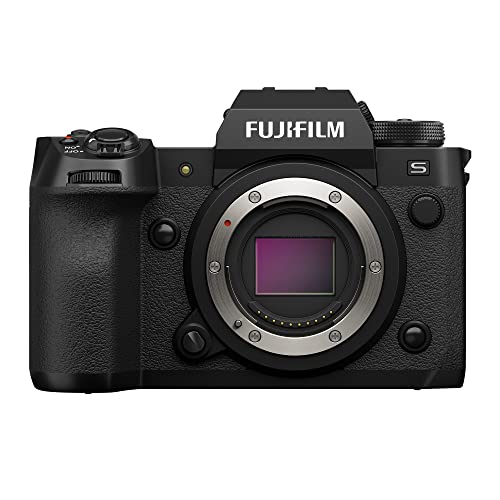

The Canon EOS R7 and the Fujifilm X-H2S are the two most serious APS-C cameras you can buy, and they aim at the same photographer: someone who shoots fast subjects, wants strong video, and refuses to carry a full-frame kit. Both offer flagship autofocus, in-body stabilisation, and high frame rates, but they get there in very different ways. Canon gives you a 32.5-megapixel sensor and a huge lens range, while Fujifilm gives you a stacked 26-megapixel sensor built for speed and a film simulation system that makes JPEGs look finished straight from the camera.
This comparison looks at resolution, autofocus, video, stabilisation, battery, and handling head to head, then recommends the shared accessories that work with both bodies. By the end, you should know which of these two cameras fits the way you shoot.
As an Amazon Associate, we earn from qualifying purchases.
Resolution: Canon Leads on Megapixels
The R7 carries a 32.5-megapixel APS-C sensor, which is the highest resolution in its class, while the X-H2S uses a 26.1-megapixel stacked sensor. In practice, the Canon gives you more room to crop, which matters for wildlife and sports photographers who cannot always get close enough. A heavy crop from the R7 still leaves a usable file, while the same crop from the X-H2S is tighter.
The Fujifilm sensor is stacked, which means it reads out faster and suffers less from rolling shutter, but that speed does not add pixels. For landscape and detail work, the Canon has the edge. For fast action, the Fujifilm sensor reads fast enough to keep up, and the resolution difference is less important than the speed. If your work is mostly stills with careful composition, the R7 wins this round. If you crop heavily, the R7 wins by more.
Autofocus: Both Are Excellent, Canon Is More Forgiving
Canon Dual Pixel AF is the benchmark for subject detection, and the R7 inherits it fully. It locks onto people, animals, and vehicles with confidence, and it holds focus on a moving subject through clutter. The system is forgiving of a photographer who is still learning, because it finds the subject and stays with it.
Fujifilm has closed the gap with the X-H2S, and its subject detection is now genuinely good, especially for people and animals. The stacked sensor helps it track fast subjects without lag, and the autofocus is fast and decisive. But Canon still feels a touch more reliable when the subject is small in the frame or moving erratically. For a beginner or a photographer who shoots unpredictable subjects, the R7 is the safer choice. For an experienced shooter who knows how to drive an AF system, the difference is small.
Video: Fujifilm Takes the Speed Crown
Both cameras shoot strong video, but they serve different video shooters. The X-H2S records 6.2K open-gate video and 4K at up to 120 frames per second, with 10-bit internal recording and Fujifilm’s film simulations, which give footage a finished look without grading. The stacked sensor reads fast, so rolling shutter is well controlled, and the camera is a genuine hybrid tool for someone who shoots stills and video equally.
The R7 shoots 4K at up to 60 frames per second with 10-bit recording and Canon’s colour science, which is beloved for skin tones. It is a capable video camera, but it lacks the open-gate option and the 120-frame 4K mode, and its rolling shutter is more visible in fast pans. For a photographer who shoots video occasionally, the R7 is fine. For a hybrid shooter who films often, the X-H2S is the stronger tool.
Stabilisation and Battery: A Close Call
Both cameras offer in-body image stabilisation rated at up to seven stops, and in real use both let you shoot handheld at shutter speeds that would have been impossible a few years ago. The Canon system works well with stabilised RF lenses for a combined effect, while the Fujifilm system is effective with its own stabilised lenses. There is little to separate them in practice, and both are good enough for handheld video and low-light stills.
Battery life favours the Canon slightly, because the R7 uses the larger LP-E6NH battery, while the X-H2S uses the smaller NP-W235. In a full day of shooting, the R7 will last a little longer, but both cameras benefit from a spare battery in the bag. Neither camera will get through a long wedding or a full day of wildlife shooting on one battery, so budget for spares whichever you choose.
Handling: Two Different Philosophies
The R7 feels like a small full-frame Canon: a deep grip, a familiar button layout, and a control scheme that Canon shooters will know instantly. The grip is comfortable with large lenses, and the camera balances well with a telephoto zoom. The menu system is clear, and the touchscreen is responsive.
The X-H2S feels like a Fujifilm: dedicated dials for shutter speed, ISO, and exposure compensation, a beautiful electronic viewfinder, and a design that rewards photographers who like direct control. It is slightly smaller than the R7, and the dials make it a joy to use for stills, though the learning curve is steeper for a newcomer. Handling is personal, but the R7 is the easier camera to pick up, while the X-H2S is the more rewarding camera to master.
The Verdict
Choose the Canon EOS R7 if you want the highest resolution, the most forgiving autofocus, and the longest battery life, and if you shoot wildlife, sports, or landscapes where cropping and subject detection matter most. Choose the Fujifilm X-H2S if you shoot hybrid stills and video, want the fastest sensor and the best video specs, and love direct dial control and film simulations. Both are superb cameras, and the right one is the one that matches your subjects.
1. Canon EOS R7 Body

The R7 is Canon’s flagship APS-C camera, built around a 32.5-megapixel sensor and Dual Pixel AF. It shoots stills at up to 30 frames per second with the electronic shutter, records 4K video at 60 frames per second, and offers in-body stabilisation rated at up to seven stops. The body is weather sealed, the grip is deep and comfortable, and the RF mount gives access to Canon’s growing range of lenses.
For wildlife and sports photographers, the R7 is a remarkable tool at its cost. The resolution gives cropping headroom, the autofocus finds and holds subjects, and the burst rate captures the decisive moment. It is the camera that makes APS-C feel like a serious choice rather than a compromise.
Specs: 32.5-megapixel APS-C sensor; Dual Pixel AF with subject detection; 30 frames per second burst; 4K 60p video; in-body stabilisation up to 7 stops; weather-sealed body; model 5137C002.
2. Fujifilm X-H2S Body
The X-H2S is Fujifilm’s speed flagship, built around a 26.1-megapixel stacked sensor that reads out fast enough for serious action and video work. It shoots stills at up to 40 frames per second, records 6.2K open-gate video and 4K at 120 frames per second, and offers in-body stabilisation rated at up to seven stops. The film simulations give JPEGs and video a finished look that many photographers love.
For hybrid shooters who move between stills and video, the X-H2S is one of the most capable cameras at any cost. The stacked sensor keeps rolling shutter under control, the autofocus is fast and confident, and the dial-based handling makes it a pleasure to use for stills. It is a camera that rewards a photographer who shoots both disciplines seriously.
Specs: 26.1-megapixel stacked APS-C sensor; 40 frames per second burst; 6.2K open-gate video; 4K 120p video; in-body stabilisation up to 7 stops; film simulations; weather-sealed body.
3. SanDisk Extreme PRO 128GB SDXC UHS-I Memory Card, 2-Pack
Both the R7 and the X-H2S take SD cards, and this SanDisk Extreme PRO 2-pack is the sensible way to stock up. Each card holds 128GB and reads at up to 200MB/s, which is fast enough for high-speed bursts and 4K video, and the pair means you always have a spare in the bag. SanDisk cards are known for reliability, and the Extreme PRO line is built for professional use with a lifetime limited warranty.
A 2-pack is the right format for a two-body shooter or for anyone who wants a backup card on a long day. Keep one card in each camera or one in use and one in the bag, and you will never be caught short. For the R7 and X-H2S, these cards are the practical, no-fuss choice.
Specs: 128GB capacity per card, 2-pack; UHS-I SDXC; read speeds up to 200MB/s; suitable for burst stills and 4K video; lifetime limited warranty.
4. SmallRig Black Mamba Cage for Canon EOS R7, Model 4003B

A cage protects a camera and adds mounting points, and this SmallRig Black Mamba cage is made specifically for the Canon EOS R7. It fits the body precisely, leaves the battery door and card slot accessible, and adds cold shoe and threaded mounts for a microphone, a light, or a monitor. The cage also gives the camera a better grip and protects the corners from knocks.
For R7 owners who shoot video or who mount accessories, a cage is one of the first additions to buy. SmallRig is known for precise fit and solid build, and the Black Mamba line is its premium range. Note that this cage is made for the R7 body, so check the listing carefully before ordering, as it is easier to confirm on the Canadian store than on the US store.
Specs: Cage for Canon EOS R7; model 4003B; cold shoe and threaded mounts; battery door and card slot accessible; aluminium build; improves grip and protection.
5. Rode VideoMicro Compact On-Camera Microphone

Good video needs good audio, and the Rode VideoMicro is the simplest way to improve it on either camera. This compact shotgun microphone mounts on the hot shoe, plugs into the microphone input, and needs no battery, because it draws power from the camera. The sound is far clearer than the built-in microphone, with less wind noise and a more focused pickup.
Both the R7 and the X-H2S benefit from the VideoMicro, because their internal microphones pick up handling noise and wind. The microphone is light, so it does not unbalance the camera, and it comes with a windshield that tames wind on outdoor shoots. For hybrid shooters who film interviews, vlogs, or behind-the-scenes footage, it is an easy and affordable upgrade.
Specs: Compact on-camera shotgun microphone; mounts on hot shoe; no battery required; includes windshield; improves audio clarity over built-in microphone; works with R7 and X-H2S.
Frequently Asked Questions
Which camera is better for wildlife photography?
The Canon R7 has the edge for wildlife, because its 32.5-megapixel sensor gives more cropping room and its Dual Pixel AF is superb at finding animals. The X-H2S is also capable, but the Canon’s resolution and autofocus make it the stronger wildlife tool.
Which camera is better for video?
The Fujifilm X-H2S is the stronger video camera, with 6.2K open-gate recording, 4K at 120 frames per second, and 10-bit internal recording. The R7 shoots good 4K video, but it lacks the open-gate mode and the high-frame-rate 4K option.
Can I use the same memory cards in both cameras?
Yes. Both cameras take SD cards, so a UHS-II or fast UHS-I card works in either body. The SanDisk Extreme PRO cards in this guide are a good shared choice, and a 2-pack covers both bodies or provides a spare.
Do I need a cage for the R7 or X-H2S?
A cage is not essential for stills, but it is useful for video work and for mounting accessories such as a microphone or a light. It also protects the camera body from knocks. If you shoot video often, a cage is a worthwhile addition.
Final Thoughts
The Canon EOS R7 and the Fujifilm X-H2S are both outstanding APS-C cameras, and the choice comes down to your subjects. Pick the R7 for resolution, autofocus, and battery life. Pick the X-H2S for speed, video, and handling. Whichever you choose, the shared accessories in this guide, from fast SD cards to a good microphone, will make the camera better from day one.
More from Amazon
Programs that pair well with the guide above. Offers and eligibility are set by Amazon and may change.
Free shipping on eligible items, Prime Video and more. Eligible new members can start with a free trial.
Start a Prime free trialAudiobooks and podcasts to listen to on the go. Eligible new members can start with a free trial.
Try Audible freeAd-free music streaming. Eligible new subscribers can start with a free trial.
Try Music Unlimited freeA free business account with business pricing and bulk-buying tools for work, shop or home office.
Create a business accountAs an Amazon Associate we earn from qualifying purchases.