The best APS-C camera for most photographers in 2026 is the Sony a6700 for autofocus and video, the Fujifilm X-T5 for image quality and handling, and the Canon EOS R7 for wildlife and sports. APS-C sensors are about 1.5 to 1.6 times smaller in each dimension than full frame, which means smaller and lighter lenses, more telephoto reach, and lower prices, at the cost of a bit more noise in very dim light. For a hobbyist, a travel photographer, or someone moving up from a phone, APS-C is the sweet spot.
Our top picks
 Sony ZV-E10 APS-C Mirrorless Camera with 16-50mm
- 24.2MP APS-C Exmor CMOS Sensor and fast BIONZ…
- 4K Movie oversampled from 6k w/ full pixel…
- Product Showcase Setting transitions focus from face to…
| Product | Key specs | |
|---|---|---|
 Canon EOS R100 Mirrorless Camera RF-S18-45mm F4.5-6.3 | Check price | |
| Sony ZV-E10 APS-C Mirrorless Camera with 16-50mm | 24.2MP APS-C Exmor CMOS Sensor and fast BIONZ… 4K Movie oversampled from 6k w/ full pixel… Product Showcase Setting transitions focus from face to… | Check price |
 Fujifilm X100F 24.3 MP APS-C Digital Camera-Silver | Check price | |
 Canon EOS Rebel T7 DSLR Camera EF-S | 24.1 Megapixel CMOS (APS-C) sensor with is 100–6400… Built-in Wi-Fi and NFC technology 9-Point AF system and AI Servo AF | Check price |
As an Amazon Associate we earn from qualifying purchases at no extra cost to you.
Quick comparison
| Pick | Best for | Resolution | In-body stabilization | Max burst | Price range |
|---|---|---|---|---|---|
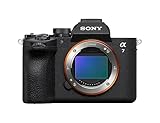
| Sony a6700 | Autofocus and hybrid video | 26 MP | Yes | 11 fps mechanical | Upper-mid |
| Fujifilm X-T5 | Photography and detail | 40.2 MP | Yes | 20 fps | Upper-mid |
| Canon EOS R7 | Wildlife and sports | 32.5 MP | Yes | 30 fps | Upper-mid |
| Fujifilm X-S20 | Hybrid photo and video | 26 MP | Yes | 20 fps | Mid |
| Nikon Z50 II | Value and beginners | 20.9 MP | No | 30 fps | Mid |
| Canon EOS R50 | First camera | 24.2 MP | No | 15 fps | Budget to mid |
Specifications are from the manufacturers’ spec sheets; burst figures vary with shutter mode and lens.
Best for autofocus and video: Sony a6700
The a6700 pairs a 26 MP sensor with Sony’s AI-based subject recognition, which tracks people, animals, birds, insects, vehicles, and aircraft. It has in-body stabilization, 4K recording with 10-bit options, and a fully articulating screen. Reviewers commonly call it the most capable APS-C body from any brand for autofocus. The trade-off is ergonomics: the grip is small, and the menu system takes time to learn.
Best for photographers: Fujifilm X-T5
The X-T5 uses a 40.2 MP stabilized sensor, traditional dials for shutter speed, ISO, and exposure compensation, and a weather-resistant body. Its image files hold fine detail well, and Fujifilm’s film simulations produce attractive JPEGs without editing. Autofocus is solid but less sticky on fast subjects than Sony or Canon, and video is capable but not the main focus.
Best for wildlife and sports: Canon EOS R7
The R7 provides a 32.5 MP sensor, in-body stabilization, dual card slots, and electronic bursts of up to 30 fps, per Canon. The 1.6x crop factor turns a 100-400 mm lens into the equivalent of 160-640 mm, which is a major advantage over full frame for distant subjects. The RF-S lens lineup is still growing, so many owners use RF or adapted EF lenses.
Best hybrid: Fujifilm X-S20
The X-S20 combines a 26 MP sensor, in-body stabilization, 6.2K video, and a large battery in a compact body. It is a good fit for creators who film vlogs and take portraits and travel photos with the same camera. Its grip is deeper than the X-T5’s, which helps with larger lenses.
Best value: Nikon Z50 II
Nikon’s Z50 II brings subject detection from higher-end models, a bright viewfinder, a flip-down screen, and 4K video into a lightweight body at a mid-range price. It has no in-body stabilization, so choose lenses with vibration reduction. Nikon’s DX lens range is small, but the camera also works with full-frame Z lenses.
Best first camera: Canon EOS R50
The R50 is small, friendly to beginners, and offers Dual Pixel autofocus, 24.2 MP images, and uncropped 4K. It lacks stabilization and has a single card slot, but few entry cameras are easier to learn. A kit with the 18-45 mm lens covers most everyday scenes.
How to choose an APS-C camera
Start with lenses, not bodies
Cameras change every few years; lenses last for decades. Before you buy, check whether the system offers the lenses you need at prices you can afford, such as a standard zoom, a fast prime, and a telephoto. Third-party lenses from Sigma, Tamron, and Viltrox now support several mounts, which reduces cost.
Calculate your equivalent focal length
Multiply the lens focal length by the crop factor: 1.5x for Sony, Nikon, and Fujifilm, and 1.6x for Canon. A 35 mm lens on Fujifilm gives about a 52 mm view, close to what the eye sees. A 16 mm lens gives about 24 mm, a classic wide-angle.
Decide whether you need stabilization
In-body stabilization adds 5 to 7 stops of handheld sharpness according to manufacturers’ claims, helpful for low light, video, and non-stabilized primes. If you mainly use stabilized zooms in good light, you can save money by skipping it.
Think about video
If you shoot more than a few clips, look for uncropped 4K, a fully articulating screen, a microphone input, and a battery rated for long recording. Overheating limits are rare on APS-C bodies but appear on small, entry-level cameras.
Weigh APS-C against full frame
Full frame gains roughly one stop of low-light performance and shallower depth of field, but a comparable lens set can weigh and cost much more. For travel, hiking, and everyday use, APS-C usually delivers the better balance.
Ownership notes
Mirrorless sensors attract dust whenever lenses are swapped, so change lenses in sheltered spots with the camera pointing down. Carry a spare battery because mirrorless bodies typically deliver 300 to 700 shots per charge by CIPA standards. Update firmware periodically, since manufacturers regularly add autofocus and video features through updates.
Which APS-C camera matches your situation
| Your situation | Best match | Reason |
|---|---|---|
| First interchangeable-lens camera, tight budget | Canon EOS R50 | Simple controls, 24.2 MP, uncropped 4K |
| Landscapes, street, travel photos | Fujifilm X-T5 | 40.2 MP, dials, stabilization |
| Birds, sports, kids’ games | Canon EOS R7 | 32.5 MP, 1.6x reach, fast bursts, dual cards |
| Vlogs plus photos | Fujifilm X-S20 or Sony a6700 | Stabilization and strong video |
| Beginner who wants a viewfinder and growth room | Nikon Z50 II | Pro-level autofocus tech at a moderate price |
A worked example: reach for wildlife
Suppose you want to photograph songbirds at 600 mm full-frame equivalent. On full frame you would need a 600 mm lens, which is large and expensive. On a Canon APS-C body, a 400 mm lens gives 400 x 1.6 = 640 mm equivalent. On Sony, Nikon, or Fujifilm (1.5x), a 400 mm lens gives 600 mm. The lens is smaller, lighter, and cheaper, which is why APS-C is popular with wildlife photographers on a budget. The cost is slightly more noise at the same ISO because the sensor collects less total light, but with good light it is rarely a problem.
Likewise, if a 24 MP APS-C sensor and a 24 MP full-frame sensor are compared, the APS-C pixels are smaller and capture less light each. In practice, a modern APS-C camera at ISO 1600 looks about like a full-frame camera at ISO 3200 to 6400, depending on the sensor generation.
Frequently Asked Questions
Is APS-C good enough for professional work?
Yes. Many working photographers and videographers use APS-C bodies for weddings, events, wildlife, and documentaries. Image quality depends more on light and lenses than on sensor size alone.
What is the crop factor on APS-C?
It is 1.5x for Sony, Nikon, and Fujifilm and 1.6x for Canon. Multiply a lens’s focal length by this number to find the full-frame equivalent field of view.
Do APS-C cameras perform badly in low light?
They produce more noise than full frame at the same settings, but modern sensors and fast lenses such as f/1.8 primes make low-light photography very practical.
Which APS-C system has the most lenses?
Sony E and Fujifilm X have the largest native and third-party selections. Canon RF-S and Nikon Z DX are smaller but can use full-frame lenses.
Should I buy APS-C or full frame for travel?
APS-C is generally lighter and cheaper for the same reach. Choose full frame only if you regularly shoot in very dim conditions or need extreme depth-of-field control.
More from Amazon
Programs that pair well with the guide above. Offers and eligibility are set by Amazon and may change.
Free shipping on eligible items, Prime Video and more. Eligible new members can start with a free trial.
Start a Prime free trialAudiobooks and podcasts to listen to on the go. Eligible new members can start with a free trial.
Try Audible freeAd-free music streaming. Eligible new subscribers can start with a free trial.
Try Music Unlimited freeA free business account with business pricing and bulk-buying tools for work, shop or home office.
Create a business accountAs an Amazon Associate we earn from qualifying purchases.