Our Top Picks

Frogs are small, quick, and often half hidden in reeds or floating among lily pads. A good frog photo needs a camera that can focus close, stay quiet, and hold detail in dim light at the edge of a pond. The five cameras in this guide cover those needs from different angles.
As an Amazon Associate, we earn from qualifying purchases.
Why Frog Photography Is Hard
A frog sits low, often at water level, and the best pictures come from getting down to its height. A flip screen helps enormously here, because you can frame the shot while the camera sits near the ground and your face stays dry.
Frogs also move in short, sudden hops. A slow autofocus system will lock on to the lily pad where the frog was, not the frog itself. Animal detection autofocus can find a small amphibian eye and hold it while the frog shifts position.
Light is the third problem. Ponds sit under trees, and the best frog activity happens at dawn and dusk. A camera with strong high ISO performance and good stabilization lets you shoot at slower shutter speeds without a tripod.
Finally, damp is part of the job. Morning dew, light rain, and spray from a pond edge all reach the camera. Weather sealing is the difference between a body that keeps working through a long morning and one that needs to be packed away at the first drop of rain.
What to Look for in a Frog Camera
Close focus matters more than reach. Frogs are small, and you will often work within a few feet of your subject. A camera that pairs well with a close-focusing macro lens or a telephoto with a short minimum focus distance will serve you better than a body built only for distant subjects.
Quiet operation matters too. Many frogs freeze when they hear a loud shutter, then hop away at the next sound. A fully electronic shutter lets you take several frames before the frog decides to move.
Autofocus with animal or bird detection is a real advantage. Frog eyes are small and dark, and a camera that can find them in a tangle of reeds will save many missed shots. Burst speed helps as well, because a frog mid-hop is worth catching.
Weight is worth thinking about. Frog photography means long walks around ponds, crouching, and waiting. A heavy kit gets tiring fast, and a tired photographer moves less carefully. A lighter body can be the practical choice even when a bigger camera wins on paper.
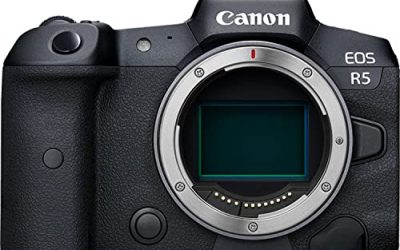
1. Canon EOS R5
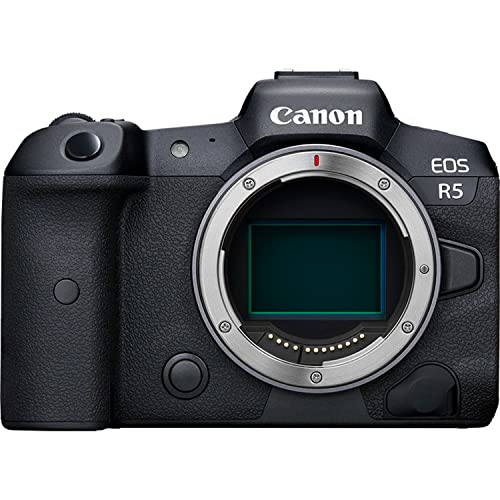
The Canon EOS R5 is the most complete camera in this guide. Its 45 megapixel full-frame sensor captures fine skin texture, the wet sheen on a frog, and the veins in a lily pad with room to crop.
Autofocus is where the R5 earns its place. Dual Pixel CMOS AF II tracks animals with confidence, and eye detection holds on small subjects even when reeds cross the frame.
The R5 also shoots quietly. Its electronic shutter is silent, and the 20 frames per second burst gives you a real chance of catching a hop mid-air. Image stabilization rated to 8 stops helps when you shoot handheld at low angles in dim light.
There are trade-offs. The R5 is a large, heavy body, and its battery life is modest, so a spare battery is wise on a long morning. Its high resolution also means large files, so bring a fast, roomy memory card.
Specs
- 45MP full-frame CMOS sensor, DIGIC X processor, Dual Pixel CMOS AF II with animal detection, 20 fps electronic shutter, 8-stop in-body image stabilization, 4K 120p video, weather-sealed magnesium alloy body, dual card slots (CFexpress Type B and SD UHS-II).
2. Sony A1 II

The Sony A1 II is the fastest camera in this guide, and speed is useful when a frog decides to move. Its 50.1 megapixel stacked sensor reads out so quickly that rolling shutter is barely a concern, and the 30 frames per second burst gives you a dense run of frames to pick from.
Subject recognition is the other headline. The dedicated AI processing unit recognizes animals, birds, and insects, and it holds focus on a small subject even as it moves through clutter.
The A1 II is also a strong low-light camera. Its sensor holds detail well at high ISO, which matters for dawn sessions. The body is weather sealed, and the dual card slots take CFexpress Type A and SD cards.
The honest trade-off is the size of the system. The A1 II is a professional body, and the lenses that make the most of it are large. It is also the most complex camera here.
Specs
- 50.1MP full-frame stacked Exmor RS sensor, BIONZ XR processor with AI processing unit, animal and bird eye autofocus, 30 fps continuous shooting with AF tracking, 8K video, 5-axis in-body image stabilization, weather-sealed body, dual CFexpress Type A and SD slots.
3. Nikon Z8
The Nikon Z8 brings flagship performance into a body that is easier to carry around a pond than its bigger sibling. Its 45.7 megapixel stacked sensor and EXPEED 7 processor deliver fast autofocus and excellent image quality in a package that fits comfortably in a small bag.
The Z8 has no mechanical shutter at all. Every shot is silent, which is a genuine advantage with shy frogs. The blackout-free viewfinder makes it easy to follow a frog through a hop without losing sight of it.
Autofocus with 3D tracking and animal detection holds on small subjects well, and the 20 frames per second full-resolution RAW burst gives you plenty of frames to choose from. The body is weather sealed.
Battery life is the weak point. The Z8 is known for modest endurance, and a cold, damp morning will drain it faster, so a spare battery is essential. The body is also heavier than the smaller cameras in this guide.
Specs
- 45.7MP full-frame stacked CMOS sensor, EXPEED 7 processor, 3D tracking with animal detection, 20 fps full-resolution RAW, fully electronic silent shutter, 8K 60p video, weather-sealed body, dual card slots (CFexpress Type B and SD UHS-II).
4. OM System OM-1 Mark II

The OM-1 Mark II is the pond-side specialist in this guide. Its Micro Four Thirds sensor gives every lens twice the effective reach of a full-frame camera, so a compact telephoto frames a frog tightly without a huge, heavy lens.
Weather sealing is the other reason this camera belongs here. The OM-1 Mark II carries an IP53 sealing, and it is built to keep working in rain, spray, and damp. Frogs live in wet places, and a camera that shrugs off moisture lets you stay out longer.
The autofocus is fast, with bird and animal detection, and the burst speed is remarkable: up to 50 frames per second with autofocus, and 120 frames per second with focus locked. A high-resolution mode helps with still frogs, and Live ND slows the shutter for moving water.
The trade-off is sensor size. A Micro Four Thirds sensor cannot match a full-frame sensor for high ISO noise, and the 20 megapixel resolution leaves less room to crop. The kit lens here, the 12-40mm f/2.8 PRO II, is a fine general zoom, but for tight frog portraits you will want a longer macro or telephoto lens. Note that this listing is the kit, not a body-only package.
Specs
- 20.4MP Micro Four Thirds stacked BSI Live MOS sensor, TruePic X processor, IP53 weather sealing, 50 fps burst with autofocus, 120 fps with focus locked, 8.5-stop in-body image stabilization, bird and animal detection autofocus, 12-40mm f/2.8 PRO II kit lens, dual UHS-II SD slots.
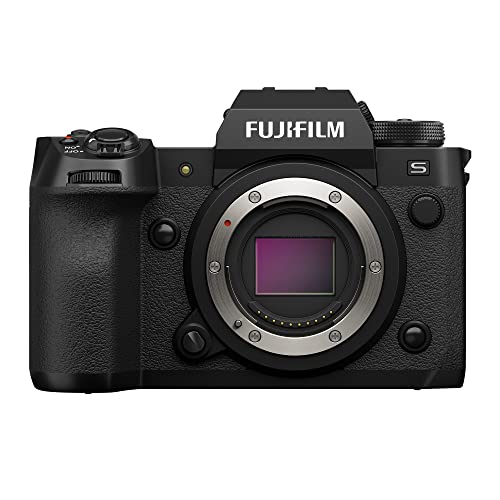
5. Fujifilm X-H2S
The Fujifilm X-H2S is the speed pick for photographers who like a smaller system. Its 26.1 megapixel stacked APS-C sensor reads out fast, the autofocus is quick and confident, and the body is compact enough to carry all morning without strain.
Subject detection covers animals and birds, and the X-H2S locks on to a frog eye well in good light. The burst reaches 40 frames per second with the electronic shutter, so a hop sequence is easy to capture. The fully articulating screen is a real help for low-angle pond work.
Fujifilm colors are a quiet strength here. Greens come out rich and natural, which suits pond vegetation. The body is weather sealed, and the dual card slots take CFexpress Type B and SD cards.
The trade-offs are modest. The APS-C sensor shows more noise than full-frame at high ISO, so dawn sessions need care with exposure. Battery life is fair rather than generous.
Specs
- 26.1MP APS-C X-Trans CMOS 5 HS stacked sensor, X-Processor 5, animal and bird detection autofocus, 40 fps electronic shutter burst, 6.2K video, 7-stop in-body image stabilization, weather-sealed body, fully articulating touchscreen, dual card slots (CFexpress Type B and SD UHS-II).
Comparing the Five Cameras
For pure image quality and cropping room, the Canon EOS R5 and Sony A1 II lead. Both have sensors above 45 megapixels, strong autofocus, and excellent low-light performance. The R5 is the more approachable of the two, while the A1 II is the faster machine.
The Nikon Z8 sits close behind, with the added benefit of fully silent shooting. If quiet matters most to you, the Z8 deserves a long look. Its only real weakness is battery endurance.
The OM-1 Mark II takes a different path. It trades sensor size for reach, weather sealing, and a light kit. For a photographer who walks long distances around ponds and shoots in rain, it is the most practical camera in the guide.
The Fujifilm X-H2S is the middle ground: smaller and lighter than the full-frame bodies, and a good fit for photographers who want speed without a flagship body.
Frog Photography Tips
Get low. The single biggest improvement in frog photos comes from shooting at the frog eye level rather than from above. Lie on the bank, rest the camera on a bean bag or a folded jacket, and use the flip screen.
Move slowly and quietly. Frogs notice vibration through the ground and sudden movement. Approach from a low angle, pause often, and let the frog settle before you lift the camera.
Watch the background. A clean background of soft green water or blurred reeds makes a frog stand out. Move a few inches to clear a bright stem or a distracting reflection from behind your subject.
Use a fast shutter for hops and a slower one for still portraits. A frog at rest can be shot at 1/250s or slower with stabilization. A frog mid-hop needs 1/1000s or faster to freeze the legs and the splash.
Respect the frog and its home. Never pick up a wild frog, never move one for a better photo, and avoid trampling the vegetation at the pond edge. Keep a safe distance from any frog you cannot identify, and leave the pond exactly as you found it.
Which One to Choose
Choose the Canon EOS R5 if you want the best all-round frog camera in this guide: high resolution, strong autofocus, and quiet shooting in one body. Choose the Sony A1 II if you want the fastest camera here. Choose the Nikon Z8 if silent shooting matters most and you are willing to carry a spare battery.
Choose the OM-1 Mark II if you walk far, shoot in rain, and want the lightest kit with the longest effective reach. Choose the Fujifilm X-H2S if you want a compact, fast camera with lovely colors and a flip screen for low-angle work.
Any of these five will serve you well at the pond. Match the camera to how you shoot, and you will come home with frog photos worth keeping.
Do I need a macro lens for frog photography?
A macro lens helps a great deal, because frogs are small and a macro lens focuses close with fine detail. A telephoto lens with a short minimum focus distance can work too, and it lets you keep more distance from a shy frog.
What shutter speed should I use for frogs?
For a frog at rest, 1/250s is usually enough with image stabilization. For a frog mid-hop, use 1/1000s or faster to freeze the legs and any water spray. In dim light, raise the ISO rather than dropping below 1/250s for a moving frog.
Is weather sealing important for frog photography?
Yes, it matters more than for most subjects. Ponds mean dew, spray, and sudden rain, and your camera will get damp. A weather-sealed body lets you keep shooting through a light shower, while an unsealed body needs to be packed away.
Can I photograph frogs with a small sensor camera?
Yes. A Micro Four Thirds or APS-C camera can take excellent frog photos, and the extra effective reach of a smaller sensor is a real advantage with small subjects. You give up some high ISO performance and cropping room compared with full-frame, but good light and careful technique close most of that gap.
More from Amazon
Programs that pair well with the guide above. Offers and eligibility are set by Amazon and may change.
Free shipping on eligible items, Prime Video and more. Eligible new members can start with a free trial.
Start a Prime free trialAudiobooks and podcasts to listen to on the go. Eligible new members can start with a free trial.
Try Audible freeAd-free music streaming. Eligible new subscribers can start with a free trial.
Try Music Unlimited freeA free business account with business pricing and bulk-buying tools for work, shop or home office.
Create a business accountAs an Amazon Associate we earn from qualifying purchases.