Our Top Picks

Two flagship cameras sit at the top of their makers’ mirrorless lines, and they take two different routes to the same goal. The Sony A1 II pairs a 50.1-megapixel sensor with extreme speed, while the Canon EOS R1 pairs a 24.2-megapixel sensor with deep autofocus intelligence and a body built for long days on the sideline. This guide compares resolution, autofocus, burst shooting, video, battery life, and handling head to head.
As an Amazon Associate, we earn from qualifying purchases.
At a Glance
The Sony A1 II is the resolution flagship. Its 50.1-megapixel full-frame stacked sensor gives you room to crop hard, print large, and keep fine detail in feathers, fabric, and distant faces. The Canon EOS R1 is the speed and reliability flagship. Its 24.2-megapixel sensor trades pixel count for cleaner files at high sensitivity, faster readout, and a huge buffer. It shoots up to 40 frames per second, records 6K RAW video, and uses Dual Pixel Intelligent AF with cross-type autofocus.
Resolution: Detail Against Clean Files
Resolution is the clearest split between these two bodies. The Sony A1 II captures 50.1 megapixels, more than twice the pixel count of the Canon EOS R1. That gap shows up whenever you crop. A wildlife shooter can frame loose for safety and still pull a tight portrait from the middle of the frame. A landscape shooter can print wide and keep texture in rock, bark, and water.
The Canon EOS R1 captures 24.2 megapixels, enough for full-page magazine work, large prints at normal viewing distance, and the file sizes that news desks and agencies expect. On a long assignment, that workflow advantage is real. In low light, the Canon claws back ground: larger pixels gather light with less noise, so its files tend to look cleaner at very high sensitivity. The Canon also offers in-camera upscaling to a 96-megapixel file, a useful trick for a tight crop, though it is not the same as native resolution.
Autofocus: AI Recognition Against Cross-Type Precision
Both cameras focus with a level of confidence that would have seemed impossible a few years ago, and both use dedicated processing to track subjects through clutter, motion, and changing light. Sony gives the A1 II a dedicated AI processing unit that reads human pose, so it can hold focus on a person even when the face turns away or another player crosses the frame. It recognizes people, animals, birds, vehicles, and insects, and it keeps the eye in focus at high speed.
Canon answers with Dual Pixel Intelligent AF and cross-type autofocus at the sensor, a first for Canon. Cross-type points read detail in both directions, which helps the camera hold focus on subjects with little contrast in one direction, such as a plain jersey or a smooth car panel. The R1 also uses deep learning to recognize people, animals, and vehicles, and it adds Action Priority modes that try to pick the key player in a sport, such as the shooter in basketball or the striker in football. In practice, both systems are superb. The Sony feels more versatile across subjects, while the Canon feels more deliberate in team sports. Eye control is a Canon-only feature: the R1 lets you look at a subject in the viewfinder to move the focus point.
Burst Shooting and Buffer: Speed Against Stamina
Burst speed is where both cameras shine, and where their philosophies diverge again. The Sony A1 II shoots up to 30 frames per second at full resolution with the electronic shutter, with no blackout in the viewfinder. You see the subject continuously while the camera captures 50-megapixel frames, so you can follow a bird in flight or a sprinter without losing the rhythm of the moment. Pre-capture can record frames before you fully press the shutter, which saves shots that would otherwise be lost to human reaction time.
The Canon EOS R1 shoots up to 40 frames per second with the electronic shutter, the faster headline number, though at 24.2 megapixels. It also offers a 12 frames per second mechanical shutter for photographers who want to avoid rolling shutter artefacts in fast pans. The R1 buffer is deep, and its smaller files clear quickly, so you can hold the shutter down through a long sequence and keep shooting when the action continues. The Sony can fill its buffer quickly at full resolution, especially with uncompressed RAW files. The Canon, with smaller files and CFexpress Type B cards, keeps going longer and recovers sooner, which matters most on long bursts at a match or a race.
Video: 8K Detail Against 6K RAW Workflow
Video is a genuine strength for both bodies, and the choice again depends on how you work. The Sony A1 II records 8K video at up to 30 frames per second, with oversampled 4K that looks superb, 4K at up to 120 frames per second for slow motion, and 10-bit 4:2:2 colour for grading. Its autofocus in video is calm and reliable, holding an eye through movement and changing light. The 8K option gives you room to crop, stabilize, and reframe in post, which is useful for documentary work where you cannot reshoot a moment.
The Canon EOS R1 records 6K RAW video internally, with 4K at up to 120 frames per second and strong Dual Pixel autofocus. Canon RAW gives colourists a flexible file to grade, and Canon colour straight from the camera is a favourite for skin tones. The R1 also offers a full-size HDMI port, timecode, and the kind of cooling and battery life that suits long interviews and event coverage. Both offer up to 8.5 stops of stabilization and microphone and headphone jacks. Choose the Sony for 8K capture and a compact hybrid kit. Choose the Canon for RAW workflow, skin tones, and long event days.
Battery Life and Handling: Compact Flexibility Against Integrated Grip
Handling is where personal taste matters most, because these bodies feel very different in the hand. The Sony A1 II uses the A9 III body, with a deep grip, a tilting and articulating screen, and a 9.44-million-dot viewfinder. It weighs around 743 grams with battery and card, which is light for a flagship, and it balances well with mid-size lenses. Add the optional vertical grip and it grows into a two-battery body for portrait work, though the grip is a separate purchase.
The Canon EOS R1 has an integrated vertical grip, weighs around 1,115 grams with battery and card, and feels like a classic 1-series body. The LP-E19 battery is large, and Canon quotes around 1,130 shots per charge on the rear screen, with higher numbers in real use when you shoot in bursts. The Sony NP-FZ100 battery is smaller, and Sony quotes around 520 shots per charge, though burst shooting and viewfinder use change that number in practice. Card slots are a practical difference too. The Sony takes two CFexpress Type A or SD cards; the Canon takes two CFexpress Type B cards, which are faster per gigabyte yet need a dedicated reader.
The Cameras
1. Sony A1 II Mirrorless Camera Body

The Sony A1 II is the camera for photographers who want everything in one body: resolution, speed, video, and autofocus. Its 50.1-megapixel sensor, AI subject recognition, and 30 frames per second burst make it a strong choice for wildlife, sports, landscape, and hybrid work.
Specs
- 50.1-megapixel full-frame stacked CMOS sensor; up to 30 fps electronic shutter; 8K 30p and 4K 120p video; AI processing unit; 8.5-stop in-body stabilization; dual CFexpress Type A and SD slots; NP-FZ100 battery.
2. Canon EOS R1 Mirrorless Camera Body

The Canon EOS R1 is the camera for photographers who want speed, stamina, and confidence above all else. Its 24.2-megapixel sensor, cross-type Dual Pixel autofocus, and 40 frames per second burst make it a strong choice for sports, news, and events.
Specs
- 24.2-megapixel full-frame stacked CMOS sensor; up to 40 fps electronic shutter; 6K RAW and 4K 120p video; Dual Pixel Intelligent AF with cross-type AF; 8.5-stop in-body stabilization; dual CFexpress Type B slots; LP-E19 battery.
Shared Accessories That Work With Both Bodies
The three accessories below fit either flagship, because they sit outside the lens mount, battery, and card format.
3. Peak Design Everyday Backpack 30L

A flagship kit is heavy, and a good bag protects it while keeping it within reach. The Peak Design Everyday Backpack 30L uses a MagLatch top, dual side access, and FlexFold dividers, so you can reach a body and lens from either side without putting the bag down. It fits a 15-inch or 16-inch laptop, a flagship body with a lens attached, and two or three more lenses in the main compartment.
Specs
- 30-litre capacity; MagLatch top closure; dual side access; FlexFold dividers; fits 15-inch or 16-inch laptop; weatherproof shell; padded shoulder straps.
4. SanDisk Extreme Portable SSD 4TB
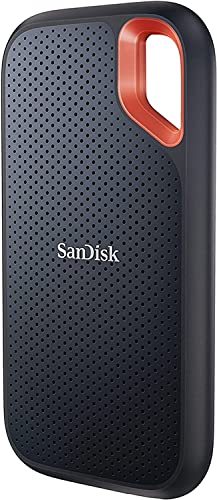
Both cameras produce large files, and a fast portable drive is the simplest way to back them up in the field. The SanDisk Extreme Portable SSD 4TB offers up to 1,050 MB per second transfer, USB-C connectivity, and IP65 water and dust resistance, so it survives rain, dust, and a knock in the bag. Four terabytes holds many assignments of RAW files and video, and the compact size fits a jacket pocket.
Specs
- 4TB capacity; up to 1,050 MB per second transfer; USB-C and USB 3.2 Gen 2; IP65 water and dust resistance; compact pocket-size design; NVMe solid-state storage.
5. DJI Mic 2 Wireless Microphone System
Good video needs good audio, and the DJI Mic 2 gives both cameras a compact wireless system for interviews, vlogs, and documentary work. The kit includes two transmitters, one receiver, and a charging case, with intelligent noise cancelling, 32-bit float internal recording, and a range of up to 250 metres. The receiver connects to either camera with the supplied 3.5 mm cable, and the 18-hour total battery life with the case covers a long shooting day.
Specs
- Two transmitters plus one receiver and charging case; 32-bit float internal recording; intelligent noise cancelling; up to 250-metre range; 18-hour total battery life with case; 3.5 mm camera cable included.
Which Flagship Should You Choose?
Choose the Sony A1 II when resolution and cropping freedom lead your work. It suits wildlife photographers who frame loose and crop tight, landscape photographers who print large, and hybrid shooters who want 8K video in a compact body. Its lens range is wider, its third-party support is stronger, and its files hold detail that survives heavy editing. Choose the Canon EOS R1 when speed, stamina, and handling lead your work. It suits sports photographers who shoot long bursts, news photographers who need clean high-sensitivity files and a fast turnaround, and event photographers who want a large battery and an integrated grip. Its autofocus is superb in team sports, its buffer is deep, and its 6K RAW video suits colourists. Pick the camera that matches the shots you miss most often, learn it deeply, and spend the rest of your budget on glass, storage, and audio.
Frequently Asked Questions
Which camera has higher resolution, the Sony A1 II or the Canon EOS R1?
The Sony A1 II has higher resolution, with a 50.1-megapixel sensor against the Canon EOS R1 at 24.2 megapixels. That gives the Sony more room to crop, while the Canon offers smaller files and a faster workflow.
Which camera shoots faster, the Sony A1 II or the Canon EOS R1?
The Canon EOS R1 shoots faster on paper, at up to 40 frames per second with the electronic shutter, against up to 30 frames per second for the Sony A1 II. The Canon also holds longer bursts, while the Sony pairs its burst with full 50.1-megapixel frames and no viewfinder blackout.
Is the Sony A1 II better for video than the Canon EOS R1?
The Sony A1 II records 8K video at up to 30 frames per second, which suits cropping and reframing in post, while the Canon EOS R1 records 6K RAW video internally, which suits colour grading and skin tones. Both record 4K at up to 120 frames per second for slow motion.
Should I choose the Sony A1 II or the Canon EOS R1 for sports photography?
Choose the Canon EOS R1 for team sports, long bursts, and all-day handling, Choose the Sony A1 II for sports where cropping matters, such as field sports where you cannot get close to the action,
More from Amazon
Programs that pair well with the guide above. Offers and eligibility are set by Amazon and may change.
Free shipping on eligible items, Prime Video and more. Eligible new members can start with a free trial.
Start a Prime free trialAudiobooks and podcasts to listen to on the go. Eligible new members can start with a free trial.
Try Audible freeAd-free music streaming. Eligible new subscribers can start with a free trial.
Try Music Unlimited freeA free business account with business pricing and bulk-buying tools for work, shop or home office.
Create a business accountAs an Amazon Associate we earn from qualifying purchases.