Our Top Picks


A garden looks very different from above. Paths that feel random at ground level turn into clean lines, flower beds become blocks of colour, and a single tree can anchor a whole composition. A camera drone lets you see that hidden geometry and capture it in a way no ladder or rooftop ever could. A garden is a tight, busy space, though, with trees, fences, and neighbours close by.
That is why the best drones for garden photography are not simply the most powerful drones on the market. The right pick is light, steady, smart about branches, and strong in mixed light. The five drones below cover every level, from a first aircraft that weighs under 249 grams to a flagship with three cameras. Every ASIN here was checked against a live Amazon listing.
As an Amazon Associate, we earn from qualifying purchases.
Why a Drone Changes Garden Photography
Ground-level garden photos show the garden the way a visitor sees it. A drone adds the view a gardener dreams about. From 10 or 20 metres up, you can photograph the full layout of a formal garden, the curve of a gravel path, the pattern of a vegetable plot, or the way a lawn meets a pond.
A drone is also useful for tracking change. Shoot the same beds in spring, summer, and autumn and you build a visual diary of growth, colour, and decay.
The garden setting brings its own demands, though. Branches are thin, hard for sensors to see, and often hang over the exact spot you want to photograph. Light shifts as clouds pass and as the sun moves behind a house or a tall hedge.
What to Look for in a Garden Drone
Weight comes first. A drone under 249 grams faces fewer registration rules in many places, and a light aircraft is easier to launch from a lawn or a patio.
Obstacle sensing comes second. A garden is full of thin, leafless branches and wires that a camera alone cannot judge well. Omnidirectional sensing, found on the Mini 4 Pro, the Air 3S, and the Mavic 3 Pro, watches in every direction and helps the aircraft stop before it meets a branch.
Camera quality matters third. A 48 megapixel sensor gives you room to crop a flower bed out of a wider frame without losing detail. A larger sensor, like the 1-inch sensor in the Air 3S and the 4/3 sensor in the Mavic 3 Pro, handles the contrast between bright lawn and deep shade far better.
Flight time matters fourth. Garden sessions are short, but you still want enough air time to frame several shots, wait for a cloud to pass, and land calmly. Anything above 30 minutes is comfortable. Flying in a garden or a residential area needs permission where local rules require it, and you should always keep distance from people and houses.
1. DJI Mini 4 Pro

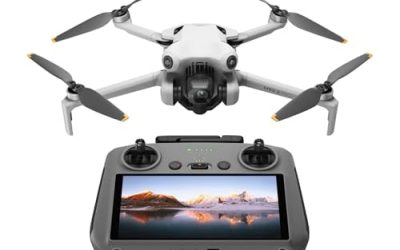
The Mini 4 Pro is the easiest drone in this guide to fly in a garden, and the one most readers should buy first. It weighs under 249 grams, so it faces fewer registration rules in many places, and it folds small enough to slip into a jacket pocket. Despite that tiny size, it carries a 48 megapixel camera that records 4K/60 HDR video, and it is the only sub-249 gram drone in this guide with omnidirectional obstacle sensing.
The camera uses a 1/1.3-inch sensor, which is small next to the sensors in the Air 3S and Mavic 3 Pro. In the dim light under a big tree, or at dusk when the garden glows, the smaller sensor shows more noise than its larger rivals. The fixed wide lens also cannot zoom in on a single flower bed, so you fly closer instead, which is fine in an open garden and less fine in a tight one. Flight time reaches 34 minutes. For most gardens, the Mini 4 Pro is the best all-round pick.
Specs
- 48MP camera, 1/1.3-inch sensor, 4K/60 HDR video, under 249 g, 34-minute max flight time, omnidirectional obstacle sensing, RC 2 controller with screen
2. DJI Air 3S
The Air 3S is the best all-round garden drone for readers who want stronger image quality and more reach without jumping to flagship size and weight. It carries two cameras: a 1-inch wide camera with 48 megapixels and a 3x medium telephoto camera, also 48 megapixels. From a safe distance, you can frame a single rose bed, a lone tree, or a distant corner of the garden without flying over it.
The 1-inch sensor gathers far more light than the Mini 4 Pro, so the Air 3S handles the contrast between sunlit lawn and shaded borders with ease. Colours stay rich in flower beds, and shadows under trees hold detail instead of turning black. Flight time reaches 45 minutes, the longest in this guide, so you can wait for the light to change and still land with charge to spare. Omnidirectional sensing with a forward-facing LiDAR sensor helps the aircraft spot thin branches, even at night, and the 724 gram weight keeps it steady in gusts. The trade-off is size: at 724 grams, the Air 3S needs registration in more places than a sub-249 gram drone.
Specs
- Dual cameras, 1-inch 48MP wide camera, 3x medium telephoto 48MP camera, 4K/60 HDR video, 45-minute max flight time, 724 g, omnidirectional sensing with LiDAR, RC-N3 controller
3. DJI Mavic 3 Pro

The Mavic 3 Pro is the flagship of this guide, and the drone to choose when image quality is the whole point. It carries three cameras: a Hasselblad 4/3 sensor wide camera with 20 megapixels, a 70mm medium telephoto, and a 166mm telephoto. You can photograph a whole garden from high above with the wide lens, then switch to the 166mm lens to isolate a single flowering tree without moving the aircraft at all.
The 4/3 Hasselblad sensor is the largest in this guide, and it shows. In mixed garden light, where bright petals sit beside deep shade, the Mavic 3 Pro holds detail at both ends. Flight time reaches 43 minutes, and omnidirectional sensing with APAS 5.0 helps the aircraft steer around branches rather than simply stopping in front of them.
The honest trade-offs are size, weight, and bulk. At 958 grams, the Mavic 3 Pro is the heaviest and bulkiest drone in this guide, and it needs a proper bag rather than a jacket pocket. It also needs registration in more places than a sub-249 gram drone.
Specs
- Triple cameras, Hasselblad 4/3 CMOS 20MP wide camera, 70mm and 166mm telephoto cameras, 5.1K video, 43-minute max flight time, 958 g, omnidirectional sensing, DJI RC controller
4. DJI Mini 3
The Mini 3 is the simplest and most affordable drone in this guide, and the right pick for a reader who wants clean garden photos on a modest budget. It weighs 248 grams, so it sits under the 249 gram line and faces fewer registration rules in many places. Its 48 megapixel camera records 4K HDR video, and flight time reaches 38 minutes, longer than the Mini 4 Pro.
True vertical shooting is a quiet strength here. Tall, narrow subjects like a cypress or a climbing rose suit a vertical frame.
The honest limit is obstacle sensing: the Mini 3 has none. In an open lawn or a large garden with clear sightlines, that is no problem at all. In a tight garden full of branches, wires, and pergolas, you must fly slowly, keep the aircraft in sight, and leave a wide margin around every tree.
Specs
- 48MP camera, 4K HDR video, 248 g, 38-minute max flight time, Level 5 wind resistance, 3-axis gimbal, true vertical shooting, RC-N1 controller
5. DJI Avata 2 Fly More Combo
The Avata 2 is the odd one out in this guide, and it earns its place as a second aircraft for garden video rather than a first drone for garden stills. It is a first-person-view drone: you wear the Goggles 3, steer with the RC Motion 3 controller, and fly through the garden at low height, weaving between trees and skimming over flower beds.
The camera records 4K/60 video with a 155-degree field of view and a 12 megapixel stills mode, but stills are not its strength. The wide, fixed view and the motion-first design mean its photos are softer and less detailed than those from the Mini 4 Pro or the Air 3S. Flight time reaches 23 minutes per battery, and this Fly More Combo includes three batteries, so a full session is possible with quick swaps.
The honest limits are clear. The Avata 2 is video-first, so it should never be your only garden drone if stills matter to you. It needs a spotter watching the aircraft while you wear the goggles, and it must never be flown over a crowd or over neighbours.
Specs
- 4K/60 video, 12MP stills, 155-degree field of view, 23-minute max flight time per battery, 3 batteries in Fly More Combo, Goggles 3, RC Motion 3, built-in propeller guard, 377 g
Garden Drone Comparison
The five drones split cleanly by garden size and ambition. The Mini 4 Pro and the Mini 3 suit small to medium gardens, thanks to their sub-249 gram weight and simple handling, with the Mini 4 Pro adding omnidirectional sensing and the Mini 3 adding longer flight time and a lower cost of entry. The Air 3S sits in the middle: a larger sensor, a telephoto camera, and the longest flight time in the guide, at the cost of more weight and registration in more places. The Mavic 3 Pro suits large gardens and professional work, with three cameras and the largest sensor here, at the cost of bulk.
For flower-bed detail, the telephoto cameras of the Air 3S and Mavic 3 Pro let you work from a respectful distance.
Garden Flying Tips
Plan before you launch. Walk the garden first, note the tallest trees, the wires, the washing line, and the spots where neighbours can see in. Choose a takeoff point on a flat, clear patch of lawn, away from beds and paths, and keep the aircraft in sight at all times.
Fly in the golden hours when you can. Early morning and late afternoon give long shadows that reveal the shape of beds and paths, while midday sun flattens a garden into a bright, even sheet.
Mind the wind. Gardens create their own gusts as air moves over fences and hedges, and a small drone can drift toward a tree faster than you expect. Check the wind before takeoff and land the moment the aircraft begins to struggle. Never fly in rain, and never fly through a sprinkler: none of the drones in this guide is waterproof, and wet electronics fail fast.
Respect the people around you. Flying in a garden or a residential area needs permission where local rules require it, and you should always keep distance from people and houses. Finally, shoot with intent: one overhead shot of the whole layout, one medium shot of each major bed, and one low detail shot of the best planting.
Which One to Choose
Choose the DJI Mini 4 Pro if you want the best all-round garden drone for most readers: light, smart, and easy to fly. Choose the DJI Air 3S if you want the finest balance of image quality, telephoto reach, and flight time. Choose the DJI Mavic 3 Pro if you photograph large gardens or sell your images. Choose the DJI Mini 3 if you want a simple, affordable first drone for an open garden. Choose the DJI Avata 2 Fly More Combo only as a second aircraft for flowing garden video, alongside one of the camera drones above.
Can I fly a drone in my own garden?
In many places you can fly over your own garden for fun, but local rules still apply, and some areas need permission or registration even for a small drone. Always check the rules for your country and your neighbourhood before takeoff,
Do I need a drone under 249 grams for garden photography?
A drone under 249 grams, like the Mini 4 Pro or the Mini 3, faces fewer registration rules in many places and is easier to launch from a small lawn. It is not a legal free pass everywhere, though, so always check the rules where you live before you buy.
Which drone is best for photographing flower beds from above?
The Air 3S is the best pick for flower beds, because its 3x telephoto camera lets you frame a single bed from a safe distance without flying over it. The Mavic 3 Pro goes further with its 70mm and 166mm lenses.
Can I fly a drone in the rain over my garden?
No. None of the drones in this guide is waterproof, and rain can damage the electronics and blur the lens. Land at the first sign of rain, keep the aircraft dry, and wait for clear skies before flying again.
More from Amazon
Programs that pair well with the guide above. Offers and eligibility are set by Amazon and may change.
Free shipping on eligible items, Prime Video and more. Eligible new members can start with a free trial.
Start a Prime free trialAudiobooks and podcasts to listen to on the go. Eligible new members can start with a free trial.
Try Audible freeAd-free music streaming. Eligible new subscribers can start with a free trial.
Try Music Unlimited freeA free business account with business pricing and bulk-buying tools for work, shop or home office.
Create a business accountAs an Amazon Associate we earn from qualifying purchases.