Our Top Picks


Triathlon gives a drone pilot three races in one day. The swim spreads athletes across open water, the bike leg sends them down long roads at speed, and the run brings them back through crowds and finish-line tape. A good drone follows the action through all three legs, holding a lock on a moving athlete while the wind shifts and the light changes. The wrong drone loses its subject at the first turn, drifts in a gust, or lands with dead batteries before the run even begins.
The best drones for triathlon photography balance subject tracking, obstacle avoidance, flight time, wind resistance, and image quality. A drone that only shoots beautiful stills is not enough here. It has to keep up with a cyclist on an open road, hold a steady hover over a swim course, and stay in the air long enough to cover a whole leg of the race. This guide compares five drones that can do that job, from a pocketable sub-249 g flyer to a triple-camera flagship and an immersive FPV machine.
As an Amazon Associate, we earn from qualifying purchases.
Why Triathlon Is a Demanding Subject for a Drone
Most sports happen in one place. Triathlon happens across a whole landscape. The swim course may sit a kilometre offshore. The bike course can run 40 to 180 kilometres along open roads. The run course weaves through towns, parks, and finish areas full of spectators, banners, and overhead wires.
Tracking is the skill that matters most. ActiveTrack-style tracking follows a selected athlete and keeps the camera pointed at them, even as they change direction. Obstacle avoidance matters just as much: a drone with omnidirectional sensing sees obstacles in every direction, while a drone with only forward sensing is fine over open water but risky near a finish area.
What to Look for in a Triathlon Drone
Subject tracking comes first. Look for a drone that can follow a moving athlete from the side, from behind, and from above, and keep the lock when the athlete passes behind a tree or a sign. A 360-degree tracking mode lets the drone circle a rider while keeping the camera on them.
Obstacle sensing comes second. Omnidirectional sensing, with sensors facing forward, backward, sideways, and down, gives the drone a full picture of its surroundings. Forward-only sensing works over water and open fields but not near crowds or structures.
Flight time and battery strategy come third. Advertised flight times are measured in calm air at a steady speed, so real-world times run shorter. Plan on 70 to 80 percent of the advertised number. A drone with a 45-minute advertised time gives roughly 30 to 35 minutes of useful flying.
Wind resistance comes fourth. Triathlon courses are exposed, and a drone rated for Level 5 wind resistance handles most race-day conditions. Image quality comes fifth: a 48MP still mode gives room to crop, and a 1-inch sensor gathers more light at dawn.
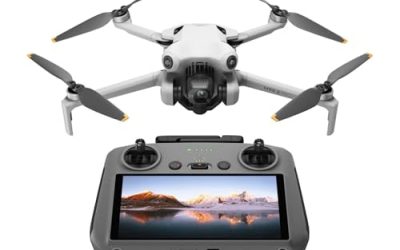
1. DJI Mini 4 Pro (DJI RC 2)

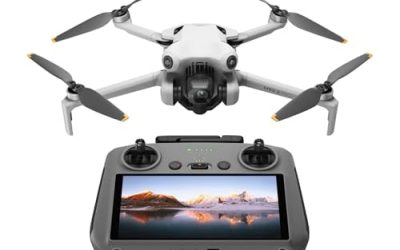
The Mini 4 Pro is the lightest drone in this guide, and the easiest to carry to a race. At 249 g it slips into a small bag beside a water bottle and a spare battery, and it is small enough to launch from a patch of grass beside the swim course.
Tracking is where this drone earns its place. ActiveTrack 360 keeps a lock on a moving athlete and can circle them while keeping the camera pointed at their position. Omnidirectional obstacle sensing watches in every direction, so the drone can hold its line beside a tree-lined road. The camera shoots 48MP stills and 4K/60fps HDR video, and the DJI RC 2 controller has a built-in screen.
Specs
- Weight: 249 g
- Camera: 48MP stills, 4K/60fps HDR video
- Max flight time: 34 minutes
- Transmission range: 20 km
- Obstacle sensing: Omnidirectional
- Tracking: ActiveTrack 360
- Controller: DJI RC 2 with built-in screen
- Model number: CP.MA.00000732.02
2. DJI Air 3S (RC-N3)
The Air 3S is the middleweight of this group, and the best all-round choice for a photographer who wants one drone for the whole race. Its dual camera system pairs a 1-inch 50MP wide camera with a 48MP medium telephoto camera, and that second lens changes how you shoot a triathlon. The 3x medium telephoto pulls a single cyclist out of a group without flying closer
Flight time is the other reason this drone stands out. At 45 minutes it stays in the air longer than anything else in this guide, and a single battery can cover a full bike loop on many sprint and Olympic-distance courses. Forward-facing LiDAR helps the drone sense obstacles in low light, useful for races that begin before dawn. The 724 g airframe handles wind better than the sub-249 g drones.
Specs
- Weight: 724 g
- Cameras: 1-inch CMOS 50MP wide, 48MP medium telephoto 3x
- Max flight time: 45 minutes
- Video: 4K/60fps HDR
- Dynamic range: 14 stops
- Obstacle sensing: Omnidirectional, forward-facing LiDAR
- Controller: RC-N3
3. DJI Mavic 3 Pro (DJI RC)

The Mavic 3 Pro is the flagship of this group, and the drone to pick when image quality is the whole point of the day. Its triple camera system carries a Hasselblad 4/3-inch CMOS 20MP wide camera, a 70mm medium telephoto, and a 166mm telephoto. That range lets a photographer shoot the swim from high above, pick out a single athlete on the bike course, and compress the finish-line scene into a tight frame, all without moving the drone closer to the course.
The 5.1K/50fps video mode records more detail than any other drone here, and the 48MP stills mode gives generous room to crop. The 43-minute flight time is close to the Air 3S, and the 958 g airframe is the most stable in wind of any drone in this guide. It is the heaviest drone here, so it suits a photographer who treats the triathlon as a paid assignment.
Specs
- Weight: 958 g
- Cameras: Hasselblad 4/3-inch CMOS 20MP wide, 70mm medium telephoto, 166mm telephoto
- Video: 5.1K/50fps
- Stills: 48MP
- Max flight time: 43 minutes
- Obstacle sensing: Omnidirectional
- Controller: DJI RC
- Model number: CP.MA.00000654.02
4. DJI Mini 3
The Mini 3 is the simplest drone in this guide, and the best pick for a photographer who wants a light, quiet aircraft for open courses. At 248 g it weighs about the same as a smartphone, and it folds small enough to ride in a jacket pocket. Its 48MP stills mode and 4K HDR video produce images that hold up well beside the more expensive drones here, and its 38-minute flight time is longer than the Mini 4 Pro.
The trade-off is honest and worth stating plainly. The Mini 3 has no omnidirectional sensing and no ActiveTrack 360, so it suits open terrain only. Over the swim course and along an open bike leg it flies beautifully. Near trees, finish-line gantries, and crowds it needs a careful pilot, because the drone cannot see obstacles behind or beside it. For a rural triathlon on open roads and open water, it covers the whole day at the lowest weight in this guide.
Specs
- Weight: 248 g
- Camera: 48MP stills, 4K HDR video
- Max flight time: 38 minutes
- Wind resistance: Level 5
- Obstacle sensing: Forward and downward only
- Tracking: Standard subject tracking, no ActiveTrack 360
- Model number: MT3PD
5. DJI Avata 2 Fly More Combo (3 Batteries)
The Avata 2 is the outlier of this group, and the most exciting drone to fly on a race day. It is a first-person-view drone, flown with goggles and a motion controller, and it produces immersive footage that no camera drone in this guide can match. Flying low beside a cyclist, sweeping through a corner, or diving down a hill gives a sense of speed that a high, steady aerial shot never will. The built-in propeller guard means a brush with a branch or a banner is a bump rather than a crash.
The Fly More Combo includes three batteries, the Goggles 3, the RC Motion 3 controller, and a two-way charging hub, so a race day is covered without extra purchases. The 23-minute flight time per battery is the shortest here, but three batteries add up to more than an hour of flying across the day. It is the immersive FPV pick, not the stills pick: its 12MP stills cannot match the 48MP and 50MP stills of the camera drones here, so use it for the bike leg and the run and a camera drone for the stills.
Specs
- Weight: 377 g
- Camera: 12MP stills, 4K/60fps video
- Field of view: 155 degrees
- Max flight time: 23 minutes per battery
- Batteries included: 3, with two-way charging hub
- Included: Goggles 3, RC Motion 3, sling bag
- Propeller guard: Built in
- Stabilization: RockSteady and HorizonSteady
How to Shoot Each Leg of the Race
The swim is the hardest leg to shoot well. Athletes spread out, the water is dark, and the light is often low. Fly high and wide, and use the telephoto lens if your drone has one. A high shot shows the shape of the whole pack, and a telephoto frame picks out the leaders.
The bike leg is where a drone earns its keep. Follow a rider from the side or from behind, and let the tracking do the framing. A side-on tracking shot shows the athlete and the road ahead. Watch your battery, and land before the low-battery warning forces a return home over the course.
The run is the most crowded leg, and the one where venue rules matter most. Stay clear of the finish area unless you have permission to fly there, and keep the drone high enough that it is out of the way of banners and gantries.
Batteries, Wind, and Race-Day Planning
Carry three batteries at minimum, and a charging hub that can top up a used battery while you fly the next one. A race day runs six to eight hours, and a drone that lands with a dead battery at the swim exit is useless for the bike leg.
Wind is the other race-day variable. Check the forecast the night before and again in the morning, and plan your launch points around it. Fly into the wind on the way out and with the wind on the way home, so a low battery never has to fight a headwind to get back. Know the venue rules before race day: many venues restrict or ban drones, so check with the organisers and fly only where allowed.
Which One to Choose
Pick the Air 3S if you want one drone for the whole race. Its 45-minute flight time, dual camera system, and wind handling cover the swim, the bike, and the run without compromise. Pick the Mini 4 Pro if you walk between vantage points and want the lightest kit with full tracking and omnidirectional sensing. Pick the Mavic 3 Pro if image quality is the priority and you are shooting the race as an assignment. Pick the Mini 3 for an open, rural course. Pick the Avata 2 if you want immersive FPV footage of the bike and run legs and already have a camera drone for the stills.
Frequently Asked Questions
Can I fly a drone at any triathlon?
No. Many race venues restrict or ban drones, and some require written permission from the race director. Check with the organisers and check local regulations before race day, and fly only where allowed.
Which drone is best for tracking cyclists on the bike leg?
The Mini 4 Pro and the Air 3S are the strongest trackers here. The Mini 4 Pro has ActiveTrack 360, which can circle a rider while keeping the camera on them. The Air 3S pairs strong tracking with a 45-minute flight time and a telephoto lens.
How many batteries do I need for a full race day?
Three at minimum. A race day runs six to eight hours, and each battery gives 20 to 45 minutes of flying depending on the drone and the wind.
Is the Avata 2 a good stills camera for triathlon?
It is the immersive FPV pick, not the stills pick. Its 12MP stills are fine for social use, but the camera drones in this guide shoot 48MP and 50MP stills with larger sensors and more room to crop.
More from Amazon
Programs that pair well with the guide above. Offers and eligibility are set by Amazon and may change.
Free shipping on eligible items, Prime Video and more. Eligible new members can start with a free trial.
Start a Prime free trialAudiobooks and podcasts to listen to on the go. Eligible new members can start with a free trial.
Try Audible freeAd-free music streaming. Eligible new subscribers can start with a free trial.
Try Music Unlimited freeA free business account with business pricing and bulk-buying tools for work, shop or home office.
Create a business accountAs an Amazon Associate we earn from qualifying purchases.