Key takeaways
- Sensor: 384×288 thermal core
- Refresh: 50Hz-class frame rate
- Connectivity: Wi-Fi for live view and media transfer
- Format: handheld monocular, pocket-class chassis
- Use case: field-edge scanning, feeder watching, hog and predator hunting
Top 3 Picks
The best overall thermal monocular for most hunters in 2026 is the RIX Pocket K3, which pairs a 384×288 sensor with a pocket-sized body, Wi-Fi streaming, and the resolution headroom to identify, not just detect, game at realistic distances. If your budget is capped and you mostly hunt open fields inside 150 yards, the CVLIFE 256×192 with its 15mm lens and 1024×768 display delivers the essentials for the least money. For hunters who want the most refined optics and the longest proven track record in the category, the Pulsar Axion XQ19 remains the premium benchmark, and the AGM Taipan V2 19-320 is the strongest alternative at that tier.
Best overall: RIX Pocket K3
A 384×288 core in a body small enough to vanish in a jacket pocket, plus Wi-Fi for recording and sharing. It is the pick for the hunter who wants one device that works for scanning field edges, spotting hogs at a feeder, and recording the shot for later.
Best budget: CVLIFE 256×192 with 15mm lens
The cheapest way into a genuinely usable 50Hz thermal image. The 1024×768 display is a real advantage at this price, because it lets the sensor’s detail reach your eye instead of being blurred by a low-res eyepiece screen.
Best premium: Pulsar Axion XQ19
Compact, magnesium-bodied, and built around a 384×288 sensor with Pulsar’s long-established firmware and warranty support. It is the choice when you want a thermal that will still be working, and still be serviceable, after a decade of truck rides and cold mornings.
Quick Comparison
| Product | Best for | Sensor / Key specs | Price tier |
|---|---|---|---|
| RIX Pocket K3 | All-round hunting, recording, mid-to-long range | 384×288, 50Hz-class refresh, Wi-Fi, handheld | Premium |
| Pulsar Axion XQ19 | Buy-it-once durability, compact carry | 384×288 sensor, compact magnesium-class chassis | Premium |
| AGM Taipan V2 19-320 | Premium optical quality, long-range glassing | 320×256-class high-sensitivity core, 19mm lens | Premium |
| TOPDON TS004 Pro | Longer reach on a mid-premium budget | 19mm lens, 50Hz refresh | Premium |
| TOPDON TS004 | Entry to mid-range general scanning | 13mm lens, 50Hz refresh | Mid-range |
| RIX Pocket K2 | Pocket carry, Wi-Fi sharing, short-to-mid range | 256×192, 50Hz, Wi-Fi, handheld | Mid-range |
| ATN BlazeSeeker 6 | Variable magnification, close-to-mid range | 256×192, 12um, 1.7-13.6x, 20mK-class NETD | Mid-range |
| ATN BlazeSeeker-210 | Wider magnification range, mid-range | 256×192, 12um, 1.5-12x, sub-35 NETD, 50Hz | Mid-range |
| GOYOJO G215 | Budget mid-range reach with 15mm lens | 256×192, 50Hz, 15mm focal lens | Budget |
| GOYOJO G210 | Tightest budget, wide field of view | 256×192, 10mm focal lens | Budget |
| CVLIFE 256×192 | Cheapest usable thermal image, close range | 256×192, 15mm lens, 1024×768 display, 50Hz | Budget |
| Teslong TTS260 | Budget buyers who want simulated extra detail | 256×192 native, 512×384 super-resolution mode | Budget |
How We Chose
This roundup is built from published specifications, manufacturer documentation, and the established engineering realities of thermal imaging rather than from field testing. Three filters did most of the work. First, every unit here had to be a genuine thermal sensor rather than a digital night-vision device with an IR illuminator, because the two solve different problems: thermal reads body heat through darkness, fog, and light brush, while digital IR needs the target to reflect your own light source. Second, we weighted sensor resolution and lens focal length together, since a 256×192 core behind a 19mm lens can out-detect a 384×288 core behind a 10mm lens at a given distance, and buyers routinely overpay for pixels while underpaying for glass. Third, we looked at refresh rate, because 50Hz-class output is the difference between a smooth pan and a smeared one when you are tracking a moving animal. We also grouped picks by realistic hunting situation — open-field scanning, timber and feeder setups, and long-range glassing — and by budget tier, so that each recommendation has a clear reason to exist next to the others. Where a specification is not publicly stated at a consistent value, we describe it by class rather than inventing a number. No product here was supplied, borrowed, or tested by us, and no brand saw this article before publication.
1. RIX Pocket K3 Thermal Monocular – Best for All-Round Hunting
As an Amazon Associate we earn from qualifying purchases at no extra cost to you.

The RIX Pocket K3 is the monocular to buy if you want one device that does not force a compromise. Its 384×288 sensor puts it a full resolution tier above the 256×192 units that dominate the mid-range, which matters less when you are spotting a heat blob at 300 yards than when you are trying to decide whether that blob has a head, shoulders, and a set of antlers worth stalking.
RIX builds the Pocket series around a genuinely pocketable form factor. That sounds like marketing, but it changes how you hunt: a thermal that lives in a chest pocket gets used ten times more often than one that lives in a pack, because there is no decision to make about whether it is worth getting out. The K3 keeps the Wi-Fi streaming and recording that made the K2 popular, so you can push live video to a phone for a hunting partner standing behind you, or save a clip of the animal you passed on.
Key specs
- Sensor: 384×288 thermal core
- Refresh: 50Hz-class frame rate
- Connectivity: Wi-Fi for live view and media transfer
- Format: handheld monocular, pocket-class chassis
- Use case: field-edge scanning, feeder watching, hog and predator hunting
Strengths
The resolution headroom is the headline. Going from 256×192 to 384×288 is a 50% increase in horizontal pixels and about 2.25x the total pixel count, and in practice that translates into being able to identify an animal roughly a third farther out under the same conditions. Thermal is often described as a detection tool, not an identification tool, and that is fair at 256×192 — you see that something warm is there. At 384×288, with a decent lens and a steady rest, you start to see what it is, which is the difference between a stalk and a wasted hour.
Wi-Fi is more useful than it first appears. Two hunters sharing one thermal can both look at the screen through a phone, which means one device serves a pair. It also means you can review footage on a bigger screen when you get back to the truck and actually learn from your mistakes rather than squinting at a 0.4-inch eyepiece display.
Pros
- 384×288 core gives real identification range, not just detection
- Pocket-sized body means it actually gets carried
- Wi-Fi live view lets a partner share the image
- Records and stores media for later review
- Price sits at the entry point to the premium tier rather than the top of it
Cons
- Premium-tier pricing for a device with no optical zoom
- Small objective lens limits extreme-range performance versus full-size scopes
- Wi-Fi drains battery noticeably when used continuously
- Pocket format means a smaller eyepiece display than a full-size unit
How it compares
Against the RIX Pocket K2, the K3 is the same concept with a sensor tier upgrade: the K2’s 256×192 core is fine for scanning inside 200 yards and for spotting hogs on a feeder at 80, but the K3 is the one you keep when your hunting changes. Against the Pulsar Axion XQ19, the K3 offers more connectivity and a lower entry price, while the Axion counters with a longer-established service network and a chassis built for a decade of abuse. If you value ecosystem and durability over pixels per dollar, the Pulsar wins; if you want the most capable image for the money and you will actually use the Wi-Fi, the K3 does.
2. Pulsar Axion XQ19 Compact Thermal Monocular – Best for Buy-It-Once Durability

The Pulsar Axion XQ19 is the thermal you buy when you are tired of replacing things. Pulsar has been in the civilian thermal market longer than almost anyone else, and the Axion line is the product that made compact thermal monoculars mainstream. The XQ19 pairs a 384×288 sensor with a 19mm lens in a body small enough to palm, and it is the pick for the hunter who wants one purchase to settle the question for the next several seasons.
The 19mm lens is the important number here. Focal length sets how much of the scene lands on the sensor, so a 19mm lens on a 384×288 core gives you meaningfully more reach than the same sensor behind a 13mm or 15mm lens. That extra reach is what turns a thermal from a “there is something in that field” tool into a “that is a boar, and it is 180 yards out” tool.
Key specs
- Sensor: 384×288 thermal core
- Lens: 19mm focal length
- Format: compact handheld monocular
- Body: ruggedized chassis designed for field carry
- Use case: general hunting, long ownership, resale-friendly
Strengths
Durability is the whole argument. A thermal monocular lives a hard life: temperature swings from a warm truck cab to a 15°F morning, rain, dust, recoil from being set down on a tailgate, and the general chaos of hunting season. Pulsar’s chassis design and firmware stability are the reason the brand dominates the used market, and the used market is the real test of whether something was built properly. A device that holds resale value is a device that people trust.
The optical performance is genuinely strong for the size. A 384×288 core behind 19mm of glass is a well-matched combination — the lens resolves enough detail that the sensor is not the bottleneck, which is the opposite of what happens with budget units that pair a decent sensor with a cheap short lens.
Pros
- 384×288 sensor with a 19mm lens is a well-balanced optical pairing
- Compact enough to carry in a coat pocket without a pouch
- Strong brand track record for service and long-term support
- Holds value on the secondary market
- Simple controls that do not require a manual
Cons
- Premium price for the sensor resolution you get
- No Wi-Fi streaming or sharing on this configuration
- Fewer magnification steps than variable-zoom competitors
- Battery system may require proprietary cells depending on configuration
How it compares
The nearest alternative in this list is the AGM Taipan V2 19-320. Both are premium, both are compact, and both come from brands with serious thermal pedigrees. The Pulsar leans toward simplicity and ecosystem; the AGM leans toward high-sensitivity sensor performance and a slightly different optical formula. If you want the device that will be easiest to sell in five years, the Axion is the safer bet. If you are chasing the best possible image at the price, compare the two side by side before deciding. Against the RIX Pocket K3, the Axion trades Wi-Fi and some price advantage for build reputation and lens reach — a fair trade for the hunter who keeps gear rather than churning it.
3. AGM Global Vision Taipan V2 19-320 Thermal Monocular – Best for Premium Long-Range Glassing

AGM’s Taipan V2 19-320 is aimed at the hunter who spends more time glassing from a fixed position than walking with a device in hand. The 19mm lens gives it reach, and AGM’s high-sensitivity sensor tuning gives it the contrast needed to pick out a warm body against a warm background — which is the hard case in thermal, not the easy one.
That contrast point deserves emphasis. Detecting a deer in an open snow-covered field is trivial for almost any thermal. Detecting a hog in a plowed field at dusk, or a coyote in sagebrush, is where sensor sensitivity and image processing separate the good units from the great ones. Taipan V2 is built for that second category of problem.
Key specs
- Sensor: 320-class high-sensitivity thermal core
- Lens: 19mm focal length
- Format: compact handheld monocular
- Design: premium chassis with AGM’s field optics heritage
- Use case: static glassing, long-range detection, predator hunting
Strengths
AGM built its reputation on weapon sights and clip-on thermal, and that background shows in how the Taipan handles high-contrast and low-contrast scenes. The high-sensitivity sensor specification means the device can resolve smaller temperature differences, and smaller temperature differences are exactly what you need when ambient temperature is high or when you are trying to separate an animal from terrain that has been baking all day.
The 19mm lens plus a 320-class core is a classic long-range detection formula. It will not give you the sheer pixel count of a 384×288 unit, but a well-tuned 320-class sensor with good glass frequently out-performs a poorly tuned higher-resolution core in real conditions, because the image pipeline matters as much as the array.
Pros
- High-sensitivity sensor performs well in low-contrast conditions
- 19mm lens gives solid detection range for a compact body
- AGM’s optical and image-processing experience shows in the output
- Compact enough for coat-pocket carry
- Strong choice for predator and hog hunting from a fixed position
Cons
- Premium pricing
- 320-class array has less raw pixel detail than 384×288 competitors at similar money
- Narrower field of view than short-lens units at close range
- Feature set is hunting-focused rather than media-focused
How it compares
Compared with the Pulsar Axion XQ19, the Taipan V2 competes on sensitivity and image processing rather than resolution and ecosystem. Both are 19mm-lens premium compacts, and the choice between them is largely about which image you prefer when you look through both. Compared with the RIX Pocket K3, the Taipan sacrifices resolution and Wi-Fi for what is typically a more refined thermal picture in difficult conditions. If your hunting is 80% sitting and glassing, the AGM is a strong argument. If it is 80% walking and scanning, the K3’s smaller-lens, higher-resolution approach may serve you better.
4. TOPDON TS004 Pro Thermal Imaging Monocular – Best for Reach on a Mid-Premium Budget

The TOPDON TS004 Pro is the longer-lens version of TOPDON’s entry thermal, and that single change is what makes it interesting. Where the standard TS004 uses a 13mm lens, the Pro moves to 19mm, which is a substantial jump in how far the device can pick out a warm target. For a hunter who wants more reach than the budget tier provides but is not ready to spend Pulsar or AGM money, the TS004 Pro is the natural landing spot.
TOPDON comes from the automotive diagnostic world and brought that engineering discipline into thermal imaging, which shows up in the interface: clean menus, straightforward buttons, and a device that does not require a manual to operate in the dark.
Key specs
- Lens: 19mm focal length
- Refresh: 50Hz-class frame rate
- Format: handheld thermal monocular
- Use case: general scanning with an emphasis on range
Strengths
The 19mm lens is the reason to pick this over the standard TS004. Focal length and sensor resolution work together to determine detection distance, and buyers routinely underestimate how much the lens contributes. Going from 13mm to 19mm is roughly a 46% increase in focal length, and detection range scales with focal length in a roughly linear way for a given sensor and target size. In plain terms: the TS004 Pro lets you work a noticeably wider piece of ground from one standing position.
The 50Hz refresh keeps panning smooth. At lower refresh rates, a slow horizontal sweep produces a visible stutter or smear that makes it hard to catch a moving animal at the edge of your view. Fifty-hertz-class output is the threshold where scanning stops feeling like work.
Pros
- 19mm lens delivers meaningfully more reach than the 13mm base model
- 50Hz-class refresh keeps panning smooth and usable
- Simple, well-organized interface that works in the dark
- Mid-premium price for near-premium range
- Handheld format with no external accessories required
Cons
- Sensor resolution is not stated as 384×288-class, so pixel detail lags the top tier
- Less brand history in hunting-specific thermal than Pulsar or AGM
- Fewer connectivity features than Wi-Fi-equipped competitors
- Narrower field of view at close range than short-lens units
How it compares
The most direct comparison is to TOPDON’s own TS004. Same family, same interface, same refresh class, but the Pro’s 19mm lens buys real detection distance for a step up in price. If you hunt open terrain and scan at distance, the Pro is the version to buy; if your shots are inside 100 yards in timber, the standard TS004 saves money without costing you anything you would use. Against the RIX Pocket K3, the TS004 Pro is a lens-first design while the K3 is a sensor-first design — reach versus detail.
5. TOPDON TS004 Thermal Imaging Monocular – Best for Affordable General Scanning

The TOPDON TS004 is the sensible starting point for a hunter who wants to try thermal without committing premium money. A 13mm lens with 50Hz-class refresh is a formula built for wide scanning at close to moderate range, which covers the majority of real hunting scenarios: field edges at dusk, timber lanes, feeder setups, and the walk in and out.
A 13mm lens gives a wider field of view than a 19mm, and that is a genuine advantage in tight cover. When your maximum realistic shot is 120 yards, field of view beats magnification, because the animal you cannot find in your narrow image window is worse than the one that looks slightly smaller.
Key specs
- Lens: 13mm focal length
- Refresh: 50Hz-class frame rate
- Format: handheld thermal monocular
- Use case: close-to-mid-range scanning, timber, feeders
Strengths
The wide view is the design intent, and it works. In heavy cover, thermal’s biggest advantage is that you can see through light vegetation that would block visible light — but only if the animal is inside your field of view. A wider lens means fewer slow sweeps and less chance of walking past something.
The 50Hz refresh class again matters more than people expect. It is the specification that keeps the image from smearing when you move the device across a treeline, and it is the reason this unit feels like a tool rather than a toy.
Pros
- Wide field of view suits timber and brush hunting
- 50Hz-class refresh for smooth scanning
- Clean, dark-friendly control layout
- Mid-range price makes thermal accessible
- Easy handoff to a second hunter — no complicated setup
Cons
- 13mm lens limits detection distance compared with 19mm models
- Lower magnification means less detail on distant animals
- No Wi-Fi or media-sharing features
- Will feel limiting if your hunting shifts to open country
How it compares
Against the TS004 Pro, this is the same device with a shorter lens: better field of view, less reach, lower price. Choose based on where you actually hunt rather than where you would like to hunt. Against the RIX Pocket K2, the K2 wins on resolution and adds Wi-Fi, while the TS004 counters with a cleaner interface and often a lower price. If you want to share the image with a partner, the K2 is the better pick; if you want the simplest possible device that works, the TS004 is.
6. RIX Pocket K2 Thermal Monocular – Best for Pocket Carry with Wi-Fi Sharing
The RIX Pocket K2 is the device that made pocket thermal a real category rather than a novelty. A 256×192 sensor, 50Hz-class refresh, and Wi-Fi in a body that disappears into a shirt pocket — the K2 is for the hunter who wants thermal available at all times without carrying a bag.
The 256×192 resolution is the honest limitation. It is enough to detect a hog at 200 yards and identify one at 80, which covers a lot of hunting. It is not enough to judge antler points at distance, and it will not replace a full-size spotter for open-country work. But as a device that is always with you, it outperforms a better thermal that stays in the truck.
Key specs
- Sensor: 256×192 thermal core
- Refresh: 50Hz-class frame rate
- Connectivity: Wi-Fi for live view and media transfer
- Format: handheld monocular, pocket-class chassis
- Use case: short-to-mid-range scanning, shared viewing, recording
Strengths
Wi-Fi at this price is the standout feature. It lets a second person watch the live image on a phone, which effectively doubles the value of one device for a hunting pair. It also means your footage goes somewhere you can actually study it, rather than living permanently on a device with a tiny screen.
Portability is not a minor spec. A thermal monocular’s real-world usefulness is a function of how often it is within arm’s reach. The K2’s size means it survives the “do I bring it” decision by making the question irrelevant.
Pros
- Genuinely pocketable — carried far more often than full-size units
- Wi-Fi live view and media transfer
- 50Hz-class refresh keeps scanning smooth
- Good value for a connected thermal
- Records footage for later review
Cons
- 256×192 resolution limits identification range
- Wi-Fi streaming reduces battery runtime
- Small eyepiece display compared with full-size monoculars
- Short lens means limited reach in open terrain
How it compares
The obvious comparison is the RIX Pocket K3. The K3’s 384×288 sensor is the upgrade path: same form factor, same Wi-Fi, roughly 2.25x the pixel count, and a corresponding jump in identification distance. If you can stretch to the K3, do it — but only if you will actually use the extra resolution. For feeder hunting at 60 yards and timber walking, the K2’s sensor is not the limiting factor; your eyes and the conditions are. Against the CVLIFE 256×192, the K2 adds Wi-Fi and pocket-class build for a higher price, while CVLIFE counters with a higher-resolution display. Choose on whether connectivity matters to you.
7. ATN BlazeSeeker 6 Thermal Monocular – Best for Variable Magnification at Mid-Range

The ATN BlazeSeeker 6 is built around a different idea: instead of a fixed magnification, it offers a 1.7-13.6x range on a 256×192, 12-micron sensor with a 10mm lens and a 20mK-class NETD rating. That magnification range makes it unusually flexible for a device at this price, letting you scan wide and then zoom in on whatever you found.
NETD — noise equivalent temperature difference — is the specification most buyers ignore and most should not. A lower NETD number means the sensor can distinguish smaller temperature differences. A 20mK-class rating is genuinely good, and it is what lets the device show useful contrast when the ambient temperature is close to body temperature, which is exactly when cheap thermals turn into a featureless gray blur.
Key specs
- Sensor: 256×192, 12-micron pixel pitch
- NETD: 20mK-class
- Magnification: 1.7-13.6x variable
- Lens: 10mm focal length
- Use case: close-to-mid-range scanning with zoom-in identification
Strengths
The magnification range is the reason to buy this over a fixed-power budget unit. Digital zoom on a thermal does not create detail that was not captured, but it does let you fill the display with the part of the scene you care about, which is often enough to make a decision. Having 13.6x available means you can check a heat signature without moving closer.
The 12-micron pixel pitch and 20mK-class NETD are modern sensor specifications that punch above what the 256×192 array would suggest on paper. ATN’s image processing is tuned for hunting use, and the result is a picture that holds up better than the raw numbers imply.
Pros
- Wide 1.7-13.6x magnification range for scan-then-zoom workflow
- 20mK-class NETD gives good contrast in warm conditions
- 12-micron sensor is a current-generation design
- Mid-range price for a feature-rich device
- Suits hunters who work both tight cover and open ground
Cons
- 10mm lens is the shortest here, limiting true detection distance
- 256×192 array means digital zoom gets soft fast at the top end
- More menu complexity than a fixed-power unit
- Digital zoom can mislead new users into overestimating range
How it compares
Against the ATN BlazeSeeker-210, this model trades a 10mm lens and higher maximum zoom for the 210’s 15mm-class reach and 1.5-12x range. The 210 will detect farther; the 6 will show a wider field at minimum power. Against the RIX Pocket K2, the BlazeSeeker 6 gives up Wi-Fi and some resolution but gains magnification range and a better NETD rating. If you want to zoom, the ATN wins; if you want to share and record, the RIX does.
8. ATN BlazeSeeker-210 Thermal Imaging Monocular – Best for Balanced Range and Magnification

The ATN BlazeSeeker-210 sits one step above the BlazeSeeker 6 in the same family, using a 256×192, 12-micron sensor with a sub-35 NETD rating, a 1.5-12x magnification range, and 50Hz refresh. It is the more balanced of the two BlazeSeeker models for hunters who split their time between timber and open ground.
The 50Hz refresh is worth calling out separately because it appears explicitly in this model’s specification. Smooth panning is not a luxury — it is the difference between catching a moving animal’s signature and losing it in a smear of pixels. Hunters who have used a low-refresh thermal and then picked up a 50Hz unit rarely go back.
Key specs
- Sensor: 256×192, 12-micron pixel pitch
- NETD: sub-35 rating
- Magnification: 1.5-12x variable
- Refresh: 50Hz
- Use case: mixed terrain, general hunting
Strengths
The 1.5x minimum magnification is a good compromise. It is wide enough to scan a field edge without constantly repositioning, and the 12x top end gives you enough reach to examine a heat signature from a distance. The intermediate steps matter too — a variable optic lets you match magnification to the terrain in front of you rather than adapting your hunting to a fixed power.
The 50Hz refresh plus the sub-35 NETD rating is a solid pairing. NETD at this level is not class-leading the way the BlazeSeeker 6’s 20mK figure is, but it is entirely adequate for normal hunting conditions, and the smooth refresh more than compensates in real use because motion artifacts are often more disruptive than marginal contrast differences.
Pros
- 50Hz refresh for genuinely smooth scanning
- 1.5-12x magnification covers close and mid-range work
- 12-micron sensor with a sub-35 NETD rating
- Mid-range price with a broader feature set than fixed-power rivals
- Fits hunters who move between terrain types
Cons
- 256×192 resolution limits fine detail at long range
- No Wi-Fi or media sharing
- Digital zoom quality degrades at the highest settings
- NETD specification trails the BlazeSeeker 6’s 20mK rating
How it compares
Versus the BlazeSeeker 6, the 210 offers a longer effective reach and a slightly lower minimum magnification, at the cost of a less sensitive NETD specification. For most hunters, the 210 is the safer all-rounder; the 6 is the better pick for tight cover and warm-weather contrast. Against the TOPDON TS004 Pro, both sit in similar territory, but the ATN offers magnification range while the TOPDON offers a longer fixed lens. If you plan to zoom, choose ATN.
9. GOYOJO G215 Thermal Imaging Monocular – Best for Budget Reach
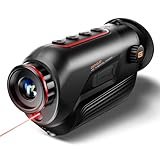
The GOYOJO G215 is the budget pick for hunters who want a 15mm lens without paying mid-range prices. A 256×192 sensor with 50Hz-class refresh behind a 15mm focal lens is a respectable combination for the money, and the 15mm lens gives it meaningfully more reach than the 10mm units that dominate the cheapest tier.
Budget thermal has one rule: the lens matters as much as the sensor. Two devices with identical 256×192 cores will perform very differently if one has a 10mm lens and the other has a 15mm lens. GOYOJO’s G215 is on the right side of that split.
Key specs
- Sensor: 256×192 thermal core
- Lens: 15mm focal length
- Refresh: 50Hz-class frame rate
- Format: handheld thermal monocular
- Use case: budget general hunting, 100-200 yard scanning
Strengths
The 15mm lens is the whole value proposition. It gives the G215 roughly 50% more focal length than the G210’s 10mm, which translates into a proportional increase in detection distance for the same target and sensor. For a hunter whose realistic shots are inside 150 yards, that is often the difference between seeing an animal in time and not.
The 50Hz-class refresh keeps the scanning experience tolerable. Budget thermals that refresh at 25Hz or lower feel broken when you pan, no matter how good the sensor is. This one does not have that problem.
Pros
- 15mm lens gives real reach for a budget price
- 50Hz-class refresh for usable panning
- 256×192 sensor is the standard budget resolution and is adequate for detection
- Simple handheld format with no accessories needed
- Good stepping stone into thermal hunting
Cons
- Budget sensor means limited identification capability
- No Wi-Fi, recording, or sharing features
- Display quality and build materials are entry-tier
- Firmware and support ecosystem is less mature than premium brands
How it compares
Against the GOYOJO G210, the G215 is the same family with a longer lens: more reach, narrower field of view, slightly higher price. Pick the G215 if you scan open ground; pick the G210 if you hunt tight cover and value field of view over magnification. Against the CVLIFE 256×192, the two are close competitors — GOYOJO offers a slightly longer lens, CVLIFE offers a higher-resolution display. Both are budget-first choices with the same fundamental limitation: you get detection, not identification, past about 150 yards.
10. GOYOJO G210 Thermal Monocular – Best for Tightest Budget with Wide View
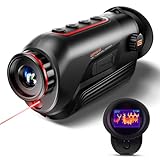
The GOYOJO G210 is the widest-view option in this roundup, using a 256×192 sensor behind a 10mm focal lens. That short lens is not a defect — it is a design choice for hunters who work close and need to see a lot of ground at once.
In heavy timber, thermal’s core advantage is that it reads body heat through thin vegetation and total darkness. That advantage is wasted if your field of view is so narrow that you sweep past animals. A 10mm lens gives you a wider window, and for a hunter sitting on a trail or a bedding area inside 80 yards, wide beats long every time.
Key specs
- Sensor: 256×192 thermal core
- Lens: 10mm focal length
- Format: handheld thermal monocular
- Use case: close-range timber and brush hunting
Strengths
Field of view is the entire argument. A 10mm lens on a 256×192 sensor shows a wide slice of terrain, which means less sweeping and more spotting. For stand hunting in cover, that is exactly the right trade.
It is also the least expensive way into the category from a brand that names itself clearly as a thermal imaging manufacturer rather than a general gadget seller. For a first thermal, the G210 lowers the entry barrier without asking you to accept a device that cannot do the job.
Pros
- Widest field of view in this roundup
- Lowest realistic entry price for a dedicated thermal monocular
- Adequate 256×192 detection performance at close range
- Simple enough for a first-time thermal user
- Well suited to treestand and ground-blind hunting
Cons
- 10mm lens severely limits detection distance in open terrain
- No refresh rate advantage over similarly priced competitors
- No connectivity or recording features
- Will feel inadequate if your hunting expands to open country
How it compares
Against the G215, this is the field-of-view end of the same family: better up close, worse at distance. Against the Teslong TTS260, the G210 offers a wider view and the Teslong offers super-resolution processing that simulates more detail from the same 256×192 native array. For close timber work, the G210’s wide window is more useful than simulated detail. For scanning at moderate range and trying to make out shapes, the Teslong’s processing has more value.
11. CVLIFE 256×192 Thermal Monocular – Best for Cheapest Usable Thermal Image

The CVLIFE 256×192 with a 15mm lens and 1024×768 display is the value pick of this roundup, and the reason is the display. A 1024×768 eyepiece screen is far higher resolution than the sensor feeding it, which sounds like overkill until you realize what it prevents: on cheaper units, a low-res display blurs the sensor’s detail before it reaches your eye. CVLIFE avoids that bottleneck.
The 50Hz frame rate is the other headline. Budget thermals frequently cut refresh rate to save cost, and the result is a stuttering image that makes tracking a moving animal nearly impossible. A 50Hz budget unit is a meaningfully better hunting tool than a 25Hz one at the same price.
Key specs
- Sensor: 256×192 thermal core
- Lens: 15mm focal length
- Display: 1024×768
- Refresh: 50Hz
- Use case: close-to-mid-range scanning on a strict budget
Strengths
The display-sensor match is genuinely well thought out. Thermal imaging is a chain: lens, sensor, processor, display, eye. A weak link anywhere degrades the final image. Many budget units pair an adequate sensor with a poor display and deliver a soft result. This one removes that specific weakness.
Fifteen millimeters of focal length at this price is also good value. It is the same reach class as the mid-range TS004 Pro’s lens, though the sensor resolution differs. For a hunter who wants to see animals at 100-150 yards without spending mid-range money, the combination works.
Pros
- 1024×768 display avoids the blur that plagues cheap eyepieces
- 50Hz refresh is unusual and valuable at this price
- 15mm lens gives usable detection range
- One of the lowest-cost ways to get a real thermal image
- Straightforward operation
Cons
- 256×192 sensor limits identification beyond about 120 yards
- No Wi-Fi or media features
- Build materials and battery life are entry-tier
- Limited brand track record in the hunting thermal category
How it compares
Against the GOYOJO G215, the two are near-identical on sensor and lens; CVLIFE’s edge is the higher-resolution display and explicit 50Hz rating, GOYOJO’s edge is a slightly more established thermal-specific product line. Against the RIX Pocket K2, the K2 adds Wi-Fi and a more refined build for more money, while CVLIFE delivers the core image competently for less. If sharing footage matters, pay for the K2; if you just want to see heat in the dark, CVLIFE is the efficient choice.
12. Teslong TTS260 Thermal Monocular – Best for Simulated Detail on a Budget

The Teslong TTS260 takes a different approach to the budget problem: a 256×192 native sensor paired with a super-resolution mode that produces 512×384 output. Super-resolution does not create information that the sensor never captured, but it does use multi-frame processing to deliver an image that reads as more detailed than the native array would suggest.
Teslong is best known for borescopes and inspection cameras, and that background shows in the TTS260’s build: functional, compact, and oriented toward getting a usable image at a low price rather than toward premium materials.
Key specs
- Native sensor: 256×192 thermal core
- Super-resolution mode: 512×384 output
- Format: handheld thermal monocular
- Use case: budget scanning where image detail matters more than range
Strengths
Super-resolution is genuinely useful in the specific case of a stationary or slow-moving target. By combining information across multiple frames, the processing can produce sharper edges and better target separation than a single 256×192 frame. For scanning a field for bedded animals, that can make the difference between a shapeless blob and a recognizable silhouette.
It is also one of the longest-established budget thermal products in this list, which means a longer track record of user experience and firmware refinement than newer budget entrants can claim.
Pros
- Super-resolution mode produces a 512×384 output image
- Established budget product with a longer track record
- Compact handheld format
- Useful for stationary target identification at close range
- Low entry price
Cons
- Super-resolution degrades with fast movement
- Native 256×192 array is still the real limit on detail
- No Wi-Fi or connectivity features
- Refresh rate and display specifications are not class-leading
How it compares
Against the CVLIFE 256×192, the Teslong trades the CVLIFE’s display advantage for processing-based detail enhancement. If you scan slowly and study stationary targets, the Teslong can look better; if you pan constantly at 50Hz and rely on a sharp display, the CVLIFE has the edge. Against the GOYOJO G210, the Teslong offers more detail processing but a narrower field of view, since the GOYOJO’s 10mm lens is the widest here. Choose the Teslong if target detail matters more than ground coverage.
How to Choose
Buying a thermal monocular is a specification-matching exercise, and most buyers get it wrong in the same way: they shop on sensor resolution alone. Resolution is the most visible number on the box, but it is only one of five specifications that determine whether the device works for your hunting. Here is how to weight them.
Start with detection distance, then work backward
The useful specification is not “how far can it see” but “how far can it identify.” Those are different numbers, and the gap between them is large. A 256×192 thermal with a 10mm lens will detect a deer-sized heat signature at roughly 300 yards under good conditions, but positive identification — is it a deer, a dog, or a person — may not happen until 80-100 yards. A 384×288 unit with a 19mm lens shifts that identification distance out to roughly 150-200 yards.
So the first question is: what is your realistic maximum shot distance? If you hunt timber and your longest ethical shot is 80 yards, a budget 10mm unit covers you and anything more is money spent on distance you will never use. If you hunt open fields and can shoot 300 yards, you need a 19mm lens and ideally a 384×288 sensor, or you will spend the season walking toward heat signatures you cannot evaluate.
Sensor resolution versus lens focal length
These two specifications multiply together, and buying one without the other is the most common mistake. Detection range scales roughly with the ratio of lens focal length to sensor pixel pitch, and with sensor resolution. A rough hierarchy for the products in this roundup:
| Sensor + lens combination | Typical detection (deer-size) | Typical identification | Best terrain |
|---|---|---|---|
| 256×192 with 10mm lens | 250-300 yd | 60-90 yd | Timber, brush, close stands |
| 256×192 with 15mm lens | 350-400 yd | 100-130 yd | Field edges, mixed cover |
| 384×288 with 13mm lens | 400-450 yd | 120-160 yd | General purpose, walking hunts |
| 384×288 with 19mm lens | 500-600 yd | 180-250 yd | Open country, long glassing |
These are approximations, not promises. Atmosphere, humidity, target size, and background contrast all move the numbers substantially. A cold, dry, high-contrast night will beat a warm, humid one by a wide margin, because thermal contrast depends on the temperature difference between the animal and its surroundings, and humidity scatters infrared energy.
Refresh rate: the specification you feel but never see on a spec sheet
Refresh rate determines how many times per second the sensor updates the image. Most hunting thermals run at 25Hz or 50Hz. The difference is not subtle. At 25Hz, panning produces a visible stutter, and a running animal smears into a trail of afterimages. At 50Hz, panning is smooth and moving targets stay coherent.
For a hunter who scans from a fixed position and looks at stationary animals, 25Hz is tolerable. For a hunter who walks and scans, or who tracks moving animals, 50Hz is the minimum. Every product in this roundup is 50Hz-class or lists a 50Hz refresh, which is why the budget picks here are a step above the absolute cheapest thermals on the market.
NETD: the contrast specification
NETD, or noise equivalent temperature difference, is measured in millikelvins (mK) and describes the smallest temperature difference the sensor can resolve. Lower is better. A 20mK-class sensor is notably more sensitive than a sub-35 mK unit, and the practical difference shows up in warm conditions.
Here is why that matters: thermal imaging works because animals are warmer than their background. On a 20°F winter morning, a deer’s body heat stands out dramatically against frozen ground, and even a mediocre sensor produces a clear image. On a 70°F evening, that contrast shrinks, and a sensor that cannot resolve small temperature differences shows a scene where the animal and the ground are nearly the same shade of gray. If you hunt in warm weather — early-season hogs, coyotes in the fall — paying for a better NETD rating is more valuable than paying for more pixels.
Battery life and field logistics
Battery life on thermal monoculars ranges from roughly 4 to 10 hours of continuous use, with the shorter end typical of compact pocket units and the longer end of full-size devices with larger cells. Wi-Fi streaming can cut runtime by a third or more.
Do the arithmetic before you buy. A four-hour runtime sounds adequate, but a November deer hunt from a blind can easily run six hours, and you will want the device on for the last hour of light on both ends of the day. Cold weather reduces lithium battery capacity significantly — expect a meaningful fraction of rated runtime lost at 20°F. The practical answer for most hunters is either a device with a user-replaceable or externally chargeable battery, or a USB power bank in the pack. Confirm before you buy whether the battery can be swapped in the field, because a sealed internal cell means carrying a charger or a backup device.
Weather resistance and durability
Thermal monoculars are sealed optical devices, and the failure modes are predictable. Moisture ingress through the eyepiece or objective is the classic killer; it fogs the interior and there is no field fix. Look for an IPX rating — IPX6 or better means the device survives heavy rain and splashing, IPX7 means brief submersion. A device with no stated rating should not be carried in a downpour without protection.
The second failure mode is shock. Thermal cores are microbolometer arrays, and while they are more robust than older cooled sensors, a drop onto rock can detune the sensor and produce permanent image artifacts. Most hunting thermals are rated for recoil, but recoil rating is not drop rating. A simple wrist lanyard is the cheapest insurance in this category.
The third is lens coating. The germanium or chalcogenide glass used in thermal objectives is softer than optical glass and expensive to replace. Clean it rarely and gently — a blower bulb first, then a microfiber cloth, and never a shirt sleeve. Most thermal lenses are ruined by well-intentioned over-cleaning rather than by dirt.
Field of view versus magnification
This is the trade that budget buyers most often get backwards. A shorter lens gives a wider field of view, and a wider field of view means you find animals faster in cover. A longer lens gives more magnification and more range, but a narrower window that requires more sweeping.
Rough guidance: if your hunting is inside 100 yards in timber or brush, prioritize a wide field of view — a 10mm or 13mm lens. If you glass open country or field edges at 150-300 yards, prioritize reach — a 19mm lens. The mistake is buying a long lens for close hunting, then spending the season looking through a soda straw.
Decision matrix by hunter profile
| Your situation | Priority spec | Recommended pick |
|---|---|---|
| First thermal, mostly timber and feeders under 100 yd | Wide field of view, lowest price | GOYOJO G210 or CVLIFE 256×192 |
| Mixed cover, 100-150 yd shots, budget-conscious | 15mm lens, 50Hz refresh | GOYOJO G215 or Teslong TTS260 |
| General hunting, walks in and out, wants one do-everything device | 384×288 sensor, pocketable | RIX Pocket K3 |
| Hunts with a partner, wants to share the image | Wi-Fi streaming | RIX Pocket K2 or K3 |
| Open country, long glassing sessions | 19mm lens, high sensitivity | Pulsar Axion XQ19 or AGM Taipan V2 |
| Warm-weather hog and predator hunting | Low NETD (contrast) | ATN BlazeSeeker 6 |
| Wants to zoom in on distant signatures | Variable magnification | ATN BlazeSeeker-210 |
| Reach on a constrained budget | 19mm lens, mid-premium price | TOPDON TS004 Pro |
Upgrade path and resale
Thermal is a category where the upgrade path is real and the resale market is active. If you buy at the bottom and later want more reach, you will sell the budget unit at a loss and buy again — which means you will have paid twice. If you are reasonably confident that thermal will become part of how you hunt, buying one tier above your current need often costs less over three years than buying twice.
The counterargument is equally valid: many hunters buy a thermal, use it for a season, and find that they hunt mostly in conditions where a good flashlight or a quality set of binoculars would have served. Buying budget first tests whether thermal actually fits your hunting before you commit premium money. Know which kind of buyer you are, and be honest about it.
Common mistakes to avoid
- Buying resolution without considering lens focal length. A 384×288 sensor behind a 10mm lens has less reach than a 256×192 sensor behind a 19mm lens.
- Ignoring refresh rate. A 25Hz unit at a great price is still a stuttering image.
- Overestimating battery life in cold weather. Rated hours are measured warm.
- Cleaning the lens too often with the wrong material. Germanium scratches.
- Assuming digital zoom adds detail. It magnifies pixels; it does not create them.
- Buying for the hunting you wish you did rather than the hunting you actually do.
Frequently Asked Questions
Is 256×192 resolution enough for hunting?
For detection inside roughly 250-300 yards and identification inside 80-130 yards depending on lens, yes. A 256×192 thermal will tell you an animal is present and roughly where it is moving, which covers most timber, feeder, and close-range field hunting. Where it falls short is judging details at distance — antler points, exact species on a brushy hillside, or a target beyond 150 yards. If your hunting happens mostly inside 150 yards, 256×192 is not the limitation; the lens and the conditions usually are.
What is the difference between 25Hz and 50Hz refresh rate?
Refresh rate is how many times per second the sensor updates the image. At 25Hz, panning produces visible stutter and moving animals leave a smeared trail. At 50Hz, both are largely resolved. For stationary scanning at close range, 25Hz is workable. For walking and scanning, tracking moving animals, or any situation where you sweep the device across terrain, 50Hz is the practical minimum and every unit in this roundup meets it.
What does NETD mean and how much does it matter?
NETD measures the smallest temperature difference a thermal sensor can detect, expressed in millikelvins. Lower numbers mean better sensitivity. A 20mK-class sensor will show clear contrast in warm conditions where a sub-35 mK unit produces a flat gray scene. NETD matters most in warm weather, because warm ambient temperatures shrink the temperature gap between an animal and its surroundings. In cold weather, even a modest sensor produces a strong image.
Do I need Wi-Fi on a thermal monocular?
Wi-Fi is optional for solo hunters who only need to see the image in the eyepiece, but it becomes valuable in two situations: hunting with a partner who wants to see what you see, and recording footage to review later. It does reduce battery runtime, often substantially during continuous streaming. If you do not have a partner to share with and you do not care about saving clips, you can save money by skipping it.
Can a thermal monocular see through fog, rain, or brush?
Thermal sees through total darkness, light smoke, and thin vegetation better than visible light or digital night vision, because it detects emitted heat rather than reflected light. It does not see through dense fog, heavy rain, or solid objects — water vapor in the air scatters infrared energy and reduces range significantly. Brush is a partial obstacle: you can often detect an animal’s heat signature through thin leaves, but a solid trunk or a thick hedge blocks the signal.
How long do thermal monocular batteries actually last in the field?
Most hunting thermals run roughly 4-10 hours continuously, with compact pocket units at the shorter end and larger-bodied models at the longer end. Cold weather reduces lithium battery performance, so a device rated at five hours may deliver closer to three or four at 20°F. Wi-Fi streaming can consume an additional third of runtime. A USB power bank or a spare battery is standard practice for full-day hunts.
Is a longer lens always better for hunting?
No. A longer lens gives more magnification and detection distance but a narrower field of view, which means more sweeping and a higher chance of missing an animal at close range in cover. For timber and close-range stand hunting, a short lens with a wide view is often the better tool. The right choice depends on your typical shot distance and terrain, not on which specification looks more impressive.
What wears out first on a thermal monocular?
The battery is the first consumable, and on units with sealed internal cells it eventually limits the device’s useful life. The lens coating is the second concern — germanium is softer than optical glass and scratches from over-cleaning. The third is the microbolometer sensor itself, which can develop artifacts after significant shock. Storage in a padded case, a wrist lanyard, and infrequent gentle lens cleaning address the three failure modes that actually matter.
Closing Recommendation by Situation
If you hunt timber, brush, or feeders inside 100 yards and want the least expensive functional option, buy the GOYOJO G210 for its wide field of view or the CVLIFE 256×192 for its sharper display. If you split time between cover and field edges and want 15mm of reach without mid-range money, the GOYOJO G215 and the Teslong TTS260 are the two budget picks to weigh — reach on one side, processing detail on the other. For a single do-everything device that handles walking hunts, field edges, and everything in between, the RIX Pocket K3 is the best overall choice, with the Pocket K2 as the more affordable version of the same idea if you can live with 256×192. If you glass open country from a fixed position, choose between the Pulsar Axion XQ19 for durability and ecosystem and the AGM Taipan V2 19-320 for sensitivity and image refinement. If you want reach without premium pricing, the TOPDON TS004 Pro’s 19mm lens is the efficient answer, and if you hunt warm-weather hogs and predators where contrast is the hard problem, the ATN BlazeSeeker 6’s 20mK-class sensor is built for exactly that condition.