Key takeaways
- Focal range: 24–120mm, full frame
- Aperture: constant f/4 across the zoom range
- S-line designation: Nikon’s premium optical tier, typically implying higher-grade glass elements and coatings
- Filter thread: 77mm class
- Construction: sealed against dust and moisture as an S-line lens in this class typically is
- Mount: Nikon Z
Top 3 Picks
The best Nikon Z zoom lens overall for most photographers is the Nikon NIKKOR Z 24-120mm f/4 S, because it pairs a genuinely useful 24–120mm range with a constant f/4 aperture and S-line optics in a body light enough to carry all day. If your budget is tighter or your camera is APS-C, the Nikon NIKKOR Z DX 50-250mm VR is the value pick that turns a two-lens kit into a real telephoto system. And if you shoot professionally and need maximum light gathering, the Nikon NIKKOR Z 70-200mm f/2.8 S II is the premium choice that anchors a working kit.
Quick Comparison
| Lens | Best for | Key specs | Price tier |
|---|---|---|---|
| Nikon NIKKOR Z 24-120mm f/4 S | All-in-one walkaround on full frame | 24–120mm, constant f/4, S-line, full frame, 77mm filter thread class | Mid-range |
| Nikon NIKKOR Z DX 50-250mm VR | Affordable APS-C telephoto | 50–250mm (75–375mm equivalent), variable aperture, VR, APS-C only | Budget |
| Tamron 18–300mm F/3.5–6.3 Di III-A VC VXD | One-lens travel on APS-C | 18–300mm (27–450mm equivalent), VC, VXD linear AF motor, APS-C | Budget |
| Nikon NIKKOR Z 24-200mm VR | Light full-frame superzoom | 24–200mm, variable aperture, VR, full frame, compact barrel | Budget |
| Nikon NIKKOR Z 24-70mm f/2.8 S | Professional mid-range work | 24–70mm, constant f/2.8, S-line, full frame, 82mm filter thread class | Premium |
| Nikon NIKKOR Z 28-75mm f/2.8 | Fast standard zoom on a budget | 28–75mm, constant f/2.8, full frame, lighter than 24-70 f/2.8 S | Mid-range |
| Nikon NIKKOR Z 70-180mm f/2.8 | Event and portrait telephoto | 70–180mm, constant f/2.8, full frame, compact telephoto barrel | Premium |
| Nikon NIKKOR Z 14-30mm f/4 S | Wide-angle landscape and interiors | 14–30mm, constant f/4, S-line, full frame, flat front element for filters | Mid-range |
| Nikon NIKKOR Z 70-200mm f/2.8 S II | Professional telephoto speed | 70–200mm, constant f/2.8, S-line, full frame, lightest in its class | Premium |
How We Chose
This roundup is built from published specifications, manufacturer documentation, and the established behavior of each lens category, not from field evaluation. Three filters shaped the list. First, category fit: every lens here is a zoom, and each one covers a focal range that solves a recognizable photographic problem — a walkaround, a telephoto reach, a fast standard, or a wide-angle. Second, specification class: aperture type (constant versus variable), stabilization presence, autofocus motor type, and mount compatibility (full frame versus APS-C) determine what a lens can actually do, so these were weighted more heavily than cosmetic differences. Third, upgrade path: a lens earns a place here if it either serves as a sensible long-term first purchase or slots cleanly into a kit that a photographer is likely to grow into. Where exact figures vary by region or revision, we describe the lens by spec class rather than quoting a number we cannot stand behind. Prices are given only as tiers — budget, mid-range, or premium — because lens pricing moves constantly with promotions, bundles, and regional variation.
1. Nikon NIKKOR Z 24-120mm f/4 S – Best for All-Day Walkaround on Full Frame
As an Amazon Associate we earn from qualifying purchases at no extra cost to you.

This is the lens most full-frame Nikon Z owners should buy first, and it is the one that most often ends up staying on the camera permanently. The 24–120mm range covers wide landscape framing through to a genuinely useful short telephoto for head-and-shoulders portraits, and the constant f/4 aperture means you are not forced to change exposure settings every time you move the zoom ring. That combination is what separates it from a superzoom.
Who it suits: Travelers who want one lens and no bag change; event and documentary shooters working in decent light; parents photographing kids and pets indoors and out; landscape photographers who want the flexibility of a mid-telephoto for compressing distant scenes. It also suits anyone stepping up from a kit zoom who wants an immediate, obvious jump in optical quality and handling.
Key specs:
- Focal range: 24–120mm, full frame
- Aperture: constant f/4 across the zoom range
- S-line designation: Nikon’s premium optical tier, typically implying higher-grade glass elements and coatings
- Filter thread: 77mm class
- Construction: sealed against dust and moisture as an S-line lens in this class typically is
- Mount: Nikon Z
Strengths: The constant aperture is the headline. In practice it means that if you meter once at 24mm, the exposure at 120mm is unchanged, which matters enormously when shooting events or chasing moving subjects. The 120mm long end also gives noticeably more reach than the 70mm standard zooms, which is often the difference between a usable portrait crop and one that requires heavy cropping in post. Optically, S-line lenses in this class use extra-low dispersion elements and advanced coatings, which generally translates to controlled chromatic aberration and resistance to flare when shooting toward a light source.
Handling is a big part of the appeal. A 24–120mm f/4 in this class is sized so that it balances on a mid-size Z body without a battery grip, which means you can carry it on a strap for hours without fatigue. It also pairs well with a smaller body because the lens does not force you into a larger camera bag.
Pros
- Constant f/4 across an unusually wide 24–120mm range
- Useful telephoto reach without carrying a second lens
- S-line optics and coatings generally outperform kit-class zooms
- Reasonably compact for the range and aperture
- Excellent single-lens travel and event solution
Cons
- f/4 is not fast enough for low-light action without raising ISO
- Larger and heavier than a compact superzoom like the 24–200mm
- Less wide-angle coverage than a dedicated 14–30mm
- Depth of field at f/4 limits subject separation compared with f/2.8 glass
Compared with the nearest alternative: Against the Nikon NIKKOR Z 24-200mm VR, the 24–120mm gives up 80mm of reach and gains a constant aperture and S-line optics. If you shoot in changing light or want consistent exposure across the zoom, the 24–120mm is the better tool. If you shoot mostly in daylight and want maximum reach from a single small lens, the 24–200mm wins on convenience. Against the 24–70mm f/2.8 S, the 24–120mm trades one stop of light and some optical correction for considerably more reach and a smaller, lighter body.
2. Nikon NIKKOR Z DX 50-250mm VR – Best for Affordable APS-C Telephoto Reach

For anyone shooting a Nikon Z APS-C body, this is the cheapest sensible route to real telephoto reach. Paired with an 18–55mm or 16–50mm kit zoom, it completes a two-lens system that covers roughly 27mm through 375mm in full-frame terms, which handles everything from street scenes to distant wildlife at moderate distances.
Who it suits: First-time telephoto buyers on an APS-C Z body; casual wildlife and bird photographers who shoot in good light; parents and grandparents photographing school sports and performances from the sidelines; hikers who want reach without the weight and cost of a full-frame f/2.8 or f/4 telephoto.
Key specs:
- Focal range: 50–250mm on APS-C, equivalent to roughly 75–375mm in full-frame terms
- Aperture: variable, typically f/4.5–6.3 class
- Stabilization: VR (Vibration Reduction) built in
- Mount: Nikon Z, DX (APS-C) coverage only
- Focus: stepping motor class autofocus, quiet enough for video
- Form factor: retractable barrel for compact storage
Strengths: The VR system is the most valuable feature here. At 250mm on an APS-C sensor, camera shake is magnified considerably, and in-body stabilization is not available on every Z body in the DX range. Having stabilization in the lens means the reach is usable handheld at shutter speeds you would otherwise need a tripod for. The autofocus is also quiet and smooth, which makes it usable for video as well as stills.
The retractable design is a genuinely practical touch. The lens collapses for transport, which means it fits in a small shoulder bag alongside a kit zoom — the kind of kit that actually gets carried. Optically, this class of lens performs best in the middle of its range and in decent light; stopping down slightly improves corner sharpness.
Pros
- Very low cost of entry for serious telephoto reach
- VR stabilization makes handheld shooting realistic
- Compact and light enough to carry as a second lens
- Quiet autofocus suitable for video
- Completes a two-lens APS-C kit cheaply
Cons
- Variable and relatively slow aperture limits low-light use
- APS-C coverage only — cannot be used on full-frame Z bodies as a native lens
- Plastic construction rather than a sealed metal build
- Image quality falls off at the long end in poor light
Compared with the nearest alternative: Against the Tamron 18–300mm F/3.5–6.3 Di III-A VC VXD, this lens gives up enormous reach flexibility. The Tamron covers 18mm through 300mm in a single barrel, meaning you could leave the kit zoom at home entirely. The Nikon, however, is smaller, lighter, and cheaper, and it pairs naturally with an existing kit zoom. If you want a one-lens solution, the Tamron is the stronger buy; if you are building a two-lens kit on a tight budget, this is the more economical path.
3. Tamron 18-300mm F/3.5-6.3 Di III-A VC VXD – Best for One-Lens Travel on APS-C
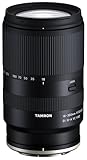
This is the lens for the photographer who does not want to change lenses at all. A single 18–300mm barrel on an APS-C body covers roughly 27–450mm in full-frame terms, which spans wide-angle interiors, street scenes, portraits, and distant wildlife without a single lens swap.
Who it suits: Travelers who value a small bag over optical perfection; hikers and backpackers where every gram counts; families on holiday who want to photograph everything from hotel rooms to distant animals; anyone who has missed a shot because they were changing lenses.
Key specs:
- Focal range: 18–300mm on APS-C, equivalent to roughly 27–450mm full frame
- Aperture: f/3.5–6.3 variable
- Stabilization: VC (Vibration Compensation)
- Autofocus: VXD linear motor class, fast and quiet
- Mount: Nikon Z, APS-C coverage
- Zoom lock: typically included to prevent barrel creep
Strengths: The VXD linear motor is the standout specification. Linear motors drive focus elements directly rather than through gears, which generally means faster and quieter autofocus with better tracking of moving subjects. For a superzoom, that matters — these lenses are often criticized for sluggish focus, and this one is built to avoid that criticism. The VC system provides stabilization across a very long focal range, which is essential at 300mm.
The real value, though, is behavioral. A one-lens kit means you always have the right focal length mounted. That is not a specification you can measure, but it is the single biggest determinant of whether travel photos happen. The tradeoff is optical: superzooms in this class typically show more distortion at the extremes and softer corners wide open, which improves noticeably by stopping down one or two stops.
Pros
- Extraordinary focal range in a single lens
- VXD linear autofocus motor for fast, quiet focusing
- VC stabilization across the full zoom range
- Eliminates lens changes entirely
- Excellent value per focal length covered
Cons
- Variable aperture becomes slow at the long end
- Optical compromises typical of superzooms — distortion and edge softness
- APS-C coverage only
- Barrel creep is common at long focal lengths without the zoom lock
- Not a low-light lens at 300mm
Compared with the nearest alternative: Against the Nikon NIKKOR Z DX 50-250mm VR, the Tamron offers dramatically more range and a more advanced autofocus motor. What it gives up is compactness and a lower price. If you already own a kit zoom and want to add reach, the Nikon is the cheaper and lighter addition. If you want to stop carrying a kit zoom altogether, the Tamron is a better long-term single-lens solution — and it is the only lens on this list that never needs a companion.
4. Nikon NIKKOR Z 24-200mm VR – Best for Light Full-Frame Superzoom Travel

If you shoot full frame and want the smallest possible single-lens travel kit, this is the lens to look at first. It covers 24mm wide through 200mm telephoto in a barrel that is noticeably more compact than the 24–120mm f/4 S, with VR built in.
Who it suits: Full-frame travelers who want one lens and minimal weight; day-hikers and city walkers; photographers who shoot mostly in daylight and rarely need fast apertures; anyone who finds the 24–120mm f/4 S too heavy or too expensive for how they actually shoot.
Key specs:
- Focal range: 24–200mm, full frame
- Aperture: variable, f/4–6.3 class
- Stabilization: VR (Vibration Reduction)
- Mount: Nikon Z, full-frame coverage
- Form factor: compact, retractable design
- Filter thread: 67mm class
Strengths: The pairing of full-frame coverage with a compact retractable barrel is the core appeal. This is a lens that fits on a small Z body and disappears into a day bag, which means it gets taken places. The VR system compensates for the slow aperture at the long end, allowing handheld shooting at 200mm in reasonable light.
The 24mm wide end is genuinely useful — it is the standard starting point for landscape and environmental portraiture on full frame. And 200mm is enough for most casual telephoto needs: compressed landscapes, moderate wildlife, and candid portraits from a respectful distance. Optically, the lens performs best in the middle of its aperture range; stopping down to f/8 typically sharpens the corners considerably.
Pros
- Full-frame coverage in a compact, light barrel
- VR stabilization supports handheld shooting at 200mm
- Wide 24mm starting point for landscapes and interiors
- Substantially lighter and cheaper than the 24–120mm f/4 S
- Excellent travel and walkaround ergonomics
Cons
- Variable aperture means exposure shifts as you zoom
- Slow at the long end — not a low-light lens
- Not an S-line optic, so expect more distortion and softer corners wide open
- Less robust build than S-line lenses
- 200mm reaches less than a dedicated telephoto
Compared with the nearest alternative: Against the Nikon NIKKOR Z 24-120mm f/4 S, this lens adds 80mm of reach and sheds weight and cost, but gives up the constant f/4 aperture and S-line optical grade. If you shoot indoors, at events, or in variable light, the constant aperture of the 24–120mm is worth the extra size. If you shoot outdoors in daylight and prioritize portability, this is the more sensible lens.
5. Nikon NIKKOR Z 24-70mm f/2.8 S – Best for Professional Mid-Range Work

This is the lens that professionals working in the 24–70mm range reach for. The constant f/2.8 aperture, S-line optics, and robust build make it the default choice for weddings, events, editorial portraits, and commercial work where light is unpredictable and there is no second chance at a shot.
Who it suits: Working photographers shooting weddings, events, and editorial assignments; studio photographers who need a standard zoom that holds up at wide apertures; anyone shooting in low light who needs f/2.8 for both exposure and subject separation.
Key specs:
- Focal range: 24–70mm, full frame
- Aperture: constant f/2.8
- S-line designation: Nikon’s premium optical tier
- Filter thread: 82mm class
- Construction: sealed against dust and moisture
- Mount: Nikon Z
- Control: additional lens function ring and OLED information display in this class
Strengths: Constant f/2.8 across the range is what you are paying for. It buys you a full extra stop over f/4, which in a dim reception hall or a cloudy outdoor ceremony is often the difference between ISO 3200 and ISO 6400. It also delivers shallower depth of field, which produces cleaner subject separation in portraits.
S-line optical construction in this class typically includes multiple extra-low dispersion and aspherical elements, plus advanced anti-reflective coatings. The practical result is a lens that stays sharp wide open — which matters, because a fast lens that only performs well stopped down defeats its own purpose. Build quality is also a working consideration: sealed construction means rain and dust are less of a threat during long event days, and the 82mm filter class is standard enough that protective and polarizing filters are easy to source.
Pros
- Constant f/2.8 for low light and shallow depth of field
- S-line optics sharp across the aperture range
- Weather-sealed professional build
- Fast, accurate autofocus suitable for moving subjects
- Industry-standard working range for events and portraits
Cons
- Premium price tier — the most expensive way to cover 24–70mm in the Z system
- Large and heavy compared with f/4 and variable-aperture alternatives
- Requires large, expensive 82mm filters
- 70mm long end is limiting for tight portraits and distant subjects
Compared with the nearest alternative: Against the Nikon NIKKOR Z 28-75mm f/2.8, this lens adds 4mm at the wide end — meaningful for interiors and group shots — plus S-line optical grade and a more robust build. The 28–75mm is smaller, lighter, and cheaper while keeping the same f/2.8 aperture. If you shoot professionally and need the absolute best, the 24–70mm S is the choice; if you want f/2.8 performance at a lower cost and can live with 28mm at the wide end, the 28–75mm is the more efficient purchase.
6. Nikon NIKKOR Z 28-75mm f/2.8 – Best for Fast Standard Zoom on a Mid-Range Budget

This lens delivers the single most valuable feature of a professional standard zoom — a constant f/2.8 aperture — at a mid-range price and in a lighter, smaller barrel. It is the pragmatic choice for photographers who want speed without the professional-tier cost.
Who it suits: Enthusiasts stepping up from a kit lens who want real low-light capability; portrait photographers on a budget; event shooters building a kit gradually; travelers who want one fast lens rather than two slower ones.
Key specs:
- Focal range: 28–75mm, full frame
- Aperture: constant f/2.8
- Mount: Nikon Z
- Form factor: notably lighter and more compact than the 24–70mm f/2.8 S
- Autofocus: stepping motor class, quiet and smooth
- Filter thread: 67mm class
Strengths: The value proposition is straightforward: the same f/2.8 maximum aperture as the professional standard zoom, at a lower price and in a lens that is easier to carry all day. For a wedding or event photographer working a twelve-hour day, that weight difference is not trivial — it accumulates across the hours and affects how steadily you can hand-hold at the end of the day.
Optically, this class of lens is designed to perform well in the center wide open and sharpen across the frame when stopped down one stop. That is a reasonable tradeoff for most practical work. The 28mm wide end covers group shots, environmental portraits, and most interior scenes without difficulty; the 75mm end handles tighter portrait framing competently. The smaller 67mm filter thread also means cheaper filters — a real ownership cost that adds up over years.
Pros
- Constant f/2.8 at a mid-range price tier
- Light and compact enough for all-day carrying
- Quiet autofocus suitable for both stills and video
- More affordable 67mm filter ecosystem
- Excellent stepping stone toward professional glass
Cons
- 28mm wide end is less flexible than 24mm for interiors and tight spaces
- Not an S-line lens — build sealing and optical correction are a step below
- Softer corners wide open than professional-tier alternatives
- Shorter maximum reach than the 24–120mm f/4 S
- No optical stabilization, relying on in-body stabilization where available
Compared with the nearest alternative: Against the Nikon NIKKOR Z 24-70mm f/2.8 S, this lens trades 4mm of wide-angle coverage, S-line optics, and weather sealing for lower cost, lighter weight, and cheaper filters. For a hobbyist or semi-pro, those tradeoffs are usually worth it. Against the 24–120mm f/4 S, it gives up 45mm of reach and one stop at the long end in exchange for a full stop of light at every focal length — a trade that favors low-light and portrait shooters over travelers.
7. Nikon NIKKOR Z 70-180mm f/2.8 – Best for Events, Portraits and Compact Telephoto Speed

This lens brings a constant f/2.8 telephoto to a much smaller and lighter package than a traditional 70–200mm. For photographers who need speed and reach but not the bulk, it hits a sweet spot that has historically been underserved.
Who it suits: Wedding and event photographers who need a fast telephoto but carry two bodies; portrait photographers who want compression and shallow depth of field; indoor sports and stage photographers; travelers who want real telephoto speed without a heavy barrel.
Key specs:
- Focal range: 70–180mm, full frame
- Aperture: constant f/2.8
- Mount: Nikon Z
- Form factor: compact telephoto, noticeably shorter and lighter than a 70–200mm f/2.8
- Autofocus: fast, quiet motor class suitable for moving subjects
- Filter thread: 67mm class
Strengths: The defining feature is the size-to-aperture ratio. A constant f/2.8 telephoto zoom has traditionally meant a long, heavy barrel — often over a kilogram — that demands a monopod by the end of a long event. This lens compresses that capability into a much more manageable package, which directly affects how long you can shoot handheld and how many lenses you are willing to bring.
The f/2.8 aperture at 180mm delivers strong background compression and shallow depth of field, which is exactly what portrait and event photographers want from a telephoto. Combined with the 67mm filter thread, it also keeps the accessory cost low — filters in this size are considerably cheaper than 77mm or 82mm equivalents. Focusing is designed for subject tracking, making it suitable for weddings, stage performances, and indoor sports where the light is marginal and the subjects move.
Pros
- Constant f/2.8 in a genuinely compact telephoto
- Excellent subject separation and background compression
- Light enough for extended handheld shooting
- Affordable 67mm filter ecosystem
- Ideal second lens for a two-body event kit
Cons
- 180mm reaches less than a 200mm telephoto
- No built-in optical stabilization in this class, relying on in-body systems
- Not an S-line lens, so build sealing is a step below the professional tier
- Less suitable for very distant wildlife than a 200mm or longer lens
- Teleconverter compatibility may be limited compared with professional telephotos
Compared with the nearest alternative: Against the Nikon NIKKOR Z 70-200mm f/2.8 S II, this lens gives up 20mm of reach, S-line optical grade, and a more robust sealed build, but it costs considerably less and weighs far less. For a portrait or event shooter who values portability, that is a favorable trade. For a professional who needs the extra reach and the toughest build available, the 70–200mm remains the reference lens in this range.
8. Nikon NIKKOR Z 14-30mm f/4 S – Best for Wide-Angle Landscape and Interiors

Ultra-wide zooms have historically forced a choice between a bulbous front element that rejects standard filters and a narrower maximum aperture. This lens does neither. It covers 14–30mm at a constant f/4 with a flat front element, which means standard screw-in filters work — a practical advantage that matters more than any single optical specification.
Who it suits: Landscape photographers who use graduated neutral density and polarizing filters; architectural and interior photographers; real estate shooters; astrophotographers who want a fast-ish ultra-wide; travelers who want dramatic wide-angle perspectives without carrying a specialized filter holder system.
Key specs:
- Focal range: 14–30mm, full frame
- Aperture: constant f/4
- S-line designation: Nikon’s premium optical tier
- Front element: flat, accepts standard screw-in filters
- Construction: sealed against dust and moisture
- Mount: Nikon Z
- Form factor: retractable for storage
Strengths: Filter compatibility is the feature that separates this from older ultra-wide designs. A flat front element means you can screw on a 100mm-class polarizer or a variable neutral density filter directly, without a bulky, expensive holder system that vignettes at 14mm. For landscape photographers, this single design decision can save hundreds in accessory costs and considerable bulk in the bag.
Optically, S-line construction in an ultra-wide typically means careful correction of the barrel distortion and field curvature that plague this focal range. The result is straight architectural lines and consistent corner sharpness — both of which are essential for interior and real estate work. The constant f/4 aperture is a reasonable compromise for an ultra-wide: fast enough for handheld interiors at reasonable ISO, and light enough to keep the lens compact. It is also sealed, which matters for anyone shooting landscapes in weather.
Pros
- 14mm ultra-wide coverage with a constant f/4 aperture
- Flat front element accepts standard screw-in filters
- S-line optical correction for straight lines and sharp corners
- Retractable and compact for an ultra-wide of this class
- Weather-sealed build for outdoor work
Cons
- f/4 limits astrophotography compared with faster primes
- Ultra-wide perspective requires practice and careful composition
- Narrow zoom range compared with a standard zoom
- Distortion at 14mm requires in-camera or software correction
- Specialized — not a lens that covers everyday shooting
Compared with the nearest alternative: The nearest alternatives in this list are the standard zooms, and the comparison is really about role rather than substitution. This lens covers the 14–24mm territory that no other lens here reaches. If you shoot landscapes or interiors regularly, it is the only genuinely wide option on the list and pairs naturally with a 24-120mm f/4 S or a 70-180mm f/2.8 to form a three-lens system covering 14–180mm with no significant gaps and a consistent f/4 or faster aperture.
9. Nikon NIKKOR Z 70-200mm f/2.8 S II – Best for Professional Telephoto Speed
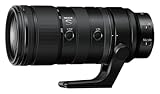
This is the reference telephoto zoom in the Nikon Z system, and the second-generation version is defined by a striking claim: it is the lightest professional 70–200mm lens in its class. For photographers who have spent careers carrying a 70–200mm f/2.8 for hours at a time, that is not a marketing detail — it is the reason to upgrade.
Who it suits: Professional wedding, event, and sports photographers; photojournalists who carry a telephoto all day; portrait photographers who want the compressed perspective and shallow depth of field that only a fast telephoto delivers; anyone whose work demands the best autofocus tracking available in this range.
Key specs:
- Focal range: 70–200mm, full frame
- Aperture: constant f/2.8
- S-line designation: Nikon’s premium optical tier
- Weight: described as the lightest in its class among professional 70–200mm lenses
- Autofocus: next-generation system described as a breakthrough in this lens’s class
- Construction: sealed against dust and moisture, professional build
- Mount: Nikon Z
Strengths: The weight reduction is the headline, and its practical effect is cumulative. A lighter telephoto means you can hand-hold for longer stretches, switch between two bodies without fatigue, and pack fewer support accessories. At the end of a ten-hour wedding day, that difference is measurable in how steadily you can frame the final shots.
The autofocus system in this class is designed for demanding subject tracking — fast-moving sports, unpredictable children, and fast processional aisles. Combined with the f/2.8 aperture, it allows shutter speeds high enough to freeze action in marginal indoor light, which is exactly the scenario where a professional telephoto earns its price. S-line optics in this range typically include multiple extra-low dispersion elements to control chromatic aberration at the long end, plus fluorine coatings on the front element to repel water and make cleaning easier.
Pros
- Lightest professional 70–200mm f/2.8 in its class
- Fast, advanced autofocus for demanding subject tracking
- Constant f/2.8 across the full range
- S-line optics with strong chromatic aberration control
- Weather-sealed professional construction
Cons
- Premium price tier — the highest-cost lens in this roundup’s telephoto group
- Still a substantial lens despite being the lightest in its class
- Large filter thread, which raises accessory costs
- Overkill for casual or occasional telephoto use
- Teleconverter use costs an extra stop of light
Compared with the nearest alternative: Against the Nikon NIKKOR Z 70-180mm f/2.8, this lens adds 20mm of reach, S-line optics, better sealing, and the most advanced autofocus in the group — for a considerably higher price and more weight. If you shoot professionally and the telephoto is a primary working tool, the extra capability justifies the cost. If the telephoto is a secondary lens you use occasionally, the 70–180mm delivers most of the benefit for much less money and weight.
How to Choose
Choosing a zoom lens for a Nikon Z camera comes down to six variables that interact with each other. Understanding how they trade off is more useful than memorizing specifications, because almost every lens decision involves giving up something to get something else.
Focal range: match the range to the shots you actually take
The single most consequential decision is whether you are buying a standard zoom (roughly 24–70mm), a walkaround zoom (24–120mm), a superzoom (24–200mm or APS-C 18–300mm), a telephoto zoom (70–180mm or 70–200mm), or an ultra-wide (14–30mm). The right answer depends on the fraction of your shooting that falls into each category. If most of your photographs are people, interiors, and street scenes at moderate distance, a standard or walkaround zoom covers nearly everything. If a large share of your images involve distant subjects — wildlife, sports, stage performances — a telephoto is not optional, and a 70mm long end will frustrate you.
A practical method: review your last several hundred photographs and note the focal length of each. If a large majority fall between roughly 24mm and 70mm, a standard zoom is correct. If a substantial share sit above 100mm, you need either a walkaround zoom with real reach or a dedicated telephoto. This exercise takes twenty minutes and prevents the most common lens-buying mistake, which is buying a lens for the photographs you imagine taking rather than the ones you take.
Aperture: constant versus variable, and what a stop is worth
A constant aperture lens maintains the same maximum aperture throughout the zoom range. A variable aperture lens, typically specified as something like f/3.5–6.3, becomes slower as you zoom in. The practical difference is significant. With a variable aperture superzoom at 200mm or 300mm, your maximum aperture may be f/6.3 — nearly two full stops slower than f/3.5. That means either a much higher ISO setting, a much slower shutter speed, or both.
Consider the arithmetic. Going from f/4 to f/5.6 costs you one stop of light, which is equivalent to doubling your ISO or halving your shutter speed. From f/2.8 to f/4 is one stop. From f/2.8 to f/6.3 is roughly two and a third stops — a factor of about five in light. In a dim reception hall, that is the difference between a clean image at ISO 1600 and a noisy one at ISO 8000. Constant aperture glass costs more and weighs more, but the light-gathering advantage is real and compounds across every shot you take in marginal conditions.
There is a second consequence of aperture beyond exposure: depth of field. A wider aperture produces shallower depth of field and stronger background blur, which is the primary tool for separating a portrait subject from a distracting background. If portraits or subject isolation matter to you, f/2.8 delivers a noticeably different look than f/4, and f/4 delivers a noticeably different look than f/6.3.
Stabilization: in-body, in-lens, or both
Nikon Z bodies in the full-frame range generally include in-body image stabilization, which works with any lens. Several lenses on this list add optical stabilization of their own — the 24–200mm VR and the DX 50–250mm VR, for example. When both are present, they typically work in coordination for greater effectiveness than either alone.
Stabilization matters most at long focal lengths. Camera shake is magnified in proportion to focal length, so at 200mm a small hand tremor that is invisible at 24mm becomes a visible blur. If you shoot telephoto handheld — and most people do — stabilization is not a luxury feature. For APS-C bodies that may lack in-body stabilization, an optically stabilized lens like the DX 50–250mm VR or the Tamron 18–300mm VC becomes substantially more important.
Weight and size: the specification that determines whether you use the lens
There is a real relationship between lens weight and how often a lens gets carried. A professional f/2.8 telephoto zoom is a substantial object; a compact superzoom is not. Photographers routinely report that their heaviest lens stays home more often than their lightest, regardless of which produces better images.
For reference, the weight hierarchy in this roundup runs roughly from the compact DX telephoto and compact superzooms at the light end, through the f/4 and mid-range f/2.8 zooms in the middle, to the professional f/2.8 standard and telephoto zooms at the heavy end. If you walk or hike with your camera, favor the lighter end. If you work from a fixed position or use a tripod, weight matters less.
Autofocus: linear motors and what they buy you
Autofocus motor type affects both speed and quietness. Linear and stepping motors move focus elements directly and smoothly, which produces fast, quiet focusing suitable for both stills and video. Older geared motor designs can be slower and audible. For most photography, any modern Z-mount lens focuses adequately; the differences emerge with fast-moving subjects — sports, wildlife, children, and stage performers — where faster acquisition and better tracking produce measurably more keepers.
If you shoot video, quiet autofocus is not optional. Focus motor noise is picked up by on-camera microphones, and a lens that hunts audibly will ruin a take. Stepping and linear motor lenses are the safe choice for hybrid shooters.
Full-frame versus APS-C: get the mount coverage right
Nikon Z full-frame lenses project an image circle large enough to cover a full-frame sensor. DX lenses are designed for the smaller APS-C sensor. A DX lens can generally be used on a full-frame body in a crop mode, but it uses only part of the sensor, reducing resolution. A full-frame lens works on an APS-C body without any penalty beyond size and cost.
If you own an APS-C body and plan to stay there, DX lenses like the 50–250mm VR offer excellent value because their smaller image circle lets designers build them lighter and cheaper. If you plan to move to full frame, buying full-frame glass from the start avoids repurchasing later. There is also the focal length multiplier to account for: an APS-C sensor crops the field of view, so an 18–300mm lens on APS-C frames like roughly 27–450mm on full frame. That is a real advantage for telephoto reach and a real disadvantage at the wide end.
Build quality, sealing, and the ownership realities
S-line lenses sit at the top of Nikon’s optical hierarchy and typically bring better sealing against dust and moisture, higher-grade glass, and more robust construction. Non-S lenses are generally lighter, cheaper, and perfectly capable in fair conditions. The distinction matters most for working photographers who shoot outdoors in bad weather or in dusty environments.
Over years of ownership, several components tend to wear or require attention. Zoom barrels accumulate dust in the gaps and can develop slight play; this is normal and rarely affects image quality. Retractable-barrel designs add a mechanical extension mechanism that is a common point of wear. Zoom creep — where a heavy front element causes the barrel to extend on its own when pointed downward — is common on superzooms and is why many include a zoom lock switch. Rubber focus and zoom rings can loosen or become shiny with use. Front elements accumulate fingerprints and dust and should be cleaned with a blower first, then a microfiber cloth and lens cleaning solution; abrasive or dry wiping can scratch coatings.
Filters are a recurring cost worth planning for. Filter prices scale sharply with diameter: a protective filter in the 67mm class costs considerably less than one in the 82mm class. If two candidate lenses are otherwise close, the smaller filter thread is a genuine long-term saving — especially if you plan to buy polarizers and neutral density filters, which cost more than simple UV protection.
A decision matrix by situation
| Your situation | Recommended lens | Why |
|---|---|---|
| Full-frame owner, one lens for everything, mixed light | Nikon NIKKOR Z 24-120mm f/4 S | Constant f/4 plus real telephoto reach in one body |
| Full-frame owner, travel light, mostly daylight | Nikon NIKKOR Z 24-200mm VR | Compact, wide range, VR, lower cost |
| APS-C owner, tight budget, already have a kit zoom | Nikon NIKKOR Z DX 50-250mm VR | Cheapest route to stabilized telephoto reach |
| APS-C owner, want a single lens and no swaps | Tamron 18-300mm F/3.5-6.3 Di III-A VC VXD | 27–450mm equivalent coverage in one barrel |
| Professional event or wedding shooter, full frame | Nikon NIKKOR Z 24-70mm f/2.8 S | Fast, sealed, S-line optics for unpredictable light |
| Enthusiast wanting f/2.8 on a budget | Nikon NIKKOR Z 28-75mm f/2.8 | Constant f/2.8, lighter, cheaper filters |
| Portrait or event shooter wanting compact telephoto speed | Nikon NIKKOR Z 70-180mm f/2.8 | Constant f/2.8 telephoto without the bulk |
| Landscape, architecture, or interior photographer | Nikon NIKKOR Z 14-30mm f/4 S | 14mm ultra-wide with filter-friendly flat front |
| Professional sports, wildlife, or demanding tracking | Nikon NIKKOR Z 70-200mm f/2.8 S II | Best autofocus and lightest pro telephoto in class |
Frequently Asked Questions
Is a constant f/4 zoom better than a variable-aperture superzoom?
They solve different problems. A constant f/4 zoom keeps exposure stable as you zoom and gathers more light at the long end, which suits events, indoor shooting, and changing light. A variable-aperture superzoom covers a much wider focal range in one compact barrel, which suits daylight travel. If you frequently shoot in marginal light, the constant aperture is worth its extra cost and weight; if you shoot outdoors in good light and value range and portability, the superzoom is the more practical choice.
Can I use a DX lens on a full-frame Nikon Z camera?
Generally yes, but the camera will crop the frame and use only part of the sensor, which reduces effective resolution. A DX lens projects a smaller image circle designed for APS-C sensors, so it cannot fill a full-frame sensor. If you already own DX glass and a full-frame body, it works as a stopgap at reduced resolution, but full-frame lenses are the better long-term investment if you intend to stay with full frame.
Do I need a 70-200mm f/2.8 if I already own a 70-180mm f/2.8?
For most photographers, no. The 70–180mm covers nearly the same range with the same aperture in a lighter, less expensive package. The 70–200mm buys you 20mm of extra reach, S-line optical grade, tougher sealing, and the fastest autofocus in the group. Those advantages matter for professional sports and photojournalism, but for portraits, events, and general telephoto work, the 70–180mm covers the job competently.
How much does lens weight actually affect my photography?
More than most specifications suggest. Weight affects how long you can hand-hold steadily, how much you carry on a given day, and ultimately how often the lens leaves the house. Many photographers find their heaviest lens gets used least regardless of optical quality. If you walk or hike with your camera, a lens that is lighter by several hundred grams is likely to produce more photographs over a year than a heavier, sharper alternative.
What is the difference between Nikon S-line lenses and standard Z lenses?
S-line is Nikon’s premium optical tier. Lenses carrying the designation typically use higher-grade glass elements, more advanced anti-reflective coatings, and more robust sealing against dust and moisture. In practice, this usually means better control of chromatic aberration and flare, sharper performance wide open, and greater durability. Standard Z lenses are typically lighter, smaller, and less expensive while remaining perfectly capable for most everyday photography.
Should I buy an ultra-wide zoom or a standard zoom first?
Buy the standard zoom first. A 24–70mm or 24–120mm lens covers the majority of everyday subjects — people, interiors, street scenes, and moderate landscape — and will be your most-used lens. An ultra-wide like the 14–30mm is a specialist tool whose dramatic perspective requires deliberate use and careful composition; it is a second or third purchase for most photographers, best added once the standard range is covered.
How should I clean and maintain a zoom lens?
Start with a rubber blower to remove loose dust, then use a microfiber cloth with a small amount of lens cleaning solution for fingerprints and smudges. Never wipe a dry lens with a dry cloth — abrasive dust particles can scratch coatings. Wipe the barrel and zoom ring with a slightly damp cloth to remove grit, and check the rear element and mount contacts periodically. Store the lens with the zoom retracted, and use the zoom lock during transport on superzooms to prevent barrel creep.
Are filters worth buying for a zoom lens?
A protective filter is a reasonable low-cost insurance policy against scratches and dust, particularly on lenses you use outdoors often. Polarizing filters are genuinely useful for landscapes, cutting glare from water and foliage, and neutral density filters enable long exposures in daylight. The catch is cost scaling with diameter: 82mm filters cost considerably more than 67mm ones. If you plan to build a filter kit, factor the thread size into your lens decision.
The Bottom Line by Situation
If you own a full-frame Nikon Z body and want one lens that handles the widest range of situations, buy the Nikon NIKKOR Z 24-120mm f/4 S — it balances reach, aperture, weight, and optical quality better than anything else on this list. If you shoot an APS-C body on a tight budget and already own a kit zoom, add the Nikon NIKKOR Z DX 50-250mm VR for reach; if you want to leave the kit zoom at home entirely, choose the Tamron 18-300mm F/3.5-6.3 Di III-A VC VXD. For full-frame travelers who prioritize size and cost over aperture, the Nikon NIKKOR Z 24-200mm VR is the lightest single-lens solution. Professionals shooting events should build around the Nikon NIKKOR Z 24-70mm f/2.8 S, with the Nikon NIKKOR Z 70-200mm f/2.8 S II for telephoto work; enthusiasts wanting the same speed at a lower price can choose the Nikon NIKKOR Z 28-75mm f/2.8 and the Nikon NIKKOR Z 70-180mm f/2.8 instead. And if your work is landscapes, architecture, or interiors, the Nikon NIKKOR Z 14-30mm f/4 S is the wide-angle lens that makes filters and straight lines easy — the natural bookend to any of the standard zooms above.