Key takeaways
- 3/4 HP single-cylinder oil-less compressor, 120 V AC operation
- Handles both liquid and vapour recovery, with push-pull capability for bulk liquid
- Class-typical vapour recovery rate around 0.5 lb/min; liquid recovery several times faster
- Standard 1/4-inch flare service ports with a self-sealing or ball-valve manifold arrangement
- High-pressure shutoff to protect the compressor, plus a carry handle and rubber feet
- Recovery-only design: no vacuum pump, no scale, no charging function built in
Short answer: the best professional automotive AC recovery machine for most shops in 2026 is the Airtek AC-Dual Fully Automatic Machine. It is the only pick in this roundup that recovers and recharges both R-134a and HFO-1234yf from one cabinet, and a typical independent bay now sees both refrigerants in the same week. One dual-refrigerant machine costs less floor space, less money and less training time than two single-refrigerant units. It suits shops running a few AC jobs a week or more that want recovery, evacuation, scale-accurate charging and a service record without juggling three separate tools.
If your work is overwhelmingly R-134a and you want the most established full recovery-recycle-recharge platform, the Robinair 34788NI Premier is the better buy. If you only need recovery because you already own a vacuum pump and a charging scale, the P PBAUTOS 3/4 HP Single Cylinder Oil-Less machine is the cheapest credible way in, and the Robinair RG3 is the mid-range portable to beat when parts availability and serviceability matter more than the lowest invoice.
Top 3 Picks
Best Overall: Airtek AC-Dual Fully Automatic Machine
The AC-Dual is a full recovery-and-recharge station that handles both R-134a and HFO-1234yf, which makes it the one purchase that covers nearly every vehicle that rolls into an independent shop in 2026. You get automated recovery, evacuation, leak-relevant pressure readings and scale-based charging in a single cabinet, so a technician does not have to remember which hose belongs to which refrigerant. It is the right choice for a shop that bills AC work regularly and wants to stop renting capability job by job.
Best Budget: P PBAUTOS 3/4 HP Single Cylinder Oil-Less Refrigerant Recovery Machine
If your goal is simply to pull refrigerant out of a system legally and store it, this 3/4 HP oil-less single-cylinder machine does the core job for the least money here. It is a recovery-only tool, so budget separately for a vacuum pump, a charging scale and recovery cylinders. It suits mobile technicians, side-work mechanics and small shops that already own the rest of the AC toolkit.
Best Premium: Robinair 34788NI Premier R-134a Refrigerant RRR Machine
This is the fully automatic R-134a station that shops graduate to when AC work becomes a profit centre rather than an occasional favour. Recovery, recycling, evacuation and recharge are handled in one sequence, with an integrated scale and an onboard vehicle charge database so technicians are not looking up charge weights on a phone. It is the deepest, best-supported R-134a platform in this list, provided you do not need 1234yf coverage from the same box.
Quick Comparison
| Product | Best for | Key specs (class-typical) | Price tier |
|---|---|---|---|
| VIVOHOME 3/4 HP Single Cylinder Portable | General recovery on a mid-range budget | 3/4 HP oil-less single cylinder, 120 V; ~0.5 lb/min vapour class; recovery only | Mid-range |
| Robinair RG3 Portable | Techs who want a proven, serviceable portable | Twin-cylinder oil-less portable; liquid and vapour; ~0.5 lb/min vapour class; recovery only | Mid-range |
| VEVOR Fully Automatic for 1234yf | Shops adding 1234yf without a full RRR budget | Fully automatic recovery/recharge, 7-inch touch screen, stated ≥98.5% charge accuracy, 1234yf | Premium |
| P PBAUTOS 3/4 HP Single Cylinder Oil-Less | Lowest-cost legal entry into recovery | 3/4 HP oil-less single cylinder; ~0.5 lb/min vapour class; recovery only | Budget |
| Airtek AC-Dual | Shops doing both R-134a and HFO-1234yf | Fully automatic recovery and recharge, dual refrigerant, integrated scale and vacuum | Premium |
| VECOTOOLS 3/4 HP Single Cylinder | HVAC-side recovery on a tight budget | 3/4 HP oil-less single cylinder, 120 V; recovery only; HVAC and auto refrigerants | Budget |
| VIVOHOME A2L 3/4 HP Single Cylinder | A2L-ready portable recovery | 3/4 HP single cylinder built for A2L refrigerants including R-1234yf; recovery only | Mid-range |
| VEVOR 1 HP Dual Cylinder | Faster recovery on bigger systems | 1 HP dual cylinder, high-pressure protection; ~0.8–1.0 lb/min vapour class; recovery only | Mid-range |
| VEVOR Portable 3/4 HP 120 V | Simple, cheap vapour and liquid recovery | 3/4 HP single cylinder, 120 V 60 Hz, liquid and vapour; recovery only | Budget |
| Robinair 34788NI Premier | Dedicated R-134a shops wanting full automation | Automatic R-134a recovery, recycle, evacuate, recharge; integrated scale; vehicle charge database | Premium |
| P PBAUTOS 1 HP Dual Cylinder Oil-Less | Budget buyers who still want dual-cylinder speed | 1 HP oil-less dual cylinder; ~0.8–1.0 lb/min vapour class; recovery only | Budget |
| KATOOL Fully Automatic | Premium dual-refrigerant automation | Fully automatic recovery and recharge, R-134a and HFO-1234yf, integrated scale and vacuum | Premium |
How We Chose
This list was built from published manufacturer specifications, product listings and well-documented category behaviour rather than from bench testing. We started with refrigerant compatibility, because a machine that cannot legally or safely touch the refrigerant in front of you is not a bargain at any price — that immediately separates recovery-only portables from A2L-rated and fully automatic stations. From there we weighed recovery rate class against the compressor fitted, whether the unit includes its own vacuum pump and scale or expects you to supply them, and how the machine fits a real workflow: hookup, evacuation, charge accuracy, and how quickly a technician can move it between bays or into a van.
We also looked at the upgrade path. A 3/4 HP recovery-only portable is a sensible first purchase and a poor fifth-year purchase, so each entry is flagged by the situation it actually fits — budget, frequency of use, refrigerant mix and whether the shop already owns a vacuum pump and charging scale. Category fit mattered as much as raw specs: an HVAC-focused recovery machine and an automotive RRR station solve different problems even when their compressor ratings look similar. Finally, we considered ownership realities that listings rarely mention — hose and seal replacement, filter-drier changes, recovery cylinder logistics and what typically fails first on a portable that is carried in and out of a van every week.
1. VIVOHOME 3/4 HP Single Cylinder Portable Refrigerant Recovery Machine – Best for General-Purpose Recovery on a Mid-Range Budget
As an Amazon Associate we earn from qualifying purchases at no extra cost to you.

This is the machine most people picture when they search for a professional-grade portable: a 3/4 HP oil-less single-cylinder compressor in a carry-frame housing, with a handle that makes it realistic to move between bays or load into a service van. It suits a technician or small shop that needs to recover refrigerant from automotive and light HVAC systems without paying for a full recovery-and-recharge station. Because it is oil-less, it does not require you to maintain compressor oil, and it can be used across the common CFC, HFC and HFO refrigerant families provided the machine is rated for that refrigerant and you follow proper hose and cylinder separation.
Key specs at a glance
- 3/4 HP single-cylinder oil-less compressor, 120 V AC operation
- Handles both liquid and vapour recovery, with push-pull capability for bulk liquid
- Class-typical vapour recovery rate around 0.5 lb/min; liquid recovery several times faster
- Standard 1/4-inch flare service ports with a self-sealing or ball-valve manifold arrangement
- High-pressure shutoff to protect the compressor, plus a carry handle and rubber feet
- Recovery-only design: no vacuum pump, no scale, no charging function built in
The strengths here are simplicity and reach. There is very little to configure, the unit is light enough for one person to move, and 120 V power is available almost anywhere. For a shop that runs AC work occasionally, the economics are straightforward: you are buying the compressor and the plumbing, and you supply the vacuum pump and charging scale you probably already own. The single-cylinder design is also easier to service than a twin-cylinder machine, with fewer moving parts to fail.
The trade-off is speed and completeness. A single-cylinder 3/4 HP compressor is the slowest configuration in this roundup, and on a system with a large charge the difference between this and a 1 HP dual-cylinder machine is measured in minutes per job. There is also no built-in scale, which means charge accuracy depends entirely on your separate scale and your technique. If you are recovering from a 30 lb cylinder into a bulk tank, plan on doing it in stages and giving the compressor time to cool.
Pros
- Oil-less single-cylinder design keeps maintenance simple and avoids oil-change intervals
- Light and portable enough for van-based and mobile work
- Runs on ordinary 120 V power, so no dedicated circuit is needed
- Liquid and vapour recovery with push-pull for faster bulk transfer
- Lower entry cost than any fully automatic recovery-and-recharge station
Cons
- Slowest recovery class here — roughly half the throughput of a 1 HP dual-cylinder machine
- No vacuum pump, scale or charging function; you buy those separately
- Standard version is not the A2L-rated variant, so check refrigerant rating before using it on R-1234yf
- Single cylinder means more heat build-up on long or repeated jobs
Against the nearest alternatives: the VIVOHOME A2L 3/4 HP version is the same class of machine with A2L refrigerant coverage, and it is the one to buy if any part of your workload touches R-1234yf or R-454B. The P PBAUTOS 3/4 HP oil-less machine sits in the same performance class at a lower price tier, and the gap between them is mostly about brand support and finish rather than recovery capability. If you want more speed without stepping up to a full station, the VEVOR 1 HP dual-cylinder machine is the natural next rung.
2. Robinair RG3 Portable Liquid and Vapor Refrigerant Recovery Machine – Best for Techs Who Want a Proven, Serviceable Portable

The RG3 is the portable that a lot of working technicians default to, and the reason is less about headline specs than about familiarity and parts. It is a liquid and vapour recovery machine in a compact, rugged housing, designed for field and shop use across the common refrigerant families. It suits someone who wants a recovery unit that will still have serviceable components and documented procedures in five years, rather than a low-cost unit that becomes disposable when a seal fails.
Key specs at a glance
- Twin-cylinder oil-less compressor in a portable, carry-handle housing
- Recovers both liquid and vapour, with push-pull for bulk liquid transfer
- Class-typical vapour recovery around 0.5 lb/min, with liquid recovery substantially faster
- Designed for the common automotive and commercial refrigerant families — confirm the specific refrigerant list on the listing
- Built-in high-pressure protection and a purge or self-clearing routine between jobs
- Recovery-only: pair it with a vacuum pump, manifold and charging scale
What makes the RG3 worth the mid-range money is the support ecosystem. Service documentation, replacement parts and technicians who have used one before are all widely available, which shortens the learning curve and the downtime when something goes wrong. The twin-cylinder layout also gives it better heat behaviour than a single-cylinder unit on back-to-back jobs, so a busy afternoon of recovering systems does not turn into a waiting game. The purge routine matters more than people expect: it is what keeps cross-contamination out of your recovery cylinder when you switch refrigerants.
The honest limitations are that it is still a recovery-only machine, so it will not charge a system for you, and it is not the fastest unit in this list. It also costs more than the budget single-cylinder portables that will, on paper, recover at a similar rate. You are paying for build quality, documentation and the confidence that the tool will be repairable rather than replaced.
Pros
- Well-documented, widely recognised platform with readily available service parts
- Twin-cylinder oil-less compressor handles repeated jobs with less heat soak
- Liquid and vapour recovery with push-pull for faster bulk transfer
- Self-clearing routine helps prevent refrigerant cross-contamination
- Compact and light enough to carry to a vehicle or load into a van
Cons
- Higher price than budget portables with comparable recovery rates
- Recovery only — no vacuum, no scale, no charging
- Not the fastest option; a 1 HP dual-cylinder machine outpaces it
- Not an A2L-rated station by default, so 1234yf work needs a different or updated machine
Compared with the VIVOHOME 3/4 HP portable, the RG3 buys you a twin-cylinder compressor and a deeper support network for a step up in price. Compared with the Robinair 34788NI Premier, it is a different tool entirely: the RG3 pulls refrigerant out, while the 34788NI is a full automatic recovery, recycle, evacuate and recharge station for R-134a. Many shops end up owning both — the portable for mobile and HVAC-adjacent work, and the station for the R-134a bay.
3. VEVOR Fully Automatic Refrigerant Recovery Machine for 1234yf – Best for Shops Adding 1234yf Without a Full RRR Budget
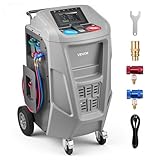
This is the machine for the shop that has started seeing R-1234yf vehicles and does not want to buy a second five-figure station to service them. It is a fully automatic recovery and recharge unit built around 1234yf, with a 7-inch touch screen interface and a stated charge accuracy of 98.5% or better. It suits a shop where 1234yf jobs are growing but still a minority of AC work, and where the alternative — turning those vehicles away — costs more than the machine.
Key specs at a glance
- Fully automatic recovery and recharge for R-1234yf
- Stated charge accuracy of ≥98.5%, which on a 24 oz (1.5 lb) charge is roughly a third of an ounce of error
- 7-inch colour touch screen with guided service steps
- Integrated vacuum and scale, so evacuation and charging happen in one sequence
- Designed for A2L-class refrigerant handling — R-1234yf is mildly flammable and requires equipment rated for it
- Automated leak-relevant pressure monitoring and service data display
The obvious strength is refrigerant coverage without a full station price. If you already have an R-134a machine, adding this unit gives you a two-machine lineup that covers essentially every vehicle in a 2026 service drive, at less than the cost of one dual-refrigerant premium cabinet. The 98.5% accuracy figure is also a genuinely useful number rather than marketing noise: on the small charges modern systems use, percentage error translates into ounces quickly, and being able to see and trust that figure changes how confidently a technician bills the job.
The touch-screen workflow is the other meaningful upgrade. Guided steps reduce the number of times a technician has to consult a manual mid-job, and the service data display gives the customer-facing explanation of what was recovered and what was added. On a busy day, that is time back per vehicle.
The limitations are about scope rather than quality. This is a 1234yf machine, so it does not replace an R-134a station — you either own both or you use it as your only machine and turn away older vehicles. Because it is A2L equipment, hoses, fittings and recovery cylinders must be dedicated to that refrigerant family; sharing them with an R-134a setup is exactly the mistake that contaminates a cylinder and costs more than the machine.
Pros
- Automatic recovery and recharge removes the manual sequencing steps
- Stated ≥98.5% charge accuracy is strong for this price class
- 7-inch touch screen with guided workflow and service data
- Integrated vacuum and scale — no separate purchases required
- Cheaper route into 1234yf capability than a dual-refrigerant premium station
Cons
- 1234yf only — no R-134a coverage
- Requires dedicated A2L-rated hoses, fittings and cylinders
- Owning it alongside an R-134a machine doubles floor space and maintenance
- Automatic machines carry more electronics to fail than a mechanical portable
Against the Airtek AC-Dual, this is the specialist-versus-generalist decision. The AC-Dual does both refrigerants in one cabinet for a premium price; the VEVOR does 1234yf only for less money, provided you already have R-134a covered. Against the KATOOL fully automatic machine, the comparison is similar — both automate the sequence, and the choice comes down to whether you need one refrigerant or two.
4. P PBAUTOS 3/4 HP Single Cylinder Oil-Less Refrigerant Recovery Machine – Best for the Lowest-Cost Entry into Recovery

This is the budget end of the recovery market, and it is honest about what it is: a 3/4 HP oil-less single-cylinder recovery machine that pulls refrigerant out of a system and pushes it into a recovery cylinder. It suits mobile technicians, side-work mechanics and small shops that already own a vacuum pump, manifold gauges and a charging scale, and who need recovery capability without spending mid-range money.
Key specs at a glance
- 3/4 HP single-cylinder oil-less compressor, 120 V operation
- Liquid and vapour recovery capability
- Class-typical vapour recovery around 0.5 lb/min; liquid recovery faster with push-pull
- Compact carry-frame housing with handle for van transport
- High-pressure protection to shut the compressor down before damage occurs
- Recovery only — vacuum pump and scale are separate purchases
The value proposition is straightforward. You get the core function — legal, contained refrigerant removal — for the least money in this roundup, and the oil-less design keeps maintenance to hoses, seals and the occasional filter rather than oil changes. For someone doing a handful of AC jobs a month, that is often the correct answer, because the money saved goes toward the vacuum pump and scale that actually determine the quality of the recharge.
The compromises are the usual ones at this price tier. Finish and fittings are simpler, documentation is thinner, and long-term parts availability is less certain than with a name-brand platform. The single-cylinder compressor is the slowest configuration here, so on a hot day with a full charge to pull, expect to wait. And because it is a general-purpose recovery machine, verify the refrigerant rating before using it on A2L refrigerants — R-1234yf requires equipment designed for mildly flammable refrigerants, and an unrated machine is the wrong tool regardless of price.
Pros
- Lowest cost route to compliant refrigerant recovery in this list
- Oil-less compressor means no oil to change or monitor
- Light and portable for mobile and van-based work
- Liquid and vapour recovery covers both bulk and residual refrigerant
- Simple mechanical design with few electronic failure points
Cons
- Slowest recovery class in the roundup
- Not rated for A2L refrigerants in the standard configuration
- No vacuum pump, scale or charging function included
- Thinner support and parts network than the established brands
Against the VECOTOOLS 3/4 HP machine, this is a near-tie on capability — both are budget single-cylinder oil-less units — and the deciding factors are usually price at the moment of purchase and which one documents its refrigerant list more clearly. Against the VEVOR 3/4 HP 120 V portable, the same logic applies. Step up to the P PBAUTOS 1 HP dual-cylinder if you want the same brand at roughly double the throughput, or to the VIVOHOME 3/4 HP if you want a better-supported mid-range portable in the same performance class.
5. Airtek AC-Dual Fully Automatic Machine – Best for Shops Doing Both R-134a and HFO-1234yf
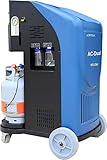
The AC-Dual is the machine for the shop that has stopped being able to predict which refrigerant will be in the next vehicle. It is a fully automatic recovery and recharge station covering both R-134a and HFO-1234yf, which means one cabinet, one training investment and one service procedure for essentially the whole fleet. It suits an independent shop or a dealership service drive running AC work as a routine line item rather than an occasional exception.
Key specs at a glance
- Fully automatic recovery and recharge of R-134a and HFO-1234yf
- Integrated vacuum pump and charging scale, so evacuation and charging are part of one sequence
- Dual-refrigerant design with separate service channels to prevent cross-contamination
- Automated recovery, evacuation, leak-relevant pressure monitoring and charge delivery
- Service data capture for documenting recovered and charged amounts per vehicle
- Cabinet format with onboard cylinder storage and hose management
The case for the AC-Dual is arithmetic as much as engineering. Two single-refrigerant automatic machines cost more in purchase price, occupy roughly twice the floor space, and require a technician to learn two interfaces. One dual machine covers the same vehicles with a single workflow, and it removes the scenario where a 1234yf vehicle arrives on a day the 1234yf machine is down. For a shop where AC work is a meaningful revenue line, that consolidation usually pays for the premium tier within a season.
It also handles the A2L question properly. R-1234yf is a mildly flammable refrigerant, and equipment used with it must be designed for that classification, with dedicated hoses and fittings. A machine that is built from the ground up as a dual-refrigerant station makes that separation part of the design rather than an accessory you have to remember.
The trade-offs are price and complexity. This is premium-tier equipment, and automatic stations carry more electronics, more sensors and more calibration points than a mechanical portable. When something drifts — a scale reading, a pressure transducer — the fix requires a service call rather than a wrench. It is also not a portable; you are committing bay space to it permanently.
Pros
- One machine covers both R-134a and HFO-1234yf vehicles
- Integrated vacuum and scale remove separate tool purchases and setup steps
- Automated sequence shortens per-vehicle time and reduces operator error
- Built as A2L-capable equipment with dedicated refrigerant channels
- Service data supports customer documentation and internal quality control
Cons
- Premium price tier — the largest single-tool outlay in this list
- Electronics and sensors add failure points that need specialist service
- Cabinet format occupies permanent floor space and is not van-portable
- Overkill for a shop running only a few AC jobs a month
Against the KATOOL fully automatic machine, the two occupy the same category and the decision usually comes down to which refrigerant coverage and service network you prefer. Against the Robinair 34788NI Premier, the split is clear: the 34788NI is a deeper, more established R-134a-only platform with an onboard vehicle charge database, while the AC-Dual trades some of that depth for 1234yf coverage. If your fleet is almost entirely R-134a, take the Robinair; if you see both refrigerants weekly, take the AC-Dual.
6. VECOTOOLS 3/4 HP Single Cylinder Refrigerant Recovery Machine – Best for HVAC-Side Recovery on a Tight Budget

The VECOTOOLS unit is a budget 3/4 HP single-cylinder recovery machine aimed at HVAC and automotive use, which makes it an interesting fit for the technician who works both sides of the trade. It suits someone who needs one portable machine that can pull refrigerant from a residential split system and a car air conditioner, without paying for a dedicated automotive station.
Key specs at a glance
- 3/4 HP single-cylinder oil-less compressor, 120 V operation
- Liquid and vapour recovery with push-pull support for bulk liquid
- Class-typical vapour recovery around 0.5 lb/min
- Compact carry housing with handle and rubber feet
- High-pressure protection and simple valve controls
- Recovery only — no vacuum pump, scale or charging function
Its advantage is versatility at a low price. A single oil-less portable that is comfortable with both HVAC and automotive refrigerants is a useful thing to own when you are building a toolkit, because it covers jobs that would otherwise be turned away. The mechanical design is simple, with few electronic components to fail, and the unit is light enough to carry up a ladder or into a van without help.
The caveats are the same ones that apply across the budget single-cylinder class. Recovery speed is the slowest here, and on a large HVAC system charge that matters more than it does on a car — pulling several pounds of vapour through a 3/4 HP single-cylinder compressor is a job you plan around rather than a job you do quickly. There is no scale or vacuum function, so charge accuracy depends on separate tools, and refrigerant rating must be checked before use on A2L refrigerants.
Pros
- Budget price for a machine that covers both HVAC and automotive refrigerants
- Oil-less design with minimal routine maintenance
- Portable enough for ladder work and van transport
- Simple controls and few electronics to fail
- Liquid and vapour recovery with push-pull
Cons
- Slow on large HVAC charges compared with dual-cylinder machines
- No integrated vacuum or scale
- Not A2L-rated for R-1234yf work
- Budget-tier support and documentation
Against the P PBAUTOS 3/4 HP oil-less machine, the performance class is effectively identical and the choice is about price and which refrigerant list is documented more clearly for your work. Against the VEVOR 3/4 HP 120 V portable, the same holds. If you find yourself recovering from HVAC systems regularly rather than occasionally, the VEVOR 1 HP dual-cylinder machine is the more sensible long-term purchase despite the higher tier, because it roughly halves the time per job.
7. VIVOHOME A2L 3/4 HP Single Cylinder Portable Refrigerant AC Recovery Machine – Best for A2L-Ready Portable Recovery

The A2L version of the VIVOHOME portable is the machine to buy when your workload has started to include mildly flammable refrigerants and you want to keep the convenience of a portable. A2L covers refrigerants such as R-1234yf, R-32 and R-454B, and equipment used with them must be designed for that classification — a standard recovery machine is not a substitute. It suits mobile technicians and shops servicing newer vehicles and modern HVAC equipment who need A2L capability without a full automatic station.
Key specs at a glance
- 3/4 HP single-cylinder compressor in a portable carry frame, 120 V operation
- Built for A2L-class refrigerants including R-1234yf, in addition to conventional refrigerants
- Liquid and vapour recovery with push-pull for bulk liquid transfer
- Class-typical vapour recovery around 0.5 lb/min
- High-pressure protection and sealed electrical design appropriate to A2L handling
- Recovery only — pair with a dedicated A2L-rated vacuum pump, scale and recovery cylinder
The whole point of this machine is compliance and safety rather than raw speed. Mildly flammable refrigerants require equipment built to reduce ignition risk, and using an unrated portable on a 1234yf system is both a safety issue and, in many jurisdictions, a regulatory one. Buying the A2L version of an otherwise familiar portable gives you that coverage in a package you can carry to the vehicle, which is exactly what mobile work requires.
The secondary benefit is that it keeps your A2L and conventional workstreams separable. A dedicated A2L machine means dedicated hoses and a dedicated recovery cylinder, which is the single most effective way to avoid cross-contaminating a cylinder. Contaminated refrigerant cannot be reclaimed cleanly, and the cost of one bad cylinder typically exceeds the price difference between a standard and an A2L machine.
The limitations mirror the standard VIVOHOME portable: single-cylinder speed, no integrated vacuum or scale, and recovery-only functionality. It is also not a charging solution — you still need a scale accurate to a fraction of an ounce and a vacuum pump capable of pulling a proper deep vacuum.
Pros
- A2L-rated for R-1234yf and similar mildly flammable refrigerants
- Keeps A2L work on dedicated equipment, protecting cylinder integrity
- Portable and van-friendly, unlike a cabinet-style station
- Oil-less compressor with minimal routine maintenance
- Handles liquid and vapour recovery including push-pull
Cons
- Single-cylinder recovery speed is the slowest class here
- No integrated vacuum pump or charging scale
- Requires a separate A2L-rated vacuum pump, scale and cylinders to be useful
- Costs more than the standard non-A2L version of the same machine
Against the standard VIVOHOME 3/4 HP portable, the difference is refrigerant rating and nothing else that matters much — if you never touch 1234yf, save the money; if you do, this is the version to own. Against the VEVOR 1 HP dual-cylinder machine, the trade is speed versus A2L coverage: the VEVOR recovers faster but is not an A2L machine, so a shop needing both capabilities ends up with two units or with a fully automatic station instead.
8. VEVOR 1 HP Refrigerant Recovery Machine Dual Cylinder – Best for Faster Recovery on Larger Systems

This is the step up in speed within the portable class. A 1 HP dual-cylinder compressor roughly doubles the throughput of a 3/4 HP single-cylinder machine, which changes the economics of recovery on larger charges — bigger automotive systems, light commercial HVAC, and shops where multiple vehicles are recovered back to back. It suits a technician or shop that has outgrown a single-cylinder portable but is not ready to commit to a cabinet-style automatic station.
Key specs at a glance
- 1 HP dual-cylinder oil-less compressor, 120 V operation
- Class-typical vapour recovery around 0.8–1.0 lb/min, roughly double a 3/4 HP single-cylinder unit
- Liquid and vapour recovery with push-pull for bulk liquid
- High-pressure protection to prevent compressor damage
- Portable housing with handle for bay-to-bay and van movement
- Recovery only — vacuum pump and charging scale purchased separately
The value of the dual-cylinder design shows up in two places. The first is time: on a 1.5 lb automotive charge, halving the vapour recovery rate saves a couple of minutes per vehicle, which becomes hours over a season. The second is thermal behaviour. Two cylinders sharing the load run cooler than one, so the machine can handle a run of jobs without the pauses that a single-cylinder unit needs on a hot afternoon. For a shop billing labour, both of those are real money.
It is still a recovery-only machine, which is the main thing to be clear about before buying. You get refrigerant out of the system and into a cylinder; you do not get evacuation or charging. That is fine if you already own a quality vacuum pump and a scale accurate to a fraction of an ounce, and it is a hidden cost if you do not. Also confirm refrigerant ratings before A2L work — this is a general-purpose recovery machine, and R-1234yf needs equipment rated for mildly flammable refrigerants.
Pros
- Roughly double the recovery rate of a 3/4 HP single-cylinder machine
- Dual-cylinder layout runs cooler on repeated jobs
- High-pressure protection safeguards the compressor
- Portable enough for van-based work, unlike a cabinet station
- Good middle ground between a budget portable and a full RRR machine
Cons
- No integrated vacuum pump or charging scale
- Heavier and bulkier than a 3/4 HP single-cylinder portable
- Not A2L-rated for R-1234yf in the standard configuration
- Costs more than budget portables that some users find adequate
Against the P PBAUTOS 1 HP dual-cylinder oil-less machine, the two are in the same performance class and the choice is mostly about price tier and finish — the P PBAUTOS undercuts it, the VEVOR typically brings a more established listing and support footprint. Against the VIVOHOME A2L 3/4 HP, the split is speed versus refrigerant rating: pick the VEVOR for throughput, the VIVOHOME for A2L coverage. If you want both, an automatic dual-refrigerant station is the cleaner answer.
9. VEVOR Portable Refrigerant Recovery Machine 3/4 HP 120 V – Best for Simple, Budget Vapour and Liquid Recovery

This is the straightforward budget portable: a 3/4 HP single-cylinder machine running on standard 120 V 60 Hz power, handling both liquid and vapour recovery. It suits the buyer who needs a working recovery machine, not a category leader — a mobile technician, a small shop, or someone doing HVAC and automotive side work who wants the job done legally and simply.
Key specs at a glance
- 3/4 HP single-cylinder oil-less compressor, 120 V 60 Hz
- Liquid and vapour recovery capability
- Class-typical vapour recovery around 0.5 lb/min
- Compact portable housing with carry handle
- High-pressure protection and straightforward valve controls
- Recovery only — no vacuum, scale or charging function
The appeal is that nothing about it requires a learning curve. Plug it in, connect the hoses, open the valves, watch the pressure, close up when the system is empty. There is no screen to configure and no calibration routine to remember. For someone who does a modest number of jobs and wants the money to go toward a good vacuum pump and scale instead of a screen, that is a defensible position.
What you give up is throughput and integration. The single-cylinder compressor is the slowest configuration in this roundup, so a large charge takes time and the machine benefits from breaks on hot days. There is no scale to tell you how much you recovered, which means your charging accuracy depends entirely on your separate scale. And as with every general-purpose recovery machine here, verify the refrigerant rating before touching R-1234yf — A2L refrigerants require equipment designed for them.
Pros
- Lowest price tier, with no unnecessary features to pay for
- Simple operation with minimal setup and no configuration
- Light and portable for van and mobile use
- Oil-less compressor with minimal routine maintenance
- Handles both liquid and vapour recovery
Cons
- Slowest recovery rate class in this comparison
- No integrated scale or vacuum pump
- Not A2L-rated for R-1234yf
- Fewer distinguishing features than the mid-range portables
Against the VECOTOOLS 3/4 HP machine and the P PBAUTOS 3/4 HP oil-less unit, all three sit in the same budget single-cylinder class and perform comparably. The decision is usually price and which listing documents its refrigerant coverage clearly. Against the VIVOHOME 3/4 HP portable, you are trading a step up in price for a step up in brand support and finish. If recovery speed is your bottleneck rather than budget, skip this tier entirely and go to a 1 HP dual-cylinder machine.
10. Robinair 34788NI Premier R-134a Refrigerant RRR Machine – Best for Dedicated R-134a Shops Wanting Full Automation

The 34788NI Premier is the machine a shop buys when R-134a air conditioning has become a normal, repeatable revenue line rather than a favour. It is a fully automatic recovery, recycling, evacuation and recharge station for R-134a, with an integrated scale and an onboard vehicle charge database. It suits established shops with a steady flow of R-134a vehicles, where the technician’s time is the most expensive input and consistency is what protects the shop’s reputation.
Key specs at a glance
- Automatic recovery, recycling, evacuation and recharge for R-134a
- Integrated charging scale, so charge weights are delivered by the machine rather than a separate scale
- Onboard vehicle charge database, reducing lookups for common models
- Cabinet format with onboard refrigerant tank and hose management
- Service record output for documenting recovered and charged amounts
- R-134a only — this is not a dual-refrigerant machine
The strength of this platform is depth. Everything in the R-134a workflow is integrated, which means the technician follows one guided sequence from recovery through to recharge, and the machine handles the intermediate steps that are easiest to get wrong manually: pulling a proper deep vacuum