
Our Top Picks

Two flagship mirrorless cameras, two very different ideas of what a flagship should be. The Nikon Z8 packs a 45.7MP stacked sensor and 8K video into a body that borrows almost everything from the Z9. The Sony A9 III bets everything on speed, with the first full-frame global shutter in a mirrorless camera and a 120 frames per second burst that no rolling shutter can match. Both are built for professionals who shoot fast action. The right choice depends on whether you value resolution and video or pure speed.


As an Amazon Associate, we earn from qualifying purchases.
Resolution: Detail Against Speed
The gap in resolution is the biggest difference between these two cameras, and it shapes everything else about them.
The Nikon Z8 uses a 45.7MP full-frame stacked CMOS sensor. That pixel count gives you enormous files with fine detail, generous room to crop, and large prints without breaking a sweat. A wildlife shooter can crop deep into a frame and still keep a usable image. The Z8 sensor also delivers a low base ISO of 64, which helps when you want long exposures or the cleanest possible files in bright light.
The Sony A9 III uses a 24.6MP full-frame stacked sensor with a global shutter. Every pixel reads out at the same instant, which removes rolling shutter distortion entirely. The trade is resolution: 24.6MP is plenty for publication, web use, and most print work, but it gives you far less room to crop than the Z8.
Neither sensor is weak. The question is which strength matters more to your shooting. Detail and cropping favor the Z8. Distortion-free capture of fast motion favors the A9 III.
Autofocus: Two Excellent Systems
Both cameras offer subject detection that covers people, animals, birds, vehicles, and aircraft, and both lock on with confidence in difficult light. The differences are in how they get there.
The Nikon Z8 inherits the autofocus system of the Z9, built around the EXPEED 7 processor. Its 3D tracking follows a subject across the frame with tenacity, and its eye detection is reliable for people and animals alike. Nikon has refined this system through firmware updates, and it handles erratic subjects such as birds in flight with real composure.
The Sony A9 III pairs its sensor with a dedicated AI processing unit and 759 phase-detection points covering most of the frame. The AI unit helps the camera recognize and hold subjects, including human pose estimation that can track a subject even when the face turns away. In practice the A9 III feels a fraction quicker to acquire a target, and its 120 fps burst gives it more chances to land the exact frame you want.
Burst Speed and the Global Shutter
This is where the Sony A9 III pulls away from every other camera on the market.
The A9 III shoots up to 120 frames per second at full resolution with autofocus tracking active, and it does so with no viewfinder blackout and no rolling shutter. Because the global shutter reads the whole sensor at once, fast-moving subjects keep their true shape. A golf swing, a tennis serve, a bird taking off: all stay geometrically correct. The global shutter also allows flash sync at any shutter speed, up to 1/80000 second, which opens up daylight flash work that other cameras cannot attempt.
The Z8 answers with up to 120 frames per second as well, but at a reduced 11MP in its fastest JPEG mode, and up to 20 frames per second in full-resolution RAW. Its electronic shutter is fast enough that rolling shutter is well controlled, yet it cannot match the absolute distortion-free capture of a global shutter. Where the Z8 wins is in the quality of each frame: a 45.7MP RAW file holds far more detail than a 24.6MP file, so a single well-timed Z8 frame can be cropped and printed large.
Video: 8K Muscle Against 4K Finesse
The video comparison is nearly as lopsided as the burst comparison, but in the opposite direction.
The Nikon Z8 records 8.3K 60p in 12-bit N-RAW internally, along with 4K 120p and 10-bit ProRes 422 HQ. It is a genuine hybrid camera that can serve as a primary video tool for documentaries, commercials, and high-end content. The 8K oversampling also produces superb 4K footage.
The Sony A9 III tops out at 4K 120p in 10-bit 4:2:2, with 16-bit RAW output over HDMI. Its 4K footage is clean and detailed, and the global shutter means no rolling shutter skew when panning or tracking fast subjects. But there is no 8K, and the video feature set is clearly built for a stills-first camera that also shoots video, rather than a hybrid equal.
Image Stabilization: A Small Sony Edge
Both cameras offer sensor-shift stabilization, and both let you shoot handheld at shutter speeds that would have been unthinkable a decade ago.
The Nikon Z8 is rated for up to 6 stops of compensation at the center of the frame, working together with stabilized Z-mount lenses for a coordinated effect. In real use, it makes handheld shooting at slow shutter speeds reliable, and it smooths video footage when you are working without a rig.
The Sony A9 III is rated for up to 8 stops at the center, which is among the best figures in the industry. That extra margin matters when you are shooting with a long lens in dim light or trying to hold a slow shutter speed for a creative blur. The global shutter also means the sensor readout never distorts a handheld frame, which pairs well with the stabilization system.
The Sony holds a modest advantage here, though the difference is smaller in practice than the numbers suggest. Both systems are excellent, and lens stabilization and technique matter as much as the body figure.
Battery Life: Sony Lasts Longer
Long shoots punish small batteries, and this is an area where the two cameras diverge.
The Nikon Z8 uses the EN-EL15c battery, rated for around 340 shots per charge under CIPA testing conditions. In real-world use, with the electronic viewfinder and bursts rather than single frames, most shooters get considerably more than the CIPA figure. Even so, a full day of action shooting or video work calls for spare batteries, and the Z8 can also draw power over USB-C while shooting.
The Sony A9 III uses the NP-FZ100 battery, rated for around 530 shots per charge under the same CIPA conditions. That is a meaningful advantage on a long assignment, and the A9 III can also charge and run over USB-C. Fewer battery swaps mean fewer missed moments, which matters when the action never pauses.
Handling and Build
The Z8 weighs about 910 grams with battery and card, while the A9 III weighs about 702 grams with battery and card. The Sony is the lighter camera, and you feel it on a long day with a heavy lens mounted. The Nikon is the larger camera, with a deeper grip that suits big hands and balances long telephoto lenses well.
Both bodies are weather sealed and built to professional standards. Both have dual card slots: the Z8 pairs one CFexpress Type B slot with one SD UHS-II slot, while the A9 III pairs CFexpress Type A and SD UHS-II in each of its two slots. The Sony slot arrangement is more flexible, since either slot takes either card type. The Nikon arrangement gives you the faster Type B format for 8K video and long bursts.
The viewfinder is a clear Sony win on paper: a 9.44-million-dot electronic viewfinder against the Nikon 3.69-million-dot unit. The A9 III viewfinder is crisper and more detailed. Both rear screens tilt on four axes for low and high angle work.
Which Flagship Wins?
There is no single winner, because these cameras are built for different priorities.
Pick the Nikon Z8 if you want the highest resolution, the strongest video feature set, and a true hybrid body that can cover stills and motion with equal confidence. Its 45.7MP files, 8K recording, and deep grip make it the better all-rounder, and the better choice for landscape, wildlife, and commercial work where detail matters.
Pick the Sony A9 III if speed is your whole job. Its global shutter, 120 fps burst, flash sync at any speed, longer battery life, and lighter body make it the most capable action camera ever built. For sports, news, and any assignment where the moment cannot be repeated, nothing else keeps up.
Our Picks
1. Nikon Z8 Mirrorless Camera Body
The Z8 brings the Z9 sensor and processor into a smaller body, with 45.7MP resolution, 8K video, and deep subject tracking for action, wildlife, and hybrid work.
Specs
- 45.7MP full-frame stacked CMOS sensor; EXPEED 7 processor; 8.3K 60p 12-bit N-RAW internal video; 4K 120p; up to 20 fps full-resolution RAW; 3D tracking AF with subject detection; 6-stop in-body stabilization; CFexpress Type B plus SD UHS-II slots; EN-EL15c battery; about 910 g with battery and card.
2. Sony A9 III Mirrorless Camera Body
The A9 III is the first full-frame mirrorless camera with a global shutter, pairing 120 fps blackout-free shooting with flash sync at any shutter speed and an AI autofocus unit.
Specs
- 24.6MP full-frame stacked CMOS sensor with global shutter; BIONZ XR processor with AI processing unit; up to 120 fps continuous shooting with AF tracking; 4K 120p 10-bit video; 759 phase-detection AF points; 8-stop in-body stabilization; 9.44-million-dot EVF; dual CFexpress Type A and SD UHS-II slots; NP-FZ100 battery; about 702 g with battery and card.
3. Sony TOUGH SF-G128T 128GB SDXC UHS-II Card
Both cameras have an SD UHS-II slot, so one fast card works as backup media in either body. This TOUGH card is built with a one-piece molded shell, so it resists bending and drops far better than a standard card.
Specs
- 128 GB capacity; SDXC UHS-II interface; V90 video speed class; read speed up to 300 MB/s; write speed up to 299 MB/s; one-piece molded TOUGH shell; dust, water, and bend resistant; works in the SD slot of both cameras.
4. Peak Design Cuff Camera Wrist Strap
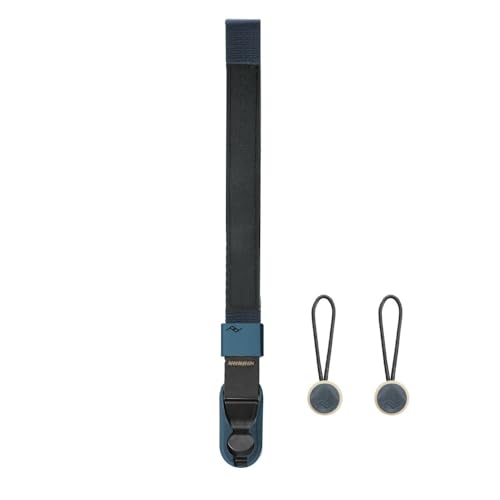
A wrist strap suits both of these bodies, keeping a heavy flagship secure in the hand without the bulk of a neck strap. The Anchor Link system lets you clip it on and off in a second.
Specs
- Seatbelt-style nylon webbing with aluminum hardware; Anchor Link quick-release system; anchors hold over 200 lb; adjusts from 20 cm to 29 cm; stows as a bracelet with a magnetic clasp; weighs about 50 g; fits any camera with a strap lug.
5. VSGO Full-Frame Camera Sensor Cleaning Kit
Two cameras that change lenses in the field will collect dust on their sensors. This full-frame kit keeps swabs and fluid together so you can clean a sensor safely before a shoot.
Specs
- 24 mm swabs sized for full-frame sensors; sensor cleaning fluid included; microfiber swab heads for single-pass cleaning; sealed swabs for field use; suits Nikon Z and Sony E full-frame mirrorless cameras; compact kit for a camera bag.
Frequently Asked Questions
Is the Nikon Z8 better than the Sony A9 III for wildlife photography?
For most wildlife work, the Z8 has the edge because its 45.7MP sensor gives you far more room to crop, which matters when a subject is distant. The A9 III counters with faster acquisition and a distortion-free global shutter, so it is the better pick if you shoot fast birds in flight at close range and crop little.
Can the Sony A9 III shoot 8K video like the Nikon Z8?
No. The A9 III records up to 4K 120p in 10-bit, which is excellent for slow-motion work, but it does not record 8K. The Z8 records 8.3K 60p in 12-bit N-RAW internally, so it is the clear choice if 8K capture or heavy video work is part of your plans.
Which camera has better battery life, the Z8 or the A9 III?
The Sony A9 III lasts longer, with a CIPA figure of around 530 shots per charge against around 340 shots for the Nikon Z8. Real-world results vary with burst use and viewfinder settings, but the Sony advantage holds in practice, so Z8 owners should carry a spare battery on long days.
Do the Z8 and A9 III use the same memory cards?
Partly. Both cameras accept SD UHS-II cards, so an SD card works in either body. For the fast slot they differ: the Z8 uses CFexpress Type B, while the A9 III uses CFexpress Type A, and the two formats are not interchangeable.
More from Amazon
Programs that pair well with the guide above. Offers and eligibility are set by Amazon and may change.
Free shipping on eligible items, Prime Video and more. Eligible new members can start with a free trial.
Start a Prime free trialAudiobooks and podcasts to listen to on the go. Eligible new members can start with a free trial.
Try Audible freeAd-free music streaming. Eligible new subscribers can start with a free trial.
Try Music Unlimited freeA free business account with business pricing and bulk-buying tools for work, shop or home office.
Create a business accountAs an Amazon Associate we earn from qualifying purchases.









