Key takeaways
- Climbing with a camera means weight, weather, and awkward access. These five bags keep your gear safe on rock, from the crag to the summit, all day.
A climbing day asks more of a camera bag than almost any other kind of shoot. You hike to the crag with a full rack, scramble over loose rock, clip into a harness, and your camera still has to be within reach when the light turns good.

As an Amazon Associate, we earn from qualifying purchases.
Climbing photography sits at the meeting point of two demanding hobbies. Rock climbing rewards light loads and free movement. Photography rewards protection, organisation, and fast access. A bag built only for one of those jobs will fail at the other. The five bags in this guide balance both sides: they protect a camera and a couple of lenses, carry comfortably under a harness, and open with one hand free.
Why Climbing Is Hard on a Camera Bag
The approach alone can be a steep hike over scree and across boulder fields. Your bag gets scraped against rock and set down on grit. Dust works its way into zippers, and a sudden shower can arrive while you are halfway up a pitch with no shelter in sight.
Weight matters more here than in most kinds of photography. Every extra pound is a pound you carry up the approach and a pound that pulls on your shoulders while you belay. The best climbing bags keep their own weight low and carry the load close to your spine.
Access is the other half of the problem. On a climb you rarely have both hands free. You need to pull your camera out, shoot, and put it away again, often while standing on a narrow ledge. A bag with side access or a rear opening lets you swing it around and grab the camera.
What to Look for in a Climbing Bag
Capacity comes first, and the right number is smaller than most photographers expect. A climbing bag needs to hold one camera body, one or two lenses, a few small accessories, and the personal items you need for the day: water, food, a layer, and sun protection. Look for 15 to 25 litres with a clear split between the camera compartment and the personal compartment.
Fit and comfort decide whether you actually enjoy the day. Padded shoulder straps matter, but the waist belt matters more on steep ground, because it keeps the load from bouncing and pulling you backward. A sternum strap keeps the shoulder straps in place when you reach overhead.
Access style is worth thinking about before you buy. Rear access, where the camera compartment opens against your back, is the most secure option, because the opening stays clean on dusty ground. Side access is the fastest, because you can swing the bag around on one strap and pull the camera out without taking the pack off. For climbing, rear or side access beats top access every time.
Weather protection deserves a close look at the fabric and the zips. A coated nylon or polyester shell sheds light rain and resists abrasion against rock, and a rain cover is the backup layer for heavy rain. Be honest about limits: no bag in this guide is fully waterproof. A water-resistant shell plus a rain cover and closed zips is the realistic combination.
1. TARION Canvas Camera Backpack
The TARION canvas backpack is the most old-fashioned looking bag in this guide, and that is part of its charm on rock. The canvas shell has a rugged feel, and it shrugs off scrapes that would mark a smooth nylon bag. It is a compact pack, which is exactly what you want when the approach involves scrambling.
Specs
- Material: canvas with water-resistant finish; Rain cover: included; Tripod compartment: yes, bottom; Laptop compartment: yes; Weight: 2.65 lb; Dimensions: 11.02 x 5.91 x 14.96 in; Model: MVJPS-TARION-M-02-Backpack-G
Inside, removable padded dividers let you shape the camera compartment around your body and lenses rather than living with a fixed layout. The rain cover is included and worth using: canvas sheds light rain on its own, but it absorbs water in a long downpour. The TARION is not the biggest bag here: it forces you to pack light.
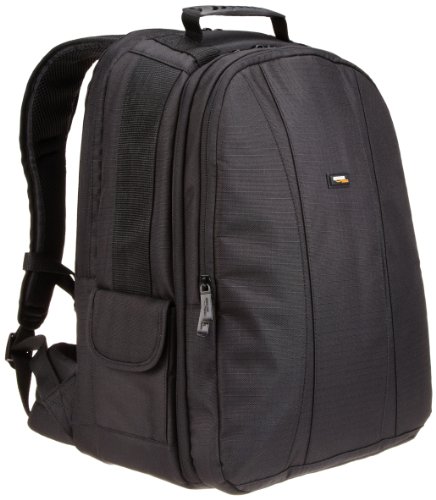
2. Amazon Basics DSLR and Laptop Backpack
The Amazon Basics backpack is the plain workhorse of this guide. It does not try to look clever, and it does not need to. It is a roomy, well-padded pack that holds a serious amount of gear, and its simple rectangular shape packs neatly against your back.
Specs
- Capacity: 17 L; Material: polyester; Holds: 2 SLR camera bodies and 3 to 4 lenses; Laptop sleeve: up to 17 in; Weight: 4.2 lb; Pockets: 5; Tripod straps: exterior, adjustable
The interior is the strength here. Removable dividers let you fit two bodies and three or four lenses, and the padded walls protect gear when the bag gets set down hard on rock. The laptop sleeve fits a 17-inch machine, and five pockets hold memory cards, batteries, a lens cloth, and small items. One honest limitation: this bag has no included rain cover, so in heavy rain you will need a cover of your own. It is also the heaviest bag in this guide at 4.2 lb before you load it.
3. Lowepro Fastpack PRO BP 250 AW III
Lowepro has been making camera backpacks for decades, and the Fastpack PRO BP 250 AW III shows that experience. It is built around a simple idea: your camera should be reachable in seconds, and your personal gear should stay separate.
Specs
- Capacity: 25 L; Material: 300D ripstop nylon; Laptop compartment: up to 15 in; Camera compartment: DSLR or mirrorless body with 4 to 5 lenses, including an attached 24-70mm f/2.8 lens; Access: QuickDoor side access; Weather cover: All Weather AW Cover included; Model: LP37331-PWW
The QuickDoor is the feature that defines this bag. A side opening gives you the camera without taking the pack off your back, which is what you want when the light is doing something interesting. The lower camera compartment is separated from the upper personal compartment, so your food, layer, and sunscreen never touch your lenses. The All Weather cover pulls out of its own pocket and fits over the whole bag. At 25 litres this is the largest bag in the guide, which makes it a good pick for long days. On a tight chimney, though, a 25-litre pack is more to manage than a compact one.
4. Manfrotto Advanced Befree III Backpack

The Manfrotto Advanced Befree III is built for photographers who carry a full kit. Its defining feature is rear access: the camera compartment opens against your back, which keeps the opening clean when the bag sits on dusty ground and keeps your gear secure while you wear it.
Specs
- Camera capacity: DSLR or mirrorless body with 70-200mm f/2.8 lens attached, plus up to 6 extra lenses; Laptop compartment: 15 in laptop and 9.7 in tablet; Weight: 2.69 lb; Layout: 60 percent photo gear, 40 percent personal items; Rain cover: included; Tripod pocket: expandable side pocket; Model: MB-MA3-BP-BF
The 60/40 split between photo gear and personal items is a sensible layout for a climbing day. The lower compartment holds the camera kit, protected by customisable dividers, while the upper compartment holds food, a layer, and the small personal items you need on the wall. The expandable side tripod pocket swallows a travel tripod or a water bottle without eating into the interior. One note on availability: this listing was verified through a mirror of the United States store, so check the live listing and stock before you order.
5. Brevite The Jumper Photo Backpack 18L

The Brevite Jumper is the smallest and lightest bag in this guide, and it is the pick for climbers who travel light. It looks like an ordinary daypack, which is a genuine advantage: it does not advertise that it holds expensive camera gear, and it blends in at the crag, on the trail, and in town after the climb.
Specs
- Capacity: 18 L; Material: 600D polyester; Weight: 1.8 lb; Laptop sleeve: padded; Access: side-entry zipper pocket; Pocket: J-zip front pocket; Weather resistance: weather-resistant shell, not fully weatherproof
The side-entry pocket is the heart of the Jumper. You swing the bag around on one strap, open the side zip, and your camera is in your hand. That is the fastest access in this guide, and on a climb, speed matters. The main compartment uses adjustable dividers, so you can fit a mirrorless body and two or three lenses and still have room for a layer and lunch. At 1.8 lb the Jumper is barely there on your back. The 600D polyester shell is tough and water resistant, but it is not fully weatherproof, so in a heavy downpour you will want a rain cover of your own.
How the Five Bags Compare
The five bags cover the full range of climbing styles. The Brevite Jumper is the lightest and most discreet, built for fast-and-light climbers with a mirrorless kit. The TARION canvas pack is a compact and rugged option for climbers who like a simple bag. The Amazon Basics pack is the roomiest for the least fuss. The Lowepro Fastpack PRO is the fastest to open, with the largest capacity in the guide. The Manfrotto Befree III is the most organised, with rear access and a clear split between camera gear and personal items.
Capacity runs from 17 litres at the Amazon Basics to 25 litres at the Lowepro. Weight runs from 1.8 lb at the Brevite to 4.2 lb at the Amazon Basics. Rain covers come included with the TARION, the Lowepro, and the Manfrotto, while the Amazon Basics and the Brevite need a cover of your own in heavy rain.
Climbing Field Tips
Pack the night before, and pack with the climb in mind. Put the camera and the lens you will use first nearest the access door. Put water where you can reach it without opening the main compartment. Keep the rain cover in its pocket and know how to deploy it.
At the crag, set the bag down with care. Pick a flat spot out of the fall line, away from where loose rock might come down. If the ground is dusty, set the bag on its back panel rather than on the access door, so dust stays out of the opening. Keep zips closed whenever you are not taking gear out. A heavy bag changes your balance, so tighten the waist belt and the sternum strap before you move over loose rock. Take the bag off before you climb, and clip it to the anchor or hang it from a tree if the ground is wet.
Which Bag to Choose
If you want one bag for most climbing days, the Manfrotto Advanced Befree III is the strongest all-round pick. Rear access keeps your gear secure and clean, the 60/40 split handles a full kit plus a day of personal items, and the included rain cover and tripod pocket cover the extras. If you climb fast and light, take the Brevite Jumper: the lightest bag here by a clear margin. If you want the fastest access of all, take the Lowepro Fastpack PRO BP 250 AW III, with its QuickDoor and the best rain protection in this guide. If you want the most room for the least fuss, take the Amazon Basics DSLR and Laptop Backpack, and add a rain cover of your own. If you want a compact, rugged bag, take the TARION canvas backpack.
What size camera bag do I need for climbing?
A bag in the 15 to 25 litre range covers most climbing days. That size holds one camera body, one or two lenses, a few small accessories, and the personal items you need for the day. Smaller than 15 litres and you will struggle to fit water and a layer. Bigger than 25 litres and the bag feels bulky on steep ground.
Can I climb with a camera backpack on?
You can hike and scramble with a camera backpack on, but you should take it off before you climb. A pack changes your balance, snags on rock, and puts your gear at risk if you fall. Clip the bag to the anchor, hang it from a tree, or leave it at the base of the wall.
How do I keep my camera dry while climbing?
Use a bag with a water-resistant shell and a rain cover, and keep zips closed whenever you are not shooting. In heavy rain, pull the cover on early rather than waiting until the bag is already wet. A dry bag inside the main compartment adds a second layer of protection.
Should I choose rear access or side access for a climbing bag?
Both work well, and the best choice depends on how you shoot. Rear access is more secure and keeps the opening clean when the bag sits on dusty ground. Side access is faster, because you can swing the bag around and grab the camera without taking the pack off.
More from Amazon
Programs that pair well with the guide above. Offers and eligibility are set by Amazon and may change.
Free shipping on eligible items, Prime Video and more. Eligible new members can start with a free trial.
Start a Prime free trialAudiobooks and podcasts to listen to on the go. Eligible new members can start with a free trial.
Try Audible freeAd-free music streaming. Eligible new subscribers can start with a free trial.
Try Music Unlimited freeA free business account with business pricing and bulk-buying tools for work, shop or home office.
Create a business accountAs an Amazon Associate we earn from qualifying purchases.