
Our Short List of 3

- 61.0-megapixel full-frame back-illuminated Exmor R sensor; BIONZ XR processor with dedicated AI processing unit; 8K24p and 4K60p video; 5-axis stabilization rated to 8 stops; dual CFexpress Type A and SD slots; 9.44-million-dot viewfinder; 4-axis multi-angle rear screen; NP-FZ100 battery; 723 g body.

- 45.7-megapixel full-frame stacked CMOS sensor; EXPEED 7 processor; 8K60p N-RAW and 4K120p video; 20 fps raw bursts with no viewfinder blackout; fully electronic shutter; 5.5 stops of in-body stabilization; CFexpress Type B and SD slots; EN-EL15c battery; 910 g body.

- 128 GB SDXC UHS-II card; up to 300 MB per second read and write; V90 video speed class; model SDSDXDM-128G-GN4IN; works in the SD slot of both the A7R V and the Z8; lifetime limited warranty.
All 5 Picks at a Glance
| Product | Specs | Action |
|---|---|---|
| 1. Sony A7R V Mirrorless Camera Body |
| Check price on Amazon |
| 2. Nikon Z8 Mirrorless Camera Body |
| Check price on Amazon |
| 3. SanDisk Extreme PRO SDXC UHS-II V90 128GB Memory Card |
| Check price on Amazon |
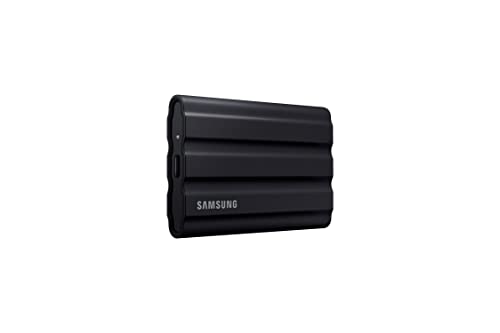 4. Samsung T7 Shield Portable SSD 1TB, Black |
| Check price on Amazon |
 5. Giottos AA1900 Rocket Air Blaster, Large, Black |
| Check price on Amazon |
Our Top Picks
Introduction
Two flagship-class cameras, two very different ideas about what a high-resolution mirrorless body should do. The Sony A7R V packs 61 megapixels, a dedicated AI processing unit and 8K video into a compact body built for landscape, studio and detail-obsessed work. The Nikon Z8 takes the stacked sensor and speed of the flagship Z9, trims the body down by about a third, and adds 8K60 raw video and blackout-free bursts for wildlife and action.
Both cameras shoot full-frame stills with enormous files, both offer deep autofocus subject detection, and both can anchor a professional kit for years. The differences show up in how they get there: Sony leans on sheer resolution and clever AI autofocus, while Nikon leans on readout speed, a fully electronic shutter and a deeper grip.
As an Amazon Associate, we earn from qualifying purchases.
Resolution and Image Quality
Resolution is the Sony’s clearest win. At 61 megapixels, the A7R V captures roughly a third more detail than the Z8’s 45.7 megapixels, and that gap is visible in large prints, in heavy crops and in fine textures such as foliage, fabric and architecture. Landscape photographers who print large will notice it immediately, and commercial shooters who crop into a frame for a second composition will value the extra room. The Sony sensor is back-illuminated, and its dynamic range at low sensitivity is excellent, holding detail in deep shadows and bright skies with room to lift either side in editing.
The Nikon sensor gives up some resolution but gains speed. Because it is stacked, it reads out much faster than the Sony sensor, which reduces rolling shutter distortion when the camera or the subject moves quickly. For stills of moving subjects, that speed matters more than the extra megapixels. The Z8 also delivers clean files at high sensitivity, with noise that stays controlled through the range most photographers actually use. Its colors are rich and natural, and its files hold up well to editing, even if they cannot be cropped quite as far as the Sony files.
For most buyers, the practical question is how large you print and how much you crop. If you print beyond A2 size or crop heavily, the Sony resolution is worth having. If you shoot action or wildlife, the Nikon files are more than detailed enough.
Autofocus
Autofocus is close, and each system wins in different situations. The Sony A7R V introduced a dedicated AI processing unit that recognizes people, animals, birds, insects, cars, trains and aircraft, and it estimates human pose, so it can keep focus on a subject even when the face turns away or is partly hidden. Eye detection is tenacious, locking onto a human or animal eye and holding it through movement. In practice, the Sony feels almost clairvoyant when tracking a person walking toward the camera or a pet moving through a room.
The Nikon Z8 uses the same autofocus core as the flagship Z9, with deep learning subject detection for people, animals, birds, vehicles and aircraft. It is especially strong on birds and wildlife, where it can find a small bird in a busy frame and hold it as it flies across the sky. The Z8 also offers 3D tracking that follows a subject across the frame with impressive stickiness. For fast, erratic subjects, many wildlife photographers find the Nikon system the more reliable of the two.
Burst shooting separates them further. The Sony shoots up to 10 frames per second with continuous autofocus, which is respectable but modest for a camera at this level. The Nikon shoots 20 frames per second in raw, 30 frames per second in JPEG, and up to 120 frames per second in a cropped JPEG mode, all with a fully electronic shutter and no viewfinder blackout. Choose the Sony if people and portraits dominate your work, and choose the Nikon if birds, wildlife and fast sport dominate yours.
Video
Video is where the Nikon pulls ahead on paper and in use. The Z8 records 8K at up to 60 frames per second in N-RAW, 4K at up to 120 frames per second, and 10-bit ProRes internally, with no recording time limit in normal conditions. It oversamples 4K from the full sensor width, giving sharp, detailed footage, and its electronic shutter means no shutter shock and no mechanical wear during long video sessions.
The Sony is no slouch. The A7R V records 8K at 24 frames per second and 4K at up to 60 frames per second, oversampled from 6.2K for clean, detailed 4K. It offers 10-bit 4:2:2 internal recording, S-Log3 and S-Cinetone profiles, focus breathing compensation and AI autofocus that tracks a subject smoothly through a scene.
The deciding factor is frame rate and raw video. If you need 4K120 slow motion or 8K60 raw, the Nikon is the only choice here. If you need 4K60 with superb autofocus and a compact rig, the Sony is the easier camera to live with.
Stabilization
Stabilization is another Sony win on the specification sheet, with a useful edge in real shooting too. The A7R V offers up to 8 stops of in-body stabilization, coordinated with lens stabilization where available, and it is tuned to hold a 61-megapixel sensor steady at slow shutter speeds. Handheld landscape work at dusk, slow shutter panning and low-light interiors all benefit, and the stabilization is effective enough to make a tripod optional in conditions where it once felt mandatory.
The Nikon Z8 offers up to 5.5 stops of in-body stabilization, which is less on paper but still very capable. It works with lens stabilization for a combined effect, and it keeps the viewfinder steady while you compose. For wildlife work with long lenses, the Nikon stabilization is tuned for the kind of movement you get when tracking a subject. The difference shows up at the slowest shutter speeds, where the Sony holds a static scene steady a stop or two longer.
Battery Life and Power
Battery life favors the Nikon in stills, while the Sony has a small edge in efficiency for video and mixed use. The Z8 uses the EN-EL15c battery, rated for around 340 shots per charge under standard testing, and considerably more in real use when the electronic shutter and airplane mode are used sensibly. It charges over USB-C and supports USB power delivery, so a power bank can keep it running through a long day in the field.
The Sony uses the NP-FZ100 battery, rated for around 530 shots per charge, and it is famously frugal in real-world shooting, often delivering far more frames than the headline figure suggests. It also charges over USB-C and supports USB power delivery. Carry a spare battery and a compact USB-C power bank either way, since cold weather and heavy video use drain both batteries quickly.
Handling and Build
Handling is where personal preference matters most, and the two cameras feel very different in the hand. The Nikon Z8 is the larger, heavier body, at around 910 grams, with a deep grip and a layout that will feel familiar to anyone who has used a Nikon DSLR. Buttons are large and well spaced, the grip fills the hand, and the camera balances well with long lenses.
The Sony A7R V is smaller and lighter, at around 723 grams, with a grip that has been improved over earlier Sony bodies but still feels compact next to the Nikon. Its controls are dense, with many buttons that can be customized, and its menu system is deep but well organized once you learn it.
Who Should Buy Which
Choose the Sony A7R V if resolution is your first priority. Landscape, architecture, product and studio photographers will get the most from its 61 megapixels, its pixel-shift mode and its superb stabilization. Portrait photographers will love its AI autofocus and eye detection. It is also the better travel companion, being lighter and smaller, and it pairs well with compact primes for a kit that stays portable.
Choose the Nikon Z8 if speed is your first priority. Wildlife, bird and sports photographers will get the most from its stacked sensor, blackout-free bursts and fast autofocus. Hybrid shooters who need 4K120 and 8K60 raw video will find the Nikon far more capable.
Our Picks
These five products cover the two cameras and the accessories that both of them share. The two bodies are the heart of the comparison, and the three accessories work with either camera, so they are useful whichever side you choose.
1. Sony A7R V Mirrorless Camera Body
- 61.0-megapixel full-frame back-illuminated Exmor R sensor; BIONZ XR processor with dedicated AI processing unit; 8K24p and 4K60p video; 5-axis stabilization rated to 8 stops; dual CFexpress Type A and SD slots; 9.44-million-dot viewfinder; 4-axis multi-angle rear screen; NP-FZ100 battery; 723 g body.
The resolution flagship in this comparison, with a 61-megapixel sensor, AI autofocus and 8K video in a compact weather-sealed body.
2. Nikon Z8 Mirrorless Camera Body
- 45.7-megapixel full-frame stacked CMOS sensor; EXPEED 7 processor; 8K60p N-RAW and 4K120p video; 20 fps raw bursts with no viewfinder blackout; fully electronic shutter; 5.5 stops of in-body stabilization; CFexpress Type B and SD slots; EN-EL15c battery; 910 g body.
The smaller Z9, with a 45.7-megapixel stacked sensor, blackout-free bursts and 8K60 raw video in a deep-gripped pro body.
3. SanDisk Extreme PRO SDXC UHS-II V90 128GB Memory Card
- 128 GB SDXC UHS-II card; up to 300 MB per second read and write; V90 video speed class; model SDSDXDM-128G-GN4IN; works in the SD slot of both the A7R V and the Z8; lifetime limited warranty.
A fast UHS-II card that fits the SD slot of both cameras, with the write speed needed for high-resolution bursts and demanding video modes.
4. Samsung T7 Shield Portable SSD 1TB, Black
- 1 TB portable solid state drive; up to 1,050 MB per second read and 1,000 MB per second write; USB 3.2 Gen 2 with USB-C connection; IP65 dust and water resistance; drop resistant to 3 metres; model MU-PE1T0S/AM; 98 g.
A rugged field backup drive for the huge stills and video files both cameras produce, with dust and water resistance for outdoor use.
5. Giottos AA1900 Rocket Air Blaster, Large, Black
- Large rocket blower, model AA1900; 7.5 inches tall with a 2.25-inch nozzle; one-way valve keeps dust out of the air stream; durable rubber construction; stands upright on its fins; 90 g.
A simple, reliable blower for clearing dust from either sensor and from lenses in the field, with no batteries and no canned air to carry.
Frequently Asked Questions
Which camera has better image quality, the Sony A7R V or the Nikon Z8?
The Sony has the resolution advantage, with 61 megapixels against 45.7, so it records finer detail and allows heavier cropping and larger prints. The Nikon has the speed advantage, with a stacked sensor that reduces rolling shutter and keeps files clean at high sensitivity.
Is the Nikon Z8 better than the Sony A7R V for wildlife photography?
Yes, for most wildlife work the Nikon is the stronger choice. Its stacked sensor, 20 fps raw bursts with no viewfinder blackout and fast bird detection make it easier to track and capture fast-moving animals. The Sony tracks people superbly, but its 10 fps burst rate gives the Nikon the edge on fast subjects.
Can the Sony A7R V shoot 8K video like the Nikon Z8?
Both cameras shoot 8K, but the Nikon goes further. The Sony records 8K at 24 frames per second, while the Nikon records 8K at up to 60 frames per second in N-RAW, plus 4K at up to 120 frames per second.
Which camera should a landscape photographer choose?
A landscape photographer will usually be happier with the Sony A7R V. Its higher resolution, pixel-shift mode for static scenes, stronger stabilization and lighter body suit tripod and handheld landscape work. Resolution and stabilization are the deciding factors here, and the Sony wins both.
Final Verdict
There is no single winner, because these cameras are built for different photographers. The Sony A7R V wins on resolution, stabilization, screen flexibility and autofocus for people. The Nikon Z8 wins on speed, video, burst depth and handling with long lenses. If you print large and shoot slowly, buy the Sony. If you shoot fast and film often, buy the Nikon. Either way, pair your choice with fast storage and a rugged backup drive.
More from Amazon
Programs that pair well with the guide above. Offers and eligibility are set by Amazon and may change.
Free shipping on eligible items, Prime Video and more. Eligible new members can start with a free trial.
Start a Prime free trialAudiobooks and podcasts to listen to on the go. Eligible new members can start with a free trial.
Try Audible freeAd-free music streaming. Eligible new subscribers can start with a free trial.
Try Music Unlimited freeA free business account with business pricing and bulk-buying tools for work, shop or home office.
Create a business accountAs an Amazon Associate we earn from qualifying purchases.









