Our Top Picks


Aerial photography rewards patience, planning, and a camera that holds detail when the light turns difficult. A drone built for stills work earns its place on a simple test: does the sensor capture enough information for large prints and heavy crops, and does the gimbal hold the frame steady while the aircraft hangs in moving air? Video specs fill most listings, yet a photographer judges a drone by stills first — sensor size, photo resolution, file flexibility, and the range of focal lengths on board.
This guide compares three camera drones that suit professional photography, judged from their published specs alone. The lead pick carries a 100MP four-thirds sensor with three lenses, a combination no other folding drone matches. The other two carry one-inch sensors: one pairs a wide lens with a medium tele lens in a mid-weight body, and the other packs a one-inch sensor into a sub-250-gram aircraft that travels light and faces lighter rules in many regions. Each one captures DNG stills, carries a three-axis gimbal, and flies long enough for a careful session over a location. Read the sections below to match sensor, lenses, and flight time to the work you shoot.
What to Look For
Sensor size. A larger sensor gathers more light and holds more detail in shadows and highlights. A four-thirds sensor outclasses a one-inch sensor for dynamic range and clean files at dawn and dusk, while a one-inch sensor still delivers strong files for web use, editorial work, and moderate print sizes. Sensor size is the single most important figure on a photography drone, ahead of every video spec on the listing.
Photo resolution. A 48MP or 50MP file gives room to crop into a scene and still hold a printable image. A 100MP file goes further: it survives aggressive crops, supports very large prints, and keeps fine texture in foliage, stone, and water. Resolution only helps when the lens and the sensor work together, so read the sensor size beside the megapixel count rather than judging either figure alone.
File flexibility. DNG files hold far more editing latitude than compressed JPEGs. A photographer who grades color, lifts shadows, or recovers bright skies needs that latitude, and all three drones in this guide capture DNG stills. Check that the drone you pick lists DNG support, and keep a fast card and enough onboard storage for a full session of large files.
Gimbal range. A three-axis gimbal keeps the horizon level and the frame steady in wind. Extra range matters for stills: an upward tilt lets you frame a tower, a cliff face, or a tall facade from below, and a gimbal that rotates past vertical opens true portrait-orientation stills without cropping a landscape frame. The lead pick in this guide rotates its gimbal a full 360 degrees.
Focal lengths. A wide lens sets the scene; a medium tele lens compresses distance and isolates a subject. Two or three focal lengths on one aircraft mean fewer flights and fewer lens compromises, because you change perspective from the controller rather than landing and swapping hardware. For architecture, real estate, and landscape work, a tele option is often the difference between a usable frame and a wasted flight.
Flight time and transmission. Longer flights mean fewer battery swaps during golden hour, when the light changes minute by minute. A strong transmission link keeps the live view smooth at distance, so you can judge focus and exposure with confidence rather than guessing from a frozen frame. Read the maximum flight time and the transmission range together, since a drone that flies far but drops its link is no help at the edge of a location.
Wind handling and weight. A heavier aircraft holds position better in gusts, while a sub-250-gram aircraft travels light and faces lighter rules in many regions. Match weight to your travel habits: a compact drone that fits in a camera bag gets used more often than a flagship left at home. Whatever the weight, read the wind resistance figure on the listing and respect it on the day.
Obstacle sensing. Omnidirectional sensing protects the aircraft when you fly close to trees, walls, and cliffs for a tight frame. Forward LiDAR adds another layer in low light, where cameras alone struggle to judge distance. Sensing never replaces a careful flight plan, but it turns a risky position into a workable one.
DJI Mavic 4 Pro with DJI RC 2

https://www.amazon.com/dp/B0DS2HDF1M
The Mavic 4 Pro is the most capable camera drone in this guide, and the listing describes it for professionals. Its main camera is a 100MP four-thirds CMOS Hasselblad unit, the largest sensor on any folding drone in this roundup, and it records 6K/60fps HDR video with around 16 stops of dynamic range. For stills work, the 100MP resolution is the headline: files survive heavy crops, hold fine texture in landscape scenes, and support large prints without softening.
Two more cameras sit beside the main unit. A 1/1.3-inch medium tele camera covers a 70mm equivalent focal length, and a 1/1.5-inch tele camera reaches 168mm equivalent, so one aircraft covers wide, portrait, and compressed tele perspectives without landing. All three cameras feed a 360-degree Infinity Gimbal that tilts 70 degrees upward, which opens upward angles on tall structures that a fixed gimbal cannot frame.
Flight time reaches 51 minutes at maximum, and the O4+ transmission link reaches 30 km with 10-bit HDR video on the live view. Nightscape sensing works down to 0.1 lux, and omnidirectional obstacle sensing guards the aircraft in tight spaces. The kit includes the RC 2 controller with a built-in screen, one battery, and a 100W USB-C power adapter, and the aircraft carries 64GB of internal storage alongside its card slot. DNG stills are supported, so files carry the editing latitude a professional workflow demands. At 1,063 grams it is the heaviest drone here, which helps it hold position in wind, and the same weight means it belongs in a dedicated case rather than a jacket pocket. Confirm the exact kit on the listing, since the same model ships in several bundles with different batteries and controllers.
DJI Air 3S Fly More Combo with DJI RC 2
https://www.amazon.com/dp/B07FVZFFXD
The Air 3S pairs a one-inch CMOS wide-angle camera with a medium tele camera, giving a photographer two focal lengths on a mid-weight aircraft. The wide camera covers a 24mm equivalent view and the medium tele camera covers 70mm equivalent, and both capture 48MP stills with dual 4K/60fps HDR video. Dynamic range reaches 14 stops, which keeps highlight and shadow detail in high-contrast scenes such as sunlit facades against dark water or a bright sky over a shaded valley.
Flight time reaches 45 minutes at maximum, and the transmission link reaches 20 km. Omnidirectional obstacle sensing and Nightscape low-light sensing are built in, so the aircraft holds position and avoids hazards during dawn and dusk sessions. DNG stills are supported for full editing latitude in post.
This listing is the Fly More Combo with the RC 2 screen controller. The kit includes three batteries, a battery charging hub, an ND filter set covering ND8, ND32, and ND128, a shoulder bag, and the RC 2 controller with a bright built-in screen. Three batteries change how a session runs: you rotate packs through the hub and keep flying while the light holds, rather than cutting a shoot short after one pack. At 724 grams the aircraft sits between the flagship and the ultralight pick in this guide, balancing wind handling against travel weight. The ND filters matter for stills work too, since they let you hold a slow shutter for motion blur in water and clouds without overexposing the frame. Confirm the exact kit on the listing before ordering, since the Air 3S ships with different controllers and battery counts.
DJI Mini 5 Pro Fly More Combo Plus with DJI RC 2
https://www.amazon.com/dp/B0F6XK911R
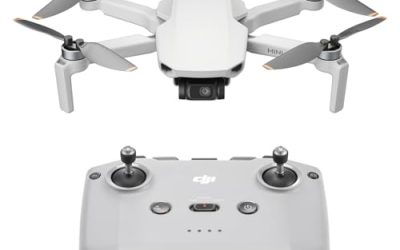
The Mini 5 Pro is the most travel-friendly drone in this guide, and it refuses to trade its sensor for its size. A one-inch CMOS sensor captures 50MP stills and 4K/60fps HDR video, and the three-axis gimbal rotates 225 degrees for true vertical stills without cropping a landscape frame. Forward LiDAR joins omnidirectional obstacle sensing, and ActiveTrack 360 degrees keeps a moving subject framed while you concentrate on composition.
At 249 grams with the standard battery, the aircraft sits in the sub-250-gram class, which faces lighter rules in many regions and slips into a camera bag beside a mirrorless body. The Fly More Combo Plus kit in this listing includes three Intelligent Flight Battery Plus packs, each rated for up to 52 minutes of flight, plus a two-way charging hub, an ND filter set covering ND8, ND32, and ND128, a shoulder bag, and the RC 2 controller with a built-in screen. Onboard storage reaches 42GB, and DNG stills are supported for editing latitude in post.
The transmission link reaches 20 km, and Nightscape sensing supports low-light flying. The compact body trades some wind authority against the heavier picks here, so read the wind resistance figure and plan flights for calmer windows when the location allows. For travel photographers, hikers, and anyone who shoots from a small bag, the Mini 5 Pro is the pick that actually comes along on every trip, and a drone that is with you captures frames a flagship left at home never will. Confirm the exact kit on the listing, since the Mini 5 Pro ships in several bundles and the Plus batteries in this kit are what deliver the longer flight times.
Comparison Table
| Drone | Main sensor | Still resolution | Cameras | Max flight time | Transmission |
|---|---|---|---|---|---|
| DJI Mavic 4 Pro (RC 2) | 4/3 CMOS Hasselblad | 100MP | 3 (wide, 70mm, 168mm) | 51 min | 30 km |
| DJI Air 3S Fly More Combo (RC 2) | 1-inch CMOS | 48MP | 2 (24mm, 70mm) | 45 min | 20 km |
| DJI Mini 5 Pro Fly More Combo Plus (RC 2) | 1-inch CMOS | 50MP | 1 (wide) | 52 min (Plus battery) | 20 km |
Frequently Asked Questions
Which sensor size matters most for aerial stills?
Sensor size matters more than any other figure for stills quality. A four-thirds sensor gathers more light than a one-inch sensor, holds more detail in shadows and highlights, and keeps files clean at dawn and dusk. A one-inch sensor still delivers strong files for editorial work, web use, and moderate print sizes, and it fits in smaller, lighter aircraft. Choose the four-thirds sensor when large prints and heavy crops are part of the job, and choose a one-inch sensor when travel weight and portability matter more than the last margin of image quality.
Do these drones capture RAW stills?
Yes. All three drones in this guide capture DNG stills alongside JPEG. DNG files hold far more editing latitude than compressed files, so you can lift shadows, recover bright skies, and grade color without the banding and artifacts that compressed files show under heavy edits. Keep a fast card with enough capacity for a session, since DNG files are much larger than JPEGs, and confirm the file format on the listing for the exact kit you order.
What should I check on the listing before ordering?
Check the exact kit first. Each model in this guide ships in several bundles: different controllers, different battery counts, and different included accessories. The RC 2 controller has a built-in screen, while the RC-N3 controller uses a phone for its display, and the Fly More bundles add batteries, a charging hub, ND filters, and a bag. Confirm the battery count, the controller model, and the included accessories on the listing, and confirm that the bundle matches the one described in this guide before you complete the order.
How to Choose
Match the drone to the work you shoot most. Choose the Mavic 4 Pro when image quality leads every decision: its 100MP four-thirds sensor, three focal lengths, and 360-degree gimbal cover the widest range of professional stills, from large landscape prints to compressed architectural detail. Choose the Air 3S when you want two focal lengths and a mid-weight aircraft with three batteries in the kit, a combination that suits real estate, travel, and editorial sessions where the light changes fast. Choose the Mini 5 Pro when travel weight decides the matter: a one-inch sensor in a sub-250-gram body with long-flight Plus batteries is the camera that rides along on every trip, and the best drone for a shoot is the one that is actually in your bag when the light turns. Whatever you pick, confirm the exact kit on the listing, carry spare batteries, and plan each flight around the light rather than the clock.
Disclosure: As an Amazon Associate, we may earn a commission from qualifying purchases made through links in this article, at no additional cost to you.
More from Amazon
Programs that pair well with the guide above. Offers and eligibility are set by Amazon and may change.
Free shipping on eligible items, Prime Video and more. Eligible new members can start with a free trial.
Start a Prime free trialAudiobooks and podcasts to listen to on the go. Eligible new members can start with a free trial.
Try Audible freeAd-free music streaming. Eligible new subscribers can start with a free trial.
Try Music Unlimited freeA free business account with business pricing and bulk-buying tools for work, shop or home office.
Create a business accountAs an Amazon Associate we earn from qualifying purchases.