Our Top Picks


Winter turns familiar landscapes into something new. Snow softens every edge, frozen lakes become mirrors, and low sun paints long blue shadows across white fields. A drone is the best way to capture that change, but winter is also the hardest season to fly in. Cold air drains batteries, wind gusts push light airframes around, and bright snow confuses both cameras and sensors.
This guide compares five DJI drones that handle winter conditions well, from a pocketable sub-249 g flyer to a triple-camera flagship built for serious aerial work.
As an Amazon Associate, we earn from qualifying purchases.
Why Winter Is Hard on a Drone
Cold is the first enemy. Lithium batteries lose usable capacity as temperatures drop, so a 34-minute flight on a mild day may only last 25 minutes in freezing air. Keep spare batteries warm in an inside jacket pocket.
Wind is the second enemy. Winter storms and open ridgelines bring gusts that a light drone must fight constantly. Heavier airframes resist wind better, which is why the 958 g Mavic 3 Pro holds steady in conditions that push a 248 g Mini around.
Snow creates a third problem: exposure. A camera meter sees a bright white scene and darkens it, turning snow grey. Drones with high dynamic range and 10-bit video hold far more tone in snow and sky.
Finally, winter light is low and brief. The sun stays near the horizon, which is beautiful for long shadows but leaves little margin for long sessions.
What to Look for in a Winter Drone
Flight time matters more in winter than in any other season, because cold shortens every flight. Look for at least 30 minutes of claimed flight time, and expect to lose a quarter of it to the cold.
Obstacle avoidance matters because winter hides hazards. Bare branches and power lines stand out against snow, but thin twigs can be nearly invisible in flat light. Omnidirectional sensing is the safest setup for flying low over snowy woods.
Camera quality decides whether your snow shots look crisp or washed out. A larger sensor gathers more light in dim winter conditions, and a 1-inch sensor or bigger handles the gap between bright snow and dark pine trees far better than a small one.
Wind resistance is the fourth factor. Open coasts and frozen lakes funnel wind, and a drone that holds position in a 12 m/s gust keeps your framing steady.
One honest note applies to every drone in this guide: none of them is waterproof. Landing in deep powder or flying through falling snow can damage motors and electronics. Fly in clear air, wipe the drone dry after landing, and never take off or land in a snowdrift.
The 5 Best Drones for Winter Photography
1. DJI Mini 4 Pro

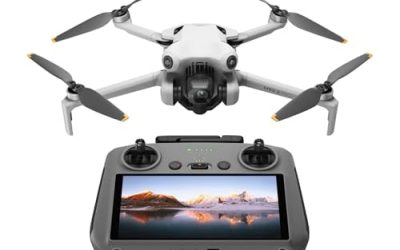
The Mini 4 Pro is the smallest drone in this guide. It weighs under 249 g, folds small enough to fit in a jacket pocket, and still carries omnidirectional vision sensing, a 48MP camera, and a 34-minute flight time. That makes it the easiest drone here to carry on a long winter hike, and it stays warm against your body until you need it.
Its 1/1.3-inch sensor shoots 48MP stills and 4K/60 HDR video with 10-bit D-Log M color. In snow, that dynamic range matters: bright fields and dark tree lines both keep detail.
The weak point in winter is weight. At under 249 g, the Mini 4 Pro feels gusts more than the heavier drones here, and its small battery loses charge faster in the cold. Plan for shorter flights than the claimed 34 minutes.
Specs
- Weight: under 249 g; Camera: 48MP, 1/1.3-inch CMOS; Video: 4K/60 HDR, 10-bit D-Log M; Flight time: up to 34 minutes; Sensing: omnidirectional vision sensing; Transmission: up to 20 km; Controller: DJI RC 2 with built-in screen.
2. DJI Air 3S
The Air 3S is the best all-round winter drone in this guide. Its dual-camera system pairs a 1-inch CMOS wide camera with a 3x medium telephoto, both shooting 48MP stills, so you can frame a wide snowy valley and then punch in on a distant cabin without landing to change lenses. The 1-inch sensor gathers noticeably more light than the Mini line in dim winter dawns, and the 14 stops of dynamic range keep snow detail from clipping.
Flight time reaches up to 45 minutes, the longest in this guide. The 724 g airframe resists wind far better than a sub-249 g drone, and omnidirectional sensing with a forward LiDAR sensor watches for thin branches and wires that are easy to miss against a white sky.
The Air 3S ships here with the RC-N3 controller, which uses your phone as the display. In deep cold, a phone screen dims and its own battery drains quickly, so keep the phone warm until takeoff.
Specs
- Weight: 724 g; Cameras: dual, 1-inch CMOS wide 48MP and 3x medium tele 48MP; Video: 4K/60 HDR, 14 stops of dynamic range; Flight time: up to 45 minutes; Sensing: omnidirectional obstacle sensing with forward LiDAR; Transmission: up to 20 km; Controller: DJI RC-N3.
3. DJI Mavic 3 Pro

The Mavic 3 Pro is the flagship in this guide and the strongest winter camera platform of the five. Its triple-camera system gives you a 4/3 CMOS Hasselblad wide camera at 20MP, a 70mm medium telephoto at 48MP, and a 166mm telephoto at 12MP. The wide lens captures a whole frozen lake, the medium tele isolates a snow-covered barn, and the long tele pulls in a distant peak without flying closer through gusty air.
The Hasselblad camera shoots 5.1K/50 video and 20MP stills with rich color and deep dynamic range. Flight time reaches up to 43 minutes, and the 958 g airframe is the most wind-resistant drone in this guide.
Omnidirectional sensing with APAS 5.0 steers around branches and wires automatically. The trade-off is size and weight: this is the bulkiest drone here, and it needs a proper bag rather than a jacket pocket. It also ships with a single battery in this configuration, so budget for spares.
Specs
- Weight: 958 g; Cameras: triple, Hasselblad 4/3 CMOS 20MP wide, 70mm medium tele 48MP, 166mm tele 12MP; Video: 5.1K/50; Flight time: up to 43 minutes; Sensing: omnidirectional obstacle sensing, APAS 5.0; Transmission: O3+ up to 15 km; Controller: DJI RC with built-in screen.
4. DJI Mini 3
The Mini 3 is the most affordable drone in this guide and the simplest winter flyer. At 248 g it needs no registration in many regions, folds down small, and flies for up to 38 minutes on a single charge. Its 48MP camera with a 1/1.3-inch sensor shoots 4K HDR video and crisp stills, and True Vertical Shooting turns the camera sideways for tall compositions.
For winter beginners, the Mini 3 is an easy first drone. It is light, quiet, and forgiving to fly.
The honest trade-off is sensing. The Mini 3 has no obstacle sensing at all, so it will not warn you about a bare branch or a fence wire in your path. Fly higher than the treeline, keep the drone in sight at all times, and avoid threading it between trees.
Specs
- Weight: 248 g; Camera: 48MP, 1/1.3-inch CMOS; Video: 4K HDR; Flight time: up to 38 minutes; Sensing: none, no obstacle sensing; Transmission: up to 10 km; Controller: DJI RC-N1.
5. DJI Avata 2 Fly More Combo
The Avata 2 is the wild card in this guide. It is an FPV drone, flown with goggles and a motion controller, and it sees winter completely differently from the camera drones above. Instead of hovering high above a snowy field, it dives through gaps between trees, skims low over frozen streams, and follows a skier down a slope at eye level.
This Fly More Combo includes three batteries, Goggles 3, the RC Motion 3 controller, a two-way charging hub, and a sling bag. Flight time reaches up to 23 minutes per battery, shorter than the camera drones here, but three warm batteries in rotation cover a good winter outing.
Be honest about its limits. The Avata 2 is video-first: its 12MP stills are weaker than every other drone here, so it is the wrong pick if still photography is your main goal. For immersive winter video, though, nothing else in this guide comes close.
Specs
- Weight: 377 g; Camera: 1/1.3-inch CMOS, 12MP, 155-degree field of view; Video: 4K/60, RockSteady stabilization; Flight time: up to 23 minutes; Sensing: downward vision sensing, built-in propeller guard; In the box: 3 batteries, Goggles 3, RC Motion 3, charging hub, sling bag; Transmission: up to 13 km.
How the Five Drones Compare
For pure image quality in winter, the Mavic 3 Pro leads. Its 4/3 Hasselblad sensor and triple-camera range handle bright snow and dark forest in the same frame better than anything else here.
For the best balance of flight time, wind resistance, and image quality, the Air 3S wins. Its 45-minute flight time is the longest in the guide, and its dual cameras cover wide and telephoto without landing.
For portability, the Mini 4 Pro is unmatched. It slips into a jacket pocket, stays warm against your body, and still offers omnidirectional sensing and 4K/60 HDR video.
For budget and simplicity, the Mini 3 is the entry point. Its 38-minute flight time and 48MP camera are strong for the size, but the lack of obstacle sensing means you must fly it with care.
For immersive winter video, the Avata 2 stands alone. No other drone here flies low through trees or follows a skier at eye level.
Winter Flying Tips That Keep Your Drone Safe
Warm your batteries before every flight. Keep them in an inside jacket pocket until the moment you load one into the drone. Land with at least 25 percent charge remaining, because a cold battery can drop suddenly near the end of a flight.
Check the wind before you fly. Winter gusts change fast, especially near ridgelines and frozen lakes. Fly into the wind on the way out, so the return leg uses less battery.
Protect your hands and your phone. Thin gloves make controller sticks hard to feel, and touchscreen gloves often fail in deep cold. Keep your phone warm in an inside pocket until takeoff.
Expose for the snow, not the sky. Add one to two stops of positive exposure compensation, so white snow renders white instead of grey.
Land on a dry surface. Deep powder swallows a small drone and melts into its motors. Carry a small landing pad, or land on a jacket or backpack.
Respect winter wildlife and other people. Animals burn precious energy in winter, and a drone buzzing overhead can push them into deep snow or away from food. Keep your distance, and never chase animals with a drone.
Which One to Choose
If you want the best winter photos and can carry the weight, choose the Mavic 3 Pro. Its large sensor and triple cameras are built for the hardest winter conditions.
If you want one drone that does nearly everything well, choose the Air 3S. Its 45-minute flight time and dual cameras make it the most capable all-rounder here.
If you hike or ski with your drone, choose the Mini 4 Pro. Its pocket size and omnidirectional sensing make it the easiest winter companion.
If you are new to drones and want a simple winter flyer, choose the Mini 3. Its low weight and long flight time are forgiving.
If your goal is thrilling winter video rather than stills, choose the Avata 2 Fly More Combo. Its FPV view and propeller guard are made for diving through snowy forests.
Winter rewards preparation. Warm batteries, calm wind, and a clear landing spot matter more than any single feature.
Frequently Asked Questions
Can I fly a drone in snow?
Light falling snow is usually fine for a short flight, but heavy snow is not. Wet snow can get into motors and vents, and it blinds vision sensors. Fly in clear air when you can, and dry the drone after landing. Never fly in a blizzard or in freezing rain.
How cold is too cold for a drone battery?
Most drone batteries are built to work down to around minus 10 degrees Celsius, but flight time drops sharply below freezing. Keep batteries warm in an inside pocket until use, and land with at least 25 percent charge left.
Do I need a permit to fly a drone in winter?
Winter does not change the basic rules, but many winter locations have extra restrictions. National parks, nature reserves, and ski areas often ban or limit drone flights. Check local rules before you travel.
What camera settings work best for snow scenes?
Add one to two stops of positive exposure compensation so snow renders white instead of grey, and shoot RAW stills so you can recover highlight detail later. Use a low ISO to keep noise down in flat winter light.
More from Amazon
Programs that pair well with the guide above. Offers and eligibility are set by Amazon and may change.
Free shipping on eligible items, Prime Video and more. Eligible new members can start with a free trial.
Start a Prime free trialAudiobooks and podcasts to listen to on the go. Eligible new members can start with a free trial.
Try Audible freeAd-free music streaming. Eligible new subscribers can start with a free trial.
Try Music Unlimited freeA free business account with business pricing and bulk-buying tools for work, shop or home office.
Create a business accountAs an Amazon Associate we earn from qualifying purchases.