Our Top Picks


A lake at dawn is one of the most rewarding subjects a drone can capture. Still water doubles the sky, mist hangs low over the surface, and the shoreline curves away in soft light. A drone frames all of it from above, turning a quiet stretch of water into a wide, layered image that no camera on the bank can match.
As an Amazon Associate, we earn from qualifying purchases.
Lakes also punish careless flying. Water gives a drone nothing to land on, wind can rise without warning across an open surface, and low mist can confuse the sensors that keep a drone steady. The best drones for lake photography balance a strong camera with long flight time, steady wind handling, and sensing that keeps the aircraft safe.
Why Lake Photography Is Hard on a Drone
A lake looks calm, and that calm is deceptive. The surface reflects the sky, so a camera can be fooled by bright glare one minute and dark water the next. Shooting in RAW gives you room to pull detail back from highlights and shadows later, and every drone in this guide can do it.
Wind is the bigger challenge. Open water has no trees or hills to slow the air, so gusts sweep across the surface from any direction. A light drone can be pushed off course fast, and a sudden gust near the water is the worst place to lose control.
Mist is a third problem. At dawn, thin fog over the water can weaken the downward vision sensors that help a drone hold position, so fly a little higher when mist is thick and never trust the sensors alone.
Finally, no drone in this guide is waterproof. A splash or a hard landing on water will end the flight and likely the drone. Keep a safe height and always leave enough charge to fly home with a margin.
What to Look for in a Lake Drone
Camera quality comes first. A larger sensor holds detail in dawn light, and a wide dynamic range keeps both the bright sky and the dark shoreline in one frame. A telephoto lens is a bonus over water, because it lets you compress the far shore and pull distant subjects closer without flying low.
Flight time comes second. The best light at a lake lasts about an hour, and you want as much of it in the air as possible. A drone that flies 40 minutes or more gives you time to scout, frame, and re-shoot. Shorter flights are fine if you carry spare batteries. Obstacle avoidance and wind resistance come next: sensing keeps you clear of docks and masts, and a drone rated for at least Level 5 wind holds position over open water.
1. DJI Mini 4 Pro

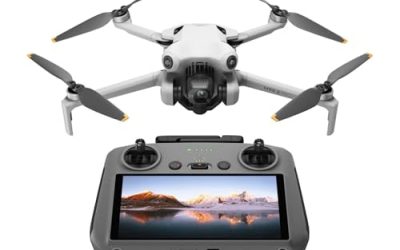
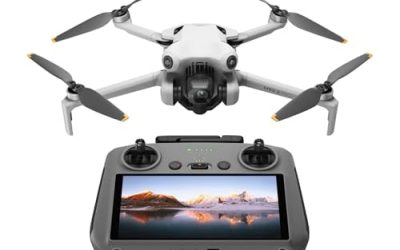
The Mini 4 Pro is the lightest drone in this guide, and the easiest to carry to a remote lake. It weighs under 249 g, which keeps it below the registration threshold in many places, and it folds small enough to slip into a jacket pocket.
The camera punches above the weight. A 48MP sensor shoots 4K/60 HDR video, and the 1/1.3-inch sensor handles low light better than most drones this size. True vertical shooting is built in, so tall reflections are easy to frame. Omnidirectional sensing watches in every direction, which matters when you fly backward along a tree-lined shore.
Flight time reaches 34 minutes, and the 20 km transmission range keeps the signal solid well out over the water. The RC 2 controller has a built-in screen.
Specs
- Weight: Under 249 g
- Camera: 48MP, 4K/60 HDR video
- Sensor: 1/1.3-inch CMOS
- Max flight time: 34 minutes
- Transmission range: 20 km
- Sensing: Omnidirectional vision sensing
- Controller: DJI RC 2 with built-in screen
2. DJI Air 3S
The Air 3S is the sweet spot of this guide: a mid-weight drone with two cameras and the longest flight time here. Its wide camera uses a 1-inch CMOS sensor at 48MP, and a second medium telephoto camera gives you a 3x zoom for pulling the far shore closer. Over a lake, that second camera changes how you shoot. You can stay high and safe while the telephoto compresses the scene.
Both cameras shoot 4K/60 HDR video with 14 stops of dynamic range, which helps when the sky is bright and the water is dark. The Air 3S also carries a forward-facing LiDAR sensor and omnidirectional sensing, so it handles low light and mist better than most drones in its class.
Specs
- Weight: 724 g
- Cameras: 1-inch CMOS wide 48MP plus 3x medium telephoto 48MP
- Video: 4K/60 HDR, 14 stops of dynamic range
- Max flight time: 45 minutes
- Transmission range: 20 km
- Sensing: Omnidirectional sensing with forward LiDAR
- Controller: DJI RC-N3
3. DJI Mavic 3 Pro

The Mavic 3 Pro is the flagship of this guide, and the only drone here with three cameras. The main Hasselblad camera uses a 4/3 CMOS sensor at 20MP with an adjustable aperture, joined by a 70mm medium telephoto and a 166mm telephoto. Over a lake, three focal lengths mean you can shoot wide reflections, a compressed mid-range view, and a tight detail of a distant boat or bird, all without moving the drone.
Image quality is the best in this guide. The large sensor holds detail in dawn shadows, and the camera shoots 5.1K/50 video with 10-bit color. Flight time reaches 43 minutes, and the 15 km transmission range keeps the link strong far out over the water. At 958 g, it is the heaviest drone here, and it holds position in wind that would trouble lighter aircraft.
Specs
- Weight: 958 g
- Cameras: Hasselblad 4/3 CMOS 20MP wide, 70mm medium telephoto, 166mm telephoto
- Video: 5.1K/50, 10-bit color
- Max flight time: 43 minutes
- Transmission range: 15 km
- Sensing: Omnidirectional sensing with APAS 5.0
- Controller: DJI RC with built-in screen
4. DJI Mini 3
The Mini 3 is the most affordable drone in this guide, and a solid pick for a first lake drone. It weighs 248 g, folds small, and shoots 48MP stills with 4K HDR video from a 1/1.3-inch sensor. Dual native ISO helps in the low light of dawn, and true vertical shooting makes tall reflection compositions easy.
Flight time reaches 38 minutes, and the 10 km transmission range is plenty for lake work. Level 5 wind resistance helps it hold position over open water.
Be honest about the trade-off: the Mini 3 has no obstacle sensing. It will not warn you about a branch, a dock post, or a mast. Keep it high over open water, stay clear of shoreline trees, and never fly backward into an area you have not already checked.
Specs
- Weight: 248 g
- Camera: 48MP, 4K HDR video
- Sensor: 1/1.3-inch CMOS
- Max flight time: 38 minutes
- Transmission range: 10 km
- Wind resistance: Level 5
- Sensing: None, no obstacle avoidance
- Controller: DJI RC-N1
5. DJI Avata 2 Fly More Combo
The Avata 2 is the odd one out in this guide, and the most fun to fly. It is a first-person-view drone: you wear the Goggles 3 and fly with the RC Motion 3 controller, seeing exactly what the drone sees. Over a lake, that means skimming low across the water and sweeping along the shoreline in a way no camera drone can match.
The camera shoots 4K/60 video with a 155-degree field of view, and RockSteady and HorizonSteady stabilization keep the footage smooth even in fast, low flight. The built-in propeller guard protects the props if you clip a reed or a low branch.
Specs
- Weight: 377 g
- Camera: 12MP, 4K/60 video, 155-degree field of view
- Max flight time: 23 minutes per battery
- Batteries: 3 included in the Fly More Combo
- Included: Goggles 3, RC Motion 3, charging hub, sling bag
- Stabilization: RockSteady and HorizonSteady
- Propeller guard: Built in
How the Five Drones Compare
The Mini 4 Pro and the Mini 3 are the lightweights: easy to carry, easy to launch from a rocky shore, and strong enough cameras for most lake work. The Mini 4 Pro adds omnidirectional sensing and a longer transmission range, while the Mini 3 costs less and asks you to fly with more care because it has no obstacle sensing.
The Air 3S sits in the middle and may be the best all-round lake drone here. Its dual cameras cover wide and telephoto, its 45-minute flight time is the longest in the guide, and its LiDAR-assisted sensing handles dawn mist better than the rest. The Mavic 3 Pro is the image-quality pick, and the Avata 2 is the creative pick for immersive low video.
Lake Shooting Tips
Fly at dawn or dusk. The light is soft, the wind is usually calm, and mist sits on the water. Midday sun turns a lake into a flat sheet of glare.
Shoot RAW. A lake scene has bright sky and dark water in the same frame, and RAW files give you room to recover detail from both. Every drone in this guide shoots RAW stills.
Use the telephoto when you have one. The Air 3S and the Mavic 3 Pro let you compress the far shore and pull distant subjects closer without flying low over the water. A low flight over a lake is the riskiest move you can make.
Watch the wind. Check the forecast before you leave, and watch the trees at the shore for gusts. If the drone is fighting to hold position, land and wait.
Keep spare batteries warm. Cold dawn air drains batteries faster, and a lake session often runs longer than planned. Keep spares in a warm pocket until you need them, and never fly a battery below 20 percent over water.
Wipe the lens before every flight. Mist and spray settle on the lens fast at a lake, and a single drop can ruin a whole set of images.
Check local rules before you fly. Many lakes sit inside parks or near homes, and some ban drones outright. A quick check saves a wasted trip.
Which One to Choose
If you want one drone for lake photography, pick the Air 3S. It has the best mix of camera quality, flight time, sensing, and wind handling in this guide, and the dual cameras give you creative range that a single-camera drone cannot match.
If you hike to remote lakes, pick the Mini 4 Pro. It weighs under 249 g, folds into a pocket, and still shoots 48MP stills with omnidirectional sensing.
If image quality is your top goal, pick the Mavic 3 Pro. Its three cameras and large Hasselblad sensor produce the best files here.
If you are on a tight budget, pick the Mini 3. It is a capable lake drone at a lower cost, as long as you fly with care and respect its lack of obstacle sensing.
If you want dynamic, low, fast video, pick the Avata 2 Fly More Combo. Its three batteries cover a full dawn session.
Can I fly a drone over a lake in the morning mist?
Yes, but fly with care. Mist can weaken the downward vision sensors that help a drone hold position, so keep the drone higher than usual, fly slowly, and keep it in sight. Wait for a solid GPS lock before takeoff.
Do I need a drone with obstacle sensing for lake photography?
It helps a lot. Shorelines are full of trees, docks, masts, and wires, and a drone with omnidirectional sensing is far safer than one without. The Mini 3 has no obstacle sensing, so fly it high over open water.
How long should a drone fly to be useful at a lake?
Aim for at least 35 minutes per battery, or carry spares. The best light at a lake lasts about an hour, and you need time to scout, frame, and re-shoot. The Air 3S flies for 45 minutes, the Mavic 3 Pro for 43, and the Avata 2 Fly More Combo gives you three batteries.
Is any drone in this guide waterproof?
No. None of the five drones is waterproof, and a dunk in a lake will almost certainly end the flight and damage the aircraft. Keep a safe height over the water, watch your battery level, and always leave enough charge to fly home.
Final Verdict
A lake rewards patience and punishes carelessness. The right drone gives you a strong camera, long flight time, steady wind handling, and sensing that keeps you safe while you chase the light. The Air 3S is the best all-round pick, the Mini 4 Pro is the best travel pick, the Mavic 3 Pro is the best image-quality pick, the Mini 3 is the best value pick, and the Avata 2 is the pick for dynamic video. Whichever you choose, fly at dawn, shoot RAW, and keep spare batteries warm.
More from Amazon
Programs that pair well with the guide above. Offers and eligibility are set by Amazon and may change.
Free shipping on eligible items, Prime Video and more. Eligible new members can start with a free trial.
Start a Prime free trialAudiobooks and podcasts to listen to on the go. Eligible new members can start with a free trial.
Try Audible freeAd-free music streaming. Eligible new subscribers can start with a free trial.
Try Music Unlimited freeA free business account with business pricing and bulk-buying tools for work, shop or home office.
Create a business accountAs an Amazon Associate we earn from qualifying purchases.