Our Top Picks
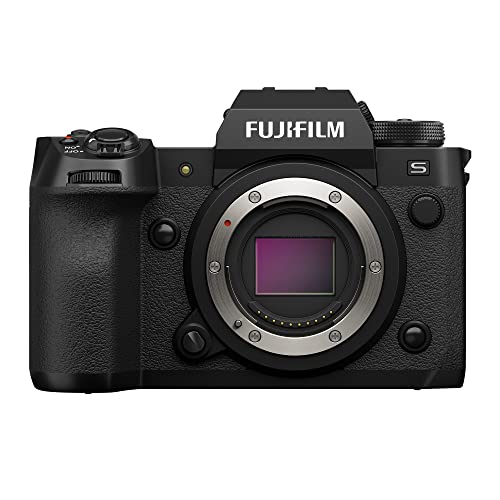



Two APS-C mirrorless cameras lead the field for creators who want serious video without a full-frame system. The Fujifilm X-H2S is a stacked-sensor flagship built for speed, while the Sony A6700 packs the autofocus brain of Sony’s cinema line into a pocketable body. Both shoot 10-bit 4:2:2 video with strong in-body stabilization. Picking between them comes down to how you shoot, how long you shoot, and how much you want to carry.
As an Amazon Associate, we earn from qualifying purchases.
At a Glance
| Feature | Fujifilm X-H2S | Sony A6700 |
|---|---|---|
| Sensor | 26.1MP X-Trans 5 stacked BSI CMOS, APS-C | 26.0MP Exmor R BSI CMOS, APS-C |
| Processor | X-Processor 5 | BIONZ XR plus dedicated AI processing unit |
| Top video mode | 6.2K/30p open gate, 4K/120p | 4K/60p oversampled from 6K, 4K/120p with crop |
| Internal recording | 10-bit 4:2:2, ProRes, F-Log2 | 10-bit 4:2:2, S-Log3, S-Cinetone |
| Stabilization | Up to 7 stops, 5-axis IBIS | Up to 5.5 stops, 5-axis IBIS |
| Media slots | CFexpress Type B plus SD UHS-II | Single SD UHS-II |
| Viewfinder | 5.76M-dot EVF | 2.36M-dot EVF |
| Battery | NP-W235 | NP-FZ100 |
| Weight with battery and card | 660 g | 493 g |
Fujifilm leads on video capability and viewfinder quality, while Sony leads on size, weight and autofocus. The gap between them changes with the kind of shooting you do.
Video Capabilities
Video is where the X-H2S makes its strongest case. Its stacked sensor reads out fast enough to record 6.2K open gate footage at 30 frames per second in 10-bit 4:2:2, which gives editors room to reframe in the edit. It also records 4K at up to 120 frames per second and Full HD at up to 240 frames per second. Internal Apple ProRes recording is available, along with F-Log2 for a wide dynamic range that holds highlight detail in bright scenes. Fujifilm quotes up to 14 stops of dynamic range, and an optional clip-on cooling fan helps on long sessions in warm conditions.
The A6700 answers with 4K at 60 frames per second oversampled from 6K, which produces clean, detailed footage with very little moiré. It also offers 4K at 120 frames per second, though with a 1.58x crop that narrows the field of view and changes the effective focal length of your lens. S-Log3 and S-Cinetone cover grading latitude and ready-to-use looks. Sony improved heat handling over earlier compact bodies, so the A6700 keeps recording in 4K/60p far longer than its predecessors, which matters at weddings, interviews and events.
For pure video specifications, the X-H2S wins. Open gate 6.2K, uncropped 4K/120p, internal ProRes and dual media slots make it the stronger tool for paid video work, documentaries and commercial shoots. Its oversampled 4K/60p looks excellent, but the crop at 4K/120p and the single card slot put a ceiling on how far it can go as a primary video camera. If your work lives mostly in 4K/60p and below, that ceiling may never bother you.
Autofocus
Autofocus is where the A6700 takes the lead, and the gap is wide. Sony fitted the A6700 with a dedicated AI processing unit, the same kind of chip found in its flagship full-frame bodies. It recognizes humans, animals, birds, insects, cars, trains and airplanes, and it holds focus on a subject’s eye even when the subject turns away or slips behind an object. Real-time Tracking locks onto a subject with a tap on the screen and follows it across the frame with remarkable tenacity. For solo creators and wildlife shooters, this removes a whole layer of worry.
The X-H2S is not far behind in everyday use. Its subject detection covers animals, birds, cars, motorcycles, bicycles, airplanes and trains, and its autofocus is three times faster than the previous generation of Fujifilm cameras according to the manufacturer. It locks on quickly and tracks well, especially with human faces and eyes. Where it falls short is in tricky moments: a subject turning away, a bird darting behind branches, a child running toward the camera and then away. The Sony holds on longer, and that shows in the usable clips at the end of a day.
For interviews and controlled scenes, both focus reliably. For sports, wildlife, weddings and run-and-gun work, the A6700 has a real edge, and if autofocus is the feature you lean on most, Sony wins this round.
Stabilization
Both cameras offer 5-axis in-body image stabilization, but Fujifilm quotes the stronger figure: up to 7 stops of compensation on the X-H2S, against up to 5.5 stops on the A6700. In real use, both deliver smooth handheld footage for static and slow-moving shots. The X-H2S has a small advantage at longer focal lengths or in low light.
Sony adds Active Mode stabilization, a digital mode that crops slightly into the frame and delivers noticeably smoother walking shots, a real help for vloggers and travel filmmakers. Fujifilm counters with its own digital stabilization, but Sony’s is the more polished of the two for walking footage. Neither camera replaces a gimbal for serious moving shots, but for handheld b-roll both are capable, with the X-H2S ahead on raw stabilization and the A6700 ahead on walking shots.
Battery Life and Recording Time
Battery life separates these two cameras more than the spec sheets suggest. The X-H2S uses the NP-W235 battery, the same cell found across Fujifilm’s recent flagship bodies. It is solid for stills, but video drains it quickly, so long sessions call for spares or a USB-C power source, and a power bank in your bag extends a shoot considerably.
The A6700 uses the NP-FZ100, the large battery from Sony’s full-frame line, and that is a meaningful advantage in a compact body. It delivers longer recording times per charge and runs cooler for longer. For a full day of vlogging, travel, or event work where changing batteries mid-scene is awkward, the A6700 lasts longer between swaps, and it also charges over USB-C. Sony wins on endurance: Fujifilm shooters should budget for two spare batteries and a power bank, while Sony shooters can often get through a day on two cells.
Handling and Build
Handling is where personal preference matters most. The X-H2S is the bigger camera at 660 g with battery and card, and it feels like a professional tool in the hand. The grip is deep, the buttons are large and well spaced, and the top plate carries dials for shutter speed and ISO. The 5.76M-dot viewfinder is bright and detailed. Weather sealing is thorough.
The A6700 is the smaller camera at 493 g, and it disappears into a bag in a way the Fujifilm does not. The grip is shallower, which suits small hands and light lenses but can feel cramped with a large zoom attached. The menu system is Sony’s modern touch-friendly layout, easier than older Sony menus but still slow to learn. The 2.36M-dot viewfinder is the weakest part of the camera: the image is smaller and less detailed than the Fujifilm finder. That matters less for video-first shooters and more for photographers.
Both have fully articulating touch screens, customizable buttons, dual dials and video assist tools including focus peaking, zebras and waveform displays. With large lenses the X-H2S balances better; traveling light, the A6700 wins on size alone.
The Gear: Five Picks for Either Kit
The accessories below work with both cameras, so this kit list stays the same whichever body you choose.
1. Fujifilm X-H2S Mirrorless Camera Body
The X-H2S is the video flagship of the Fujifilm X system, built around a 26.1MP stacked sensor that keeps rolling shutter under control. It records 6.2K open gate, 4K/120p and Full HD/240p internally in 10-bit 4:2:2, with ProRes and F-Log2 on board, and its dual card slots give you backup recording and fast media.
Specs: 26.1MP X-Trans 5 stacked BSI CMOS sensor; X-Processor 5; 6.2K/30p open gate and 4K/120p internal 10-bit 4:2:2 recording; Apple ProRes and F-Log2; up to 7 stops 5-axis IBIS; CFexpress Type B plus SD UHS-II slots; 5.76M-dot EVF; 660 g with battery and card.
2. Sony A6700 Mirrorless Camera Body
The A6700 squeezes Sony’s AI autofocus into the smallest body the company makes for this sensor class. The 26.0MP Exmor R sensor and BIONZ XR processor deliver oversampled 4K/60p in 10-bit 4:2:2, with 4K/120p for slow motion, and Real-time Tracking holds focus through the moments that usually break it. At 493 g it is the camera you carry everywhere.
Specs: 26.0MP Exmor R BSI CMOS sensor; BIONZ XR processor with dedicated AI processing unit; 4K/60p oversampled from 6K and 4K/120p 10-bit 4:2:2 recording; S-Log3 and S-Cinetone; up to 5.5 stops 5-axis IBIS; single SD UHS-II slot; 2.36M-dot EVF; 493 g with battery and card.
3. Lexar Professional Silver PRO 128GB SDXC UHS-II Memory Card
Both cameras have UHS-II SD slots, and this card makes full use of them. With V60 speed class and read speeds up to 280MB/s, it handles high-bitrate 10-bit footage from either body without dropped frames and offloads quickly at the end of the day. The 128GB capacity holds a solid day of 4K footage, and the card resists water, shock, temperature swings and X-rays.
Specs: 128GB SDXC UHS-II; V60 video speed class, U3, Class 10; read speeds up to 280MB/s; write speeds up to 160MB/s; resistant to water, shock, temperature and X-rays; model LSDSIPR128G-BNNNU.
4. SanDisk Extreme 128GB SDXC UHS-I Memory Card

A second card is cheap insurance, and this one is a reliable spare for either body. It records 4K UHD video with V30 speed class and U3, reads at up to 150MB/s, and survives drops, water, temperature extremes and X-rays. Use it as a backup card, a second slot card on the X-H2S, or a swap card on the A6700 while the main card offloads.
Specs: 128GB SDXC UHS-I; V30 video speed class, U3, Class 10; read speeds up to 150MB/s, write speeds up to 70MB/s; shockproof, temperature-proof, waterproof and X-ray-proof; model SDSDXV5-128G-GNCIN.
5. Rode VideoMicro II Ultra-Compact On-Camera Microphone
Built-in camera microphones pick up handling noise and room echo, and this compact shotgun microphone fixes that on either body. It mounts on the hot shoe, plugs into the 3.5mm mic input both cameras carry, and needs no battery, drawing plug-in power from the camera. The cardioid pattern focuses on sound in front of the lens, while the HELIX mount and furry windshield keep wind and vibration out of the recording.
Specs: Cardioid condenser shotgun microphone; frequency range 20Hz to 20kHz; HELIX isolation mount included; foam and furry windshields included; 3.5mm TRS output, plug-in power, no battery needed; 39 g.
Which Camera Should You Buy?
Choose the Fujifilm X-H2S if video quality is your top concern. Open gate 6.2K, uncropped 4K/120p, internal ProRes and dual card slots make it the better primary camera for paid video work, documentaries and commercial shoots.
Choose the Sony A6700 if autofocus, size and endurance matter most. The AI autofocus is the best in this class, the body is light enough to carry all day, and the NP-FZ100 battery lasts longer between changes. It is the better camera for vlogging, travel, wildlife and solo creators. Its 4K/60p footage looks excellent; the single card slot is the main compromise.
There is no loser here. The X-H2S is the stronger video camera; the A6700 is the smarter all-round companion. Match the camera to the work you actually do.
Frequently Asked Questions
1. Can the Sony A6700 record 4K/120p without a crop?
The A6700 records 4K at 120 frames per second with a 1.58x crop, which narrows the field of view. The Fujifilm X-H2S records 4K/120p with no crop, so if slow motion is a regular part of your work, Fujifilm has the edge.
2. Does the Fujifilm X-H2S have better autofocus than the Sony A6700?
No. The X-H2S focuses quickly and its subject detection is capable, but the A6700 has a dedicated AI processing unit that recognizes more subject types and holds tracking through harder moments. For fast-moving subjects, the Sony is the safer choice.
3. Which camera is better for vlogging?
The A6700 is the better vlogging camera for most creators. It is lighter, its autofocus keeps your face sharp while you move and talk, its battery lasts longer, and Active Mode stabilization smooths out walking shots. The X-H2S wins when the vlog turns into a full production with a crew, lights and a grading workflow.
4. Do both cameras use the same memory cards and accessories?
Both take SDXC UHS-II cards, so a fast V60 or V90 SD card works in either body. The X-H2S adds a CFexpress Type B slot for its top video modes, while the A6700 records everything to SD. Both share the same 3.5mm mic input, hot shoe and 1/4-inch tripod thread, so microphones, lights, tripods and monitors move freely between them.
More from Amazon
Programs that pair well with the guide above. Offers and eligibility are set by Amazon and may change.
Free shipping on eligible items, Prime Video and more. Eligible new members can start with a free trial.
Start a Prime free trialAudiobooks and podcasts to listen to on the go. Eligible new members can start with a free trial.
Try Audible freeAd-free music streaming. Eligible new subscribers can start with a free trial.
Try Music Unlimited freeA free business account with business pricing and bulk-buying tools for work, shop or home office.
Create a business accountAs an Amazon Associate we earn from qualifying purchases.