Our Short List of 3
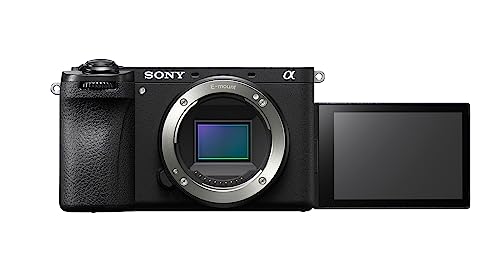
- Best for: enthusiasts and hybrid shooters who already own, or plan to build, a set of Sony E-mount lenses.
- Sensor: APS-C Exmor R back-illuminated CMOS, 26.0 megapixels effective
- Processor: BIONZ XR
- Stabilization: 5-axis in-body optical stabilization, up to 5 stops of compensation
- Autofocus: 759 points with eye and face detection

- Best for: new creators and families who want one box that is ready to shoot stills and video immediately.
- Sensor: 24.2 megapixel CMOS, APS-C
- Processor: DIGIC X
- Lens included: Canon RF-S 18-45mm f/4.5-6.3 IS STM
- Video: 4K recording

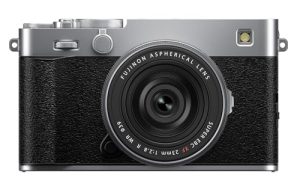
- Best for: creators who want Fujifilm color and high-resolution open-gate video in the smallest body available here.
- Sensor: 26.1 megapixel X-Trans CMOS 4, 23.5 by 15.6mm APS-C
- Processor: X-Processor 5
- Lens included: Fujifilm XC 15-45mm f/3.5-5.6 OIS PZ
- Video: 6.2K at 29.97 frames per second, up to 200Mbps
All 5 Picks at a Glance
| Product | Specs | Action |
|---|---|---|
| Sony a6700 (Body Only) |
| Check price on Amazon |
| Canon EOS R50 with RF-S 18-45mm Lens |
| Check price on Amazon |
| Fujifilm X-M5 with XC 15-45mm Lens |
| Check price on Amazon |
 Nikon Z30 with 16-50mm Lens |
| Check price on Amazon |
 Canon EOS R100 (Body Only) |
| Check price on Amazon |
Our Top Picks
- Canon EOS R50 Mirrorless Camera RF-S18-45mm F4.5-6.3 is2.71 x 4.58 x 3.37 Inches1 poundsCheck on Amazon
- FUJIFILM X-M5 Mirrorless Digital Camera XC15-45mmF3.5-5.6 OIS PZ9.1 x 9.1 x 9.1 inchesCheck on Amazon
The real decision with a compact mirrorless camera is not whether the body is small, because every camera on this page is. It is what you give up for that size: whether a lens is included in the box, how the autofocus handles moving subjects, whether stabilization lives in the body or only in the lens, and how far the video specification actually goes. Two of these five cameras are sold as bodies only, so the headline configuration is only half of what you need to start shooting.
This guide is for travelers, vloggers, first-time camera buyers stepping up from a phone, and enthusiasts who want a second, smaller body. One point needs to be clear from the start: every camera here is an interchangeable-lens mirrorless model, which is a different category from the fixed-lens compact cameras covered elsewhere on this site. The picks run from the flagship Sony a6700 body through creator kits from Canon, Fujifilm and Nikon to the entry-level Canon EOS R100.
Quick Picks
As an Amazon Associate we earn from qualifying purchases
| Product | Best for | Key spec from title |
|---|---|---|
| Sony a6700 (Body Only) | Enthusiasts who already own E-mount lenses | 26MP APS-C sensor with 5-axis in-body stabilization |
| Canon EOS R50 with RF-S 18-45mm Lens | New creators who want a ready-to-shoot kit | 24.2MP APS-C sensor with DIGIC X processor |
| Fujifilm X-M5 with XC 15-45mm Lens | Film-look color and high-resolution video | 26.1MP X-Trans CMOS 4 sensor with 6.2K video |
| Nikon Z30 with 16-50mm Lens | Vloggers who record long takes | 20.9MP DX sensor with up to 125 minutes of recording |
| Canon EOS R100 (Body Only) | First-time buyers learning the basics | 24.1MP APS-C sensor with DIGIC 8 processor |
How to Choose
Sensor Size and Resolution
Every camera in this guide uses an APS-C sensor, which is far larger than a phone sensor and is the main reason these small bodies deliver cleaner low-light images and shallower depth of field. Resolution runs from 20.9 megapixels on the Nikon Z30 to 26.1 megapixels on the Fujifilm X-M5. That gap matters if you crop heavily or print large, but for social sharing and standard prints all five sensors are more than sufficient, so treat megapixels as a secondary factor rather than the deciding one.
Kit Lens or Body Only
Two of the five picks, the Sony a6700 and the Canon EOS R100, are sold as bodies only, which means a separate lens purchase is mandatory before the camera can take a single picture. The other three arrive with a standard zoom in the box: Canon fits an RF-S 18-45mm to the R50, Fujifilm fits an XC 15-45mm to the X-M5, and Nikon fits a 16-50mm to the Z30. A kit zoom is the practical starting point for most buyers, while body-only pricing suits people who already own lenses for that mount.
Autofocus and Subject Detection
Autofocus is where these generations of camera separate most clearly. The Sony a6700 pairs 759 focus points with eye and face detection driven by a dedicated AI processing unit, the Canon R50 uses Dual Pixel CMOS AF II, and the Fujifilm X-M5 adds AI-based subject detection for animals, birds and vehicles. The Nikon Z30 and Canon R100 cover the essentials with eye detection for people. If your subjects are children, pets or sports, prioritize the newer detection systems; for landscapes and posed portraits, all five focus systems are adequate.
Video Specification and Screen Design
Still cameras in this class now double as serious video tools, but the details differ. The Fujifilm X-M5 records 6.2K open-gate video, the Sony a6700 records 4K at up to 120 frames per second for slow motion, and the Nikon Z30 stretches a single 4K take to 125 minutes, which suits long-form recording. Screen design matters just as much: fully articulating touchscreens on the a6700, R50, X-M5 and Z30 make self-recording practical, while stabilization ranges from true in-body systems to lens-based or digital-only approaches.
The 5 Best Options
Sony a6700 (Body Only)
- Best for: enthusiasts and hybrid shooters who already own, or plan to build, a set of Sony E-mount lenses.
- Sensor: APS-C Exmor R back-illuminated CMOS, 26.0 megapixels effective
- Processor: BIONZ XR
- Stabilization: 5-axis in-body optical stabilization, up to 5 stops of compensation
- Autofocus: 759 points with eye and face detection
enthusiasts and hybrid shooters who already own, or plan to build, a set of Sony E-mount lenses.
this listing is body only, so at least one E-mount lens has to be budgeted before the camera is usable.
The a6700 is the performance ceiling of this group and the natural pick for an experienced shooter who wants a compact body without stepping down in capability. Its 26 megapixel back-illuminated APS-C sensor works with the BIONZ XR processor and a dedicated AI unit for subject recognition, while 5-axis in-body stabilization steadies any E-mount lens you attach, including older primes with no stabilization of their own. Continuous shooting reaches 11 frames per second, and the electronic viewfinder suits bright outdoor work where a rear screen washes out.
Watch out for: this listing is body only, so at least one E-mount lens has to be budgeted before the camera is usable.
Canon EOS R50 with RF-S 18-45mm Lens
- Best for: new creators and families who want one box that is ready to shoot stills and video immediately.
- Sensor: 24.2 megapixel CMOS, APS-C
- Processor: DIGIC X
- Lens included: Canon RF-S 18-45mm f/4.5-6.3 IS STM
- Video: 4K recording
new creators and families who want one box that is ready to shoot stills and video immediately.
the kit zoom’s f/4.5-6.3 aperture is dim for indoor available-light work, so a fast prime lens is the natural first upgrade.
The R50 is the most complete starter package here, because the box contains the camera, a stabilized standard zoom, a battery and a charger, so a first-time buyer can shoot on day one. The 24.2 megapixel APS-C sensor and DIGIC X processor are shared with Canon’s larger RF bodies, and Dual Pixel CMOS AF II keeps faces and eyes locked during both stills and 4K video. The vari-angle touchscreen flips forward for self-recording, which is why this kit is aimed squarely at content creators moving up from a phone.
Watch out for: the kit zoom’s f/4.5-6.3 aperture is dim for indoor available-light work, so a fast prime lens is the natural first upgrade.
Fujifilm X-M5 with XC 15-45mm Lens
- Best for: creators who want Fujifilm color and high-resolution open-gate video in the smallest body available here.
- Sensor: 26.1 megapixel X-Trans CMOS 4, 23.5 by 15.6mm APS-C
- Processor: X-Processor 5
- Lens included: Fujifilm XC 15-45mm f/3.5-5.6 OIS PZ
- Video: 6.2K at 29.97 frames per second, up to 200Mbps
creators who want Fujifilm color and high-resolution open-gate video in the smallest body available here.
stabilization is digital and works for video only, so stills rely entirely on the optical stabilization in the kit lens.
The X-M5 is the smallest and lightest body in this guide and the one aimed most directly at video creators who care about color. Its 26.1 megapixel X-Trans CMOS 4 sensor gives access to Fujifilm’s film simulation recipes, and the listing’s headline video mode is 6.2K open-gate recording at up to 200 megabits per second, which leaves room to crop vertical and horizontal versions from one take. The XC 15-45mm power zoom keeps the whole package pocketable, and the vari-angle touchscreen handles framing from in front of the camera.
Watch out for: stabilization is digital and works for video only, so stills rely entirely on the optical stabilization in the kit lens.
Nikon Z30 with 16-50mm Lens
- Best for: vloggers and educators who record long, uninterrupted talking-head or tutorial videos.
- Sensor: 20.9 megapixel DX format CMOS, APS-C class
- Processor: EXPEED 6
- Lens included: NIKKOR Z DX 16-50mm f/3.5-6.3 VR
- Video: 4K at 30 frames per second, Full HD up to 120 frames per second
vloggers and educators who record long, uninterrupted talking-head or tutorial videos.
there is no in-body stabilization, so steady footage depends on the VR in the kit lens or on a tripod or gimbal.
The Z30 is Nikon’s smallest Z-series body and the most single-minded video tool in this group. It records 4K at 30 frames per second and can keep a single take running for up to 125 minutes, which removes the recording-limit anxiety that affects long interviews, lessons and livestream-style content. The 20.9 megapixel DX sensor is the lowest resolution here, but it is paired with the EXPEED 6 processor and a retracting 16-50mm VR zoom that keeps the outfit genuinely pocket-sized at a body weight of 350 grams.
Watch out for: there is no in-body stabilization, so steady footage depends on the VR in the kit lens or on a tripod or gimbal.
Canon EOS R100 (Body Only)
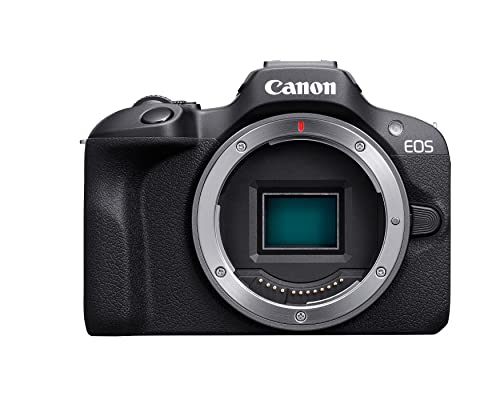
- Best for: beginners who want the lowest-cost route into an interchangeable-lens system and mainly shoot still photographs.
- Sensor: 24.1 megapixel APS-C CMOS
- Processor: DIGIC 8
- Video: 4K recording
- Autofocus: Dual Pixel AF with eye detection
beginners who want the lowest-cost route into an interchangeable-lens system and mainly shoot still photographs.
the DIGIC 8 processor and feature set sit a generation behind the EOS R50, and a lens must be bought separately before shooting.
The R100 is the entry point of Canon’s RF mirrorless line and the simplest camera in this guide, which is exactly its appeal for a first interchangeable-lens purchase. The 24.1 megapixel APS-C sensor is nearly the same resolution as the R50’s, but the DIGIC 8 processor is a generation older, and the feature set is trimmed toward stills photography with 4K video as a secondary mode. Because this listing is body only, it pairs naturally with the same RF-S 18-45mm kit zoom sold with the R50 or with an inexpensive RF prime.
Watch out for: the DIGIC 8 processor and feature set sit a generation behind the EOS R50, and a lens must be bought separately before shooting.
Which One Fits Your Situation
You Record Yourself for a Channel
Choose between the Nikon Z30 and the Fujifilm X-M5. The Z30 wins on endurance, with up to 125 minutes of continuous 4K recording and a retracting kit zoom that keeps the rig small. The X-M5 wins on flexibility, because its 6.2K open-gate video can be reframed for horizontal and vertical platforms from a single take, and its film simulations give footage a finished look without grading.
You Are Upgrading From a Phone for Family Photos
The Canon EOS R50 kit is the smoothest step up. It arrives ready to shoot, its Dual Pixel autofocus tracks children’s faces without menu diving, and the vari-angle screen handles everything from low-angle toddler shots to group selfies. The large APS-C sensor delivers the background blur and low-light cleanliness that a phone cannot match, while automatic modes keep the first weeks simple.
You Already Own Lenses for One Mount
Buy the body that matches your glass. Sony E-mount owners should take the a6700 body, which adds in-body stabilization that steadies even unstabilized lenses, plus the strongest autofocus in this guide. Canon RF owners can choose between the R50’s newer processor and video tools or the R100 as a low-cost second body. Matching mount to existing lenses always beats switching systems for a small specification gain.
You Want to Learn Photography Properly
The Canon EOS R100 body paired with one standard zoom is the most affordable classroom here. It forces the right habits: choosing lenses, working with aperture and shutter priority modes, and reviewing images on a large sensor’s files. Its simpler video specification matters less if stills are the goal, and the money saved against the R50 can fund the lens that the body-only box leaves out.
Common Mistakes
- Buying a body-only listing and forgetting that a lens is a second, unavoidable purchase before the camera works.
- Confusing these cameras with fixed-lens compacts: a mirrorless body’s lens comes off, and that flexibility is the whole point.
- Choosing on megapixels alone, when autofocus generation and stabilization type affect everyday results far more.
- Assuming every camera stabilizes the same way, when this group spans in-body, in-lens and digital-only systems.
- Ignoring the lens mount’s wider lineup, since the body is a long-term commitment to one lens family.
Frequently Asked Questions
How are these different from fixed-lens compact cameras?
A fixed-lens compact has its lens permanently attached, so the focal range you buy is the focal range you keep. Every camera in this guide accepts interchangeable lenses, so one small body can pair with a wide zoom for travel, a fast prime for portraits, or a telephoto for sports. That flexibility, on a much larger APS-C sensor, is the defining difference.
Is an APS-C sensor enough, or do I need full frame?
For travel, family photography, online video and prints at moderate sizes, APS-C is enough, and it is what keeps these bodies and their lenses small. Full frame pulls ahead mainly for extreme low-light work and very shallow depth of field, at the cost of larger, heavier lenses. Most buyers stepping up from a phone will not hit the limits of the sensors in this guide.
Should I buy a kit with a lens or a body only?
Buy the kit if this is your first interchangeable-lens camera, because a standard zoom covers everyday subjects while you learn what you actually shoot. Buy body only if you already own compatible lenses, or if you have a specific lens in mind, such as a fast prime, and would rather put the whole budget there than pay for a kit zoom you will replace.
Which of these cameras is best for video?
It depends on the kind of video. The Nikon Z30 records the longest single takes, up to 125 minutes in 4K. The Fujifilm X-M5 offers the highest resolution with 6.2K open-gate recording and strong color options. The Sony a6700 adds 4K slow motion at up to 120 frames per second and in-body stabilization, making it the most versatile hybrid of the five.
More from Amazon
Programs that pair well with the guide above. Offers and eligibility are set by Amazon and may change.
Free shipping on eligible items, Prime Video and more. Eligible new members can start with a free trial.
Start a Prime free trialAudiobooks and podcasts to listen to on the go. Eligible new members can start with a free trial.
Try Audible freeAd-free music streaming. Eligible new subscribers can start with a free trial.
Try Music Unlimited freeA free business account with business pricing and bulk-buying tools for work, shop or home office.
Create a business accountAs an Amazon Associate we earn from qualifying purchases.