Key takeaways
- Five long-reach cameras for dolphins, seals and seabirds photographed from shore, with optical zoom from 600mm to 3000mm equivalent compared.
Photographing marine wildlife from shore is mostly a distance problem. Dolphins work the far side of the surf line, seals haul out on offshore rocks, and seabird colonies sit on cliffs you cannot approach. The real buying decision is how many millimeters of optical reach you need to fill the frame from a pier, beach or headland, and how much image quality and weight you are willing to trade for that reach.

This guide is for shore-based watchers: pier anglers who photograph passing dolphins, cliff-path birders, and whale watchers working from headlands. The picks run from the Nikon COOLPIX P1100 and its 3000mm equivalent lens, through the Nikon P950, Canon SX70 HS and Panasonic FZ80D, down to the Sony RX10 IV, which stops at 600mm but uses a far larger sensor for cleaner files.
Quick Picks
As an Amazon Associate we earn from qualifying purchases
| Product | Best for | Key spec from title |
|---|---|---|
| Nikon COOLPIX P1100 | Maximum reach | 125x optical zoom, 24-3000mm equivalent |
| Nikon COOLPIX P950 | Long reach, lighter body | 83x optical zoom, 24-2000mm equivalent |
| Canon PowerShot SX70 HS | Lightest all-day carry | 65x optical zoom, 21-1365mm equivalent |
| Panasonic LUMIX FZ80D | Wide shoreline scenes plus reach | 60x optical zoom, 20-1200mm equivalent |
| Sony Cyber-shot RX10 IV | Image quality and fast action | 25x optical zoom, 24-600mm equivalent |
How to Choose
Judge reach in millimeters, not the zoom multiplier
A zoom multiplier only describes the ratio between a lens’s two ends, so it can mislead. The Canon SX70 HS is a 65x zoom that tops out at 1365mm equivalent, while the Panasonic FZ80D is a 60x zoom ending at 1200mm, and the Nikon P1100 reaches 3000mm. For a dolphin fin beyond the breakers, that telephoto endpoint is what decides whether the animal fills the frame or sits as a speck. Work out your typical subject distance first, then match the millimeter figure to it instead of chasing the biggest multiplier on the box.
Weigh sensor size against raw reach
Four of these cameras use small 1/2.3-inch sensors, which is how they achieve enormous zoom ranges in one fixed lens. The Sony RX10 IV uses a 1-inch sensor that gathers far more light, giving cleaner detail and better low-light files, but its lens stops at 600mm equivalent. Neither answer is wrong. If your subjects are distant specks in bright midday light, reach wins. If seals and birds often sit within moderate range, or you shoot at dawn and dusk, the bigger sensor earns its place quickly.
Plan stabilization and support for the long end
At 2000mm or 3000mm equivalent, even a steady hand produces visible shake, and a light sea breeze makes it worse. Every pick here has optical stabilization, and the Nikons add strong vibration reduction, but support still matters. A monopod suits pier railings and cliff paths where a tripod is awkward. Fast shutter speeds also freeze both the animal and your own movement. When you compare listings, check the stabilization system named in the specifications and think honestly about whether you will carry support on a long coastal walk.
Check the viewfinder and screen for bright coastal light
On a sunny shoreline, a rear screen can wash out until framing a dark seal against bright water becomes guesswork. An electronic viewfinder solves that, and its resolution matters at extreme zoom: the FZ80D’s finder has 2,360k dots, and the Canon uses an OLED finder. Vari-angle screens, fitted to both Nikons, help when you shoot low over a railing or rest the camera on a rock. If you wear sunglasses while watching, test how the finder handles them before committing to one body for all-day sessions.
The 5 Best Options
Nikon COOLPIX P1100
The P1100 is the reach specialist of this group, built around a 125x lens that runs to 3000mm equivalent. That is the figure that matters for whales surfacing beyond a headland or seals resting on a rock that the tide keeps you away from. It keeps the formula of the P1000 it replaces: a 16 megapixel sensor, 4K video, RAW capture and a rotating screen, in a fixed-lens body that needs no lens changes on a windy beach. For shore watchers whose subjects never come close, nothing else in this price class of camera reaches as far.
Specs
- Sensor: 16MP 1/2.3-inch CMOS
- Lens: 24-3000mm (35mm equivalent), 125x optical zoom
- Video: 4K Ultra HD
- Image formats: RAW and JPEG
- Screen: Rotating LCD
- Connectivity: Wi-Fi and Bluetooth
- Model: COOLPIX P1100 (26541)
Best for: Whale and dolphin watching at the longest distances from headlands and piers.
Watch out for: The small sensor limits low-light quality, and at 3000mm you will want a tripod or monopod for steady framing.
ASIN: B0DWSYJLGJ
Nikon COOLPIX P950
The P950 gives up some reach to the P1100 but remains a serious shore tool, with an 83x lens reaching 2000mm equivalent. That covers most pier and cliff work: gannet colonies on offshore stacks, seals on sandbanks, and dolphins inside the surf zone. It shares the family strengths of RAW capture, 4K video and a rotating screen, in a body that is easier to carry on long coastal paths than its bigger sibling. For many shore photographers, 2000mm is the point where extra reach stops being the limiting factor and light and haze take over.
Specs
- Sensor: 16MP CMOS
- Lens: 24-2000mm (35mm equivalent), 83x optical zoom
- Video: 4K Ultra HD
- Image formats: RAW and JPEG
- Screen: Rotating LCD
- Model: COOLPIX P950 (26532)
Best for: Bird colonies and seals at long range, with less weight to carry than the P1100.
Watch out for: The lens slows to f/6.5 at the long end, so overcast days push the ISO up quickly.
ASIN: B083K41SKC
Canon PowerShot SX70 HS
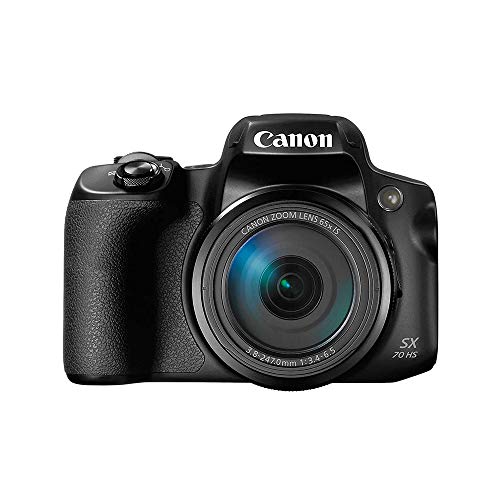
The SX70 HS is the compact option here, a 65x zoom reaching 1365mm equivalent in the lightest body of the group. That reach still frames seabirds on nearshore rocks and dolphins close behind the surf, and the OLED electronic viewfinder is a genuine help in harsh beach light where screens fade. It records 4K video and uses a 20.3 megapixel sensor. Walkers who cover miles of coast path and shoot opportunistically, rather than setting up at one viewpoint, will appreciate how little space it takes in a daypack compared with the big Nikons.
Specs
- Sensor: 20.3MP CMOS
- Lens: 21-1365mm (35mm equivalent), 65x optical zoom
- Video: 4K
- Viewfinder: OLED electronic viewfinder
- Model: PowerShot SX70 HS (3071C001)
Best for: Long coastal walks where weight matters more than maximum reach.
Watch out for: The 1365mm ceiling means distant whales stay small in the frame, and there is no RAW support for stills.
ASIN: B07JLT68VP
Panasonic LUMIX FZ80D
The FZ80D stands out at the wide end: its lens starts at 20mm equivalent, wide enough for the sweep of a bay or a cliff-top panorama, and still runs out to 1200mm at 60x for distant subjects. The 2,360k-dot viewfinder is the sharpest finder in this group, which helps when you are tracking a tern against glittering water. Panasonic’s 4K Photo mode pulls stills from video clips, a practical way to catch a dolphin at the peak of a breach. USB-C charging suits travel days away from a charger base.
Specs
- Sensor: 18.1MP MOS
- Lens: 20-1200mm (35mm equivalent), 60x optical zoom, f/2.8-5.9
- Stabilization: POWER O.I.S.
- Video: 4K video and 4K PHOTO
- Viewfinder: 2,360k-dot LVF
- Model: DC-FZ80DK
Best for: Mixed shoreline shooting, from wide seascapes to moderately distant wildlife.
Watch out for: Reach is the shortest of the small-sensor cameras here, so far-offshore subjects will need heavy cropping.
ASIN: B0D8239188
Sony Cyber-shot RX10 IV
The RX10 IV plays a different game. Its ZEISS lens stops at 600mm equivalent, the shortest reach here, but the 1-inch sensor behind it is several times larger than the others, and the autofocus is in another class: the listing quotes 0.03-second acquisition with 315 phase-detection points and bursts up to 24 frames per second. For seals hauled out at moderate range, birds in flight crossing a headland, or dolphins that surface close to a pier, that speed and file quality outweigh raw millimeters. It is the pick for image quality first, reach second.
Specs
- Sensor: 20.1MP 1-inch Exmor RS CMOS
- Lens: ZEISS Vario-Sonnar T* 24-600mm (35mm equivalent), f/2.4-4, 25x optical zoom
- Autofocus: 0.03-second AF acquisition, 315 phase-detection points
- Burst rate: Up to 24 fps with AF/AE tracking
- Stabilization: Optical SteadyShot
- Model: DSC-RX10M4
Best for: Nearer subjects, flight shots and low-light sessions where file quality matters most.
Watch out for: At 600mm, genuinely distant subjects stay small, and it is the heaviest and most complex camera in this group.
ASIN: B075KTJJPC
Which One Fits Your Situation
You watch whales and dolphins far offshore
Choose the Nikon P1100. From a headland, surfacing whales can sit several hundred meters out, and the 3000mm equivalent endpoint is the only specification here that frames them usefully without cropping away most of the file. Pair it with a tripod, shoot in the calmer morning light before heat haze builds over the water, and accept the small sensor as the price of that reach.
You walk cliff paths and shoot seabird colonies
Choose the Canon SX70 HS if weight rules your day, or the Nikon P950 if the colony sits on an offshore stack. Both cover the distances most cliff colonies demand. The Canon is the easier carry over miles of path, while the Nikon’s extra reach to 2000mm and RAW capture reward photographers who stop, set up and work one viewpoint properly.
Your subjects often come within moderate range
Choose the Sony RX10 IV. Seals on a near sandbank, gulls and terns crossing a harbor wall, and dolphins inside the surf line all sit within its 600mm range, and there the larger sensor and fast tracking autofocus produce visibly cleaner files than any small-sensor rival. This is also the strongest choice for birds in flight and for dawn or dusk sessions.
You want one camera for seascapes and wildlife together
Choose the Panasonic FZ80D. The 20mm wide end captures the whole bay, the boats and the weather, then the zoom runs to 1200mm when something surfaces or lands beyond the rocks. The sharp viewfinder and 4K Photo mode make it a flexible single-body kit for travel days when you cannot predict what the shoreline will offer.
Common Mistakes
- Judging a camera by its digital zoom figure instead of the optical reach in millimeters, which is the only number that holds real detail.
- Handholding at 2000mm or 3000mm equivalent in a sea breeze and blaming the camera for soft results that support would have fixed.
- Shooting distant subjects at midday and ignoring heat haze over warm water, which softens images no lens can overcome.
- Expecting a small-sensor bridge camera to match a large-sensor camera at dawn or dusk, when light levels expose the sensor gap.
- Treating any of these cameras as waterproof; none is rated for submersion, and salt spray needs a cover and a wipe-down after sessions.
Frequently Asked Questions
How much zoom do you need for dolphins from shore?
It depends on your coastline. Dolphins feeding just behind the surf can be framed at 600mm to 1200mm equivalent, but animals traveling beyond the breakers often need 2000mm or more. If your local sightings are usually distant, prioritize the longest optical reach you can carry, as in the two Nikons, rather than relying on cropping a shorter lens later.
Are any of these cameras waterproof?
No. None of the five listings rates its camera for underwater use or submersion, and they are shore cameras, not dive cameras. They are built to be used outdoors from piers, beaches and cliffs, but driving spray and rain call for a rain cover, and salt residue should be wiped off the body and lens after a session near the surf.
Should you choose a bridge camera or a mirrorless camera with a telephoto lens?
A bridge camera gives you the longest reach in one sealed, ready-to-shoot body, which suits shore watching where subjects appear and vanish quickly. A mirrorless body with a long telephoto lens offers a larger sensor and better files, but the lens needed to pass 1000mm equivalent is large, heavy and costly. Choose based on whether reach and readiness or ultimate quality drives your photography.
Do you really need a tripod at these focal lengths?
At 1200mm and beyond, support stops being optional for most people. Stabilization helps, but wind, fatigue and tiny subject movements all multiply at extreme magnification. A monopod is the practical middle ground for piers and paths, while a tripod earns its carry at fixed viewpoints such as headlands and harbor walls where you wait for animals to appear.
More from Amazon
Programs that pair well with the guide above. Offers and eligibility are set by Amazon and may change.
Free shipping on eligible items, Prime Video and more. Eligible new members can start with a free trial.
Start a Prime free trialAudiobooks and podcasts to listen to on the go. Eligible new members can start with a free trial.
Try Audible freeAd-free music streaming. Eligible new subscribers can start with a free trial.
Try Music Unlimited freeA free business account with business pricing and bulk-buying tools for work, shop or home office.
Create a business accountAs an Amazon Associate we earn from qualifying purchases.