Our Short List of 3
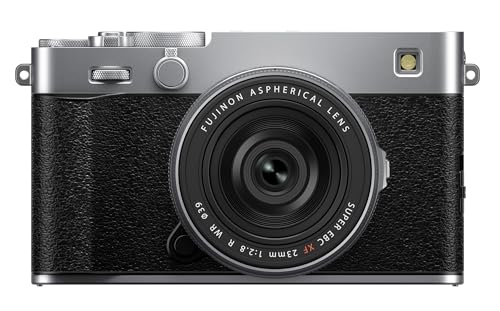
- Best for: Photographers who want a viewfinder, a pancake lens, and manual-feeling controls in the thinnest Fujifilm body with stabilization.
- 40.2 megapixel APS-C X-Trans CMOS 5 HR sensor
- X-Processor 5 image processor
- 5-axis in-body image stabilization, up to 7.0 stops at the centre
- 6.2K video at 30p, 4K video at 60p

- Best for: Creators who want full-frame image quality and 6K video in a flat body that fits a small bag.
- 24.2 megapixel full-frame BSI CMOS sensor
- Venus Engine image processor
- 779-point Phase Hybrid autofocus with subject recognition
- 6K open-gate video at 30p, 4K video at 60p

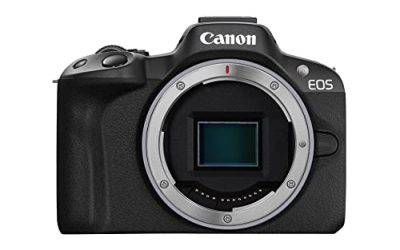
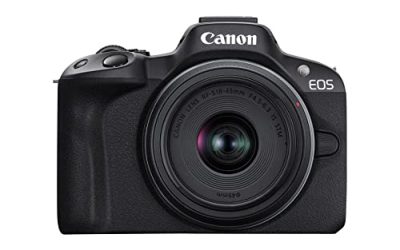
- Best for: Canon shooters who want a flat, video-first body with an ultra-wide power zoom kit lens.
- 24.2 megapixel APS-C CMOS sensor
- DIGIC X image processor
- Dual Pixel CMOS AF II autofocus
- 4K video at 30p oversampled from 6K, cropped 4K at 60p
All 3 Picks at a Glance
| Product | Specs | Action |
|---|---|---|
| Fujifilm X-E5 |
| Check price on Amazon |
| Panasonic Lumix S9 |
| Check price on Amazon |
| Canon EOS R50 V |
| Check price on Amazon |
Key takeaways
- Five slim mirrorless cameras that fit a jacket pocket, compared on body thickness, pancake kit lenses, autofocus, and stills and video quality.
A slim mirrorless camera is bought for one reason: it is the camera you actually carry. A thick body with a long zoom stays in a bag at home, while a flat body with a pancake lens slips into a jacket pocket and comes along for the walk, the meal, and the evening out. The trade is real, though. Slim bodies give up viewfinders, stabilization, and grip depth to stay thin, and the wrong one leaves you squinting at a screen in bright sun or fighting a lens that extends every time you switch the camera on.
This guide is for travelers, daily walkers, and creators who want interchangeable lenses without a camera bag. Every camera below is a slim mirrorless body chosen from its Amazon listing, judged on body depth, the kit lens it ships with, autofocus, and how it handles stills and video.
Quick Picks
As an Amazon Associate we earn from qualifying purchases.
| Product | Best for | Key spec from title |
|---|---|---|
| Fujifilm X-E5 | Rangefinder feel with a pancake kit lens | 40.2 megapixel APS-C sensor, 23mm f/2.8 pancake lens |
| Panasonic Lumix S9 | Full-frame quality in the thinnest full-frame body | 24.2 megapixel full-frame sensor, 20-60mm kit lens |
| Fujifilm X-M5 | The lightest body in this guide | 26.1 megapixel APS-C sensor, 15-45mm power zoom kit lens |
| Sony ZV-E10 II | Vlogging with a collapsing kit zoom | 26 megapixel APS-C sensor, 16-50mm collapsing kit lens |
| Canon EOS R50 V | Wide-angle video in a flat body | 24.2 megapixel APS-C sensor, 14-30mm power zoom kit lens |
How to Choose
Measure Thickness With the Lens On, Not the Body Alone
A body that measures under 40 mm deep can still become a brick once a standard zoom is mounted, so judge the kit as it ships. Pancake lenses and collapsing power zooms are what keep these cameras pocketable: the Fujifilm 23mm f/2.8 pancake adds only 23 mm in front of the X-E5, and the Sony 16-50mm collapses to just over 31 mm when the camera is off. A lens that extends on startup also adds a delay before the first shot, which matters when a scene appears suddenly. Before buying, check the depth of the body plus the kit lens together, and picture the pair in the pocket or pouch you already use every day.
Decide What You Will Give Up to Stay Slim
Every camera here trades something for its thin profile, and the trade should match your shooting. Three of the five have no viewfinder at all, so bright sunlight means composing on the rear screen. The Lumix S9 also drops the mechanical shutter and the hot shoe, while the X-M5 and the ZV-E10 II have no in-body stabilization. If you shoot mostly stills outdoors, a viewfinder body such as the X-E5 is worth its extra depth. If you film yourself or shoot indoors, a screen-only body with a stabilized kit lens is the better compromise, because the screen faces forward and the lens steadies the shot.
Check the Kit Lens Before the Sensor
The kit lens decides whether the camera stays slim in daily use, so read its details before comparing sensors. A pancake prime gives the thinnest carry and the widest aperture, but locks you to one focal length. A collapsing zoom covers wide scenes to short portraits and folds flat for storage, yet it is slower at the long end and needs more light indoors. A power zoom adds smooth zooming for video, and the Canon and Sony kits both include one. The mount behind the lens matters too: a wide lens system with small primes lets you stay slim as you add lenses, while a mount with only large zooms will undo the thin body on the first upgrade.
Match Autofocus and Video to Real Days Out
A slim camera still has to focus fast and record clean clips, or its size counts for nothing. Subject-detection autofocus that finds eyes and holds them while a person walks toward you is the feature that saves the most shots, and all five bodies here include some form of it. For video, look at the frame rates and the recording format: 4K at 60 frames per second suits action and slow motion, while 10-bit color gives footage more room for grading. Also check the battery and the card slot, because a small body usually means a small battery and a single slot. Carry a spare battery and a fast card, and the thin camera keeps up all day.
The 5 Best Options
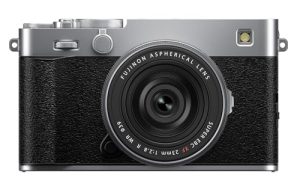
Fujifilm X-E5
- Best for: Photographers who want a viewfinder, a pancake lens, and manual-feeling controls in the thinnest Fujifilm body with stabilization.
- 40.2 megapixel APS-C X-Trans CMOS 5 HR sensor
- X-Processor 5 image processor
- 5-axis in-body image stabilization, up to 7.0 stops at the centre
- 6.2K video at 30p, 4K video at 60p
Photographers who want a viewfinder, a pancake lens, and manual-feeling controls in the thinnest Fujifilm body with stabilization.
There is no weather sealing, so rain needs cover, and the kit lens is a single 23mm focal length, so zooming means changing lenses. Confirm the listing is the kit with the 23mm lens, since body-only listings use different codes.
The X-E5 is the most camera-like camera in this guide, and that is its appeal. Its rangefinder-style body keeps the viewfinder in the corner, the top plate carries a dedicated film simulation dial, and the new 23mm f/2.8 pancake lens turns the whole kit into a 35mm-equivalent setup that fits a jacket pocket. The 40.2 megapixel sensor and five-axis stabilization handle low light and handheld evening shots, while the interchangeable X mount means the pancake is only the first lens. It suits photographers who want a deliberate, tactile camera that still disappears into a small bag.
Watch out for: There is no weather sealing, so rain needs cover, and the kit lens is a single 23mm focal length, so zooming means changing lenses. Confirm the listing is the kit with the 23mm lens, since body-only listings use different codes.
Panasonic Lumix S9
- Best for: Creators who want full-frame image quality and 6K video in a flat body that fits a small bag.
- 24.2 megapixel full-frame BSI CMOS sensor
- Venus Engine image processor
- 779-point Phase Hybrid autofocus with subject recognition
- 6K open-gate video at 30p, 4K video at 60p
Creators who want full-frame image quality and 6K video in a flat body that fits a small bag.
The electronic-only shutter can distort fast-moving subjects, and there is no viewfinder or hot shoe, so bright daylight and flash work need a different approach. Confirm the listing is the kit with the 20-60mm lens, since body-only listings use different codes.
The S9 is the only full-frame camera here, and it earns its place by squeezing a 24.2 megapixel full-frame sensor into a flat rangefinder-style body that weighs 486 g ready to shoot. The 20-60mm kit zoom opens wider than most kit lenses, which suits tight rooms, streets, and arm’s-length filming, and the 6K open-gate video lets you reframe one take into vertical and horizontal cuts. The dedicated LUT button applies a look in camera, and the L-mount opens the door to compact lenses from Panasonic, Sigma, and Leica. It suits creators who want the largest sensor in the smallest full-frame body they can carry all day.
Watch out for: The electronic-only shutter can distort fast-moving subjects, and there is no viewfinder or hot shoe, so bright daylight and flash work need a different approach. Confirm the listing is the kit with the 20-60mm lens, since body-only listings use different codes.
Fujifilm X-M5
The X-M5 is the lightest camera in this guide at 355 g, and the smallest in the hand, because Fujifilm removed the viewfinder entirely and kept only what a daily carry camera needs. The 26.1 megapixel sensor and the latest processor still deliver 6.2K open-gate video and the full set of film simulation modes, and the vari-angle screen faces forward for self-filming. The XC 15-45mm power zoom collapses flat for storage and covers wide scenes to short portraits, so the kit stays pocketable. It suits walkers and creators who want the least weight and the simplest body that still takes interchangeable lenses.
Specs
- 26.1 megapixel APS-C X-Trans CMOS 4 sensor
- X-Processor 5 image processor
- 6.2K open-gate video at 30p, 4K video at 60p
- XC 15-45mm f/3.5-5.6 OIS PZ kit lens
- 3.0-inch vari-angle touchscreen LCD, 1.04 million dots
- Customizable film simulation dial
- No viewfinder, no in-body image stabilization
- Single UHS-I SD card slot
- ISO 160-12800
- Body weight 355 g, body depth 38 mm
- X mount
Best for: Walkers and creators who want the lightest interchangeable-lens body with a collapsing kit zoom.
Watch out for: There is no viewfinder and no in-body stabilization, so bright sun and handheld walking shots rely on the screen and the stabilized kit lens. The kit lens extends when the camera is switched on, which adds a short wait before the first shot.
Sony ZV-E10 II
The ZV-E10 II is the video-first pick, built around a flip-out screen, a three-capsule directional microphone, and a body that weighs only 292 g. Its 26 megapixel sensor records 4K at 60 frames per second in 10-bit color, and the real-time autofocus holds eyes through movement while you walk and talk. The E PZ 16-50mm kit lens collapses to 31.3 mm when powered off, so the whole kit folds into a jacket pocket, and the E-mount system behind it offers the widest choice of compact lenses in this guide. It suits creators who film themselves daily and want a tiny kit that still takes proper stills between clips.
Specs
- 26 megapixel APS-C Exmor R CMOS sensor
- BIONZ XR image processor
- 4K video at 60p, 10-bit 4:2:2, 5.6K oversampling
- Real-time Recognition autofocus with 759 phase-detection points
- E PZ 16-50mm f/3.5-5.6 OSS II kit lens, collapses to 31.3 mm
- 3.0-inch vari-angle touchscreen LCD
- 3-capsule directional microphone with windscreen
- No viewfinder, no in-body image stabilization
- Up to 11 frames per second continuous shooting
- Body weight 292 g, body depth 54.2 mm
- E mount
Best for: Creators who film themselves often and want the smallest Sony body with a collapsing kit zoom and a wide lens system behind it.
Watch out for: There is no viewfinder and no in-body stabilization, so bright sunlight and handheld walking shots need a stabilized lens or a different approach. The kit lens is slow at the long end, so indoor stills may need a faster prime.
Canon EOS R50 V
- Best for: Canon shooters who want a flat, video-first body with an ultra-wide power zoom kit lens.
- 24.2 megapixel APS-C CMOS sensor
- DIGIC X image processor
- Dual Pixel CMOS AF II autofocus
- 4K video at 30p oversampled from 6K, cropped 4K at 60p
Canon shooters who want a flat, video-first body with an ultra-wide power zoom kit lens.
There is no viewfinder and no in-body stabilization, so stills shooters who compose outdoors will miss the eyepiece. The 4K 60p mode is cropped, so wide shots need the lens at its shortest setting, and the video-first controls take some learning for photo-only use.
The R50 V is Canon’s slim answer to the same brief: take the R50, remove the viewfinder hump and the flash, and leave a flat body that is only 45.2 mm deep. The 14-30mm power zoom kit lens opens at an ultra-wide 14mm, which suits vlogging at arm’s length, tight rooms, and landscapes, and its power zoom rocker gives smooth zooms for video. Dual Pixel autofocus tracks people and animals, and the 4K footage oversampled from 6K looks detailed for both clips and stills. It suits Canon shooters who want a video-first body that pairs with the RF mount and stays thin in a small bag.
Watch out for: There is no viewfinder and no in-body stabilization, so stills shooters who compose outdoors will miss the eyepiece. The 4K 60p mode is cropped, so wide shots need the lens at its shortest setting, and the video-first controls take some learning for photo-only use.
Which One Fits Your Situation
You Want the Thinnest Kit With a Viewfinder
Choose the Fujifilm X-E5. The corner viewfinder, the film simulation dial, and the 23mm pancake lens give you a deliberate stills camera that still fits a jacket pocket. Start with the pancake for everyday walking, then add a small prime for indoor light. The stabilization helps evening shots, and the X mount keeps the kit slim as it grows.
You Want Full-Frame Files From a Small Bag
Choose the Panasonic Lumix S9. Its full-frame sensor gives cleaner files in dim light than any APS-C body here, and the 20-60mm kit lens is wide enough for rooms and streets. Accept the screen-only composing and the electronic shutter, and you get the largest sensor in the set in a body that weighs less than many APS-C kits.
You Want the Lightest Camera Possible
Choose the Fujifilm X-M5 or the Sony ZV-E10 II. The X-M5 is the lightest body here and the simplest to carry, while the ZV-E10 II adds a better microphone and stronger video codecs for filming. Both fold flat with their collapsing kit zooms, and both suit days when the camera has to disappear into a pocket between shots.
You Film Yourself More Than You Photograph
Choose the Sony ZV-E10 II or the Canon EOS R50 V. The Sony pairs its flip-out screen with a directional microphone and eye autofocus built for solo filming, while the Canon adds an ultra-wide power zoom that frames arm’s-length shots without a selfie stick. Either one keeps the kit thin enough to carry from morning to night.
Common Mistakes
- Judging slimness by the body alone and then mounting a large zoom that doubles the depth of the kit.
- Buying a screen-only body and discovering too late that the rear screen is hard to see in bright sun.
- Choosing a body-only listing and forgetting that a usable lens is part of the real cost of starting.
- Picking a kit for its video features and then finding its stills controls are buried in menus.
- Ignoring battery life and arriving at a day trip with one charge and no spare for a small-body camera.
Frequently Asked Questions
Is a slim mirrorless camera worse than a bigger one?
Not for the shooting it is built for. A slim body with a large sensor takes the same stills as a thicker body with the same sensor, and the camera you carry takes more photographs than the one left at home. The compromises are real, though: smaller batteries, fewer dials, and often no viewfinder, so match the body to how you actually shoot.
Do I need a viewfinder on a slim camera?
Not always, but it helps outdoors. A viewfinder steadies the camera against your face and stays readable in bright sunlight, while a rear screen is easier for low angles and self-filming. If you shoot mostly stills outside, pick the X-E5. If you film yourself, a flip-out screen matters more than an eyepiece.
What makes a kit lens good for a slim camera?
A good kit lens folds flat, opens wide, and stabilizes the shot. Pancake primes and collapsing power zooms keep the camera pocketable, and a wide opening focal length covers rooms and streets without stepping back. Check the collapsed length and whether the lens extends on startup, because both decide how the camera carries and how fast it is ready.
Should I buy the kit or the body on its own?
A kit with a lens is the fastest way to start, and the included lens is chosen to keep the camera slim. A body on its own makes sense when you already own lenses for that mount or you know exactly which pancake prime you want first. Either way, confirm the lens matches the mount before ordering, because mounts are not interchangeable between brands.
More from Amazon
Programs that pair well with the guide above. Offers and eligibility are set by Amazon and may change.
Free shipping on eligible items, Prime Video and more. Eligible new members can start with a free trial.
Start a Prime free trialAudiobooks and podcasts to listen to on the go. Eligible new members can start with a free trial.
Try Audible freeAd-free music streaming. Eligible new subscribers can start with a free trial.
Try Music Unlimited freeA free business account with business pricing and bulk-buying tools for work, shop or home office.
Create a business accountAs an Amazon Associate we earn from qualifying purchases.