
Key takeaways
- Five Micro Four Thirds lenses for the Panasonic G85, from a 28mm-equivalent pancake prime to a 400mm-equivalent superzoom for stills and video.
The Panasonic G85 is one of the most likeable cameras in the Micro Four Thirds system. Its 16 megapixel sensor, 4K video recording, and weather sealed body make it a capable hybrid for stills and motion, and its Dual I.S. stabilization pairs the in-body stabilizer with the optical stabilizer in a compatible lens to steady handheld shots.

A better lens changes the G85 more than almost any other upgrade. The kit zoom is handy in daylight, but it is modest in dim rooms and limited when you want a soft background behind a portrait or real reach for distant subjects. Native Micro Four Thirds glass keeps the kit small, because every lens below was made for this mount, and lenses from Panasonic and OM System share the same mount, so there is no adapter and no loss of autofocus speed. The five lenses in this guide cover the focal lengths most G85 owners actually use: a pancake wide prime, a weather sealed standard zoom, a true macro prime, a compact telephoto zoom, and a superzoom that covers a whole trip in one barrel.
As an Amazon Associate, we earn from qualifying purchases.
The 2x Crop Factor, in Plain English
Every Micro Four Thirds camera, including the G85, has a sensor about half the diagonal of a full frame sensor. That gives the system a 2x crop factor, which means you double a lens focal length to get its full frame equivalent field of view. A 14mm lens frames like a 28mm lens, and a 200mm lens frames like a 400mm.
This is genuinely good news for telephoto shooting, because long lenses stay small and light. It also means a lens that looks short on paper can be a serious portrait or wildlife tool on the G85. Throughout this guide, both numbers are given: the number printed on the lens barrel, and the full frame equivalent that tells you how the framing will actually feel. Depth of field is a little deeper at a given aperture than on a larger sensor, which helps video work.
1. Panasonic Lumix G 14mm f/2.5 II ASPH. — Best Pancake Wide Prime
The 14mm f/2.5 II is the lens that makes the G85 disappear into your day. At 14mm it frames like a 28mm lens, wide enough for streets, interiors, architecture, and landscapes with real depth, yet tight enough that scenes do not feel stretched. The f/2.5 aperture gathers enough light for evening streets and dim cafes without a flash, and the deep depth of field at this focal length keeps most of a scene in focus, which suits video work where focus hunting would distract from the shot.
The headline here is size. This is a pancake prime, roughly 20mm long and about 55 grams, so mounted on the G85 it adds almost nothing to the bag or to the balance of the camera. The optical design uses six elements in five groups, including three aspherical elements, to keep images crisp from edge to edge in a barrel this small, and the seven-blade circular diaphragm keeps out-of-focus highlights smooth. Minimum focus is 0.18 m, and the stepping motor focuses quickly and quietly.
There are two honest trade-offs. The lens has no optical stabilizer of its own, so it leans on the G85 in-body stabilization, which is plenty at 14mm. And f/2.5 will not blur backgrounds the way a fast portrait prime does, so this is a lens for context and place rather than for isolating a single face.
Specs
- 14mm (28mm equivalent), f/2.5 to f/22, 6 elements in 5 groups (3 aspherical), stepping motor autofocus, 0.18 m minimum focus, 0.1x maximum magnification, 7 diaphragm blades, 46mm filter thread, 56 x 20.5mm, approx. 55 g, Micro Four Thirds mount.
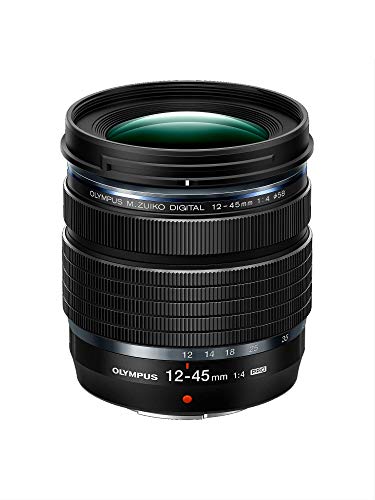
2. Olympus M.Zuiko Digital ED 12-45mm f/4.0 PRO — Best Weather Sealed Standard Zoom
The Olympus 12-45mm f/4 PRO is the standard zoom for G85 owners who want one lens that handles a whole day outdoors. It covers 12-45mm, which is 24-90mm in full frame terms, from a genuinely wide view for streets and interiors to a short telephoto reach for portraits and details. The constant f/4 aperture stays bright through the whole range, so exposure stays consistent as you zoom, which matters for video.
Image quality is the surprise here. The PRO optics are crisp across the frame, and the lens focuses as close as 0.12 m at the wide end, giving 0.25x maximum magnification for food, flowers, and small details. At 254 grams and 70mm long it keeps the G85 balanced for walking all day. Dustproof, splashproof, and freezeproof sealing matches the weather sealed G85 body, so drizzle and dust do not end a shoot, and the MSC autofocus motor is quick and quiet for stills and video alike.
The f/4 aperture will not blur backgrounds as strongly as an f/1.7 prime, and the lens has no stabilizer of its own, so it relies on the G85 in-body stabilization. At these focal lengths that combination works well, and the trade is a fair one: a sealed, featherweight zoom that covers wide streets and portraits in one bright barrel.
Specs
- 12-45mm (24-90mm equivalent), f/4.0 constant to f/22, 12 elements in 9 groups (2 ED, 2 aspherical), MSC autofocus, 0.12 m minimum focus at wide end, 0.23 m at telephoto end, 0.25x maximum magnification, 7 diaphragm blades, ZERO coating, 58mm filter thread, 63.4 x 70mm, 254 g, dustproof, splashproof and freezeproof, Micro Four Thirds mount.
3. Panasonic Lumix G Macro 30mm f/2.8 ASPH. MEGA O.I.S. — Best Macro Prime

The 30mm f/2.8 Macro is the lens for everything small. At 30mm it frames like a 60mm lens, but its real talent is close focus: it reaches true 1:1 life-size magnification at a minimum focus distance of just 0.105 m, so a flower, an insect, or a plate of food can fill the frame with fine detail. That makes it a macro lens and a general purpose normal prime in one barrel.
MEGA O.I.S. stabilization steadies handheld close-ups, where every tremor is magnified along with the subject, and it works together with the G85 Dual I.S. system. The optical design uses nine elements in seven groups with one aspherical element, and the seven-blade circular diaphragm keeps backgrounds soft when you shoot wide open. At 180 grams it is light enough to carry all day, and full-time manual focus lets you fine tune focus by hand for critical macro work.
The working distance is the honest trade-off: at 1:1 magnification the front of the lens sits very close to the subject, so skittish insects may move on before you frame them. For flowers, food, products, and still-life scenes, though, that close working distance is a fair exchange for a true macro lens that also serves as a sharp normal prime.
Specs
- 30mm (60mm equivalent), f/2.8 to f/22, 9 elements in 7 groups (1 aspherical), MEGA O.I.S., 0.105 m minimum focus, 1.0x maximum magnification, 7 diaphragm blades, 46mm filter thread, 58 x 50.5mm, approx. 180 g, Micro Four Thirds mount.
4. Panasonic Lumix G Vario 45-150mm f/4.0-5.6 ASPH. MEGA O.I.S. — Best Compact Telephoto Zoom

The 45-150mm is the telephoto zoom that disappears into your bag. It covers 45-150mm, which is 90-300mm in full frame terms, from a portrait length for faces through sports, school events, and distant landscapes, all in a lens that weighs about 200 grams and measures roughly 73mm long. It is the 90-300mm equivalent you will actually carry everywhere.
MEGA O.I.S. stabilization helps hold the long end steady, and it pairs with the G85 Dual I.S. system for handheld work at 150mm, where every small hand movement is magnified. The optical design packs 12 elements in 9 groups into that tiny barrel, and the seven-blade circular diaphragm keeps out-of-focus areas smooth. Minimum focus is 0.9 m throughout the range, and the autofocus motor is quick and quiet.
The modest aperture is the trade-off, so this lens shines brightest in good light, and it will not blur backgrounds as strongly as a fast prime. For daylight portraits, youth sports, travel details, and wildlife at moderate distances, though, it is the right balance of reach, size, and stabilization.
Specs
- 45-150mm (90-300mm equivalent), f/4.0-5.6, 12 elements in 9 groups, MEGA O.I.S., 0.9 m minimum focus, 0.2x maximum magnification, 7 diaphragm blades, 52mm filter thread, 62 x 73mm, approx. 200 g, Micro Four Thirds mount.
5. Olympus M.Zuiko Digital ED 12-200mm f/3.5-6.3 — Best One-Lens Travel Superzoom

The 12-200mm is the one-lens answer for a trip with the G85. It spans 12-200mm, which is 24-400mm in full frame terms, a 16.6x zoom range that covers wide landscapes, normal street scenes, short portraits, and distant details in a single barrel, so you never need to change lenses in dust or a crowded market. At 455 grams and just under 100mm long, it is remarkably compact for that range.
The optical formula is serious for a superzoom: 16 elements in 11 groups, including extra-low dispersion and aspherical elements, with Olympus ZERO coating to suppress flare and ghosting when you shoot toward the light. Minimum focus is 0.22 m at the wide end and 0.5 m at the long end, and the MSC autofocus motor is fast and quiet for stills and video. The lens is weather sealed against dust and splashes, which matches the G85 sealed body for outdoor days.
A superzoom always trades a little outright sharpness and aperture for convenience, and this one is no exception: f/3.5 at the wide end narrows to f/6.3 at 200mm, so dim interiors call for higher sensitivities or a faster prime from this guide. For a single-lens travel kit, though, that trade is the whole point.
Specs
- 12-200mm (24-400mm equivalent), f/3.5-6.3, 16 elements in 11 groups (ED and aspherical elements), ZERO coating, MSC autofocus, 0.22 m minimum focus at wide end, 0.5 m at telephoto end, 0.24x maximum magnification, 7 diaphragm blades, 72mm filter thread, 77.5 x 99.7mm, 455 g, dustproof and splashproof, Micro Four Thirds mount.
Which Lens Should You Buy First
Match the lens to the shooting you do most. For everyday carry and travel with one lens, the Olympus 12-45mm f/4 PRO is the clear first buy: it covers wide streets and portraits in one bright, sealed zoom. For a single lens that covers a whole trip, the Olympus 12-200mm superzoom is the better first buy, because its 24-400mm equivalent range means you never change lenses on the move. For street photography, the Panasonic 14mm f/2.5 II pancake is the better first buy, because at about 55 grams it makes the G85 pocketable. Add the Panasonic 45-150mm when portraits, sports, and distant subjects fill your weekends, and add the Panasonic 30mm Macro when flowers, food, and fine detail are the subjects you love most.
Frequently Asked Questions
Do all Micro Four Thirds lenses fit the Panasonic G85?
Yes. The G85 uses the Micro Four Thirds mount, so lenses from Panasonic and OM System mount directly, with full autofocus, aperture control, and electronic communication. That includes every lens in this guide.
Is the G85 good for video with these lenses?
Yes, the G85 is a strong video camera for its class, with 4K recording, Cinelike picture profiles, and Dual I.S. stabilization. Lenses with built-in stabilization, such as the 30mm Macro and the 45-150mm, work together with the body stabilization, while the Olympus lenses here rely on the body stabilization alone.
What is the best lens for travel on the G85?
The Olympus 12-200mm is the best single travel lens in this guide, because its 24-400mm equivalent range covers landscapes, streets, portraits, and distant details without a lens change. If you prefer a smaller, brighter kit, pair the Olympus 12-45mm f/4 PRO with the Panasonic 45-150mm instead.
Can I use these lenses on an OM System camera?
Yes. Micro Four Thirds is a shared mount, so every lens here works on OM System bodies such as the OM-1 and OM-5, with autofocus and aperture control. Stabilization behavior may differ slightly between brands, but the lenses mount and function normally.
Final Thoughts
The G85 rewards small, bright glass, and the five lenses above keep that promise. The 14mm pancake makes the camera disappear into your day. The 12-45mm PRO covers a whole day outdoors with one sealed zoom. The 30mm Macro opens up a world of fine detail. The 45-150mm adds quiet telephoto reach without adding bulk, and the 12-200mm superzoom covers a whole trip in one barrel. Buy the zoom that matches your days first.
More from Amazon
Programs that pair well with the guide above. Offers and eligibility are set by Amazon and may change.
Free shipping on eligible items, Prime Video and more. Eligible new members can start with a free trial.
Start a Prime free trialAudiobooks and podcasts to listen to on the go. Eligible new members can start with a free trial.
Try Audible freeAd-free music streaming. Eligible new subscribers can start with a free trial.
Try Music Unlimited freeA free business account with business pricing and bulk-buying tools for work, shop or home office.
Create a business accountAs an Amazon Associate we earn from qualifying purchases.









