
Key takeaways
- Balance the phone before powering on. Even auto-balancing motors have limits, and a heavy phone in a thick case can overload a small gimbal.
- Clamp width matters. Check the maker’s stated phone width range, and remember that a case and any magnetic ring add thickness.
- Wide-angle and ultra-wide modes can show the gimbal’s arms in frame. Many phone apps crop automatically in stabilized mode.
- Lithium batteries should be charged with the supplied cable, stored partly charged for long gaps, and kept away from heat, as the manual instructs.
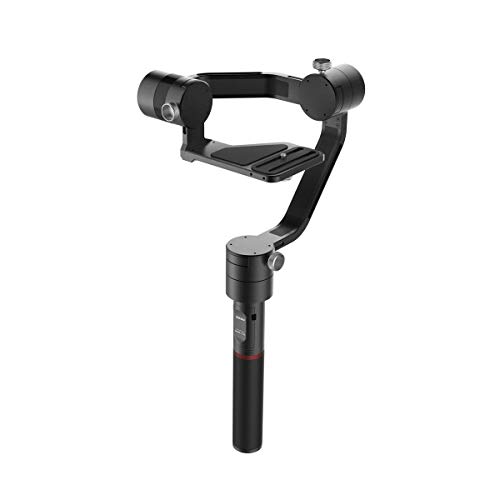
For phone shooters who want a pocketable stabilizer, the Moza Mini-series is the sensible starting point; for mirrorless or compact cinema cameras, the Moza AirCross 3 and Air 2S families are the models built for the extra weight. Moza makes handheld gimbals in two broad groups, and the first decision is simply which group your camera belongs to. The second decision is how much weight, setup time and carrying space you are willing to accept in exchange for smoother footage.
Our top picks


As an Amazon Associate we earn from qualifying purchases at no extra cost to you.
Moza Gimbals at a Glance
| Model family | Best for | What the maker states | Main limits |
|---|---|---|---|
| Moza Mini-P | Travel and everyday phone video | Foldable three-axis smartphone gimbal with a built-in extension rod and tracking features | Phones only; small motors suit modern phones, not heavy cases with big lens add-ons |
| Moza Mini-MX / Mini-S line | Budget phone stabilization | Compact three-axis phone gimbals aimed at casual and social video | Fewer extras and simpler controls than the Mini-P |
| Moza AirCross 3 | Compact mirrorless cameras | Lightweight camera gimbal with a payload rating in the low-to-mid single-digit kilograms | Large lens and cage combinations can exceed the rating |
| Moza Air 2S | Heavier mirrorless and DSLR rigs | Higher payload rating than the AirCross class, handle-style body | Larger and heavier to carry all day |
| Moza Slypod | Low angles and stable standing support | Combined monopod and tripod accessory that works with Moza grips | An accessory, not a stabilizer by itself |
Model names and lineups change often, so treat this table as a map of categories. Use the maker’s compatibility list for the exact camera and lens you own before choosing.
Phone Gimbals: Moza Mini-P and the Mini-MX/Mini-S Class
Phone gimbals solve a specific problem: walking footage that looks like a shaky handheld clip. Moza’s Mini-P is described by the maker as a foldable three-axis gimbal, and it folds down small enough to sit in a jacket pocket or camera bag side pocket. Reviewers who cover phone stabilizers generally point to three things that separate the Mini-P tier from cheaper models: a built-in extension rod for selfie and high-angle shots, a more refined companion app, and subject-tracking features driven by the phone’s camera.
The simpler Mini-MX and Mini-S style models trade features for a lower budget. They still use three-axis motors to level the horizon and smooth pans, but the controls are more basic and the folding design is usually less compact. For someone who films family events, travel clips or short social videos, the stabilization quality is the main benefit and the extra extension rod is optional.
Phone gimbal fit and care notes
- Balance the phone before powering on. Even auto-balancing motors have limits, and a heavy phone in a thick case can overload a small gimbal.
- Clamp width matters. Check the maker’s stated phone width range, and remember that a case and any magnetic ring add thickness.
- Wide-angle and ultra-wide modes can show the gimbal’s arms in frame. Many phone apps crop automatically in stabilized mode.
- Lithium batteries should be charged with the supplied cable, stored partly charged for long gaps, and kept away from heat, as the manual instructs.
Camera Gimbals: AirCross 3 vs Air 2S Class
Mirrorless gimbals are rated by payload, and the number matters more than any feature list. Moza states a maximum payload for each model, and that figure covers the camera body, lens, battery, microphone, any cage and any follow-focus gear together. A camera that looks light on a spec sheet can exceed the rating once a fast prime, a matte box or a monitor is bolted on.
The AirCross 3 is positioned by the maker as a compact, lighter option with a folding-friendly layout suited to smaller mirrorless cameras and modest lenses. Reviewers who compare camera gimbals tend to describe this class as the best match for travel, vlogging and run-and-gun work, where weight and speed of setup are priorities. The Air 2S sits higher on payload, which helps with full-frame bodies and larger zooms, but the whole rig becomes noticeably heavier on a long shoot day.
What to check before buying a camera gimbal
- Total weight: add every accessory, then compare to the stated payload with some margin for comfort. Operating near the limit tends to shorten battery life and can cause motor noise.
- Camera control cable: the maker publishes a compatibility list for which cameras can start and stop recording from the gimbal. Some cameras need a different cable or only support limited control.
- Lens balance: zoom lenses that extend during zooming can shift the balance and need re-adjustment.
- Quick-release plate: a standard Arca-style plate makes switching between a tripod and the gimbal faster.
Budget Tiers Without Prices
| Tier | Typical choice | What you give up |
|---|---|---|
| Budget | Mini-MX or Mini-S class phone gimbal | Fewer shooting modes, simpler app, less compact fold |
| Mid-range | Mini-P for phones or AirCross 3 for light mirrorless | Payload ceiling on the camera model; accessories are separate |
| Premium | Air 2S or higher-capacity camera gimbal with accessories | Weight, bulk and a steeper learning curve |
Pick X If…
| If you… | Pick | Why |
|---|---|---|
| Film mostly with a phone and travel light | Moza Mini-P | Folds small and adds an extension rod |
| Want the least expensive step up from handheld phone video | Mini-MX or Mini-S class | Core stabilization without extras |
| Own a compact mirrorless camera with a light prime | AirCross 3 | Lighter body with a payload suited to small rigs |
| Shoot with a full-frame body and a heavier zoom | Air 2S | Higher stated payload |
| Need low angles or a stable stance for interviews | Moza Slypod with a compatible grip | Doubles as support when you stop moving |
Alternatives Worth Considering
- DJI Osmo Mobile line: a major competitor in phone gimbals, with a wide accessory range and a large user base.
- DJI RS-series gimbals: a well-known option for mirrorless and cinema cameras, and the main rival to Moza’s camera lines.
- Zhiyun Smooth and Weebill series: another established maker with phone and camera gimbals, often compared with Moza on features.
- In-body stabilization and software: many newer cameras and phones offer strong electronic stabilization, which may be enough for casual clips without extra gear.
Practical Setup Advice
Gimbal footage looks best when your own movement is smooth. Bend your knees and walk heel to toe, keep elbows tucked, and use a two-handed hold when the model allows. Spend a few minutes balancing the camera before every session because small shifts in lens or battery position change the load on the motors. Update firmware through the maker’s app before an important shoot, since updates sometimes change tracking or control behavior. Keep spare batteries or a power bank where the maker states charging on the go is supported.
For safety, keep fingers clear of the arms while the motors power up, avoid using the gimbal in rain unless the maker states a water-resistance rating, and store it in its case to protect the motor housings from impact. Do not operate near open water or on crowded walkways where a stumble could cause injury.
How to Decide Quickly
Start with the camera. If it is a phone, choose between the simple Mini line and the Mini-P based on whether you want the folding design and extension rod. If it is a mirrorless or DSLR camera, weigh the complete rig, compare it to the stated payload, then pick the lighter gimbal that fits with margin. If you only shoot an occasional clip, built-in camera stabilization or a monopod may already cover your needs.
Modes, Apps and Everyday Features
Moza’s gimbals typically offer several follow modes. A pan-follow mode keeps the horizon level and follows horizontal turns, a full-follow mode follows both pan and tilt, and a lock mode holds a fixed direction. Phone models add features such as subject tracking, time-lapse, panorama and sometimes a rotating mode for vertical video. The maker’s companion app, which also handles firmware updates, controls most settings, and reviewers say that app stability is as important as the hardware.
Camera gimbals also provide manual focus and zoom control through optional accessories or built-in wheels on some models. Compare the control layout on the handle to your habits. If you operate with one hand, a joystick and a record button within thumb reach make a difference, and a trigger button is handy for recentering the camera.
Battery, Charging and Travel
Battery runtime depends on payload and motor load, and the maker’s figures are measured under specific conditions. Many gimbals can be charged by USB, which lets you use a power bank in the field. Lithium batteries have rules for air travel, so carry gimbals in hand baggage and follow the airline’s guidance on battery capacity. Use the supplied case or a padded pouch to protect the motors, and lock the axes before packing if the model has locks.
Frequently Asked Questions
Is a Moza gimbal worth it for a phone?
If you film walking shots, travel clips or events, a three-axis gimbal smooths motion more than electronic stabilization alone, particularly in low light where phones slow the shutter. For static shots or very short clips, built-in phone stabilization is often enough.
How do I know if my camera is too heavy?
Add up the weight of the body, lens, battery, memory card, microphone and any cage or accessory, then compare it with the maker’s stated payload. Leave a safety margin, because a rig near the limit may cause motor strain and shorter runtime.
Can the gimbal control my camera’s recording?
Many models can through a control cable, but support varies by camera brand and model. The maker publishes a compatibility list, and some cameras only support start-stop recording rather than full control.
Do I need a gimbal if my camera has in-body stabilization?
In-body stabilization helps with handheld shake but cannot fully remove walking motion. A gimbal is built for smooth movement shots, so many creators use both.
How long do the batteries last?
Runtime depends on the model, payload and motor load, and the maker lists a figure for each model. Heavier cameras and cold weather usually reduce runtime, so carry a spare or power bank where supported.
What is the Moza Slypod for?
It is a monopod and tripod combination that works as a stable base for some Moza grips. It is useful for low-angle shots and for holding the rig steady between moving takes.





