
The best indoor drone is a small, light model with propeller protection: the Ryze Tello suits kids and first-time pilots, the DJI Neo and Neo 2 suit solo creators who want a palm-launched camera drone with built-in guards, the DJI Flip suits families and travellers who want a ducted-style camera drone, and a cinewhoop such as the DJI Avata 2 or a small FPV kit suits experienced pilots who want to fly through rooms and tight spaces. Indoor flight is harder than outdoor flight, so the right pick is as much about safety and control as about camera quality.
Our top picks
 DJI Neo
- * Due to platform compatibility issue, the DJI…
- Lightweight and Regulation Friendly - At just 135g,…
- Palm Takeoff & Landing, Go Controller-Free [1] -…
| Product | Key specs | |
|---|---|---|
 Holy Stone Mini Drone for Kids and | Check price | |
 SYMA X100 Indoor Drone for Kids 8-12 | Check price | |
| DJI Neo | * Due to platform compatibility issue, the DJI… Lightweight and Regulation Friendly - At just 135g,… Palm Takeoff & Landing, Go Controller-Free [1] -… | Check price |
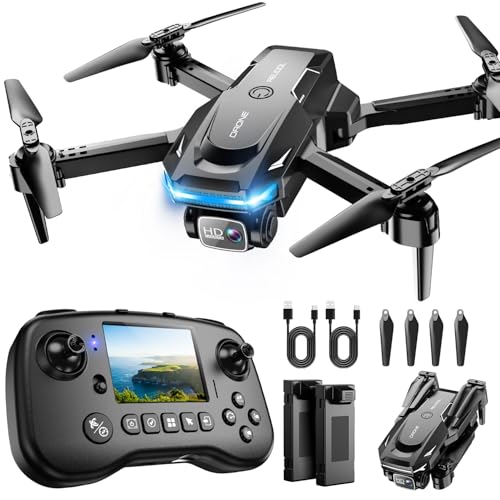 Drone with Camera | The PK01 drone's remote comes with a super… 📷【Drone with Camera】 Equipped with a 1080P HD… 🕹️【More Fun to Fly】 This foldable drone has… | Check price |
As an Amazon Associate we earn from qualifying purchases at no extra cost to you.
What Makes a Drone Good Indoors
Indoor drones do not have the benefit of GPS, which most drones use to hold position outdoors. Without it, they rely on downward-facing vision sensors, barometers and sometimes obstacle sensors. Floors with plain, shiny or dark surfaces can confuse downward vision, and moving air from a vent can push a light drone off course. For that reason, look for propeller guards, low weight, a stable hover with vision positioning, and a controller or app that makes it easy to stop quickly.
Safety matters more than specs. A spinning propeller can injure people, pets and fragile objects. Keep fingers clear, fly in an open room, keep children supervised and read the maker’s safety guidance. Local rules may also apply to flying drones, even indoors in public or shared buildings, so check with the venue or building management when relevant.
At a Glance
| Drone | Best for | Camera | Stated highlights | Limit |
|---|---|---|---|---|
| Ryze Tello | Kids, learning, coding | HD video, small sensor | Very light, propeller guards available, programmable | Basic camera, short flight time, older design |
| DJI Neo | Solo selfies and vlogs | 4K video | Palm launch, built-in propeller guards, light body | Limited obstacle sensing, small battery |
| DJI Neo 2 | Hands-free following indoors and out | 4K video | Updated Neo with additional sensing, according to the maker | Newer model with a premium over Neo |
| DJI Flip | Families and travel | 4K video, gimbal | Foldable, guarded propellers, obstacle sensing | Larger than Neo, more complex |
| DJI Avata 2 | Immersive flying through rooms | 4K video with goggles | Ducted design, FPV view | Needs practice and goggles, not for beginners |
| Small cinewhoop kits | Experienced FPV pilots | Action camera or built-in | Small, durable and customisable | Needs flight skill, licences or training may apply |
The maker publishes specifications such as weight, flight time and camera resolution; read them on the maker’s page, and note that models and regional availability change.
Ryze Tello: The Classic Starter
The Tello is a small, light drone built by Ryze with DJI technology. It has long been a favourite for classrooms because it can be programmed with block-based tools and Python, and it is light enough that a bump into a wall is rarely serious. The camera is basic by current standards, and flight time is short, so it is best treated as a learning tool rather than a filmmaking drone. Check the packaging for what is included, since some bundles add spare propellers, controllers or batteries.
DJI Neo and Neo 2: Palm-Launch Creators
The DJI Neo is a very light camera drone designed to launch from your palm, follow you and return to your hand. It has propeller guards built around the body, which reviewers praise as helpful for family use. It is marketed for solo creators and can fly without a controller, using the phone app, voice commands or optional controllers. The Neo 2 is the update; the maker lists improved sensing and other refinements, though the specific indoor behaviour should be read in its manual. Both models are small, so wind or strong air from a fan can move them.
Because they are so light, they are less likely to cause damage, but guards do not make the drone harmless. Keep the area clear and keep your face away from the drone during takeoff and landing.
DJI Flip: A Step Up in Camera and Sensing
The Flip is a foldable drone with guarded propellers and a gimbal-stabilised camera. It is aimed at people who want better video than the Neo while keeping a safer design than an open-prop drone. It is bigger than the Neo and takes more space to fly, so it works best in a large room, a studio or a hall. Reviewers describe it as a user-friendly option, though the extra size and weight mean greater caution around people.
DJI Avata 2 and Cinewhoops
For pilots who want dramatic footage moving through hallways and staircases, the Avata 2 and small cinewhoops have ducted propellers and fly in manual or stabilised modes. The pilot often wears goggles for an immersive view, and a spotter should watch the drone. This is not a beginner choice. Practising in a simulator first is a common suggestion from the FPV community. Check local regulations, as FPV flight may require visual line of sight or a spotter, and indoor spaces may have rules on drones.
Other Drones Worth Knowing
- DJI Mini 4K and similar sub-250g drones: Meant for outdoors, but used indoors in large, empty spaces. They lack full propeller guards, so extra guards are optional on some models.
- Potensic Atom series: A sub-250g option for outdoors; not designed for tight indoor flying.
- Toy-grade mini drones: Cheap and light, good for kids, though with basic cameras and limited stability.
- Tiny whoops: Very small FPV drones, such as BetaFPV Cetus kits, designed for flying indoors for fun and practice.
Fit and Safety Notes
- Room size: Allow several metres around the drone. Clear cables, curtains and fragile items.
- Lighting: Vision sensors need good lighting and textured floors. Dim rooms and plain floors can lead to drifting.
- Air movement: Switch off fans and air conditioning vents if the drone drifts.
- Batteries: Use the charger supplied by the maker. Lithium batteries should be charged on a non-flammable surface and not left unattended, following the manual.
- Noise: Small drones are louder than most expect indoors; give notice if others are nearby.
- People and pets: Keep a safe distance and never fly over people.
- Spare propellers: Bumps are common, so spares are worth having.
Practical Tips for Flying Indoors
Start with a short, low hover in an open area to see how the drone behaves, and keep the controller in reach so you can land quickly. Mark a takeoff spot, turn off ceiling fans and keep the drone away from mirrors and glass walls, which can confuse sensors. If the drone supports beginner or slow modes, use them until you are comfortable. Keep spare propellers and a screwdriver handy, and inspect blades for chips before each flight, since damaged blades can vibrate and reduce stability.
When filming, plan the route in advance and use gentle movements, since quick turns in small spaces leave little room for correction. Many creators combine short drone clips with footage from a handheld camera, which saves battery and reduces risk in crowded rooms. If you are filming people, ask for their consent and keep a safe distance.
Budget Tiers
- Budget: Ryze Tello, toy mini drones, and tiny whoop kits.
- Mid-range: DJI Neo, Neo 2 and DJI Flip.
- Premium: DJI Avata 2 with goggles, or custom cinewhoop builds.
Pick X If …
| Pick | If you … |
|---|---|
| Ryze Tello | want a cheap way to learn, or need a classroom drone |
| DJI Neo | want a light, guarded camera drone for selfies and family clips |
| DJI Neo 2 | want the Neo format with the newer sensing features |
| DJI Flip | want better video and a foldable, guarded design |
| DJI Avata 2 | are an experienced pilot who wants immersive indoor shots |
| Tiny whoop kits | want inexpensive FPV practice at home |
Alternatives
- Gimbal-stabilised handheld cameras: For smooth indoor video without flying risk.
- Action cameras on a slider or jib: Controlled movement indoors with no propellers.
- Drone simulators: A low-risk way to learn FPV flying before buying hardware.
Frequently Asked Questions
Can I fly any drone indoors?
Technically yes, but many drones are designed for GPS and outdoor use, and they can behave unpredictably indoors. Light drones with propeller guards and vision positioning are better choices. Always follow the maker’s guidance.
Why does my drone drift indoors?
Without GPS, the drone relies on downward vision sensors, which struggle on plain, dark or reflective floors and in low light. Air from fans and vents can also push it. Try a textured surface and good lighting.
Are propeller guards enough to keep children safe?
No. Guards reduce the risk of contact with spinning blades, but they do not remove it. Supervise children, keep fingers away and follow the age guidance from the maker.
Which indoor drone has the best camera?
Among those covered here, the DJI Flip and Avata 2 have stronger cameras than the Tello and Neo, according to the maker’s specifications. Image quality is less important than safe handling for most indoor flying.
Do I need a licence or registration?
Rules depend on your country, the drone’s weight and the location. Indoor flights may be treated differently from outdoor ones, but venue rules still apply. Check with your local aviation authority and the building owner.
How long do indoor drones fly on a battery?
Flight times are modest for small drones, often in the range of minutes rather than half an hour. The maker lists the figure for each model, and real use is usually shorter, so buy spare batteries if you want longer sessions.





