
Key takeaways
- Single-tube legs are light and quick to deploy, suited to lighter cameras.
- Twin-tube legs are stiffer and resist twisting during pans. Reviewers regularly point out their stability, at the cost of weight.
- Travel legs fold small and are best for lighter mirrorless cameras.
If you shoot video seriously, choose a tripod with a true fluid head, such as a Manfrotto 504X-class or Benro S-series head on twin-leg or single-leg legs, because smooth pans and tilts matter more than a high maximum height; casual shooters can get by with a lighter travel tripod with a video-capable head, while run-and-gun filmmakers may prefer a monopod or a compact fluid kit. The right pick depends on camera weight, the type of movement you need and how much you are willing to carry.
Product details below come from the makers’ published specifications, and reviewer observations are attributed to the outlet. Because maker lineups change often, treat model names as starting points and compare payload and weight figures on the maker’s current page before buying.
Our top picks

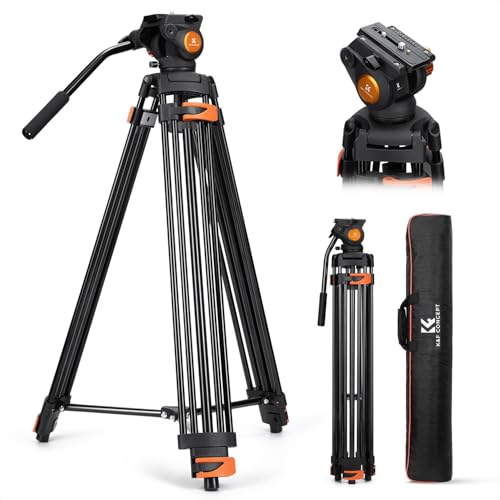


As an Amazon Associate we earn from qualifying purchases at no extra cost to you.
At a Glance: Video Tripods Compared
| Option | Type | Best for | Key stated traits | Limits |
|---|---|---|---|---|
| Manfrotto 504X head with 546B twin-leg legs | Professional fluid kit | Interviews, events, documentary work | Fluid head with counterbalance and a mid-level spreader, twin-leg stability | Heavy and bulky to carry |
| Manfrotto Nitrotech series | Fluid head, higher-end | Cinema-style cameras and heavier rigs | Continuously variable counterbalance, smooth fluid damping | A higher spend tier |
| Benro S2PRO or S4PRO kits | Fluid head kits | Hybrid shooters wanting value | Fluid head with pan and tilt drag, supplied with legs | Heavier and less compact than travel tripods |
| Manfrotto Befree Live | Travel tripod with video head | Travellers, solo vloggers | Compact folding legs, lightweight fluid head | Lower payload, less stable in wind |
| Sachtler Ace and Flowtech lines | Professional video systems | Broadcast and commercial work | Pan and tilt fluid heads with counterbalance, quick-release systems | Premium tier, heavier to transport |
| Fluid-head monopods | Monopod with small base | Sports, events, quick moves | Compact, fast to reposition | Needs user to bear the load |
What Makes a Video Tripod Different
Fluid head versus ball head
A ball head is made for stills: lock it, shoot, repeat. A fluid head contains viscous damping that lets you pan and tilt with consistent resistance, so movements start and stop gently. If you ever plan to pan across a scene, track a moving subject or follow a speaker, a fluid head is the key feature, and it is the single reason most buyers purchase a video-specific tripod.
Counterbalance
Counterbalance springs offset the weight of the camera so a tilted camera does not flop forward or snap back. Higher-end heads, such as Manfrotto’s Nitrotech line, offer variable counterbalance steps that the maker describes as supporting a wide range of rigs. Check that the counterbalance range matches your camera, lens and accessories together, not only the body.
Payload capacity
Every maker lists a maximum payload for the head and a separate one for the legs. A safe approach is to stay comfortably below both figures when you add a matte box, follow focus, monitor or large lens, because the stated maximum is a limit, not a target. Heavier rigs benefit from a mid-level spreader and twin-leg designs.
Leg design: single, twin or travel
- Single-tube legs are light and quick to deploy, suited to lighter cameras.
- Twin-tube legs are stiffer and resist twisting during pans. Reviewers regularly point out their stability, at the cost of weight.
- Travel legs fold small and are best for lighter mirrorless cameras.
Bowl size and levelling
Video tripods use either a flat base, a 75 mm bowl or a 100 mm bowl. A half-ball bowl lets you level the head quickly without adjusting each leg, which is a big time-saver on uneven ground. Make sure the head and legs share the same bowl size, or buy a matching adaptor.
Quick-release plates
Quick-release plates let you move a camera between a tripod and a gimbal or slider. Use the correct plate for your camera, tighten the locking screw firmly and check the safety catch before letting go.
Best by Use Case
Best for interviews and events: Manfrotto 504X with twin-leg legs
The 504X-class fluid head is a long-standing standard for lightweight to mid-weight camcorders and mirrorless cinema rigs. Manfrotto lists a flat-base or half-ball option depending on the kit, a counterbalance and a pan bar. Paired with twin-leg legs and a mid-level spreader, it provides a stable base for interviews and long takes. The drawback is size and weight, which makes it a vehicle-and-tripod-bag kind of kit.
Best for higher-end rigs: Manfrotto Nitrotech or Sachtler
If your camera, lens and accessories add up to a heavy rig, step up to a head built for it. These heads offer finely tuned fluid damping and counterbalance, and are supported by serviceable parts and professional support networks. They are priced in the premium tier and are overkill for small mirrorless setups.
Best value for hybrid shooters: Benro S-series fluid kits
Benro sells fluid heads and matching legs in kits that attract hybrid photo-and-video users. Reviewers commonly describe them as offering a lot of fluid-head performance for the money, although finish and long-term durability may not match top-tier brands. Pick the model whose stated payload comfortably exceeds your rig.
Best for travel: Manfrotto Befree Live or a compact travel tripod
The Befree Live combines folding legs with a lightweight fluid head, so it fits in a carry-on bag or a backpack. The compromise is a lower payload and reduced stability in wind or on soft ground. It suits small mirrorless cameras and compact camcorders rather than heavy cinema rigs.
Best for quick, mobile shooting: a fluid monopod
A fluid-head monopod gives you vertical support and a smooth tilt with minimal setup. It is popular for sports, parades and events where tripod legs would block a walkway. You still hold part of the weight, so it will not give you the locked-off stability of a tripod.
Budget Tiers
| Tier | Typical choices | What you get | Trade-off |
|---|---|---|---|
| Budget | Entry fluid-head kits, lightweight travel kits | Basic fluid damping, adequate for small cameras | Lower payload, plastic parts, less smooth at slow speeds |
| Mid-range | Benro S-series, Manfrotto 504X kits, Befree Live | Better damping, counterbalance, sturdier legs | Weight, and some features reserved for the premium tier |
| Premium | Manfrotto Nitrotech, Sachtler Ace and Flowtech | Precision damping, serviceable, high payload | Weight, cost and size |
Fit, Size and Safety Notes
- Match payload to your real rig: Add camera, lens, cage, monitor, microphone and battery. Choose a head whose stated capacity sits comfortably above that total.
- Height versus weight: A tripod that extends very tall can be less rigid at full extension. Use the centre column sparingly, because it reduces stability.
- Ground and wind: In wind, hang a bag from the hook if the maker provides one, and spread the legs fully. Never leave a camera unattended on a tripod near water, crowds or uneven surfaces.
- Care: Wipe off sand and salt water after use, extend and retract leg locks to clean grit, and keep fluid heads out of extreme heat or cold, which can thicken or thin the fluid and change drag.
- Travel rules: Check airline limits for carry-on length if you travel with a tripod.
Pick X If… Decision Table
| Pick this | If you |
|---|---|
| Manfrotto 504X with twin-leg legs | Film interviews, events or documentary scenes with a mid-weight camera |
| Manfrotto Nitrotech or Sachtler | Use a heavy cinema rig and want precise counterbalance and damping |
| Benro S-series kit | Want solid fluid-head performance at a more moderate spend |
| Manfrotto Befree Live | Travel often and shoot with a small mirrorless or compact camcorder |
| Fluid monopod | Shoot sports or events where speed and mobility matter |
Alternatives Worth Considering
- Photo tripod with a separate fluid head: Pair a sturdy carbon fibre photo tripod with a fluid video head, so one set of legs serves both photo and video.
- Handheld gimbal: For moving shots, a gimbal complements a tripod rather than replaces it.
- Flexible mini tripods: Useful for small cameras on a table or tree branch, but not for pans.
- Shoulder rigs: A rig spreads the weight on your shoulder and suits documentary-style handheld work.
Frequently Asked Questions
Can I use a photo tripod for video?
You can, but a ball head makes smooth pans difficult. For occasional clips, it works, and for regular filming, a fluid head is a worthwhile upgrade. You can often keep the legs and swap only the head.
How much payload do I need?
Add up the weight of the camera, lens and every accessory, then choose a head rated well above that. For mirrorless setups with a small monitor and microphone, many fluid heads from major makers are suitable, while cinema rigs call for heavier-duty heads.
Are carbon fibre legs worth it?
Carbon fibre is lighter and damps vibration better than aluminium, which helps when you carry the kit often. Aluminium is typically more affordable and just as strong, only heavier. Pick carbon fibre if weight matters and aluminium if you want savings.
What is the difference between a flat base and a bowl?
A flat base screws or clamps straight to the leg plate, while a bowl sits in a hemispherical seat and allows quick levelling. Bowls save time on uneven ground, but the head and legs must match in bowl diameter.
Do I need a spreader?
A mid-level or ground spreader reduces leg flex and improves stability, particularly on heavier rigs. Lightweight travel kits often omit it to save weight, which is acceptable for small cameras.
How do I maintain a fluid head?
Keep it clean and dry, avoid leaving it in extreme temperatures and follow the maker’s instructions for lubrication. If the damping feels uneven, contact the maker or an authorised service centre rather than opening the head.





