Key takeaways
- Overall height: 58 inches
- Platforms: seven, individually removable
- Included accessories: hammock
- Construction: powder-coated metal wire with a multi-level frame
- Footprint: standard small-animal class, roughly the 30–36 inch by 22–25 inch base this cage family uses
- Bar spacing: ferret-rated class, typically under 1 inch; verify before buying for a young kit or a kit-sized chinchilla
- Access: front-opening doors plus a base tray
The short answer: for most ferret and chinchilla households the best multi-level cage is the Garvee 58″ Ferret Nation-style cage with hammock and seven removable platforms. It delivers more usable shelf area per dollar than anything else in the mid-range tier, and its seven platforms lift out individually instead of forcing you to strip the whole cage at cleaning time. Choose the VEVOR 34″ two-tier rolling cage instead if your budget is tight, your chinchilla is still young and small, or you want to wheel the cage to a bathtub for washing. Choose the Garvee 64″ Deluxe four-tier if you keep three or more ferrets, or a bonded chinchilla trio, and want maximum internal volume from a single footprint. Every cage below is judged on the six things that actually decide whether a multi-level build works in a living room: usable floor space, bar spacing, ramp geometry, shelf construction, tray cleanup, and assembly and safety hardware.
Top 3 Picks
Best overall: Garvee 58″ Ferret Nation Cage with Hammock and 7 Removable Platforms
Seven individually removable platforms, a 58-inch frame and an included hammock make this the most adaptable cage in the mid-range group. It suits one to three ferrets, or a bonded chinchilla pair, in a room where you want vertical climbing room without a footprint that swallows the floor. The removable-platform design is the detail that matters most over years of ownership, because you can pull one shelf at a time to scrub it rather than dismantling the whole structure.
Best budget: VEVOR 34.06″ Two-Tier Rolling Cage with 0.55″ Wire Spacing
This is the tightest published bar spacing in the roundup at 0.55 inches, which is the number that keeps small animals inside the cage. The 34-inch height is modest, so it is a better fit for chinchillas, younger animals and small spaces than for a full-grown ferret that wants to climb. Casters make it the easiest cage here to roll aside for floor cleaning.
Best premium: Garvee 64″ Deluxe Four-Tier Ferret and Chinchilla Cage
At 64 inches tall with four full tiers, this is the largest vertical build from a brand already represented twice in this list. It suits multi-ferret households, chinchilla pairs, and anyone who wants the cage to double as the room’s main piece of animal furniture. Buyers who want maximum interior volume and are willing to pay premium-tier pricing should start here.
Quick Comparison
| Product | Best for | Key specs from the listing | Price tier |
|---|---|---|---|
| Garvee Metal Small Animal Cage, 58″ H Ferret Nation Cage with Hammock | Most ferret and chinchilla homes | 58″ height; 7 removable platforms; hammock included; multi-level metal frame | Mid-range |
| Aptliton 4-Tier Metal Ferret Cage | Large vertical build for multi-ferret homes | 64″ height; 4 tiers; metal construction; ferret and chinchilla rated | Premium |
| VEVOR Metal Small Animal Cage, 2-Tier Rolling | Tight bar spacing on a budget | 34.06″ height; 2 tiers; 0.55″ wire spacing; rolling wheels | Budget |
| Polar Aurora 59″ H Ferret Cage with Lockable Wheels | Rolling a tall cage safely | 59″ height; lockable wheels; hammock included; deluxe chinchilla build | Mid-range |
| COZIWOW Ferret Nation Cage, 5 Level | Chew-resistant ramp construction | 5 levels; chew-resistant ramps; grey finish; multi-level house | Mid-range |
| PawHut 4-Tier Rolling Big Ferret Cage | Most levels per dollar | 4 tiers; rolling casters; grey; large ferret footprint | Budget |
| Garvee 64″ H Deluxe Ferret Cage, 4 Tier | Maximum internal volume | 64″ height; 4 tiers; deluxe ferret and chinchilla layout | Premium |
| GUTINNEEN Ferret Cage, 5 Levels | Multi-species households | 5 levels; listed for chinchilla, hedgehog, squirrel, chameleon, lizard | Mid-range |
| unipaws Ferret Cage with Storage and Ramp | Small apartments and studio rooms | Large vertical format; built-in storage; ramp included | Premium |
| Jojoka Multi-Level Metal Small Animal Cage | Indoor ferret, chinchilla or rabbit | Multi-level metal frame; indoor rated; ferret/chinchilla/rabbit listed | Premium |
| HABUTWAY 45″ H Rolling Chinchilla Cage | Low-profile rolling chinchilla cage | 45″ height; rolling; removable ramps; large chinchilla format | Budget |
| Homey Pet Rat Cage | Smallest footprint entry point | Listed for rat, ferret, chinchilla and guinea pig; compact multi-level build | Budget |
How We Chose
This roundup is built from manufacturer-published specifications, the physical requirements documented in ferret and chinchilla care standards, and the geometry of how these cages are actually used day to day. Nothing here is based on a physical trial of the products; the ranking comes from reading the spec sheets and mapping each cage’s feature set to a specific household situation.
Four filters did most of the work. First, category fit: a cage rated only for rats or guinea pigs behaves differently for a ferret that climbs and a chinchilla that chews, so species coverage in the listing name carried weight. Second, published dimensions: height, tier count, platform count and bar spacing were compared directly, because those numbers decide whether an animal stays inside and whether the cage fits a room. Third, use case: budget cages were judged on whether they solve a real problem cheaply, not on whether they match premium builds feature for feature. Fourth, upgrade path: a cage that can accept extra shelves, a second litter pan or replacement ramps earns a better position than one with a sealed, non-serviceable interior. Where a listing did not state an exact figure, we describe the spec class rather than guessing a number.
1. Garvee 58″ Ferret Nation Cage – Best for Maximum Shelf Area on a Mid-Range Budget
As an Amazon Associate we earn from qualifying purchases at no extra cost to you.
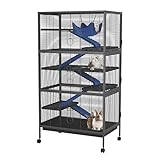
This is the cage to buy when you want the most horizontal surface per dollar and you keep animals that spend their waking hours climbing. Seven removable platforms plus a 58-inch frame suit one to three ferrets, a bonded chinchilla pair, or a single chinchilla in a large room where you want the cage to read as furniture rather than a wire box. It is also the friendliest cage in this list for owners who clean in stages rather than all at once.
Key specs
- Overall height: 58 inches
- Platforms: seven, individually removable
- Included accessories: hammock
- Construction: powder-coated metal wire with a multi-level frame
- Footprint: standard small-animal class, roughly the 30–36 inch by 22–25 inch base this cage family uses
- Bar spacing: ferret-rated class, typically under 1 inch; verify before buying for a young kit or a kit-sized chinchilla
- Access: front-opening doors plus a base tray
Why it earns the top spot
The seven-platform layout is the whole argument. A cage with three fixed shelves gives you three cleaning jobs that require partial disassembly; a cage with seven removable platforms gives you seven small jobs that each take a minute with a scrub brush and hot water. Over a two-year ownership span that difference is measured in hours, not minutes. The 58-inch height is the second advantage: it is tall enough to give ferrets a genuine vertical run and a hammock height that keeps them off the tray, but short enough that a shorter adult can still reach the top shelf without a step stool.
The hammock inclusion matters more than it sounds. Ferrets sleep 14 to 18 hours a day in a heap, and a hammock at mid-height stops them from choosing a corner of the litter tray as a bed, which is the single most common cause of a smelly ferret room. The metal frame is powder-coated, which is the finish to want with chinchillas, since bare galvanized wire can leave residue on paws and gets chewed at contact points.
Where it asks something of you: the platform surfaces are wire or perforated in the standard configuration, and both ferrets and chinchillas do better with solid, covered surfaces underfoot. Budget for fleece liners or solid shelf covers on day one. Ramps in this class are also usually plastic, and a determined chinchilla can chew through a plastic ramp edge in a season.
Pros
- Seven removable platforms give the highest shelf count in the mid-range tier
- 58-inch height suits both climbing ferrets and ledge-hopping chinchillas
- Hammock included, which reduces tray-sleeping and odor
- Individual platform removal makes weekly cleaning fast
- Powder-coated metal frame handles chinchilla chewing better than bare wire
Cons
- Wire platform surfaces need fleece or solid covers added at extra cost
- Plastic ramps can be chewed by a persistent chinchilla
- No wheels, so moving it for floor cleaning means lifting
- Seven platforms means seven surfaces to clean, even if each one is quick
How it compares
The closest alternative in this list is the Polar Aurora 59″ cage, which matches it almost inch for inch but adds lockable wheels and a deluxe trim. If you clean floors often or want to reposition the cage, Polar Aurora’s lockable casters are the better answer; if you want the higher platform count and a lower mid-range position, the Garvee wins. Against the COZIWOW five-level cage, the Garvee trades one level for chew-resistant ramp construction on the other side of the comparison, so chinchilla owners with a history of destroyed ramps should look there first.
2. Aptliton 4-Tier Metal Ferret Cage – Best for Large Vertical Builds in Multi-Ferret Homes

At 64 inches tall across four tiers, the Aptliton is the tallest mainstream option here and the one to consider when you keep a business of three or more ferrets or a chinchilla pair that needs separate sleeping ledges. It suits owners with a permanent wall position for the cage and enough ceiling height to lift a 64-inch frame upright during assembly. This is a premium-tier purchase aimed at people who want the cage to be the last one they buy.
Key specs
- Overall height: 64 inches
- Tiers: four full levels
- Construction: metal frame and wire panels
- Species coverage: listed for ferrets and chinchillas
- Footprint: large small-animal class, comparable to other 60-inch-plus cages
- Access: multi-door front access with a base tray
Why it earns its place
Height is the resource ferrets fight over. In a 34-inch cage, three ferrets occupy the same two shelves and the hierarchy shows up as squabbles and corner-soiling. In a 64-inch, four-tier cage, each animal can claim a level, and the group’s social structure gets room to work itself out. That is the practical reason to pay premium-tier money for extra vertical space rather than extra width: width is limited by your floor plan, height is limited only by your ceiling.
Chinchillas benefit from the same geometry for a different reason. A chinchilla moves by hopping and ricocheting off surfaces, so it wants stacked ledges with clear landing zones rather than a long horizontal run. Four tiers at 64 inches gives a chinchilla a vertical circuit it can complete without touching the floor, which keeps it off soiled bedding and gives it the exercise it needs. Owners who keep chinchillas in shorter cages often report more bar-biting and cage-pacing, both of which are signs of an under-stimulating layout.
The trade-offs are physical rather than functional. A 64-inch cage needs two people to assemble safely, it dominates a wall, and cleaning the top tier requires a step stool for most adults. It also amplifies the usual chinchilla problem: more surfaces means more plastic ramps to protect, and a chinchilla that chews will find the top ramps just as interesting as the bottom ones.
Pros
- Tallest frame in the roundup at 64 inches, with four full tiers
- Enough separate levels to house three or more ferrets without crowding
- Vertical layout suits a chinchilla’s hopping, ricocheting movement style
- Rated for both ferrets and chinchillas in the listing itself
- Premium build aimed at long-term ownership rather than a starter setup
Cons
- Requires two people and real ceiling clearance to assemble upright
- Top tier is out of easy reach for shorter owners
- More levels means more ramp surfaces a chinchilla can chew
- Premium-tier pricing for a footprint that will not suit small rooms
How it compares
Its nearest rival is the Garvee 64″ Deluxe four-tier, which matches the height and tier count. The difference comes down to layout philosophy: Garvee’s deluxe line leans on accessory density and removable components, while Aptliton presents a cleaner four-tier frame. Owners who want the simplest possible structure to clean should lean Aptliton; owners who want more included fittings and shelf flexibility should lean Garvee. Against the Jojoka multi-level cage, the Aptliton is the more clearly ferret-focused build, while Jojoka widens species coverage to rabbits and other indoor small animals.
3. VEVOR 2-Tier Rolling Cage – Best Budget Cage for Tight Bar Spacing

This is the value pick for anyone whose main worry is escape. The published wire spacing is 0.55 inches, the tightest figure in this entire roundup, and that single number makes it the safest budget cage for small chinchillas, young animals and anyone who has already lost an animal through a wider bar gap. At 34.06 inches tall it is a low-profile cage, so it suits chinchillas, small pets and apartments far better than it suits a full-grown ferret that wants to climb.
Key specs
- Overall height: 34.06 inches
- Tiers: two
- Wire spacing: 0.55 inches
- Mobility: rolling wheels
- Construction: metal frame and wire panels
- Footprint: large small-animal class relative to its height
Why it earns its place
Bar spacing is the specification buyers skip and later regret. Ferret kits and juvenile chinchillas can compress their bodies far more than their head suggests, and a 1-inch grid is an open door for a small animal. A 0.55-inch grid closes that gap with margin to spare, and it also stops the secondary problem of a chinchilla pushing a paw or a cheek pouch through the wire and getting stuck. If you are buying for a young animal, this is the number to prioritise over height, platform count or finish.
The rolling base is the second real advantage at this price point. A two-tier cage is light enough that wheels actually work, which is not true of a 64-inch premium frame. You can roll it to a bathroom or outside door for a full hose-down, then roll it back, instead of carrying a loaded tray across a carpet. For chinchilla owners, who should avoid wet bedding and damp cage interiors, that ability to wash and fully dry the base away from the animal is genuinely useful.
The obvious limitation is height. Two tiers at 34 inches gives limited vertical climbing, and a ferret will use the available space quickly. Treat this as a starter cage, a hospital or quarantine cage, or a permanent home for a chinchilla that is not a climber. It is also a budget-tier build, so hinges and latches should be checked and tightened on arrival.
Pros
- 0.55-inch wire spacing is the tightest in this roundup
- Rolling wheels make full cage washing practical
- Compact 34-inch height fits under windows and in small rooms
- Budget-tier price for a two-tier layout with real escape protection
- Light enough for one person to reposition
Cons
- Two tiers and 34 inches of height limit climbing exercise for ferrets
- Budget hardware should be inspected and tightened on arrival
- Wheels need locking or chocking if the floor is uneven
- Smaller internal volume means more frequent full cleanings
How it compares
The nearest alternative is the HABUTWAY 45″ rolling chinchilla cage, which buys you 11 more inches of height and removable ramps for a similar budget-tier outlay. If your animal climbs, HABUTWAY is the better budget choice; if escape risk is your primary concern, VEVOR’s 0.55-inch spacing is the safer number. Against the PawHut four-tier rolling cage, VEVOR wins on bar spacing while PawHut wins on level count, so the decision is simply whether you need containment or stimulation more.
4. Polar Aurora 59″ Ferret Cage – Best for a Tall Cage You Can Move Safely

Polar Aurora’s 59-inch cage solves the problem every tall cage owner eventually hits: you cannot move a 59-inch frame without a second person, so you stop moving it, and the floor underneath becomes a permanent dust trap. Lockable wheels change that. This cage suits ferret owners who clean floors weekly, renters who may need to reposition furniture, and chinchilla owners who want deluxe trim without going to the 64-inch premium class.
Key specs
- Overall height: 59 inches
- Mobility: lockable wheels
- Included accessories: hammock
- Construction: metal frame with deluxe finish
- Species coverage: listed for ferrets and chinchillas
- Footprint: standard large small-animal class for its height
Why it earns its place
Lockable casters are the feature that separates a cage you maintain from a cage you neglect. Non-locking wheels on a 59-inch frame are actively dangerous, because a ferret launching off a top shelf can shift the whole structure. Lockable wheels let you roll the cage out, lock it, clean the floor, unlock it and roll it back, with no risk of it walking across the room during use. It is a small mechanical detail with an outsized effect on how often the floor actually gets cleaned.
The 59-inch height places it in the sweet spot for ferrets: tall enough for a genuine multi-level climb, short enough that the top shelf is reachable. The included hammock gives you a mid-height sleeping station immediately, which matters because ferrets choose sleeping spots based on height and enclosure, not comfort, and an animal with no elevated bed will sleep in the litter tray. For chinchillas, 59 inches supports a stacked ledge circuit without the ceiling clearance demands of a 64-inch frame.
Considerations are the usual mid-range ones. The deluxe trim usually means plastic ramps and a plastic base tray, both of which are chew targets in a chinchilla household. Plan on solid shelf covers and a spare tray. Assembly is a two-person job at this height, and the wheel housings are the first parts to loosen with repeated rolling.
Pros
- Lockable wheels let one person move a 59-inch cage safely
- Height suits ferret climbing without extreme ceiling requirements
- Hammock included, encouraging elevated sleeping over tray-sleeping
- Rated for both ferrets and chinchillas
- Mid-range pricing for deluxe-tier fittings
Cons
- Plastic ramps and tray are vulnerable to chinchilla chewing
- Two-person assembly at 59 inches of height
- Wheel housings loosen over time and need periodic tightening
- Fewer platforms than the seven-platform Garvee at a similar price tier
How it compares
The head-to-head with the Garvee 58″ is close and comes down to one question: do you need to move the cage? If yes, Polar Aurora’s lockable wheels win outright and the one-inch height difference is irrelevant. If no, Garvee’s seven removable platforms give you more usable surface and a faster cleaning routine. Against the Aptliton 4-tier, Polar Aurora trades a tier of height and premium build quality for mobility and a lower price tier, which makes it the more practical choice for renters and small apartments.
5. COZIWOW Ferret Nation Cage, 5 Level – Best for Chinchillas That Destroy Ramps

The COZIWOW cage is aimed squarely at the most expensive habit a chinchilla has: chewing through ramps. Its listing leads with chew-resistant ramps across five levels, which is a direct answer to the single most common replacement cost in chinchilla ownership. It suits chinchilla owners who have already replaced plastic ramps once, and ferret owners who want a five-level climb in a mid-range frame.
Key specs
- Levels: five
- Ramps: chew-resistant construction
- Finish: grey
- Construction: metal frame and wire panels
- Format: multi-level house with stacked levels
- Species coverage: ferret and chinchilla category
Why it earns its place
Chinchillas chew for maintenance, not mischief. Their teeth grow continuously, and plastic is soft enough to be satisfying without being hard on the jaw. That is why plastic ramp edges disappear first, followed by tray rims, then the base pan itself. A cage that ships with chew-resistant ramps removes the first and most frequent failure point in the chain, and it delays the moment you have to source a replacement part that may not be sold separately.
Five levels in a mid-range frame is a strong ratio. More levels at a shorter overall height means smaller gaps between shelves, which is easier on older animals and on ferrets recovering from minor injuries, and it gives a chinchilla more landing zones in the same wall space. It also spreads the cage’s population across more surfaces, which reduces the territorial crowding that leads to corner-soiling.
The grey finish is a practical choice rather than a cosmetic one: mid-tone grey hides the dust and fur film that shows up on white wire within days. For chinchilla owners, who manage constant fine dust from bathing, that is a genuine quality-of-life detail. Expect to add solid shelf covers and to check that the chew-resistant ramps are secured at both ends, since a loose ramp is a fall hazard on a five-level frame.
Pros
- Chew-resistant ramps address the most common chinchilla replacement cost
- Five levels in a mid-range frame gives a strong level-per-dollar ratio
- Shorter gaps between levels suit older animals and younger ones
- Grey finish hides dust and fur better than white wire
- More landing zones reduce territorial crowding in pairs
Cons
- Five levels means five surfaces to clean weekly
- Ramp ends must be checked regularly on a tall stacked layout
- Shelf covers still needed for foot comfort
- No published bar spacing figure, so verify before buying for a small animal
How it compares
Its closest match is the GUTINNEEN five-level cage, which also stacks five levels but widens species coverage to hedgehogs, squirrels and reptiles. If your household has one species, COZIWOW’s chew-resistant ramp focus is the more targeted benefit. Against the unipaws vertical cage with storage, COZIWOW wins on level count and ramp durability while unipaws wins on room integration and included storage. Choose COZIWOW if chewing is your history; choose unipaws if floor clutter is.
6. PawHut 4-Tier Rolling Ferret Cage – Best Budget Cage for Level Count
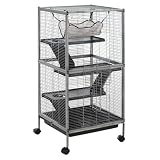
PawHut’s four-tier rolling cage is the budget answer to the question “how many levels can I get for the least money?” Four tiers plus casters at a budget-tier position makes it the entry point for ferret owners who want real vertical climbing rather than a two-tier starter box. It suits first-time ferret owners, foster households that need spare capacity, and anyone building a cage setup on a fixed budget.
Key specs
- Tiers: four
- Mobility: rolling casters
- Colour: grey
- Construction: metal frame and wire panels
- Format: large ferret cage with stacked tiers
- Footprint: large small-animal class
Why it earns its place
Four tiers at budget pricing is a legitimate trade, not a compromise. Ferrets need vertical distance more than they need premium hardware, and a budget four-tier cage delivers the climbing and the level separation that a two-tier cage cannot. For a single ferret or a pair, four tiers is enough to establish separate sleeping, eating and litter zones, which is the layout that keeps a ferret enclosure from smelling. When food, water and sleep all happen on one level, waste ends up in the food area, and that is the point at which a ferret room becomes unpleasant.
The casters matter at this price. A budget cage without wheels is a cage that gets cleaned in place with a spray bottle and a cloth, which never reaches the corners. Wheels let you pull the frame out from the wall and get to the back panels where fur and dust accumulate fastest.
Budget-tier construction brings budget-tier realities. Expect thinner wire than premium frames, hinges that need periodic tightening, and a tray that may flex when loaded with heavy bedding. Bar spacing should be verified against your animal’s size, because a wide budget grid is a real escape risk for a kit. Plan on adding fleece liners and replacing the tray once every year or two, especially with chinchillas.
Pros
- Four tiers at budget-tier pricing, the best level count at this price
- Rolling casters allow full access to back panels and floor
- Enough levels to separate sleeping, feeding and litter zones
- Large format suits a ferret or a bonded pair
- Neutral grey finish works in most rooms
Cons
- Thinner wire and lighter hardware than mid-range or premium builds
- Bar spacing should be confirmed before housing a small kit
- Tray may need replacing within a couple of years
- Castors are usually non-locking at this tier, so chock them
How it compares
Against the VEVOR two-tier rolling cage, PawHut doubles the level count for a similar budget outlay, but gives up the 0.55-inch bar spacing that makes VEVOR the safer choice for small animals. If your ferret is full-grown and escape has never been an issue, take the levels. Against the HABUTWAY 45″ rolling cage, PawHut offers a taller stacked format while HABUTWAY focuses on chinchilla-friendly removable ramps at a similar price tier.
7. Garvee 64″ Deluxe Ferret Cage, 4 Tier – Best for Maximum Internal Volume
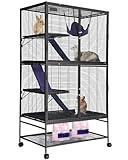
This is the largest cage in the roundup by height, and the one to choose when the constraint is volume rather than budget. Four tiers across 64 inches gives a deluxe configuration aimed at multi-ferret households, bonded chinchilla groups, and owners who want a single cage that will not need replacing. It suits anyone with a dedicated wall, adequate ceiling clearance and the patience for a two-person build.
Key specs
- Overall height: 64 inches
- Tiers: four
- Construction: metal frame and wire panels, deluxe finish
- Species coverage: listed for ferrets and chinchillas
- Format: deluxe multi-level with accessory fittings
- Footprint: large small-animal class consistent with the 60-inch-plus category
Why it earns its place
Volume is the resource that solves the most problems at once. A 64-inch four-tier cage gives you room for a dedicated litter corner on the ground tier, a feeding station on the second, sleeping hammocks on the third and a lookout on the fourth. That separation is what keeps a multi-animal enclosure clean, because waste, food and sleep stop competing for the same square feet. It is also the layout that lets three ferrets live together without one animal being pushed off the only available shelf.
For chinchillas, the extra height supports a full vertical circuit of ledges, which is the closest a cage can come to replicating the rock-hopping environment chinchillas are built for. Chinchillas that lack vertical stimulation tend to develop repetitive bar-biting and fur-chewing behaviours, both of which are difficult to reverse once established. Extra height is one of the few environmental changes that reliably helps.
The deluxe fittings cut both ways. You get more included accessories and more shelf flexibility, but also more plastic components in a chinchilla household. Check every ramp and shelf bracket on arrival, secure anything that rocks, and keep a spare set of shelf covers on hand. The other honest drawback is reach: the top tier of a 64-inch frame is above comfortable eye level for most adults, so you will inspect it by feel or with a step stool.
Pros
- 64-inch height, the tallest cage in this roundup
- Four tiers allow separate litter, feeding, sleeping and activity zones
- Enough volume for three or more ferrets or a bonded chinchilla group
- Deluxe fittings add shelf flexibility and included accessories
- Premium build intended as a long-term, one-time purchase
Cons
- Two-person assembly and significant ceiling clearance required
- Top tier is awkward to inspect and clean for shorter owners
- More plastic components means more chew targets for chinchillas
- Premium-tier cost and a large floor footprint
How it compares
This is the direct head-to-head with the Aptliton 4-tier 64″: identical height and tier count, different priorities. Garvee’s deluxe line leans toward accessory density and removable components; Aptliton leans toward a cleaner, simpler frame. If you want fewer parts to clean, Aptliton; if you want more included fittings, Garvee. Against the Jojoka multi-level cage, the Garvee is the more ferret-specific build, while Jojoka broadens coverage to rabbits and other indoor small animals.
8. GUTINNEEN 5-Level Small Animal Cage – Best for Multi-Species Households

GUTINNEEN’s five-level cage is the generalist of the group. Its listing covers chinchillas, hedgehogs, squirrels, chameleons and lizards alongside ferrets and rats, which makes it the practical pick for a household that keeps more than one species and wants a consistent cage format. It suits keepers who want one cage family they understand, rather than a different manual for every animal.
Key specs
- Levels: five
- Species coverage: ferret, rat, chinchilla, hedgehog, squirrel, chameleon, lizard
- Construction: metal frame and wire panels
- Format: stacked multi-level cage
- Footprint: mid-size small-animal class
Why it earns its place
Multi-species coverage is not marketing padding when it reflects genuine structural choices. A cage rated for a chameleon or a lizard has to manage humidity and ventilation differently from one built purely for a ferret, and a cage rated for squirrels has to survive harder chewing and more aggressive climbing than a rat cage. The practical benefit for a mixed household is standardisation: the same cleaning routine, the same liner sizes and the same shelf-cover pattern work across cages.
Five levels gives you the same benefit COZIWOW delivers: more landing zones in less height, smaller drops between levels, and better separation of function. For a chinchilla, five closely stacked levels means more hopping and less falling. For a ferret, it means a longer climbing circuit through the same footprint. It is also a useful shape for hedgehogs and smaller rodents, which do not need the headroom a 64-inch ferret cage provides.
What to watch: multi-species cages often use a single bar spacing that is a compromise. Verify the actual grid size against your smallest animal, because a spacing suited to a ferret is too wide for a small hedgehog or a juvenile squirrel. Also confirm the tray material, since a cage designed for reptiles may use a base that is not built to survive chinchilla chewing. And note that heat and humidity needs differ sharply between species, so a shared cage format does not mean a shared environment.
Pros
- Broadest published species coverage in this roundup
- Five levels give more landing zones and shorter drops
- Standardised format simplifies cleaning across a multi-cage household
- Mid-range pricing for a five-level build
- Suits smaller species that do not need 60-inch-plus headroom
Cons
- Compromise bar spacing should be verified for very small animals
- Base material may not resist chinchilla chewing long-term
- Not designed around any single species’ specific needs
- Five levels require a consistent weekly cleaning routine
How it compares
Against the COZIWOW five-level cage, GUTINNEEN wins on species breadth while COZIWOW wins on chew-resistant ramp construction for chinchillas specifically. If you keep only chinchillas or only ferrets, take the targeted build. Against the Homey Pet rat cage, GUTINNEEN offers substantially more vertical space for a modest step up in price tier, which makes it the better choice for anyone who wants a cage that will still fit the animal in two years.
9. unipaws Ferret Cage with Storage and Ramp – Best for Small Apartments

unipaws approaches the multi-level cage as furniture. The large vertical format includes a ramp and built-in storage, which addresses the two things that make small-animal ownership difficult in a studio or one-bedroom flat: floor clutter and the lack of anywhere to keep bedding, food and cleaning supplies. It suits apartment dwellers, owners in shared housing, and anyone who wants the cage to look deliberate rather than improvised.
Key specs
- Format: large vertical cage
- Included: storage compartment and ramp
- Construction: metal and composite frame
- Species coverage: ferret category, with vertical small-animal applications
- Footprint: compact vertical class, designed to use height rather than floor area
Why it earns its place
The storage integration is the differentiator, and it is a bigger deal than it sounds. A ferret or chinchilla setup generates a surprising amount of gear: bags of bedding, fleece liners, a dust bath, a spare litter pan, cleaning spray, nail clippers. In a small flat that gear ends up stacked on top of the cage or on the floor beside it, which is exactly where animals knock it over and where it collects fur. Building the storage into the cage removes that clutter and keeps supplies within arm’s reach at cleaning time, which makes you more likely to clean on schedule.
The vertical format is the second advantage. By trading floor area for height, it fits into the corner of a room that cannot take a wide 36-inch footprint. The included ramp is a sensible starting point, though you should check its angle and secure both ends, since an unsecured ramp is the most common cause of a fall in a new cage.
Premium pricing is the trade. You are paying for the integrated storage and finish as much as for the wire frame, so if storage is not a priority for you, the money is better spent on level count. Also verify that the storage compartment seals properly, since bedding dust migrating into a closed compartment is a minor but constant annoyance, and check that the composite components are out of reach of a chewing chinchilla.
Pros
- Integrated storage keeps bedding and supplies off the floor
- Vertical format uses height instead of scarce floor area
- Ramp included, so the cage is usable on arrival
- Furniture-like appearance suits living areas and studios
- Supplies within reach at cleaning time encourage a consistent routine
Cons
- Premium-tier pricing driven partly by storage rather than cage volume
- Composite components need checking in a chinchilla household
- Storage compartment should seal well to keep bedding dust out
- Level count is lower than five-level mid-range options at a similar or higher tier
How it compares
Against the COZIWOW five-level cage, unipaws wins on room integration and storage while COZIWOW wins on level count and chew-resistant ramps. Against the Jojoka multi-level cage, unipaws is the more apartment-oriented design with a smaller footprint, while Jojoka is the broader multi-species indoor build. If your limiting factor is floor space and clutter, unipaws is the pick; if it is stimulation, take the extra levels.
10. Jojoka Multi-Level Metal Small Animal Cage – Best for Indoor Ferret, Chinchilla or Rabbit Setups

Jojoka’s multi-level cage is the widest-scope premium option here, listed for indoor ferrets, chinchillas and rabbits in a single frame. That combination suits households where the animal may change — a family starting with a chinchilla and later adding a rabbit, or a foster situation where species vary. It suits buyers who want premium build quality and a cage that is not locked to one animal type.
Key specs
- Format: multi-level metal cage, indoor rated
- Species coverage: ferret, chinchilla, rabbit
- Construction: metal frame and wire panels
- Levels: multi-level stacked layout
- Footprint: large small-animal class
Why it earns its place
Rabbits change the engineering requirements. A rabbit is heavier than a ferret or a chinchilla, it stamps rather than climbs, and it puts point loads on shelves and ramps that a lighter animal never generates. A cage rated for a rabbit therefore has to be built with stronger joints and more substantial floor panels than a ferret-only frame. That extra structural margin benefits lighter animals too: a chinchilla ricocheting off a ledge or a ferret launching from a top shelf puts less stress on a frame designed for a rabbit.
The indoor rating is a useful signal as well. Indoor cages are typically finished for living spaces, with coatings and edge treatments that are less likely to scratch furniture or snag fabric, and with trays designed for bedding rather than for outdoor drainage. For chinchillas, which must be kept out of direct sun and in cool, dry conditions, an indoor-oriented cage fits the environmental requirements more naturally.
Premium pricing is the main barrier, and the multi-species flexibility is only valuable if you will actually use it. If you keep one species permanently, a species-specific premium cage will usually give you more tailored features for the same money. Also confirm the level count and shelf configuration, since “multi-level” covers a wide range and the exact number of usable surfaces matters more than the label.
Pros
- Listed for ferrets, chinchillas and rabbits in one frame
- Structural margin from rabbit-rated engineering benefits lighter animals
- Indoor-rated finish suits living spaces
- Premium build quality aimed at long ownership
- Useful for foster households where species change
Cons
- Premium pricing for flexibility you may never use
- Fewer species-specific features than a dedicated ferret or chinchilla build
- Exact level count and shelf layout should be confirmed before buying
- Large footprint for a single animal
How it compares
Against the unipaws vertical cage, Jojoka is the broader, more structurally robust build while unipaws is the more space-efficient apartment design with integrated storage. Against the Garvee