Our Short List of 3

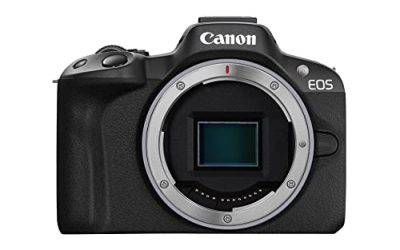
- Best for: Beginners who want one capable camera for learning, travel, and family photos.
- 24.2 megapixel CMOS APS-C sensor
- RF-S 18-45mm F4.5-6.3 IS STM kit lens
- Model 5811C012
- 4K video recording

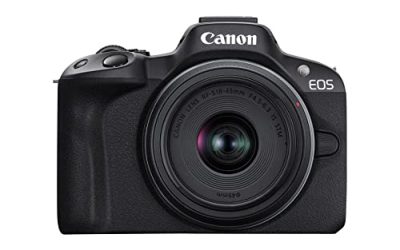
- Best for: First-time buyers who want the lightest and simplest Canon mirrorless kit.
- 24.1 megapixel CMOS APS-C sensor
- RF-S 18-45mm F4.5-6.3 IS STM kit lens
- Model 6052C012
- 4K video recording

- Best for: Beginners who want wide and telephoto coverage in a single purchase.
- APS-C sensor with EXPEED 7 image processor
- NIKKOR Z DX 16-50mm lens included
- NIKKOR Z DX 50-250mm lens included
- 4K video at 60 frames per second
All 4 Picks at a Glance
| Product | Specs | Action |
|---|---|---|
| Canon EOS R50 |
| Check price on Amazon |
| Canon EOS R100 |
| Check price on Amazon |
| Nikon Z50 II Two-Lens Kit |
| Check price on Amazon |
 FUJIFILM X100VI |
| Check price on Amazon |
Our Top Picks
- Canon EOS R50 Mirrorless Camera RF-S18-45mm F4.5-6.3 is2.71 x 4.58 x 3.37 Inches1 poundsCheck on Amazon
- Canon EOS R100 Mirrorless Camera RF-S18-45mm F4.5-6.3 is2.7 x 4.6 x 3.4 inches0 PoundsCheck on Amazon
A Wi-Fi camera changes how a beginner learns photography, because the photo reaches a phone in seconds instead of waiting for a cable and a computer. The real decision is not which camera has the biggest sensor on paper. It is which camera makes it easy to send a shot to a friend, check the framing on a large phone screen, and keep shooting while the app handles the transfer in the background. A camera with slow or fiddly wireless sharing ends up unused, while a camera that moves files quickly becomes the one you reach for every day.
This guide is for amateur photographers learning to shoot beyond a phone who want a real camera with Wi-Fi built in. Every pick below was chosen from its Amazon product title and listing details, and every one is a mirrorless or compact camera with wireless sharing and remote control from a phone app. None of these is a DSLR, so each one stays light and simple to learn on.
Quick Picks
As an Amazon Associate we earn from qualifying purchases.
| Product | Best for | Key spec from title |
|---|---|---|
| Canon EOS R50 | Best all-round starter camera | 24.2MP APS-C, RF-S 18-45mm kit lens |
| Canon EOS R100 | Simplest and lightest starter kit | 24.1MP APS-C, RF-S 18-45mm kit lens |
| Nikon Z50 II Two-Lens Kit | Widest reach with two lenses | Two-lens kit, 16-50mm plus 50-250mm |
| Sony Alpha ZV-E10 II | Fastest sharing for stills and video | 26MP APS-C, 16-50mm power zoom lens |
| FUJIFILM X100VI | Premium fixed-lens compact | 40.2MP APS-C, fixed 23mm f/2 lens |
How to Choose
Check How the Wi-Fi Actually Works
Wi-Fi on a camera is only useful if the connection is quick and stable, so check the listing for the companion app and wireless features. A good setup pairs with a phone once, then reconnects by itself the next time you open the app. Check whether the app transfers full-size images or only small copies, whether it shows a live view on the phone screen, and whether you can tap the phone to focus and shoot from a distance. Some cameras also use Bluetooth to keep a low-power link alive, so Wi-Fi starts faster when you want it. If the listing only names Wi-Fi without describing the app, read the app description first.
Match the Sensor and Lens to What You Shoot
An APS-C sensor is the sweet spot for a beginner camera, because it gathers far more light than a phone sensor and still keeps the body and lenses compact. The kit lens matters just as much as the sensor: a standard 18-45mm or 16-50mm zoom covers wide landscapes, group photos, and portraits without any extra purchase. A two-lens kit adds a telephoto zoom that reaches distant subjects, while a fixed-lens compact trades zoom range for a sharper lens and a smaller body. Think about your most common subjects before you compare megapixel counts, because the lens you carry every day shapes your photos more than a small difference in resolution.
Look for Guides and Controls That Teach You
A beginner camera should help you learn, not hide everything behind automatic modes. A guided mode that explains aperture, shutter speed, and ISO in plain language lets you experiment without guessing what each setting does. A touchscreen for tap-to-focus, a vari-angle screen that flips out for awkward angles, and a viewfinder for bright sunlight all make learning faster. Check the control layout too: a camera with a dedicated mode dial and a quick menu is easier to adjust on the move than one that buries every setting in a deep menu. The best starter camera is the one whose controls you understand after a single afternoon.
Plan for Batteries, Cards, and the App Habit
Wireless sharing uses power, so battery life matters more on a Wi-Fi camera than on one you only shoot with and put away. Check the battery type in the listing and consider a spare if you plan to transfer photos all day. A fast card keeps the camera from stalling during bursts, and a card reader is a useful backup when the wireless connection is slow. Finally, be honest about your own habits: if you rarely open companion apps, a camera with simple one-touch transfer will serve you better than a powerful app you never use. The wireless feature only helps when it fits the way you already share photos.
The 5 Best Options
Canon EOS R50
- Best for: Beginners who want one capable camera for learning, travel, and family photos.
- 24.2 megapixel CMOS APS-C sensor
- RF-S 18-45mm F4.5-6.3 IS STM kit lens
- Model 5811C012
- 4K video recording
Beginners who want one capable camera for learning, travel, and family photos.
Confirm the listing is the 18-45mm kit in the US configuration and not a body-only or international version before ordering.
The EOS R50 is the strongest all-round starter camera here, pairing a 24.2 megapixel APS-C sensor with a compact body, a guided shooting mode, and Wi-Fi plus Bluetooth through the Canon Camera Connect app. The RF-S 18-45mm kit lens covers everyday subjects from wide landscapes to portraits, and the camera records 4K video for buyers who also want moving images. Eye and face autofocus keeps portraits sharp while you are still learning, and the vari-angle touchscreen makes low angles and self-portraits easy. This is the camera to choose when you want one body for learning, travel, and family photos without a second purchase.
Watch out for: Confirm the listing is the 18-45mm kit in the US configuration and not a body-only or international version before ordering.
Canon EOS R100
- Best for: First-time buyers who want the lightest and simplest Canon mirrorless kit.
- 24.1 megapixel CMOS APS-C sensor
- RF-S 18-45mm F4.5-6.3 IS STM kit lens
- Model 6052C012
- 4K video recording
First-time buyers who want the lightest and simplest Canon mirrorless kit.
Confirm the listing is the new kit and not the Renewed version of the same kit before ordering.
The EOS R100 is the simplest way into a Canon mirrorless system, and it suits buyers who want the smallest, lightest camera with a real APS-C sensor. Its 24.1 megapixel sensor and RF-S 18-45mm kit lens cover the same everyday range as the R50, while the body stays lighter and the controls stay close to a point-and-shoot layout. Wi-Fi and Bluetooth are built in, so photos move to a phone through the Canon Camera Connect app, and it records 4K video for short clips. This is the pick for a buyer who finds a larger camera intimidating and wants a gentle learning curve.
Watch out for: Confirm the listing is the new kit and not the Renewed version of the same kit before ordering.
Nikon Z50 II Two-Lens Kit
- Best for: Beginners who want wide and telephoto coverage in a single purchase.
- APS-C sensor with EXPEED 7 image processor
- NIKKOR Z DX 16-50mm lens included
- NIKKOR Z DX 50-250mm lens included
- 4K video at 60 frames per second
Beginners who want wide and telephoto coverage in a single purchase.
Confirm the listing is the two-lens kit, since the same camera is also sold as a one-lens kit and as a body only.
The Nikon Z50 II two-lens kit suits a beginner who wants to cover the widest range of subjects from day one, without buying a second lens later. The kit includes the NIKKOR Z DX 16-50mm lens for wide scenes and everyday shooting, plus the NIKKOR Z DX 50-250mm lens for wildlife, sports, and stage shows. The EXPEED 7 processor drives fast autofocus and 4K video at 60 frames per second, and Wi-Fi handles wireless sharing to a phone. This is the camera to choose when you know you will want telephoto reach and would rather get both lenses in one box.
Watch out for: Confirm the listing is the two-lens kit, since the same camera is also sold as a one-lens kit and as a body only.
Sony Alpha ZV-E10 II
The Sony Alpha ZV-E10 II is the pick for a beginner who shoots stills and video and wants photos and clips on a phone fast. Its 26 megapixel APS-C Exmor R sensor sits in a compact mirrorless body with the E PZ 16-50mm F3.5-5.6 OSS II power zoom lens, and Wi-Fi plus Bluetooth move files to a phone quickly. It records 4K video at 60 frames per second, tracks eyes and faces with real-time autofocus, and flips its screen around for self-recording. This camera leans toward video and content creation, so it fits best when fast sharing and moving images matter as much as stills.
Specs
- 26 megapixel APS-C Exmor R CMOS sensor
- E PZ 16-50mm F3.5-5.6 OSS II lens included
- Model ZVE10M2KB
- 4K video at 60 frames per second
- Wi-Fi and Bluetooth connectivity
- Vari-angle touchscreen, 3 inches
- BIONZ XR image processing engine
Best for: Beginners who shoot stills and video and want the fastest route to sharing on a phone.
Watch out for: This camera has no built-in viewfinder, so confirm you are comfortable framing on the rear screen in bright sunlight before ordering.
FUJIFILM X100VI
- Best for: Enthusiast beginners who want premium image quality in a pocketable fixed-lens camera.
- 40.2 megapixel APS-C sensor
- Fixed 23mm f/2 lens, 35mm equivalent
- Model 16821913
- Wi-Fi with Fujifilm XApp
Enthusiast beginners who want premium image quality in a pocketable fixed-lens camera.
Stock of this camera can be limited, so confirm the listing shows an available offer for the Black version and not the Silver version before ordering.
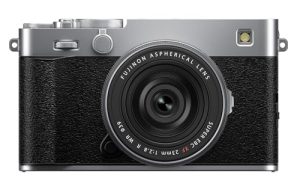
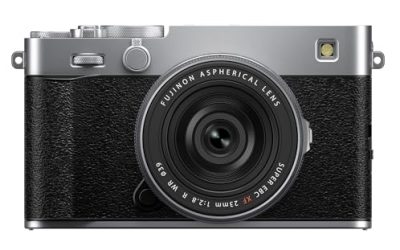
The FUJIFILM X100VI is the premium compact here, and it suits an amateur photographer who wants a fixed-lens camera with a classic feel and the best image quality of the group. Its 40.2 megapixel APS-C sensor pairs with a fixed 23mm f/2 lens, equivalent to 35mm, covering street scenes, travel, and everyday portraits with a sharp, bright optic. Wi-Fi connects to the Fujifilm XApp for transfers and remote control, and the compact body slips into a jacket pocket or a small bag. This is the camera to choose when you value image quality and deliberate shooting over zoom range and interchangeable lenses.
Watch out for: Stock of this camera can be limited, so confirm the listing shows an available offer for the Black version and not the Silver version before ordering.
Which One Fits Your Situation
You Want One Camera That Does Everything
Choose the Canon EOS R50. Its guided mode, eye-detect autofocus, and 18-45mm kit lens cover learning, travel, and family photos in a single body, and the Wi-Fi connection to the Canon app keeps sharing simple. It is the safest all-round pick in this guide when you do not yet know which kind of photography you will enjoy most.
You Want the Smallest and Simplest Start
Choose the Canon EOS R100. It is lighter and easier to learn than the R50, while keeping the same everyday zoom range and the same wireless sharing. It fits buyers who want a camera that feels close to a point-and-shoot but still gives them a large sensor and interchangeable lenses for later.
You Want Wide and Telephoto in One Box
Choose the Nikon Z50 II two-lens kit. The two included lenses cover everything from wide landscapes to distant subjects, so you will not need a second purchase to try wildlife, sports, or stage photography. Its fast processor and 4K video also leave room to grow as your skills improve.
You Want the Best Image Quality in a Pocket Camera
Choose the FUJIFILM X100VI. Its 40.2 megapixel sensor and fixed 23mm lens deliver the sharpest stills in this guide, and the compact body is the easiest to carry every day. It fits buyers who are happy to move their feet instead of zooming and who want a camera that rewards deliberate shooting.
Common Mistakes
- Buying a camera for its megapixel count while ignoring the lens, the sensor size, and the wireless app that decides how often you actually share photos.
- Choosing a fixed-lens camera when you mostly shoot distant subjects, then finding the lens cannot reach far enough for wildlife or stage performances.
- Skipping the battery plan: Wi-Fi transfers drain power, so a single battery can run low on a long day of shooting and sharing.
- Ordering the wrong kit version, such as a body-only listing, a one-lens kit, or a Renewed unit, instead of the exact kit named in the listing.
- Assuming the companion app transfers full-size files, when some apps send small copies by default and need a setting change for full resolution.
Frequently Asked Questions
Do I need Wi-Fi on a camera if I already have a phone?
Wi-Fi matters when you want a real camera without giving up the instant sharing a phone gives you. The link sends photos to your phone for editing and posting, and lets you control the camera from a distance for group shots and tripod work. Without Wi-Fi, every transfer needs a cable or a card reader, which slows sharing down and makes the camera feel like extra work.
Is a mirrorless camera better than a DSLR for a beginner?
A mirrorless camera is usually easier for a beginner, because what you see on the screen matches the photo you will get, and the body is smaller and lighter. Eye and face tracking autofocus is also more common on recent mirrorless cameras. A DSLR still has strengths, such as an optical viewfinder and long battery life, but for learning with Wi-Fi sharing, mirrorless is the simpler starting point.
Can I use the kit lens for portraits?
Yes, the kit lens handles portraits well at its longer end, around 35 to 45mm, where faces look natural and the background softens. Step back a little, use the widest aperture the lens allows at that zoom, and keep the subject away from a busy background. A dedicated portrait lens blurs the background more, but the kit lens is enough while you are learning framing and light.
How do I keep photos safe if the Wi-Fi transfer fails?
Keep the memory card in the camera until you have checked that the transferred files opened on your phone. Set the app to send full-size files when you want the best quality, and use a card reader as a backup when the wireless connection is slow. Back up the card to a computer or cloud storage, so a lost phone or a failed transfer never costs you the original files.
More from Amazon
Programs that pair well with the guide above. Offers and eligibility are set by Amazon and may change.
Free shipping on eligible items, Prime Video and more. Eligible new members can start with a free trial.
Start a Prime free trialAudiobooks and podcasts to listen to on the go. Eligible new members can start with a free trial.
Try Audible freeAd-free music streaming. Eligible new subscribers can start with a free trial.
Try Music Unlimited freeA free business account with business pricing and bulk-buying tools for work, shop or home office.
Create a business accountAs an Amazon Associate we earn from qualifying purchases.