Our Short List of 3

- Best for: Shooters who want the classic film look with no editing afterward.
- 40.2MP APS-C X-Trans CMOS 5 HR sensor
- Fixed Fujinon 23mm f/2 lens
- 20 film simulations built in
- In-body image stabilization

- Best for: Street and everyday photographers who want a camera that is always in a pocket.
- 24MP APS-C size CMOS sensor
- 40mm f/2.8 GR lens (26.1mm actual focal length)
- Highlight diffusion filter on the HDF version
- Compact pocket-sized body

- Best for: Photographers who want vintage handling with full-frame image quality.
- 24.5MP full-frame BSI CMOS sensor
- EXPEED 7 image processor
- 4K UHD video recording
- Dual card slots
All 5 Picks at a Glance
| Product | Specs | Action |
|---|---|---|
| Fujifilm X100VI |
| Check price on Amazon |
| Ricoh GR IIIx |
| Check price on Amazon |
| Nikon Zf |
| Check price on Amazon |
 Fujifilm X-T50 |
| Check price on Amazon |
 Kodak Ektar H35 |
| Check price on Amazon |
Key takeaways
- Find the best cameras for lofi photography, from film-simulation compacts to a real half-frame film camera with grain, soft tones, and vintage character.
Lo-fi photography is a deliberate choice to trade clinical sharpness for mood. The look people chase is soft contrast, muted or warm color, visible grain, and the slightly imperfect feel of an old film frame. The real decision is not which camera has the highest resolution, but which one gets you that character with the least friction, whether through built-in film looks, a diffusion filter, or actual film.
This guide is for photographers who want the lo-fi aesthetic straight out of the camera, casual shooters who enjoy the surprise of film, and street and travel photographers who prefer small, quiet bodies. Each camera below was picked from its Amazon listing details, with the features that shape the lo-fi look called out so you can match the tool to the mood you want.
Quick Picks
As an Amazon Associate we earn from qualifying purchases.
| Product | Best for | Key spec from title |
|---|---|---|
| Fujifilm X100VI | Film simulations in a fixed-lens compact | 40.2MP APS-C sensor with 20 film simulations |
| Ricoh GR IIIx | Pocketable street shooting with a soft glow | 24MP APS-C sensor with 40mm f/2.8 GR lens |
| Nikon Zf | Vintage handling on a full-frame body | 24.5MP full-frame BSI CMOS sensor |
| Fujifilm X-T50 | A dedicated film simulation dial | 40.2MP APS-C X-Trans CMOS 5 HR sensor |
| Kodak Ektar H35 | Real film grain on a small budget | Half-frame 35mm reusable film camera |
How to Choose
Decide Between Built-In Film Looks and Real Film
Digital cameras with film simulations let you see the lo-fi look before you press the shutter, change it for the next frame, and shoot as many images as your card holds. Real film cameras like the Kodak Ektar H35 give you genuine grain and halation that no preset fully copies, but every roll costs money to buy and develop, and you wait days to see the result. If you want to experiment freely and learn what tones you like, start digital. If the ritual and the wait are part of the appeal for you, film is the honest route.
Look at How the Camera Creates Softness
Lo-fi character comes from somewhere specific, and that source matters. Fujifilm film simulations shift color and contrast in the camera, the Ricoh GR IIIx HDF adds a highlight diffusion filter that blooms bright areas, and a half-frame film camera gets softness from the film stock and the simple plastic lens. A camera that only offers a generic warm filter gives you less control than one with a named simulation set or a physical diffusion option. Check what the listing actually names before you buy.
Match the Focal Length to Your Subjects
Most lo-fi work happens at one focal length, because the cameras built for this look usually have a fixed lens. A 23mm lens on the Fujifilm X100VI behaves like a 35mm view on a full-frame camera, wide enough for street scenes and interiors. The Ricoh GR IIIx sits at 40mm, a little tighter and better for single subjects and portraits. If you shoot mostly people in cafes and on sidewalks, the tighter lens helps. If you shoot places and groups, the wider one is the safer pick.
Check Size, Controls, and How You Will Carry It
Lo-fi cameras earn their keep by being with you, so weight and handling decide how often they get used. A pocket camera like the Ricoh GR IIIx disappears into a jacket, while the Nikon Zf is a full-frame body with manual dials that feels at home in a bag but not a pocket. Physical dials for shutter speed, ISO, and exposure compensation make the vintage experience tangible, and they also slow you down in a good way. Hold the idea of the camera in your daily routine, not just on a shelf.
The 5 Best Options
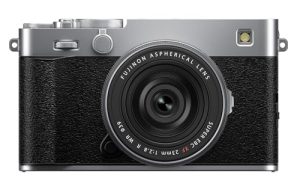
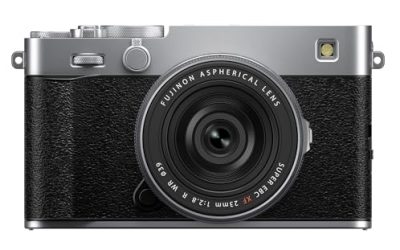
Fujifilm X100VI
- Best for: Shooters who want the classic film look with no editing afterward.
- 40.2MP APS-C X-Trans CMOS 5 HR sensor
- Fixed Fujinon 23mm f/2 lens
- 20 film simulations built in
- In-body image stabilization
Shooters who want the classic film look with no editing afterward.
The fixed lens means no zoom, so you compose by moving your feet.
The X100VI is the camera most people picture when they think of the lo-fi look, and the reason is simple: its film simulations are the whole point of the design. Twenty built-in looks cover the range from warm, faded color to punchy contrast and soft black and white, and the fixed 23mm lens keeps the shooting experience focused instead of fiddly. In-body stabilization steadies handheld shots in dim cafes and evening streets, and the hybrid viewfinder lets you switch between an optical view and an electronic one depending on the mood.
Watch out for: The fixed lens means no zoom, so you compose by moving your feet.
Ricoh GR IIIx
- Best for: Street and everyday photographers who want a camera that is always in a pocket.
- 24MP APS-C size CMOS sensor
- 40mm f/2.8 GR lens (26.1mm actual focal length)
- Highlight diffusion filter on the HDF version
- Compact pocket-sized body
Street and everyday photographers who want a camera that is always in a pocket.
Battery life is modest, so carry a spare if you shoot all day.
The GR IIIx is a pocket camera built for the kind of photography where the camera is almost invisible. Its 40mm lens frames scenes the way your eye sees a single subject, which suits portraits, details, and quiet street moments, and the small body slips into a jacket pocket so it is always there. The HDF version adds a highlight diffusion filter that softens bright areas and gives highlights a gentle glow, a direct shortcut to the dreamy lo-fi feel. Images come out with the warm, slightly soft rendering that defines the GR family.
Watch out for: Battery life is modest, so carry a spare if you shoot all day.
Nikon Zf
- Best for: Photographers who want vintage handling with full-frame image quality.
- 24.5MP full-frame BSI CMOS sensor
- EXPEED 7 image processor
- 4K UHD video recording
- Dual card slots
Photographers who want vintage handling with full-frame image quality.
It is heavier than the compacts here, and it needs a lens, so plan for the full kit.
The Nikon Zf brings the lo-fi aesthetic to a full-frame sensor with the most convincing vintage body of any modern mirrorless camera. Brass dials for shutter speed, ISO, and exposure compensation sit on top of a body styled after classic Nikon film cameras, and the 24.5MP full-frame sensor handles low light with the clean files that smaller sensors struggle to match. That combination matters for lo-fi work after dark, where grain from high ISO can look intentional rather than messy. It is the pick for someone who wants the old-camera feel without giving up modern autofocus and video.
Watch out for: It is heavier than the compacts here, and it needs a lens, so plan for the full kit.
Fujifilm X-T50
- Best for: Shooters who want film looks plus the freedom to change lenses later.
- 40.2MP APS-C X-Trans CMOS 5 HR sensor
- X-Processor 5
- Dedicated film simulation dial
- 6.2K video recording
Shooters who want film looks plus the freedom to change lenses later.
The body-only listing needs a lens, so confirm which kit or lens you are buying.
The X-T50 takes the same film simulation idea as the X100VI and puts it on a camera with interchangeable lenses and a dedicated film simulation dial on top. That dial is the feature that matters most for lo-fi shooters: you can switch looks with a twist instead of digging through menus, which keeps you in the moment. The 40.2MP sensor captures plenty of detail, and the rounded, compact body is easy to carry all day. With a small prime lens attached, it behaves like a fixed-lens camera with the option to change lenses later.
Watch out for: The body-only listing needs a lens, so confirm which kit or lens you are buying.
Kodak Ektar H35
- Best for: Beginners who want authentic film grain and the surprise of waiting for scans.
- Half-frame 35mm film format
- Reusable, focus-free design
- Built-in flash
- Lightweight compact body
Beginners who want authentic film grain and the surprise of waiting for scans.
Film and developing add ongoing cost, and the camera needs one AAA battery to run the flash and meter.
The Ektar H35 is the only camera here that shoots real film, and that is exactly why it belongs on the list. It is a reusable half-frame camera, which means each 35mm frame is split in two, so a standard 24-exposure roll yields around 48 shots. The focus-free lens and built-in flash keep operation simple: load film, wind, and shoot. Images come back with genuine grain, soft edges, and the color character of whatever film stock you loaded, which is the lo-fi look in its original form rather than an imitation of it.
Watch out for: Film and developing add ongoing cost, and the camera needs one AAA battery to run the flash and meter.
Which One Fits Your Situation
You Want the Lo-Fi Look With No Editing
Pick the Fujifilm X100VI. Its film simulations are the most complete set in this guide, and the fixed 23mm lens removes the question of which lens to use. Shoot in a simulation you like, and the files are ready to share as they are, with warm tones and soft contrast already baked in.
You Shoot Mostly on the Street and Travel Light
Pick the Ricoh GR IIIx. It fits in a jacket pocket, starts fast, and the 40mm lens suits single subjects and details. The HDF version adds the soft highlight glow that makes evening light look dreamy without any post work, so the camera stays out of the way while the mood stays in the frame.
You Want Vintage Feel and the Best Low-Light Files
Pick the Nikon Zf. The full-frame sensor keeps high-ISO grain attractive instead of muddy, and the manual dials make every shot feel deliberate. It is the largest camera here, but it rewards the extra weight with the most capable files, especially after dark when smaller sensors start to fall apart.
You Want to Try Real Film for the First Time
Pick the Kodak Ektar H35. It is simple to operate, the half-frame format stretches each roll, and the results carry genuine grain and color that no preset reproduces. Budget for film and developing before you start, and expect a few happy surprises in every roll, which is half the point.
Common Mistakes
- Buying a camera for its film simulations without checking which looks are actually built in, then discovering the one you wanted is missing.
- Choosing a fixed-lens camera and later realizing you mostly shoot subjects that need a longer or wider lens.
- Loading expensive film into a half-frame camera before testing the camera with a cheaper roll.
- Judging the lo-fi look on a phone screen, where grain and soft tones are hard to see, instead of viewing files at full size.
- Forgetting that film cameras need batteries for the flash and meter, and arriving at a shoot with a dead camera.
Frequently Asked Questions
What makes a camera good for lo-fi photography?
A good lo-fi camera builds character into the image, through film simulations, a diffusion filter, a simple lens, or real film. The best ones let you see that character while shooting, so you compose for the mood instead of adding it later. Sensor size matters less than the look the camera produces.
Do I need a film camera to get the lo-fi look?
No. Digital cameras with strong film simulations, like the Fujifilm models here, produce a convincing lo-fi look straight out of the camera. Real film adds genuine grain and unpredictability, but it costs more per shot and you wait for developing. Start digital if you want to experiment freely.
Is the Fujifilm X100VI worth it for casual lo-fi shooting?
It is the most complete lo-fi tool here, with twenty film simulations, stabilization, and a fixed 23mm lens that suits street and travel work. Casual shooters should weigh the fixed lens carefully, since you cannot zoom. If that constraint sounds freeing rather than limiting, it fits.
Can I use these cameras for everyday photos too?
Yes. Every camera in this guide is a capable everyday camera first and a lo-fi tool second. The film looks and soft rendering are settings and characteristics you can choose, so the same camera handles family photos, travel, and daily life without any special setup.
More from Amazon
Programs that pair well with the guide above. Offers and eligibility are set by Amazon and may change.
Free shipping on eligible items, Prime Video and more. Eligible new members can start with a free trial.
Start a Prime free trialAudiobooks and podcasts to listen to on the go. Eligible new members can start with a free trial.
Try Audible freeAd-free music streaming. Eligible new subscribers can start with a free trial.
Try Music Unlimited freeA free business account with business pricing and bulk-buying tools for work, shop or home office.
Create a business accountAs an Amazon Associate we earn from qualifying purchases.