Our Short List of 3

- Specs:
- Sensor: 33MP full-frame Exmor R CMOS
- Processor: BIONZ XR
- Video: 4K 60p 10-bit 4:2:2

- Specs:
- Sensor: 40.2MP APS-C X-Trans 5 HR CMOS
- Stabilisation: 7-stop in-body
- Video: 6.2K

- Specs:
- Sensor: 45.7MP full-frame CMOS
- Processors: dual EXPEED 6
- Autofocus: 493-point phase-detect
All 3 Picks at a Glance
| Product | Specs | Action |
|---|---|---|
| Sony a7 IV |
| Check price on Amazon |
| Fujifilm X-T5 |
| Check price on Amazon |
| Nikon Z7 II |
| Check price on Amazon |
Our Top Picks
- Sony Alpha 7 IV Full-frame Mirrorless Interchangeable Lens5.45 x 3.80 x 2.83 inches9.6 x 6.5 x 6.7 inches2.2 PoundsCheck on Amazon
Product photography is a different discipline from most other kinds of shooting, and the camera that suits it best is not always the one with the fastest burst rate or the longest lens. A product camera needs resolution for tight crops, colour that stays true under studio lights, autofocus that locks onto small details, and a tethered connection that shows each frame on a large screen the moment it is taken. The body is only part of the system, but it sets the ceiling for everything else in the studio.
This guide is for sellers, studio photographers, and small businesses who photograph products for listings, catalogues, and online stores. Every camera below was chosen from the names and specifications on its Amazon page, with sensor resolution, colour handling, autofocus, and studio features checked against the listing before it earned a place here.
Quick Picks
As an Amazon Associate we earn from qualifying purchases
| Product | Best for | Key spec from title |
|---|---|---|
| Sony a7 IV | Hybrid studio work with video | 33MP full-frame sensor |
| Fujifilm X-T5 | High-resolution stills and colour | 40.2MP APS-C sensor |
| Canon EOS R8 | Lightweight full-frame studio body | 24.2MP full-frame sensor |
| Nikon Z7 II | Maximum detail for large prints | 45.7MP full-frame sensor |
How to Choose
Resolution and cropping for listings
Resolution decides how far a product image can be cropped and how large it can be printed, and both matter in product work. A listing image often starts as a wide studio shot and ends as a tight crop on a clasp, a stitch, or a label, so extra megapixels give room to crop without losing detail. A 24-megapixel body covers most online listings, while a 40-megapixel or 45-megapixel body suits large prints and heavy cropping. Check the sensor resolution on the listing, then think about the largest output the images will ever need, since buying more resolution than the work requires only slows the workflow with larger files.
Colour accuracy under studio lights
Colour accuracy is the heart of product photography, because a buyer must trust that the colour on screen matches the product in the box. A camera with good colour science and a reliable white balance keeps reds, skin tones, and fabric colours true under studio lights, and it reduces the editing time needed to correct each frame. Check whether the body offers tethered shooting with live colour preview, since seeing the image on a large screen during the shoot catches colour problems before the set is packed away. A body that records clean raw files also helps, because raw gives more room to correct white balance after the shoot.
Autofocus for small details and tethered shooting
Product photography needs autofocus that locks onto tiny subjects: a watch face, a zip pull, a logo, or a gemstone. Eye detection helps with lifestyle shots that include a model, while focus peaking helps with manual focus on small products. Tethered shooting matters just as much, because it shows each frame on a computer screen immediately, so the photographer can check focus, exposure, and styling without walking to the camera. Check the autofocus system and the tethered connection on the listing, and confirm the body works with the tethering software already in use.
Lenses, lighting, and the total studio cost
The body is only one part of a product studio, and the lens in front of it often matters more. A sharp macro lens or a standard zoom with close focusing covers most product work, and the mount must offer those lenses at a sensible cost. Lighting matters too: continuous lights suit video and stills, while strobes give more power for small apertures and deep depth of field. Add up the body, a suitable lens, lights, a tripod, and a background before deciding, since a cheaper body with a better lens often produces better product images than an expensive body with a poor lens.
The 4 Best Options
Sony a7 IV
- Specs:
- Sensor: 33MP full-frame Exmor R CMOS
- Processor: BIONZ XR
- Video: 4K 60p 10-bit 4:2:2
The Sony a7 IV is the hybrid pick in this group, and it suits a studio that shoots both stills and video for product listings. Its 33-megapixel full-frame Exmor R sensor gives ample resolution for cropping, the BIONZ XR processor keeps the camera responsive, and Real-time Eye AF locks onto a model quickly for lifestyle product shots. Video reaches 4K at 60 frames per second in 10-bit colour, and the 759 phase-detection autofocus points cover most of the frame. Five-axis stabilisation helps with handheld work, and dual card slots protect the files during a paid shoot.
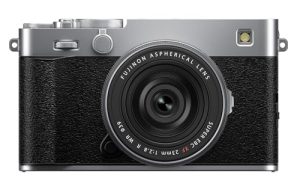
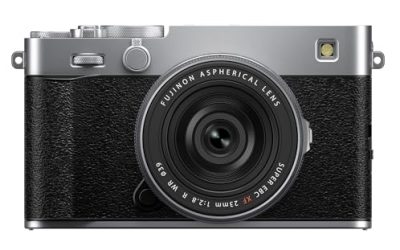
Fujifilm X-T5
- Specs:
- Sensor: 40.2MP APS-C X-Trans 5 HR CMOS
- Stabilisation: 7-stop in-body
- Video: 6.2K
The Fujifilm X-T5 is the resolution and colour pick in this group, and it suits a stills-first product studio. Its 40.2-megapixel APS-C X-Trans sensor gives the highest stills resolution per frame size here, and Pixel Shift Multi-Shot builds 160-megapixel files for the most detailed work. Seven-stop in-body stabilisation keeps handheld shots sharp, the 425-point hybrid autofocus system locks onto small details, and the three-way tilting LCD makes low-angle product shots straightforward. Film simulations give pleasing colour straight from the camera, which speeds up the workflow for listings that need quick turnaround.
Canon EOS R8
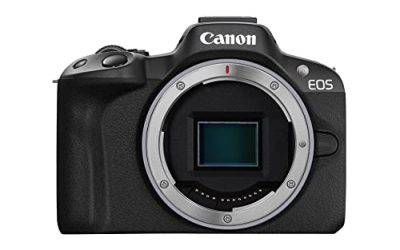
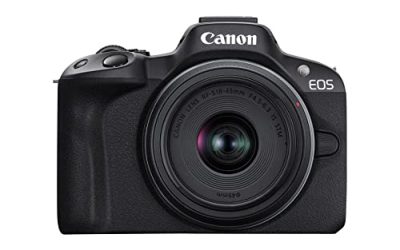
The Canon EOS R8 is the lightweight full-frame pick, and it suits a small studio or a seller who photographs products at home. Its 24.2-megapixel full-frame sensor and DIGIC X processor give clean files with Canon colour, Dual Pixel CMOS AF II tracks subjects accurately, and video reaches 4K at 60 frames per second oversampled from 6K. At 461 g it is the lightest full-frame body here, which matters when the camera moves between a tripod and handheld shots all day. The vari-angle touchscreen makes overhead and low-angle product shots easy to compose.
- Specs:
- Sensor: 24.2MP full-frame CMOS
- Processor: DIGIC X
- Autofocus: Dual Pixel CMOS AF II
- Video: 4K 60p oversampled from 6K
- Continuous shooting: up to 40 fps
- Weight: 461 g
- Viewfinder: 2.36 million dot OLED
- Screen: 3.0-inch vari-angle LCD touchscreen
- Model: 5803C002
- Best for: small studios and home sellers who want full-frame quality in a light body.
- Watch out for: there is no in-body stabilisation, so use a tripod or a stabilised lens for slow shutter speeds.
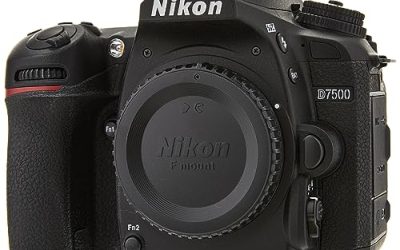
Nikon Z7 II
- Specs:
- Sensor: 45.7MP full-frame CMOS
- Processors: dual EXPEED 6
- Autofocus: 493-point phase-detect
The Nikon Z7 II is the maximum-detail pick in this group, and it suits product work where every texture and stitch must show. Its 45.7-megapixel full-frame sensor gives the highest resolution here, dual EXPEED 6 processors keep the camera responsive, and the 493-point phase-detect autofocus system locks onto small subjects reliably. Five-axis vibration reduction steadies handheld shots, video reaches 4K UHD, and continuous shooting runs to 10 frames per second. It is the body for large prints, heavy cropping, and catalogue work where detail is the product.
Which One Fits Your Situation
Online listings with stills and short video
A seller who needs both stills and short video clips for listings should look at the Sony a7 IV. Its 33-megapixel sensor gives room to crop, its 4K video covers product clips and social posts, and Real-time Eye AF handles lifestyle shots with a model. Tether the camera to a laptop during the shoot, check each frame on the large screen, and keep a consistent lighting setup.
High-resolution catalogue and print work
Catalogue and print work rewards resolution above all else, and the Nikon Z7 II leads this group. Its 45.7-megapixel sensor holds fine texture and small print clearly, and the 493-point autofocus system locks onto the details that matter. Shoot on a tripod with a remote release, use a macro lens for close work, and store the large files on fast cards so the workflow does not slow down.
Small products and jewellery
Small products need close focusing, accurate colour, and a steady hand, and the Fujifilm X-T5 suits that pattern. Its 40.2-megapixel sensor captures fine detail, its seven-stop stabilisation helps with handheld close-ups, and its film simulations give pleasing colour with little editing. Use a macro lens, a small light tent, and a tripod for the sharpest results, and check focus on a large screen before moving to the next piece.
Home studio on a budget
A home seller needs full-frame quality without a heavy body or a complex setup, and the Canon EOS R8 fits that brief. Its 24.2-megapixel sensor covers online listings comfortably, its vari-angle screen makes overhead shots easy, and its 461 g weight keeps it manageable on a small tripod. Pair it with a standard zoom that focuses closely, add two soft lights, and keep the background simple so the product stays the centre of attention.
Common Mistakes
- Buying a body for burst speed when product work needs resolution, colour, and tethering instead.
- Skipping tethered shooting and finding focus or colour problems only after the set is packed away.
- Using a kit lens for close product work instead of a sharp macro or close-focusing lens.
- Ignoring white balance under mixed lights, which shifts colours from shot to shot.
- Cropping heavily from a low-resolution file and wondering why the listing image looks soft.
Frequently Asked Questions
How many megapixels do I need for product photography?
A 24-megapixel body covers most online listings comfortably, including moderate cropping. A 40-megapixel or 45-megapixel body suits large prints, heavy cropping, and catalogue work where fine detail matters. More resolution also means larger files and slower editing, so match the sensor to the largest output the images will ever need rather than buying the highest number available.
Is full-frame better than APS-C for product photography?
Full-frame sensors give cleaner files, more background blur, and a wider field of view with the same lens, which suits many product studios. APS-C bodies such as the Fujifilm X-T5 can match full-frame on resolution and colour, and they cost less with smaller lenses. Choose full-frame for the cleanest files and APS-C for a lighter, more affordable kit.
Do I need a macro lens for product photography?
A macro lens helps with small products such as jewellery, watches, and cosmetics, because it focuses closely and renders fine detail sharply. For larger products such as furniture or clothing, a standard zoom with good close focusing is enough. Check the minimum focusing distance of the lens planned for the shoot before buying.
What lighting works best for product photography?
Soft, even lighting works best for most products, because it controls reflections and keeps colours true. Two softbox lights at 45 degrees cover most setups, with a third light for the background when needed. Continuous lights suit video and stills together, while strobes give more power for small apertures and deep depth of field.
More from Amazon
Programs that pair well with the guide above. Offers and eligibility are set by Amazon and may change.
Free shipping on eligible items, Prime Video and more. Eligible new members can start with a free trial.
Start a Prime free trialAudiobooks and podcasts to listen to on the go. Eligible new members can start with a free trial.
Try Audible freeAd-free music streaming. Eligible new subscribers can start with a free trial.
Try Music Unlimited freeA free business account with business pricing and bulk-buying tools for work, shop or home office.
Create a business accountAs an Amazon Associate we earn from qualifying purchases.