Our Top Picks


Buying an affordable camera drone is really a decision about footage, not flying. Almost every model in this class lifts off with one tap and hovers on its own, so the difference that matters shows up later, when you watch the clips back at home. Shaky video, soft detail in low light and a battery that runs out halfway through a shoot are the frustrations that turn a fun gadget into a drawer filler. The right choice is the drone whose camera, stabilization and flight time match the kind of shots you actually plan to take.
This guide is for first-time flyers, travel photographers and families who want aerial photos without stepping up to a professional rig. Every drone below was chosen from its Amazon listing title and specifications, with attention to camera resolution, gimbal type, flight time, weight and return-to-home features, so you can compare the models on the things that shape your photos.
Quick Picks
As an Amazon Associate we earn from qualifying purchases.
| Product | Best for | Key spec from title |
|---|---|---|
| DJI Mini 4K | First-time flyers who want true 4K footage | 4K UHD camera, 3-axis gimbal, under 249 g |
| DJI Mini 2 SE | Beginners who want a proven, simple first drone | 2.7K QHD video, 3-axis gimbal, under 249 g |
| DJI Mini 3 | Photographers who want longer flights and vertical video | 4K video, 38-min flight time, true vertical shooting |
| Potensic ATOM SE | Flyers who want two batteries in the box | 4K EIS camera, 62 mins flight with 2 batteries |
| DJI Neo | Solo creators who want hands-free follow-me clips | 4K UHD camera, 135 g, palm takeoff, subject tracking |
How to Choose
Camera resolution and stabilization
Resolution is only half the camera story. A 4K sensor still produces shaky footage if the camera is fixed to the frame, so check whether the drone carries a mechanical gimbal or relies on electronic stabilization alone. A 3-axis gimbal physically steadies the camera against wind and movement, which shows up as smoother pans and level horizons in your clips. Electronic stabilization crops the frame slightly to smooth motion, which can soften fine detail. Look at the still-photo resolution too, because a 12-megapixel sensor captures noticeably more detail for prints and crops than a lower-resolution one. If your main goal is shareable video rather than large prints, electronic stabilization with a 4K sensor is usually enough.
Flight time and batteries in the box
Advertised flight time is measured in calm air with gentle flying, so a model rated for 31 minutes may give closer to 25 once wind, hovering and filming are factored in. That still leaves room for several takes at one location, but one battery rarely covers a full outing. Count the batteries included in the box before comparing models: a kit with two batteries effectively doubles your time in the air without a return trip. Also check how the batteries charge: some kits include a hub, while others charge one battery at a time through the drone. For a day of shooting, two or three batteries and a hub matter more than a few extra minutes on a spec sheet.
Weight, rules and portability
Weight decides both how easy the drone is to carry and which rules apply to it. Drones under 249 grams are exempt from FAA registration for recreational flying in the United States, which removes a paperwork step for beginners. Sub-250-gram models also fold down small enough for a jacket pocket or a camera bag side pocket, so you are more likely to bring one along. Heavier drones need registration and a Remote ID broadcast, and they take up more bag space. Check your local rules before every flight, since regulations differ by country and by where you fly. If you plan to travel with the drone, a folding sub-250-gram design is the practical first step.
Range, GPS and return-to-home
A long transmission range sounds impressive, but most beginners fly well within sight of the drone, so the more useful features are GPS positioning and automatic return-to-home. GPS lets the drone hold its position in a breeze and return to its takeoff point if the signal drops or the battery runs low. Models with a dedicated return-to-home button add a safety net for first flights, when orientation can get confusing at a distance. Range still matters for open landscapes, where a stronger link keeps the live feed smooth. Look for a drone that pairs GPS with a clear low-battery warning, so you have time to bring it back before the battery is spent.
The 5 Best Options
DJI Mini 4K
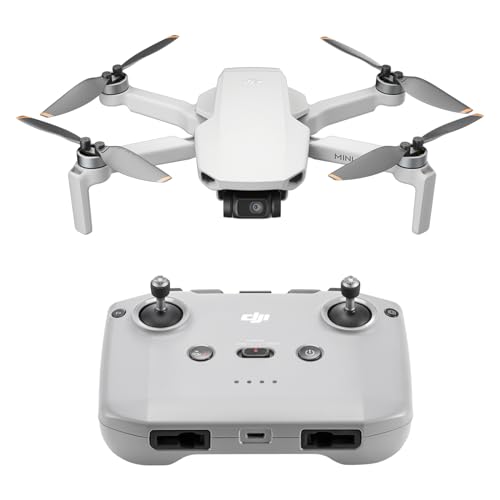
The Mini 4K is the most straightforward pick for a first drone because it combines a true 4K camera with a 3-axis gimbal in a folding body under 249 grams. Footage stays smooth in a breeze, stills come out at 12 megapixels, and the 31-minute maximum flight time covers a relaxed session at one location. QuickShots automate circling and pull-back clips that look polished without manual flying skill, and GPS return-to-home brings the drone back if the signal drops. It suits beginners who want dependable aerial photos and video without learning advanced controls first.
Specs
- 4K UHD video with 3-axis gimbal stabilization
- 12-megapixel still photos
- Under 249 g (246 g) folding design
- 31-minute maximum flight time
- 10 km maximum video transmission range
- Level 5 wind resistance (38 kph)
- GPS return-to-home and QuickShots
- RC-N1C remote controller and 1 battery included
Best for: First-time flyers who want smooth 4K footage from a proven, easy-to-fly drone.
Watch out for: The controller connects through your phone, so check that your phone model works with the DJI Fly app before ordering.
DJI Mini 2 SE

The Mini 2 SE is the simplest drone in this guide and a sensible choice if you want to learn the basics before committing to a 4K model. Its 2.7K QHD camera records sharper video than the 1080p drones in this class, and the 3-axis gimbal keeps the footage steady enough for family clips and travel memories. The sub-250-gram body needs no FAA registration for recreational use, and the 31-minute flight time matches the Mini 4K. It lacks the Mini 4K’s sharper sensor, but its controls, app and handling are nearly identical, which makes it a gentle introduction to DJI flying.
Specs
- 2.7K QHD video with 3-axis gimbal stabilization
- 12-megapixel still photos
- Under 249 g folding design
- 31-minute maximum flight time
- 10 km maximum video transmission range
- Level 5 wind resistance (38 kph)
- GPS return-to-home and QuickShots
- RC-N1 remote controller included
Best for: Complete beginners who want the easiest, most forgiving way to begin flying a camera drone.
Watch out for: Video tops out at 2.7K, so it is not the pick if you need full 4K footage for larger screens.
DJI Mini 3
The Mini 3 stands out for photographers because its 38-minute maximum flight time is the longest in this guide, giving you more time to line up compositions at each location. True vertical shooting rotates the camera for portrait-format clips, which suits social feeds without cropping away half the frame. The 4K camera and 3-axis gimbal deliver the same smooth footage as the Mini 4K, while the longer battery life and vertical mode make it the stronger pick for deliberate photo sessions. It is also the most capable option here for anyone who wants to grow from casual clips into planned aerial photography.
Specs
- 4K video with 3-axis gimbal stabilization
- 38-minute maximum flight time
- 10 km maximum video transmission range
- True vertical shooting for portrait-format clips
- GPS auto return and QuickShots
- Under 249 g folding design
- RC-N1 remote controller and 1 battery included
Best for: Photographers who want the longest flight time and native vertical video in a compact drone.
Watch out for: The standard kit includes one battery, so plan on a spare battery or a charging hub for longer outings.
Potensic ATOM SE
The ATOM SE earns its place with a practical bundle: two batteries in the box for up to 62 minutes of total flight time, so you can keep flying after the first battery runs down. Its 4K EIS camera uses a Sony sensor and electronic stabilization to smooth footage, and the sub-250-gram folding body travels easily in a small bag. GPS auto return, follow-me modes and three flight modes, including a beginner mode, make it friendly for new pilots. SurgeFly controls and a top speed of 16 metres per second give it room to grow as your confidence builds.
Specs
- 4K EIS camera with Sony 1/3-inch CMOS sensor
- 12-megapixel still photos
- Under 249 g folding design
- 62 minutes total flight time with 2 batteries (31 minutes each)
- 4 km FPV transmission range
- Brushless motors, maximum speed 16 m/s
- GPS auto return and follow-me modes
- 2 intelligent 2500 mAh batteries and carrying bag included
Best for: Flyers who want two batteries and the longest total flying time straight out of the box.
Watch out for: Stabilization is electronic rather than a mechanical gimbal, so footage can look less smooth in gusty wind.
DJI Neo

The Neo is the most unusual drone here because it can fly without a controller at all, launching from your palm and following you with subject tracking. At 135 grams it is the lightest model in this guide, with built-in propeller guards that make it comfortable to fly close to people and indoors. It records 4K video with electronic stabilization and shoots QuickShots hands-free, which suits solo creators filming themselves walking, running or cycling. Flight time is shorter than the other models, so it works best for short, planned clips rather than long exploring sessions.
Specs
- 4K UHD video with RockSteady stabilization
- 12-megapixel still photos
- 135 g palm-sized design with built-in propeller guards
- 18-minute maximum flight time
- Palm takeoff and landing
- AI subject tracking and QuickShots
- Controller-free operation with phone app control
Best for: Solo creators who want hands-free follow-me video without carrying a controller.
Watch out for: The short flight time and lack of a mechanical gimbal limit it for long sessions and windy days.
Which One Fits Your Situation
You have never flown a drone before
Begin with the DJI Mini 2 SE or the DJI Mini 4K. Both include one-tap takeoff and landing, GPS return-to-home and a forgiving learning curve, so your first flights stay calm. The Mini 2 SE is the gentler introduction, while the Mini 4K adds full 4K video if you expect to keep the drone for years.
You travel light and shoot on the move
Pick the DJI Neo or the DJI Mini 4K. The Neo weighs just 135 grams and flies without a controller, which suits walks and short self-filmed clips. The Mini 4K folds into a pocket, flies far longer and records steadier footage, making it the better all-rounder for a travel bag.
You want the longest time in the air
Choose the Potensic ATOM SE, which includes two batteries for up to 62 minutes of total flight time. The DJI Mini 3 is the alternative if you prefer one long 38-minute flight and a mechanical gimbal over swapping batteries mid-session. Either way, you get far more shooting time than a single-battery kit, so a full afternoon at one location is realistic.
You film yourself outdoors
Go with the DJI Neo for hands-free subject tracking, or the Potensic ATOM SE for its follow-me mode and longer total flight time. The Neo is simpler for quick solo clips, while the ATOM SE gives you more airtime to repeat a shot until it works. For the steadiest clips, the DJI Mini 4K is worth considering too, since its 3-axis gimbal smooths footage the Neo and ATOM SE cannot match.
Common Mistakes
- Judging a drone by resolution alone and ignoring whether it has a mechanical gimbal or only electronic stabilization.
- Planning a full outing around one battery, then running out of flight time halfway through a location.
- Skipping the app and phone compatibility check, then discovering the controller will not connect on the first day.
- Flying in strong wind on a first flight, when gusts can drain the battery and push a light drone off course.
- Forgetting to check local flying rules and no-fly zones before launching in a new place.
Frequently Asked Questions
Do affordable drones shoot real 4K video?
Several models in this guide do, including the DJI Mini 4K, DJI Mini 3, Potensic ATOM SE and DJI Neo, which all record 4K video from their onboard cameras. The DJI Mini 2 SE records 2.7K QHD instead, which still looks sharp on phones, laptops and smaller screens. Resolution alone does not decide footage quality, so also weigh stabilization, sensor size and how the drone handles wind.
Do I need to register a sub-250-gram drone?
For recreational flying in the United States, drones under 249 grams do not require FAA registration, and Remote ID does not apply to recreational sub-250-gram flights. Heavier drones must be registered, and commercial flying has its own requirements regardless of weight. Rules differ by country, so always check the regulations where you plan to fly before your first flight.
How long can an affordable drone fly on one battery?
Most models in this guide fly for 18 to 38 minutes on a single battery in calm conditions, with the DJI Mini 3 giving the longest single-battery flight at 38 minutes. Real flying time is usually a few minutes shorter once wind, hovering and filming are factored in. Carrying a spare battery is the simplest way to extend a session without cutting a shoot short.
Can a budget drone fly in wind?
Light drones handle a gentle breeze well, and several models here are rated for Level 5 wind resistance, which covers winds up to 38 kph. Stronger gusts still drain the battery faster and can push a sub-250-gram drone off course, so check the forecast and fly in open space. If the drone struggles to hold position, land and wait for calmer conditions rather than fighting the wind.
More from Amazon
Programs that pair well with the guide above. Offers and eligibility are set by Amazon and may change.
Free shipping on eligible items, Prime Video and more. Eligible new members can start with a free trial.
Start a Prime free trialAudiobooks and podcasts to listen to on the go. Eligible new members can start with a free trial.
Try Audible freeAd-free music streaming. Eligible new subscribers can start with a free trial.
Try Music Unlimited freeA free business account with business pricing and bulk-buying tools for work, shop or home office.
Create a business accountAs an Amazon Associate we earn from qualifying purchases.