Our Top Picks
 Canon EOS R50 Mirrorless Camera RF-S18-45mm F4.5-6.3 is2.71 x 4.58 x 3.37 Inches1 poundsCheck on Amazon

Shot put looks simple from the stands. An athlete spins or glides across a seven-foot circle, drives a heavy iron ball off the shoulder, and the throw is over in less than two seconds. For a photographer, that short window is the whole job. You need a camera that locks focus on a moving athlete and fires a long burst without choking. The five cameras in this guide do exactly that, and each one suits a different kind of shooter.
As an Amazon Associate, we earn from qualifying purchases.
Why Shot Put Is Hard to Photograph
A shot put throw has three moments that matter. The glide or spin across the circle is fast and low, with the athlete’s body twisting away from the lens. The release is a single explosive frame where the shot leaves the hand. The follow-through sends the athlete toward the toe board.
Light is the other problem. Most rings sit outdoors, and a meet can run from bright morning sun through flat midday cloud to warm late light. A camera with a wide dynamic range and strong high ISO performance keeps skin tones honest. Weather sealing matters too, because a field event does not pause for drizzle.
Distance is the third factor. Photographers work from behind a safety line, well outside the sector, so a mid-range zoom will not reach the circle. Every camera here pairs with a telephoto lens, and the crop-sensor bodies gain extra reach from their smaller sensors.
What to Look for in a Shot Put Camera
Autofocus comes first. Look for a system that tracks a human subject and holds on through a spin, when the athlete’s face turns away and the camera has only a shoulder and a back to follow. Body tracking is what keeps the burst sharp through the throw itself.
Burst speed comes next. Ten frames per second is a workable floor, and faster is better, because the release happens between two heartbeats. A deep buffer matters just as much as the headline speed. A camera that fires twenty frames and then stalls will miss the next thrower.
Low-light performance decides whether your evening session is usable. Meets often run late, and indoor shot put in winter is common. A full-frame sensor gathers more light, but a modern APS-C or Micro Four Thirds sensor with a fast lens can still deliver clean files in a dim arena. Sealed buttons and dials keep dust and drizzle out, a bright viewfinder helps in harsh sun, and a light body matters across a six-hour meet. Pack a spare battery whatever you shoot with.
Canon EOS R10

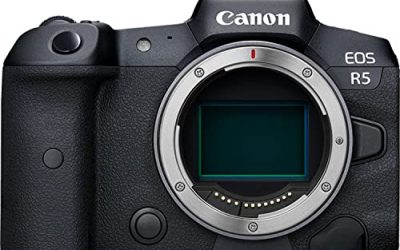
The Canon EOS R10 is the lightest way into serious sports shooting, and its autofocus is the reason it earns the first slot in this guide. Dual Pixel CMOS AF II tracks people with confidence, and it keeps hold of the athlete through the spin when older systems would hunt. At 15 frames per second with the mechanical shutter and 23 with the electronic shutter, it fires fast enough to catch the release frame.
The 24.2 megapixel APS-C sensor gives a 1.6x crop, which turns a 200mm lens into an effective 320mm reach. That extra reach is a gift at a field event, where you cannot walk into the sector. The compact body weighs only 429 grams with battery and card, so a long day around the ring does not wear your shoulder down.
There are honest trade-offs. The R10 has no in-body stabilisation, so a lens without stabilisation will show camera shake at slow shutter speeds. It also has a single card slot, which means no in-camera backup. The small LP-E17 battery runs out sooner than the larger batteries in this guide, and a spare belongs in your bag.
Specs
- 24.2MP APS-C CMOS sensor, DIGIC X processor, Dual Pixel CMOS AF II, 15 fps mechanical and 23 fps electronic burst, 4K60 video, model 5331C002, 429 g with battery and card.
Nikon Z7 II

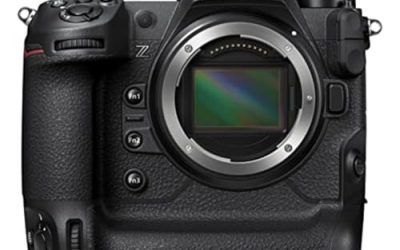
The Nikon Z7 II is the resolution pick in this guide. Its 45.7 megapixel full-frame sensor lets you crop deep into the frame and still print a large image, which matters when the safety line keeps you far from the circle. A heavy crop still holds detail in the athlete’s hands and the chalk on the neck.
Autofocus uses a 493-point hybrid system that tracks people well. The burst speed of 10 frames per second is the slowest in this group, and that is the honest trade-off for all that resolution. It still covers a throw if you time the burst well. The 5.5-stop in-body stabilisation helps handheld, and the twin card slots, one CFexpress and one SD, give you an in-camera backup.
The Z7 II is a full-frame body, so it gathers more light than the crop bodies here, and its files stay clean at the high ISOs a dim indoor arena demands. The body is sealed against dust and moisture. At 615 grams for the body alone it is heavier than the R10, but the weight buys a bigger grip.
Specs
- 45.7MP full-frame BSI CMOS sensor, dual EXPEED 6 processors, 493-point hybrid AF, 10 fps burst, 5.5-stop in-body stabilisation, dual card slots, model 1653, 615 g body only.
OM System OM-5

The OM System OM-5 is the smallest and toughest camera in this guide, built for the worst weather a field event can offer. Its IP53 sealing keeps dust, drizzle and cold out, and the freezeproof design holds up when a spring meet turns wet and grey. The 20.4 megapixel Micro Four Thirds sensor is smaller than the others here, but the 2x crop factor turns a modest telephoto into serious reach.
This is the original OM-5, not the Mark II, and the kit pairs the body with the M.Zuiko 12-45mm f/4 PRO lens. That lens covers 24 to 90mm in full-frame terms, too short for the circle on its own, so plan on a longer telephoto for shot put work.
The OM-5 fires up to 30 frames per second with the electronic shutter and 10 with the mechanical shutter, and its Pro Capture mode can save frames from before you fully press the shutter. The battery is small, so a spare is a must. The body weighs 366 grams, the lightest here.
Specs
- 20.4MP Micro Four Thirds Live MOS sensor, TruePic IX processor, IP53 dust, splash and freezeproof sealing, 7.5-stop in-body stabilisation, 30 fps electronic and 10 fps mechanical burst, 12-45mm f/4 PRO kit lens, model V210022BU000, 366 g body only.
Canon EOS R50
The Canon EOS R50 is the simplest camera in this guide, and simple is a virtue when you are learning to shoot a fast field event. It shares the 24.2 megapixel APS-C sensor and DIGIC X processor with the R10, and its Dual Pixel CMOS AF II system tracks people with the same confidence. It fires 12 frames per second with the mechanical shutter and 15 with the electronic shutter.
This listing is the kit with the RF-S 18-45mm f/4.5-6.3 IS STM lens, model 5811C012 on the live US listing. That number is worth noting, because 5811C011 is the Japan kit number and some listings mix the two. The kit lens is a handy wide zoom for the scene around the ring, but it is too short for the circle itself, so a telephoto is still needed. The R50 is light at 375 grams for the body.
The R50 has no in-body stabilisation, so rely on a stabilised lens for handheld work. It has a single card slot and a modest battery, so carry a spare. What it gives back is a camera that gets out of your way: the autofocus finds the athlete and the burst is fast enough.
Specs
- 24.2MP APS-C CMOS sensor, DIGIC X processor, Dual Pixel CMOS AF II, 12 fps mechanical and 15 fps electronic burst, 4K30 video, RF-S 18-45mm f/4.5-6.3 IS STM kit lens, model 5811C012, 375 g body only.
Sony A6700
The Sony A6700 is the most complete camera in this guide, and it earns that claim through its autofocus. A dedicated AI processing unit drives human subject recognition that holds on through the spin, when the athlete turns away and only a back and a shoulder are visible. The 759-point Fast Hybrid AF system is the densest here. The 26 megapixel APS-C Exmor R sensor is back-illuminated, which helps in flat light and in the dim corners of an indoor arena.
Burst speed is 11 frames per second with full autofocus tracking, and the buffer is deep enough to hold a full throw sequence without stalling. The NP-FZ100 battery is the strongest in this group, rated for around 570 shots per charge. The 5-axis stabilisation steadies handheld shots, and the body is sealed against dust and moisture.
The A6700 has a single card slot, the one clear weakness against the Z7 II, so download cards between sessions. The electronic viewfinder is bright and detailed, and the vari-angle screen helps when you shoot low from the sideline. At 493 grams with battery and card, it balances well with a mid-size telephoto.
Specs
- 26MP APS-C Exmor R CMOS sensor, BIONZ XR processor with AI processing unit, 759-point Fast Hybrid AF, 11 fps burst with full AF tracking, 5-axis in-body stabilisation, 4K60 video oversampled from 6K, model ILCE6700/B, 493 g with battery and card.
How the Five Cameras Compare
The Canon R10 and R50 are the light, fast APS-C pair, with the R10 offering the quicker burst and the R50 the lower bulk and simpler controls. Both need a telephoto lens to reach the circle. The Sony A6700 is the most complete all-rounder, with the strongest autofocus and the best battery life. The Nikon Z7 II is the resolution and low-light pick, trading burst speed for deep crops. The OM System OM-5 is the tough, tiny option, with the best stabilisation and sealing.
Shot Put Shooting Tips
Arrive early and walk the ring before the first thrower warms up. Find the spot behind the safety line that puts the sun behind you and the sector in front of you, and check where the officials stand so you do not block their view. Stay behind the line at all times. A shot weighs several kilograms and leaves the hand fast, and no photograph is worth standing inside the sector.
Set your shutter speed before the first throw. A minimum of 1/500 of a second freezes the athlete, and 1/1000 is safer for the release itself, when the hand moves fastest. Use a wide aperture to separate the athlete from the crowd, and shoot in RAW so you can lift shadows when the light turns flat. Hold the burst through the whole throw. Keep a lens cloth handy, because chalk dust drifts across the ring.
Which One to Choose
The Sony A6700 is the best single pick for most shot put photographers, because its autofocus holds through the spin, its battery lasts a full meet, and its buffer never leaves you waiting. The Canon R10 is the best value pick, with the fastest burst in the group and the lightest body. The Nikon Z7 II is the pick for photographers who crop hard or print large. The OM System OM-5 is the pick for bad weather and long walks. The Canon R50 is the pick for a first sports camera.
Whichever camera you choose, pair it with a telephoto lens, pack a spare battery, and stay behind the safety line. The throw lasts two seconds.
What shutter speed freezes a shot put throw?
A minimum of 1/500 of a second freezes the athlete during the glide or spin, and 1/1000 of a second is safer for the release, when the hand and the shot move fastest. Use a wide aperture to keep the shutter speed up, and raise the ISO rather than dropping below 1/500.
Do I need a telephoto lens for shot put photography?
Yes. Photographers work from behind a safety line outside the sector, so the circle is farther away than it looks from the stands. A 200mm lens on a crop-sensor body gives useful reach, and a 100-400mm zoom covers the throw and the warm-up without a lens change.
Is a full-frame camera better than a crop sensor for shot put?
A full-frame camera gathers more light and gives cleaner files in a dim arena, and its higher resolution allows deeper crops. A crop-sensor camera gives extra reach from the same lens and usually costs less and weighs less. Either one works well, and autofocus and burst speed matter more than sensor size alone.
Can I shoot shot put indoors with these cameras?
Yes, all five cameras handle indoor shot put, but the light is dimmer and the shutter speed still needs to stay high. The Nikon Z7 II and the Sony A6700 cope best in low light, and a fast telephoto lens helps every camera in the group. Keep spare batteries warm, because cold halls drain them faster.
More from Amazon
Programs that pair well with the guide above. Offers and eligibility are set by Amazon and may change.
Free shipping on eligible items, Prime Video and more. Eligible new members can start with a free trial.
Start a Prime free trialAudiobooks and podcasts to listen to on the go. Eligible new members can start with a free trial.
Try Audible freeAd-free music streaming. Eligible new subscribers can start with a free trial.
Try Music Unlimited freeA free business account with business pricing and bulk-buying tools for work, shop or home office.
Create a business accountAs an Amazon Associate we earn from qualifying purchases.