Key takeaways
- Standard depth: 6 to 7.5 inches. Found in most builder-grade 22×33-inch top-mount kitchen sinks.
- Medium-deep: 7.5 to 8.5 inches. Common in modern undermount stainless and quartz composite single bowls.
- Deep / Extra-deep: 9 to 10 inches for kitchen, 12 to 15 inches for utility/laundry tubs. True deep sinks are almost always single-bowl or large single-bowl with a small low divider.
- Laundry/utility deep: 12 to 25 inches deep freestanding or wall-mounted tubs, meant for soaking and filling buckets.
A deep sink is any kitchen or utility sink with a basin depth of 8 to 12 inches, compared to a standard sink depth of 6 to 8 inches, designed to hide large pots, soak sheet pans, and prevent splashing when washing bulky items.
If you regularly hand-wash pots, prep large batches of food, or need a laundry sink that can soak buckets and pet gear, the extra depth is functional. If you are short, have back issues, or have a low window sill or shallow base cabinet, that same depth can be a daily drawback. The decision comes down to your cabinet size, countertop height, and how you actually use the sink.
Our top picks

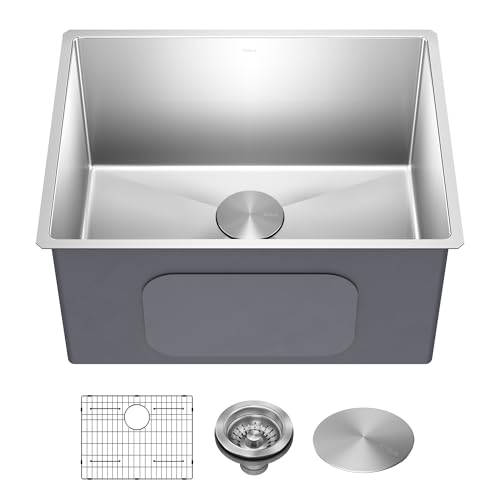


As an Amazon Associate we earn from qualifying purchases at no extra cost to you. Ratings are shown as listed on Amazon.
What Counts as a “Deep” Sink?
There is no single industry standard, but manufacturers and countertop fabricators use depth to categorize sinks:
- Standard depth: 6 to 7.5 inches. Found in most builder-grade 22×33-inch top-mount kitchen sinks.
- Medium-deep: 7.5 to 8.5 inches. Common in modern undermount stainless and quartz composite single bowls.
- Deep / Extra-deep: 9 to 10 inches for kitchen, 12 to 15 inches for utility/laundry tubs. True deep sinks are almost always single-bowl or large single-bowl with a small low divider.
- Laundry/utility deep: 12 to 25 inches deep freestanding or wall-mounted tubs, meant for soaking and filling buckets.
Depth is measured from the top rim to the bottom of the basin, not including the drain. A 10-inch deep sink in a 36-inch high countertop puts the basin floor at about 26 inches off the floor, which is 4 to 6 inches lower than a standard sink. That affects reach and splash.
Benefits and Trade-Offs You Don’t See in Listings
Where Deep Sinks Excel
- Conceals clutter: A 10-inch basin can hide a full stack of dinner plates and a sauté pan below the sightline, helpful for open-plan kitchens.
- Handles oversized items: Fits a 21×13-inch sheet pan flat, a 12-quart stockpot, or a 5-gallon bucket for soaking.
- Less splash: Higher sidewalls contain spray when using a high-arc or pull-down faucet. This is especially noticeable with 9+ inch basins.
- Soaking capacity: Holds significantly more water per inch of depth. A 30-inch single bowl gains roughly 3.5 to 4 gallons per additional inch of depth.
Where They Create Problems
- Ergonomics: You bend further to reach the bottom. For users under 5’4″ or with back pain, a 10-inch sink can cause strain during long prep or dish sessions.
- Cabinet and plumbing clearance: Deep basins reduce space for disposals, water filters, and P-traps. In a standard 24-inch deep base cabinet with a garbage disposal, a 10-inch sink may leave only 4 to 6 inches of clearance below the disposal outlet.
- Faucet reach: With deeper basins, a low-arc faucet can feel too short. You need at least 8 to 10 inches of spout clearance above the rim to comfortably fill tall pots.
- Water use and weight: A filled 10-inch 30-inch sink can weigh over 220 pounds with water alone. Make sure the base cabinet and countertop are rated for that load.
Deep Sink Styles Compared
Depth alone does not determine function. The mounting style changes usable depth, cleaning, and installation requirements.
| Style | Typical Overall Size | Basin Depth | Usable Depth After Mount | Base Cabinet Required | Best For |
|---|---|---|---|---|---|
| Undermount Single Bowl (Kitchen) | 30″ x 18″ to 32″ x 19″ | 9″ – 10″ | 9.5″ – 10.5″ (counter adds 0.5″) | 33″ minimum for 30″ sink | Minimizing splashing, modern kitchens |
| Farmhouse / Apron Front | 30″ x 20″ to 36″ x 21″ | 9″ – 10″ | 9″ – 10″ (exposed front) | 30″ to 36″ farmhouse base | Large pots, ergonomic front access |
| Drop-In / Top-Mount Double Bow | 33″ x 22″ | 7″ – 9″ (often 8″ / 10″ split) | 7″ – 9″ | 36″ standard | Rental-friendly, separating wash/rinse |
| Undermount Low-Divide Double | 32″ x 19″ | 9″ – 10″ with 5″ – 6″ divider | 9″ – 10″ | 36″ minimum | Compromise between single and double |
| Freestanding Utility / Laundry | 24″ x 24″ to 28″ x 28″ | 12″ – 15″ | 12″ – 15″ | Floor standing, no cabinet | Soaking, buckets, pet washing |
For kitchen use, a 30- to 32-inch single bowl at 9 to 10 inches deep is the sweet spot for most households. Double bowls reduce usable depth because the divider prevents laying pans flat, and extra-deep double bowls are prone to water pooling around the divider if not graded well.
Material Choice Matters More at Greater Depth
Deeper basins amplify material weaknesses: heavier water loads, louder drops, and more surface to scratch or stain.
| Material | Gauge / Thickness | Weight (30″ Single Bowl) | Heat & Impact Resistance | Noise Without Padding | Cleaning Reality |
|---|---|---|---|---|---|
| 16-Gauge Stainless Steel | 1.5mm (16-ga) | 18 – 25 lbs | Excellent heat, can dent with heavy drops | Moderate; needs undercoating/pads | Shows water spots, requires regular wiping; use grids to prevent scratches |
| 18-Gauge Stainless Steel | 1.2mm (18-ga) | 14 – 18 lbs | Good heat, dents more easily | Louder; flexes when full | Scratches faster; avoid abrasive scouring |
| Fireclay (Farmhouse) | 0.75″ – 1″ wall | 70 – 110 lbs | Very high heat resistance, can chip on hard impact | Very quiet | Gloss resists stains but chips expose clay; needs soft-side support |
| Enameled Cast Iron | 0.25″ enamel over iron | 85 – 130 lbs | Excellent heat, can chip if pot dropped | Very quiet | Glossy but chips; avoid steel wool and acidic prolonged soaking |
| Quartz / Granite Composite | 0.3″ – 0.4″ solid | 30 – 45 lbs | Up to 280°C / 536°F, resists chips better | Quiet | Matte surface can show limescale and oil; needs non-abrasive cleanser |
| Stainless Utility Tub (Freestanding) | 18-20 ga tub on legs | 20 – 35 lbs | Good, built for chemicals | Loud without pad | Simple; tolerates bleach, but legs must be leveled |
If you want 10-inch depth with a garbage disposal, 16-gauge stainless or composite handles the vibration and weight best. Fireclay and cast iron look premium and reduce noise naturally, but at 80+ pounds empty you will likely need reinforced cabinet sides and extra help on installation.
Do You Need a Deep Sink? Decision Matrix
Match your situation to the recommendation rather than going by trend:
| Your Situation | Recommended Depth & Style | Why |
|---|---|---|
| Cook daily, hand-wash large pots/pans, 33″+ base cabinet | 9.5″ – 10″ undermount or farmhouse single bowl, 30″-33″ | Holds stockpots flat, hides pans, fits sheet pans |
| Small kitchen, 24″-30″ cabinet, or under 5’4″ height | 7.5″ – 8.5″ medium depth, single or low-divide | Less bending, leaves plumbing space, easier reach |
| Dishwasher does most work, sink mainly for rinsing | 8″ – 9″ single bowl or low-divide double | Extra depth wastes water and cabinet space if not used for soaking |
| Laundry / garage / pet needs, no floor drain | 13″ – 15″ freestanding stainless utility tub with 24″ x 24″ footprint | Contains splashing, fills/fits buckets, holds 12-15 gallons |
| Entertain often, want hidden clutter | 10″ single bowl + bottom grid + fitted cutting board | Grid creates a second level; board adds prep space over deep basin |
| Back pain or front-loading preference | Farmhouse 9″ with apron front (not 10″) | Move 2-3″ closer to basin; less lean-over than undermount 10″ |
Will It Fit? A 60-Second Sizing Check
Do this before buying to avoid a cabinet or plumbing conflict:
1. Measure cabinet interior height: Standard kitchen base is 34.5 inches tall (without countertop). Subtract countertop thickness (0.75″ laminate to 1.25″ stone) to get interior height.
2. Check basin plus plumbing stack: Basin depth + disposal height (typically 6 to 6.5 inches from sink flange) + P-trap drop (about 3 inches) + air gap to cabinet floor (need at least 2 inches). Example for a 10-inch deep sink with disposal: 10 + 6.5 + 3 + 2 = 21.5 inches needed below the countertop. In a 34.5-inch cabinet with 1.25-inch stone, you have 33.25 inches interior, so 33.25 – 21.5 = 11.75 inches left at the bottom. That fits, but add a water filtration system and you may run out of space.
3. Check window or backsplash clearance: Farmhouse sinks need 2 to 3 inches of clearance below a window sill. Undermount deep sinks add about 0.5 inch of effective depth, so a 10-inch sink behaves like 10.5 inches under 1.25-inch stone.
4. Estimate filled weight: A 30″ x 18″ x 10″ single bowl holds roughly 22.3 gallons to the rim (30*18*10 = 5400 cubic inches / 231 = 23.3 gallons, minus ~1 gallon for corner radius). At 8.34 lbs per gallon, water alone is ~186 lbs, plus the sink and dishes can exceed 220 lbs. Ensure the sink base has a full plywood support platform, not just clips.
If any measurement fails, choose 9 inches instead of 10, or a workstation sink with accessories that effectively adds depth without increasing basin size.
Durability and Ownership Realities
What wears first depends on material, not depth, but depth increases stress:
- Stainless steel: The bottom grid is not optional for deep sinks. Without it, sliding cast iron pans will leave hairline scratches within weeks. Undercoating and sound pads prevent the drum effect when the deep basin empties. Avoid leaving salty or acidic water sitting overnight; it can pit thinner 18-gauge steel.
- Fireclay and cast iron: Enamel is hard but brittle. Dropping a heavy pot from 10 inches creates more impact force than from 7 inches. Use a rubber-coated grid and avoid thermal shock: do not pour boiling water directly onto a cold dry enamel surface with ice still in the basin.
- Quartz composite: The main maintenance is limescale. In hard water areas, the matte bottom shows white film. Clean weekly with a 50/50 white vinegar and water wipe, then rinse. Avoid harsh bleach pads that dull the finish.
- All deep sinks: Deep basins splash less but drain slower if the drain is not offset well. Choose a rear-offset drain; it gives more usable flat bottom and keeps the disposal off-center for more cabinet space. Clean the overflow channel monthly if present, and wipe the high sidewalls to prevent biofilm where the waterline sits.
- Common installation mistakes: No support frame for farmhouse/cast iron, using plumber’s putty on composite (use silicone per spec), and mismatched faucet height. A pull-down with 15 to 20 inches of total height pairs better with 9- to 10-inch basins than a low-arc 8-inch faucet.
For longevity at any budget, the two add-ons with the highest payoff are a fitted bottom grid (protects finish and lifts dishes for drainage) and a 3- to 4-inch thick cutting board that sits on the rim, turning depth into usable prep space instead of just a hole to reach into.
Bottom Line: When to Go Deep and When to Skip
Go deep if you have a 33-inch or wider base cabinet, hand-wash oversized cookware weekly, or need to hide a sink full of dishes in an open kitchen. A 9- to 10-inch single bowl in 16-gauge stainless or quartz composite covers most needs without requiring cabinet reinforcement.
Skip extra-deep (10 inches plus) if your cabinet is under 30 inches, you have a low window sill, you rely entirely on a dishwasher, or anyone using the sink has limited reach. In those cases a medium 8- to 8.5-inch basin with workstation accessories gives 90 percent of the function with better ergonomics and easier plumbing.
FAQ
Is a 10-inch deep sink too deep?
For many kitchens it is at the upper limit. At a 36-inch counter height, reaching the bottom of a 10-inch sink is comfortable for users around 5’6″ and taller. Shorter users or those with shoulder or back strain often prefer 8.5 to 9 inches, or a farmhouse apron that lets you stand closer.
What size deep sink fits a 30-inch cabinet?
For a 30-inch base cabinet, the maximum undermount basin is typically 27 to 28 inches wide. For a farmhouse 30-inch sink, the cabinet must be exactly 30 inches wide and built for apron support. Always check the manufacturer’s minimum cabinet size; a 30-inch sink almost always needs a 33-inch cabinet if it is undermount.
Do deep sinks work with garbage disposals?
Yes, but depth reduces clearance. With a 10-inch sink you will need a compact low-profile disposal and a rear drain location to preserve space. Verify the disposal discharge height is at least 2 inches above the P-trap entry to maintain proper slope.