The Canon EOS R50 is the safest first mirrorless camera in 2026 because it pairs a 24.2-megapixel APS-C sensor with simple menus, reliable subject-tracking autofocus and a body that weighs about 375 g with battery and card. If your budget is tight, the Canon EOS R100 is the cheapest way into a full lens system. If you want a larger grip and a viewfinder you will grow into, the Nikon Z50II is the stronger long-term choice. The right pick depends on what you shoot most, so this guide sorts six current bodies by use rather than by brand.
Our top picks
 Sony Alpha 7 IV Full-frame Mirrorless Interchangeable
- 33MP full-frame Exmor R back-illuminated CMOS sensor.Operating temperature…
- 8x more powerful, next generation BIONZ XR image…
- Up to 4K 60p 10-bit 4:2:2 w/ full…
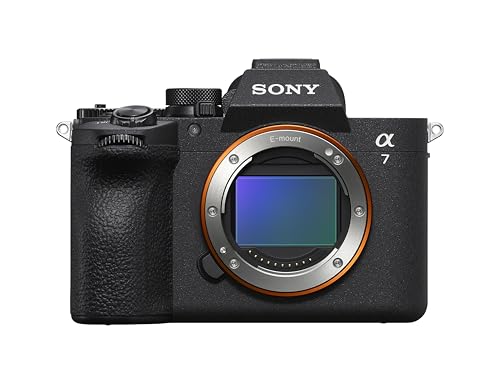 Sony Alpha a7 V Full-Frame Mirrorless Camera
- A partially stacked Exmor RS CMOS image sensor…
- The new BIONZ XR2 processing engine delivers dramatic…
- The new 33.0-megapixel*8 sensor and BIONZ XR2 processing…
| Product | Key specs | |
|---|---|---|
 Sony Alpha a7 IV Mirrorless Camera with | Check price | |
| Sony Alpha 7 IV Full-frame Mirrorless Interchangeable | 33MP full-frame Exmor R back-illuminated CMOS sensor.Operating temperature… 8x more powerful, next generation BIONZ XR image… Up to 4K 60p 10-bit 4:2:2 w/ full… | Check price |
| Sony Alpha a7 V Full-Frame Mirrorless Camera | A partially stacked Exmor RS CMOS image sensor… The new BIONZ XR2 processing engine delivers dramatic… The new 33.0-megapixel*8 sensor and BIONZ XR2 processing… | Check price |
 Sony ZV-E10 APS-C Mirrorless Camera with 16-50mm | 24.2MP APS-C Exmor CMOS Sensor and fast BIONZ… 4K Movie oversampled from 6k w/ full pixel… Product Showcase Setting transitions focus from face to… | Check price |
As an Amazon Associate we earn from qualifying purchases at no extra cost to you.
Quick comparison of the six picks
| Camera | Best for | Sensor | Weight (body, battery and card) | Viewfinder | Price tier |
|---|---|---|---|---|---|
| Canon EOS R50 | Best overall for beginners | 24.2 MP APS-C | About 375 g | Electronic | Mid-range |
| Canon EOS R100 | Lowest entry cost | 24 MP APS-C | About 356 g (body) | Electronic | Budget |
| Nikon Z50II | Growing into enthusiast shooting | 20.9 MP APS-C | About 550 g | Electronic | Upper mid-range |
| Fujifilm X-M5 | Travel and street shooting | 26 MP APS-C | About 355 g | None | Mid-range |
| Sony ZV-E10 II | Vlogging and YouTube | About 26 MP APS-C | About 377 g | None | Upper mid-range |
| Canon EOS R50 V | Video-first creators | 24.2 MP APS-C | About 370 g | None | Mid-range |
Weights come from the manufacturers’ spec pages and reputable review databases. Published figures differ slightly depending on whether the battery and memory card are included, so treat them as close approximations.
Best overall: Canon EOS R50
The R50 is the camera most beginner guides land on, and the reasons are practical. Its guided user interface explains settings in plain language, the touchscreen articulates for selfies and low angles, and the autofocus recognises people, animals and vehicles. Canon rates the battery at roughly 310 shots per charge using the viewfinder and 440 using the rear screen, so a spare LP-E17 battery is worth buying if you travel.
Who it suits: first-time buyers moving up from a phone who want good photos with little menu diving and the option to add RF-S lenses later.
Main trade-off: the small grip feels cramped with larger lenses, and there is no in-body image stabilisation, so low-light handheld shots depend on lens stabilisation or faster shutter speeds.
Best budget: Canon EOS R100
The R100 uses a 24-megapixel APS-C sensor in a body that weighs around 356 g, and it launched as Canon’s cheapest RF-mount camera. It accepts the same RF-S and RF lenses as the R50, which means the lens collection you build carries over if you later upgrade.
Who it suits: students, gift buyers and anyone who mainly shoots photos in good light.
Main trade-off: autofocus tracking is simpler than on the R50, and video features are more limited. If you plan to record much video, spend the extra for the R50.
Best for growing into: Nikon Z50II
The Nikon Z50II combines a 20.9-megapixel APS-C sensor with the EXPEED 7 processor, 209-point autofocus and a 3.2-inch articulating touchscreen. It records 4K at 30p oversampled from 5.6K, and 4K at 60p with a 1.5x crop, according to Nikon’s specifications. At about 550 g with battery and card it is noticeably heavier than the Canon options, but the deeper grip balances longer lenses well.
Who it suits: buyers who expect to move beyond auto modes within a year and want physical dials and a comfortable hold.
Main trade-off: the higher price and size make it less pocketable, and the lower megapixel count only matters if you crop heavily.
Best for travel and street: Fujifilm X-M5
At roughly 355 g including battery and card, the X-M5 is the lightest body here with a mode dial. It pairs a 26-megapixel X-Trans sensor with Fujifilm’s film simulations, so JPEGs look finished straight from the camera. Fujifilm lists 6.2K video at 30 fps and 4K at 60 fps, and rates the battery at about 330 frames per charge (440 in Eco mode).
Who it suits: people who want attractive colour without editing and a body small enough to carry daily.
Main trade-off: there is no viewfinder, so bright sunlight can make composing on the rear screen harder.
Best for vlogging: Sony ZV-E10 II
The ZV-E10 II is built around video: a fully articulating screen, a directional microphone capsule with a windscreen, and real-time tracking autofocus. Sony quotes up to about 610 photos per charge from its NP-FZ100 battery, one of the longest ratings in this class.
Who it suits: YouTube starters and talking-head creators who also want occasional stills.
Main trade-off: no viewfinder and a higher price than the Canon bodies, so it is poor value if you mainly shoot photos.
Best video-first alternative: Canon EOS R50 V
The R50 V strips away the viewfinder and reshapes the R50 for filmmakers, with a 24.2-megapixel sensor and a body weight reported at about 370 g. It costs only a little more than the R50 at launch, so choose it only if you rarely shoot stills in bright light.
Main trade-off: losing the viewfinder is a real cost outdoors, and reported weights vary between sources, so check Canon’s specification page before buying accessories such as cages.
How to choose: a decision matrix
| Your situation | Best match | Why |
|---|---|---|
| Mostly photos, lowest cost | Canon EOS R100 | Same lens mount as the R50 for later upgrades |
| One camera for everything | Canon EOS R50 | Balanced photo and video, easy menus |
| Want to learn manual exposure | Nikon Z50II | Larger grip and dedicated controls |
| Carry it every day | Fujifilm X-M5 | About 355 g with film simulations |
| Weekly video uploads | Sony ZV-E10 II or Canon EOS R50 V | Flip-out screens and video-first features |
Beginner buying advice with numbers
Budget for lenses and accessories, not just the body
A reasonable rule is to reserve roughly 25 to 40 percent of your total budget for a second lens, a spare battery and a fast SD card. A kit lens covers general shooting, but a 50 mm equivalent prime teaches composition and handles dim rooms far better.
Check battery life against your shooting day
Shots per charge ratings are measured under standard conditions. A day of travel with frequent screen reviews can halve the number. Carry at least one spare if the rating is under 400 frames.
Decide about the viewfinder early
If you often shoot outdoors in bright light, a viewfinder helps steady the camera against your face and makes framing easier. Skip it only if you primarily record video on a tripod or gimbal.
What wears or ages first
Rear screen hinges, battery capacity and sensor dust are the usual ownership issues. Keep a rocket blower in your bag, avoid changing lenses in wind, and store batteries partly charged if you will not shoot for weeks.
Frequently Asked Questions
What is the best mirrorless camera for a complete beginner?
The Canon EOS R50 is the most common recommendation because its menus are simple and its autofocus is dependable. The R100 is the cheaper option if you accept simpler autofocus.
Is mirrorless better than DSLR for beginners?
For most buyers, yes. Mirrorless bodies are smaller, show exposure before you press the shutter, and receive the manufacturers’ new lens designs, while DSLR development has largely stopped.
APS-C or full-frame for a first camera?
APS-C is the better starting point. Bodies and lenses are cheaper and lighter, and image quality is more than sufficient for prints and social media.
Do I need a kit lens?
A kit lens is the cheapest way to get a zoom range from wide to short telephoto. Buying the camera with the kit lens usually costs less than buying them separately, and you can add a prime later.
Which beginner camera is best for video?
The Sony ZV-E10 II and Canon EOS R50 V are built for video with flip-out screens and strong autofocus. The Nikon Z50II and Canon EOS R50 are better if you split time between stills and clips.