Our Short List of 3

- Mount: Nikon Z, FX full-frame; Focal range: 35-150mm; Max aperture: f/2-2.8; Min focus distance: 0.33 m; Max magnification: 0.17x; Weight: 1,190 g; Filter thread: 82 mm

- Mount: Nikon Z, FX full-frame; Focal length: 50mm; Max aperture: f/2.8; Max reproduction ratio: 1:1; Min focus distance: 0.16 m; Weight: 260 g; Filter thread: 46 mm

- Mount: Nikon Z, FX full-frame; Focal range: 70-180mm; Max aperture: f/2.8; Min focus distance: 0.27 m; Max magnification: 0.48x; Weight: 795 g; Filter thread: 67 mm
All 4 Picks at a Glance
| Product | Specs | Action |
|---|---|---|
| 2. Tamron 35-150mm f/2-2.8 Di III VXD — The One-Lens Event Kit |
| Check price on Amazon |
| 3. NIKKOR Z MC 50mm f/2.8 — The Compact Macro and Everyday Prime |
| Check price on Amazon |
| 4. NIKKOR Z 70-180mm f/2.8 — The Lightweight Fast Telephoto Zoom |
| Check price on Amazon |
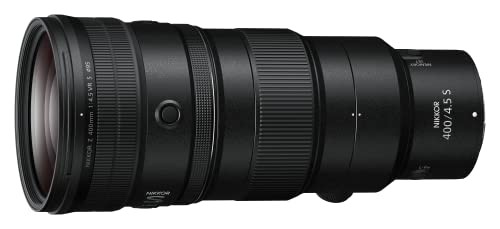 5. NIKKOR Z 400mm f/4.5 VR S — The Featherweight Wildlife Prime |
| Check price on Amazon |
Key takeaways
- Five sharp, versatile Z-mount lenses for the Nikon Z7 II, from a 125 g pancake prime to a featherweight 400mm wildlife lens, tuned for 45.7MP detail.
The Nikon Z7 II is one of the most demanding cameras you can buy for glass. Its 45.7MP full-frame sensor records enormous detail and shows every weakness in a lens, from soft corners to hazy contrast at wide apertures. Pair it with the right optics and the files are superb, with deep crops and landscape detail that holds up at large sizes. Pair it with glass that cannot resolve the sensor and you carry a heavy body for little gain.
This guide gathers five Z-mount lenses for the subjects the Z7 II handles best: travel, events, portraits, macro work, and wildlife. Every pick covers the full FX frame, so you use the whole sensor, and the set spans a pancake prime to a super-telephoto prime built for long days in the field.
As an Amazon Associate, we earn from qualifying purchases.
How to Choose a Lens for the Nikon Z7 II
Match the glass to the 45.7MP sensor
Resolution is the first filter. The Z7 II sensor out-resolves many older lenses, especially at the edges of the frame, so modern designs with strong corner sharpness matter more here than on a 24MP body. Nikon S-Line lenses were built with high-resolution sensors in mind, and the best third-party Z-mount lenses now match them. A lens that looks fine on a lower-resolution body can look soft on the Z7 II, so treat edge-to-edge sharpness as a requirement.
Buy native Z mount, full-frame coverage
Every lens below mounts directly on the Z mount and covers the full FX frame. That matters because the Z7 II drops to roughly 19.5MP when a DX lens forces a crop, which wastes the main reason to own this camera. Native Z lenses also communicate fully with the body, so autofocus, in-body stabilization, and lens corrections all work as intended. The FTZ adapter can be a useful bridge for older F-mount glass, but native lenses focus faster and balance better on the compact Z7 II body.
Use stabilization as a system
The Z7 II has 5-axis in-body stabilization that works with every lens. For wide and standard focal lengths, the body alone handles handheld shooting well. At 180mm and beyond, a VR lens adds meaningful extra steadiness, and the two systems work together. If you shoot handheld wildlife or dim event halls, favor lenses with built-in stabilization.
1. NIKKOR Z 26mm f/2.8 — The Pancake Prime for Travel
The NIKKOR Z 26mm f/2.8 is the slimmest lens in the Z system, and it turns the Z7 II into a walk-around camera that fits in a jacket pocket. At roughly 125 g, it adds almost nothing to the body, yet it delivers a wide 26mm view that suits street scenes, architecture, interiors, and travel landscapes.
On the 45.7MP sensor, the 26mm holds up better than its size suggests. Three aspherical elements keep distortion low, and the lens stays sharp across the frame when stopped down a little for landscapes. Close focus of 0.2 m lets you fill the frame with small details at a 0.19x reproduction ratio, so it doubles as a detail lens on travel days. A stepping motor keeps autofocus quiet, the lens is weather sealed, and at 26mm the Z7 II body stabilization is more than enough for handheld shooting.
This is the lens to buy if you want the Z7 II with you everywhere. It will not replace a fast zoom for events or a long lens for wildlife, but for a day of walking, it is the most freeing optic in this guide.
Specs
- Mount: Nikon Z, FX full-frame; Focal length: 26mm; Max aperture: f/2.8; Min focus distance: 0.2 m; Max reproduction ratio: 0.19x; Weight: 125 g; Filter thread: 52 mm
2. Tamron 35-150mm f/2-2.8 Di III VXD — The One-Lens Event Kit
- Mount: Nikon Z, FX full-frame; Focal range: 35-150mm; Max aperture: f/2-2.8; Min focus distance: 0.33 m; Max magnification: 0.17x; Weight: 1,190 g; Filter thread: 82 mm
The Tamron 35-150mm f/2-2.8 Di III VXD is the most versatile lens in this guide, and the one to choose if you want a single lens for events, weddings, and portraits. It opens at f/2 at 35mm and holds f/2.8 through 150mm, which is faster than any standard zoom in its class. That range gives you real subject separation at the long end and genuine low-light ability, so you can work a dim hall without changing lenses.
On the Z7 II, the VXD linear motor focuses quickly and quietly, and it tracks faces and eyes well in moving scenes. The 35mm end is wide enough for group shots and venue interiors, the 85mm to 135mm range is classic portrait territory, and 150mm reaches candid frames from the back of a room. Close focus of 0.33 m at the wide end adds near-macro ability for rings, flowers, and table details at 0.17x magnification.
The trade-off is size. At 1,190 g with an 82mm filter thread, this is the heaviest lens in the guide, and it shifts the balance of the compact Z7 II body forward. There is no built-in stabilization, so you lean on the body IBIS, which is adequate at these focal lengths. Moisture-resistant construction and a fluorine-coated front element help in dusty or damp venues.
If your Z7 II earns its keep at events, this lens covers the work of two or three primes in one mount.
3. NIKKOR Z MC 50mm f/2.8 — The Compact Macro and Everyday Prime
- Mount: Nikon Z, FX full-frame; Focal length: 50mm; Max aperture: f/2.8; Max reproduction ratio: 1:1; Min focus distance: 0.16 m; Weight: 260 g; Filter thread: 46 mm
The NIKKOR Z MC 50mm f/2.8 is the smallest true macro lens in the Z system, and it earns its place here twice over: as a 1:1 macro lens and as a light everyday 50mm. At 260 g with a 46mm filter thread, it is barely larger than a standard prime, yet it focuses down to 0.16 m and reproduces subjects at life size. Flowers, insects, jewelry, and small products all fill the frame with detail the 45.7MP sensor renders beautifully.
For macro work on the Z7 II, the lens pairs well with the camera focus-shift feature, which steps focus through a subject so you can blend the frames into one deep-focus image later. The stepping motor focuses smoothly and quietly, which matters when a subject is skittish, and the lens holds sharpness well at the apertures macro shooters actually use. As a walk-around 50mm, the f/2.8 aperture is modest by prime standards, but the rendering is clean and the size makes the camera easy to carry all day.
There is no VR in this lens, and at macro distances a steady stance or a tripod matters more anyway. The 50mm focal length suits street scenes, food, and environmental portraits, so this lens rarely stays in the bag. It is also the most affordable way into true 1:1 macro on the Z mount.
4. NIKKOR Z 70-180mm f/2.8 — The Lightweight Fast Telephoto Zoom
- Mount: Nikon Z, FX full-frame; Focal range: 70-180mm; Max aperture: f/2.8; Min focus distance: 0.27 m; Max magnification: 0.48x; Weight: 795 g; Filter thread: 67 mm
The NIKKOR Z 70-180mm f/2.8 is the lightest fast telephoto zoom Nikon makes for the Z mount, and it answers the classic problem of the 70-200mm f/2.8: superb optics in a body that wears you down. At 795 g, it is roughly 40 percent lighter than a full-size 70-200mm f/2.8, yet it keeps the constant f/2.8 aperture across the range, so portraits, sports, and events all benefit from the same low-light ability and subject separation.
The range is well judged for the Z7 II. Seventy millimeters frames tight portraits and details, 135mm is a classic portrait length, and 180mm reaches far enough for field sports and stage work. Close focus of 0.27 m at the wide end gives a 0.48x maximum magnification, which is unusually close for a telephoto zoom and makes this lens useful for flowers and larger insects as well. It also accepts the Z teleconverters, stretching to 252mm with the 1.4x or 360mm with the 2.0x.
There is no VR in this lens, so you rely on the Z7 II body stabilization, which is fine at these focal lengths. The 67mm filter thread keeps filters small and affordable, and 19 elements in 14 groups, including ED and Super ED glass, keep contrast high and fringing low, even wide open.
5. NIKKOR Z 400mm f/4.5 VR S — The Featherweight Wildlife Prime
- Mount: Nikon Z, FX full-frame; Focal length: 400mm; Max aperture: f/4.5; VR: 5.5 stops; Min focus distance: 2.5 m; Max reproduction ratio: 0.16x; Weight: 1,160 g without tripod collar; Filter thread: 95 mm
The NIKKOR Z 400mm f/4.5 VR S is the lightest super-telephoto prime in its class, and it is the lens that makes handheld wildlife photography practical on the Z7 II. At 1,160 g without the tripod collar, it is short enough and light enough to carry on a strap all day, and the 5.5-stop VR system steadies the viewfinder and the frame at 400mm. For birds, mammals, and aircraft, that combination is hard to beat.
On the 45.7MP sensor, 400mm is a serious working length. Distant subjects fill enough of the frame to keep detail, and the sensor gives you room to crop further when a bird lands just beyond comfortable range. One ED element, two Super ED elements, and one SR element keep chromatic fringing under control, and the Nano Crystal Coat resists flare when you shoot toward the light. Minimum focus of 2.5 m is close for a 400mm lens, so larger nearby subjects are within reach.
The f/4.5 aperture is a deliberate trade. It is a stop slower than the exotic f/2.8 super-telephotos, but the lens is a fraction of their size and weight. The lens takes the Z teleconverters too, reaching 560mm with the 1.4x or 800mm with the 2.0x for dedicated birding days. Weather sealing is thorough, and the 95mm front filter thread takes a single large protective filter.
Tips for Getting the Most from the Z7 II
Shoot at the base sensitivity of ISO 64 whenever light allows. The Z7 II sensor delivers its cleanest files and widest dynamic range there, which matters for landscapes and for lifting shadows in post. When light drops, raise sensitivity in whole steps and let the IBIS do its work before you open the aperture wider.
Use the focus-shift feature for macro and product work. The MC 50mm f/2.8 pairs with it well, and a short stack of frames blended later gives you depth of field no single aperture can match. A tripod and a remote release keep the frames aligned.
Carry two cards. The Z7 II takes one CFexpress Type B card and one SD UHS-II card, and the 45.7MP files fill cards quickly. Set the second slot to back up the first for paid work, or to overflow when you are shooting all day.
Finally, use the DX crop mode as a tool, not a habit. It turns the 400mm into an effective 600mm view, which is handy for distant wildlife, but it costs you resolution. A native FX lens and a careful crop in post usually give you a better file.
FAQ
Can I use DX lenses on the Nikon Z7 II?
Yes, DX lenses mount and work, but the camera crops the sensor to the DX area, leaving about 19.5MP. That throws away the main advantage of this body, so native FX lenses are the better match.
Is the FTZ adapter a good way to use older F-mount lenses on the Z7 II?
It works well for AF-S and AF-P lenses, which keep autofocus, but older screw-drive lenses lose autofocus entirely. Native Z lenses focus faster and balance better, so use the adapter as a bridge, not as the plan.
Which lens should I buy first for the Z7 II?
If one lens must cover the most ground, choose the Tamron 35-150mm f/2-2.8 for events and portraits. If travel and size matter most, the 26mm f/2.8 pancake keeps the camera with you every day. Add the MC 50mm f/2.8 next if macro interests you.
Do I need VR lenses if the Z7 II already has in-body stabilization?
For wide and standard focal lengths, the body stabilization is enough on its own. At 180mm and beyond, a VR lens adds real steadiness, and the two systems work together, so favor VR glass for handheld wildlife and long telephoto work.
Conclusion
The Nikon Z7 II rewards lenses that resolve its 45.7MP sensor, and this set covers the subjects it handles best. The 26mm f/2.8 keeps the camera light for travel, the Tamron 35-150mm f/2-2.8 handles events in one mount, the MC 50mm f/2.8 opens up true macro, the 70-180mm f/2.8 gives you fast telephoto reach without the weight, and the 400mm f/4.5 VR S makes handheld wildlife practical. Build around the subjects you shoot most, buy native FX glass, and let the sensor do its work.
More from Amazon
Programs that pair well with the guide above. Offers and eligibility are set by Amazon and may change.
Free shipping on eligible items, Prime Video and more. Eligible new members can start with a free trial.
Start a Prime free trialAudiobooks and podcasts to listen to on the go. Eligible new members can start with a free trial.
Try Audible freeAd-free music streaming. Eligible new subscribers can start with a free trial.
Try Music Unlimited freeA free business account with business pricing and bulk-buying tools for work, shop or home office.
Create a business accountAs an Amazon Associate we earn from qualifying purchases.