Our Short List of 3
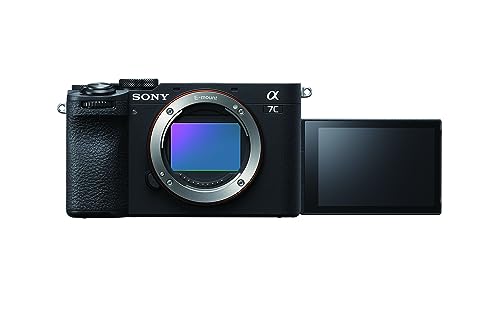
- 33MP full-frame Exmor R CMOS sensor; BIONZ XR processor; AI-based Real-time Eye AF; 5-axis in-body stabilisation; 4K 60p video; single SD card slot; body only; around 514 g with battery and card.

- 33MP full-frame Exmor R CMOS sensor; BIONZ XR processor; 759-point Fast Hybrid AF; 5-axis SteadyShot stabilisation; 10 fps continuous shooting; 4K 60p 10-bit 4:2:2 video; dual card slots; body only; around 658 g with battery and card.

- 24.5MP partially-stacked full-frame CMOS sensor; EXPEED 7 processor; model 1890; 6K/60p internal RAW video; up to 120 fps JPEG burst; 5,760k-dot electronic viewfinder; body only.
All 4 Picks at a Glance
| Product | Specs | Action |
|---|---|---|
| 1. Sony A7C II |
| Check price on Amazon |
| 2. Sony A7 IV |
| Check price on Amazon |
| 4. Nikon Z6 III |
| Check price on Amazon |
 5. Fujifilm X100VI |
| Check price on Amazon |
Our Top Picks
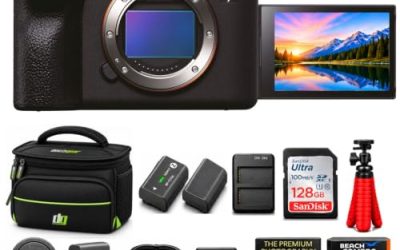
- Sony Alpha 7C II Full-Frame Interchangeable Lens Camera4.902.5 x 4.9 x 2.8 inches0.95 PoundsCheck on Amazon
- Sony Alpha 7 IV Full-frame Mirrorless Interchangeable Lens5.45 x 3.80 x 2.83 inches9.6 x 6.5 x 6.7 inches2.2 PoundsCheck on Amazon
Dropwort grows where the grass runs thin and the ground stays dry. In a chalk meadow in late June, its creamy flower heads lift above finely cut leaves, and the whole plant seems built from lace. It is a quiet subject, and that is exactly why it rewards a good camera. The flowers are small, the leaves are fine, and the light in an open meadow is often bright and hard. A camera that holds detail in white petals and focuses close enough to show one flower head will do far more than a long zoom ever will.
This guide looks at five cameras that suit dropwort photography in dry meadows. Each one brings a different strength, from a compact full-frame body that slips into a small bag to a fixed-lens camera that makes you slow down and look. All five were checked against live Amazon.com listings.
As an Amazon Associate, we earn from qualifying purchases.
Why Dropwort Is a Special Subject
Dropwort, Filipendula vulgaris, belongs to the rose family, Rosaceae, and it is the only Rosaceae plant in this batch. It grows in dry meadows, on chalk and limestone grassland, and along sunny banks where the soil drains fast. The plant rarely stands taller than knee height. Its leaves are finely divided, almost fern-like, and they spread low over the ground. From May to July, slender stems rise up and carry loose clusters of creamy white flowers, each one small, with six petals and a soft, sweet scent.
That combination of fine detail and pale colour is what makes dropwort tricky to photograph. White petals blow out easily in midday sun, so you need a camera with enough dynamic range to keep the flower heads bright without losing the veins in the petals. The leaves are so finely cut that a weak sensor will turn them into a green blur, so resolution and good glass matter more than burst speed.
Stay on the paths when you go looking for dropwort. Dry meadows are fragile places, and a single careless footstep can crush the very leaves you came to photograph. Do not pick the plant. Take your pictures from the edge of the path, or from a spot where the ground is already bare, and leave the flowers standing for the next walker and for the insects that feed on them.
What to Look for in a Camera for Dropwort
The first thing to check is close focus. Dropwort flowers are small, and the best pictures often come from getting low and near, filling the frame with one flower cluster while the meadow softens behind it. Every interchangeable-lens body in this guide needs a close-focusing lens before it is ready for tight dropwort work. A standard kit zoom will not get you close enough on its own. Plan on a macro lens, or a short prime that focuses close, and the camera you choose should have autofocus that can lock onto a small, pale subject without hunting in bright light.
The second thing is dynamic range. Creamy white petals against dark green leaves are a hard exposure problem. A camera with a wide dynamic range lets you keep the petals from blowing out while still showing detail in the shadows under the plant. Full-frame sensors have the edge here, and the two Sony bodies and the two Nikon bodies in this guide all use full-frame sensors for that reason.
The third thing is weight. Dropwort meadows are often a long walk from the nearest road, and you will be carrying your camera for an hour or more in open sun. A body that weighs half a kilo instead of a full kilo makes a real difference by the end of the walk.
Dropwort Is Not Meadowsweet
Dropwort is often confused with meadowsweet, and the confusion is easy to understand. Both belong to the same genus, Filipendula. Dropwort is Filipendula vulgaris, while meadowsweet is Filipendula ulmaria, a different species in the same genus. Meadowsweet has already been covered in cameras form, so it is worth setting the two apart clearly before you head out.
The simplest difference is where they grow. Dropwort grows in dry meadows, on thin chalk and limestone soil, where the ground drains quickly after rain. Meadowsweet grows in damp meadows, along stream banks, and in wet ditches, where the soil stays moist all summer. If your boots are dry, you are probably looking at dropwort. If the ground is soft underfoot, you are probably looking at meadowsweet.
The leaves tell the same story. Dropwort has finely cut leaves, divided into narrow leaflets that look almost feathery, and they spread low across the ground. Meadowsweet has broader, coarser leaves with large toothed leaflets and a pale underside. The flowers differ too. Dropwort carries loose, open clusters of creamy white flowers on slender stems, while meadowsweet carries dense, frothy clusters that look like foam piled on the stem, and its scent is stronger and sweeter.
The Five Picks
1. Sony A7C II
- 33MP full-frame Exmor R CMOS sensor; BIONZ XR processor; AI-based Real-time Eye AF; 5-axis in-body stabilisation; 4K 60p video; single SD card slot; body only; around 514 g with battery and card.
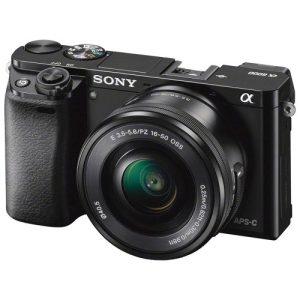
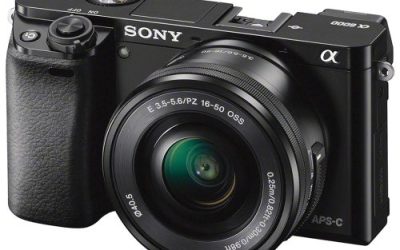
The Sony A7C II is the smallest full-frame camera in this guide, and that is its whole appeal for dropwort. It packs a 33 megapixel full-frame sensor into a body that weighs around 514 g with battery and card, so it rides lightly on a long walk across a dry meadow. The sensor holds detail in white petals well, and the AI-based autofocus locks onto small subjects without fuss, which matters when your target is a flower head the size of a coin.
The trade-offs are real. The A7C II has a single memory card slot, so there is no in-camera backup of your files. The grip is small, which suits small hands and light lenses but feels cramped with a heavy macro lens attached. And like every interchangeable-lens body in this guide, it needs a close-focusing lens before it is ready for tight dropwort work, so budget for glass as well as the body.
2. Sony A7 IV
- 33MP full-frame Exmor R CMOS sensor; BIONZ XR processor; 759-point Fast Hybrid AF; 5-axis SteadyShot stabilisation; 10 fps continuous shooting; 4K 60p 10-bit 4:2:2 video; dual card slots; body only; around 658 g with battery and card.
The Sony A7 IV is the steady all-rounder of this group. It shares the same 33 megapixel full-frame sensor as the A7C II, but it puts it in a larger body with a bigger viewfinder, dual card slots, and a deeper grip that balances a macro lens properly. The 759-point autofocus system is quick and sure, and the 10 frames per second burst is more than enough for a plant that does not move.
The honest trade-off is that the A7 IV is an older design than the A7C II, and it shows in the autofocus, which is very good but not quite as clever with small subjects. It is also heavier, at around 658 g with battery and card, so it asks more of your shoulders on a long walk. And it needs a close-focusing lens for tight dropwort work, just like the rest of the interchangeable-lens bodies here. If you want one camera that does everything well and you do not mind the weight, this is the safe choice.
3. Nikon Z5 II
The Nikon Z5 II, model 1680, is the value pick among the full-frame bodies. It uses a 24.5 megapixel full-frame BSI sensor with the EXPEED 7 processor, and it brings 7.5 stops of in-body stabilisation, which helps a great deal when you are shooting low and handheld in a meadow. The autofocus works down to minus 10 EV, so it keeps locking on in the dim light under a hedgerow at the meadow edge. Dual SD card slots give you an in-camera backup, which the A7C II lacks.
The trade-off is resolution. At 24.5 megapixels, the Z5 II gives you less room to crop than the 33 megapixel Sony bodies, so you need to get your framing right in the field rather than fixing it later. And, like every interchangeable-lens body here, it needs a close-focusing lens before it is ready for tight dropwort work.
Specs
- 24.5MP full-frame BSI CMOS sensor; EXPEED 7 processor; model 1680; 7.5-stop in-body stabilisation; AF down to -10 EV; dual SD UHS-II card slots; 4K 60p video; body only.
4. Nikon Z6 III
- 24.5MP partially-stacked full-frame CMOS sensor; EXPEED 7 processor; model 1890; 6K/60p internal RAW video; up to 120 fps JPEG burst; 5,760k-dot electronic viewfinder; body only.
The Nikon Z6 III, model 1890, is the most video-capable camera in this guide, and it is also the fastest. Its 24.5 megapixel partially-stacked full-frame sensor reads out quickly, which keeps the electronic viewfinder smooth and blackout-free, and it can shoot stills at up to 120 frames per second in JPEG. Its viewfinder is the brightest and most detailed in this group at 5,760k dots, which makes it easy to check focus on fine leaves in bright sun.
The honest trade-off is that the Z6 III is built for hybrid shooters, so you are paying for video power, including 6K/60p internal RAW recording, that a stills-only flower photographer may never use. At 24.5 megapixels it matches the Z5 II on resolution, so it offers no extra cropping room over its cheaper sibling. It is a body-only camera, and it needs a close-focusing lens for tight dropwort work, like every interchangeable-lens body in this guide.
5. Fujifilm X100VI
- 40.2MP APS-C X-Trans CMOS 5 HR sensor; X-Processor 5; fixed 23mm f/2 lens; 6-stop in-body stabilisation; 20 Film Simulation modes; 6.2K/30p video; around 521 g.
The Fujifilm X100VI is the odd one out, and that is why it earns its place. It is a fixed-lens camera with a 40.2 megapixel APS-C sensor and a fixed 23mm f/2 lens, which is a 35mm equivalent field of view. It weighs around 521 g, it slips into a jacket pocket, and its 20 Film Simulation modes give your meadow pictures a finished look straight out of the camera.
The trade-off is the lens, and it is a real one. A fixed 23mm lens cannot zoom in on a distant flower head, and it cannot swap to a macro lens for a tight close-up. For dropwort, that means you work close, filling the frame with the plant and its surroundings, rather than isolating a single flower. If you want tight close-ups of one flower cluster, this is the wrong camera. If you want to photograph dropwort in its meadow, with the grass and the light around it, the X100VI is a joy to carry and a joy to use.
Frequently Asked Questions
Is dropwort the same plant as meadowsweet?
No. Dropwort is Filipendula vulgaris and meadowsweet is Filipendula ulmaria, two different species in the same genus, Filipendula. Dropwort grows in dry meadows with finely cut leaves and loose flower clusters, while meadowsweet grows in damp meadows with broader leaves and dense, frothy flower clusters. Check the habitat first, then the leaves, and the two plants are easy to tell apart.
What lens do I need for dropwort photography?
You need a lens that focuses close. Every interchangeable-lens body in this guide needs a close-focusing lens before it is ready for tight dropwort work, because a standard kit zoom will not get you near enough to a small flower head. A macro lens is the best choice, and a short prime with close focus is a good second option. The fixed-lens X100VI cannot change lenses, so it suits wider shots of dropwort in its meadow rather than tight close-ups.
Can I photograph dropwort in the middle of the day?
You can, but the light is hard and the white petals blow out easily. Early morning and late afternoon give softer light and more detail in the petals. If you must shoot at midday, look for a thin cloud to soften the sun, or shade the plant with your body, and check the petals on the screen after each shot.
Where is the best place to find dropwort?
Look in dry meadows, on chalk and limestone grassland, and along sunny banks where the soil drains fast. Dropwort flowers from May to July, with the best displays in June. Stay on the paths, do not pick the plant, and take your pictures from the edge of the path so the meadow stays whole for the next walker.
Dropwort is a small plant with a quiet beauty, and it asks for a camera that can see fine detail without fuss. Any of the five cameras in this guide can do that, as long as you pair it with a lens that focuses close and take the time to work with the light. Go early, stay on the path, and let the meadow do the rest.
More from Amazon
Programs that pair well with the guide above. Offers and eligibility are set by Amazon and may change.
Free shipping on eligible items, Prime Video and more. Eligible new members can start with a free trial.
Start a Prime free trialAudiobooks and podcasts to listen to on the go. Eligible new members can start with a free trial.
Try Audible freeAd-free music streaming. Eligible new subscribers can start with a free trial.
Try Music Unlimited freeA free business account with business pricing and bulk-buying tools for work, shop or home office.
Create a business accountAs an Amazon Associate we earn from qualifying purchases.