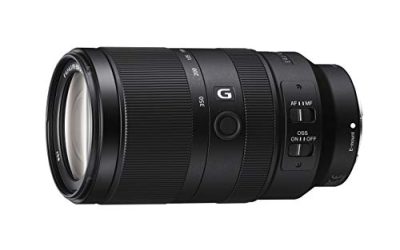
Our Short List of 3
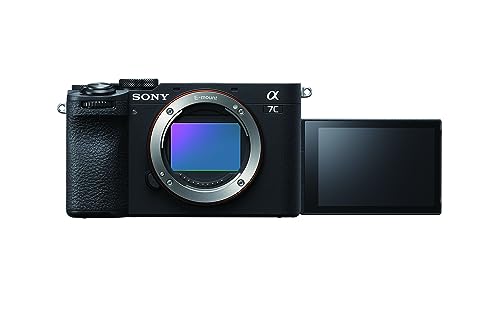
- 33 megapixel full-frame sensor, BIONZ XR processor, 5-axis in-body stabilisation, 4K 60p video, Sony E mount, single SD card slot.

- 33 megapixel full-frame sensor, BIONZ XR processor, 5-axis stabilisation, 4K 60p video, dual card slots, Sony E mount.

- 24.5 megapixel full-frame partially stacked sensor, EXPEED 7 processor, 5-axis in-body stabilisation, 6K 60p internal RAW video, Nikon Z mount, body only.
All 4 Picks at a Glance
| Product | Specs | Action |
|---|---|---|
| 1. Sony A7C II |
| Check price on Amazon |
| 2. Sony A7 IV |
| Check price on Amazon |
| 4. Nikon Z6 III |
| Check price on Amazon |
 5. Fujifilm X100VI |
| Check price on Amazon |
Our Top Picks
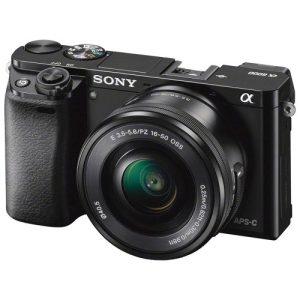
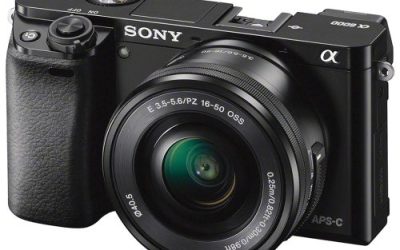
- Sony Alpha 7C II Full-Frame Interchangeable Lens Camera4.902.5 x 4.9 x 2.8 inches0.95 PoundsCheck on Amazon
- Sony Alpha 7 IV Full-frame Mirrorless Interchangeable Lens5.45 x 3.80 x 2.83 inches9.6 x 6.5 x 6.7 inches2.2 PoundsCheck on Amazon
Sea plantain grows where land meets tide: a low rosette of narrow fleshy leaves pressed close to salty mud, with slender spikes of small brown-green flowers held above the leaves in summer. It is a quiet subject, easy to walk past and easy to photograph badly, because the plant sits low, the marsh is often flat and bright, and wind moves the flower spikes at the very moment you want them still.
This guide looks at five cameras for sea plantain photography on salt marshes and coastal grassland. Each is judged on close focusing, detail, wind, and low-level use. Every interchangeable-lens body here needs a close-focusing lens for tight sea plantain work.
As an Amazon Associate, we earn from qualifying purchases.
Meeting Sea Plantain on the Salt Marsh
Sea plantain, Plantago maritima, belongs to the family Plantaginaceae. It grows on salt marshes, in coastal grassland, and along the upper edges of tidal creeks, where the ground is damp, salty, and often firm enough to walk on with care. The leaves form a flat rosette, narrow and fleshy, and the flower spikes rise on thin stalks from the centre. The flowers are small and brown-green, packed tightly along the upper part of each spike.
The best season is late spring through summer, when the rosettes are full and the flower spikes are up. Early morning and late afternoon give the lowest light and the warmest colour on the leaves. Overcast days are often kinder, because soft light holds the leaf texture and the mud keeps its tone instead of glaring back at the lens.
Do not pick sea plantain, and do not pull at the flower spikes to pose them. Work from the edge of a patch when you can, use a longer lens or a careful crouch instead of stepping in, and leave the marsh exactly as you found it.
Telling Sea Plantain From Greater-Plantain
Sea plantain is NOT greater-plantain. The two plants share the genus Plantago, so their Latin names sit side by side, Plantago maritima for sea plantain and Plantago major for greater-plantain, but they are different species. Greater-plantain is a common plant of paths, lawns, and trampled ground inland, with broad oval leaves on long stalks, while sea plantain is a coastal plant with narrow fleshy leaves in a tight flat rosette close to the ground.
The leaf is the clearest field mark. Sea plantain leaves are narrow, thick, and fleshy, often only a few millimetres wide, with a smooth margin and a pointed tip. Greater-plantain leaves are broad, flat, and thin by comparison, with a rounded blade and a long stalk. If the plant in front of you has broad leaves you could cover with the palm of your hand, it is not sea plantain.
Habitat is the second check, and it rarely fails. Sea plantain grows where salt reaches the soil, on salt marshes, in coastal grassland, and beside tidal creeks. Greater-plantain grows where people and animals walk, on garden paths, lawns, and field edges, and it seldom grows on a salt marsh. There is no generic plantain, and water-plantain is a different genus.
How to Photograph Sea Plantain Well
Sea plantain rewards a low viewpoint. Stand and shoot down at a rosette and you will get a flat record of leaves on mud. Kneel or lie down, bring the camera to the level of the leaves, and the rosette gains shape, the flower spikes rise against sky or distant marsh, and the background softens into bands of green and brown.
Wind is the main enemy on a salt marsh. The flower spikes are light and thin, and even a gentle breeze sets them swaying, which blurs the flowers at slow shutter speeds. Use a fast shutter speed when the wind is up, raise the ISO a little rather than letting the shutter fall, and take several frames in a burst so that at least one catches the spike at the top of its sway.
Light on the marsh changes fast. Side light shows the texture of the fleshy leaves, while light from behind the plant can turn the leaves translucent against dark mud.
What to Look For in a Camera for Sea Plantain
A camera for sea plantain needs four things. It needs close focusing, which comes from the lens as much as the body. It needs enough resolution to hold the fine detail of narrow leaves and small flowers. It needs reliable autofocus on a small, low-contrast subject in wind.
Weather sealing matters on a salt marsh, where spray, damp air, and salty mud are part of every visit, but no camera in this guide is fully proof against salt water, and none should be put down on wet mud or left out in rain. Wipe the body down after a marsh visit, and carry the camera in a bag when walking between patches.
1. Sony A7C II
- 33 megapixel full-frame sensor, BIONZ XR processor, 5-axis in-body stabilisation, 4K 60p video, Sony E mount, single SD card slot.
The Sony A7C II is a compact full-frame camera with a 33 megapixel sensor, and it suits sea plantain photography because it pairs a large sensor with a small body that is easy to carry across a marsh and easy to hold low to the ground. The sensor holds detail in pale leaves and dark mud, stabilisation helps handheld in soft light, and the autofocus is quick and sure on small subjects.
The trade-off is that the A7C II has a single card slot and a small body that can feel cramped with a large lens attached, and the viewfinder is smaller than the one on a full-size Sony body. A close-focusing lens is essential for tight sea plantain work, and the body alone will not focus close enough for a frame-filling rosette.
2. Sony A7 IV
- 33 megapixel full-frame sensor, BIONZ XR processor, 5-axis stabilisation, 4K 60p video, dual card slots, Sony E mount.
The Sony A7 IV is a full-frame hybrid camera with a 33 megapixel sensor, and it is the most versatile body in this guide for a photographer who wants sea plantain stills and moving images from the same marsh visit. The sensor gives the same fine leaf detail as the A7C II, with more room to crop into a single rosette, and the dual card slots give a useful safety net when you are far from home and cannot repeat a morning. The viewfinder is larger and clearer than the one on the A7C II.
The trade-off is size and weight. The A7 IV is a full-size body, and with a close-focusing lens attached it is a heavier kit to carry across soft marsh ground than the A7C II. The camera asks for a good lens to show its best, and a close-focusing lens is essential for tight sea plantain work.
3. Nikon Z5 II
The Nikon Z5 II, model 1680, is a full-frame camera with a 24.5 megapixel sensor, and it is a calm, capable choice for sea plantain photography. The sensor holds plenty of detail for a low rosette, the colours are natural and easy to work with, and the in-body stabilisation is strong enough to help at slow shutter speeds when the light is soft. The viewfinder is bright and clear, which matters on a salt marsh in full sun.
The trade-off is resolution. At 24.5 megapixels the Z5 II gives less room to crop into a single flower spike than the 33 megapixel Sony bodies or the 40.2 megapixel Fujifilm below, so you need to frame tighter in the field rather than relying on a heavy crop later. A close-focusing lens is essential for tight sea plantain work, and the body alone will not get you close enough for a frame-filling rosette.
Specs
- 24.5 megapixel full-frame sensor, EXPEED 7 processor, 5-axis in-body stabilisation, 4K 60p video, Nikon Z mount, model 1680.
4. Nikon Z6 III
- 24.5 megapixel full-frame partially stacked sensor, EXPEED 7 processor, 5-axis in-body stabilisation, 6K 60p internal RAW video, Nikon Z mount, body only.
The Nikon Z6 III is a full-frame camera with a 24.5 megapixel partially stacked sensor, and it is the fastest body in this guide, with autofocus that locks onto a small subject quickly and holds it through movement. That speed helps on a windy marsh, where a flower spike rarely stays still, and the high-speed shooting lets you take a short burst and pick the frame where the spike is sharp.
The trade-off is that this listing is body only, so a lens must be bought with it, and a close-focusing lens is essential for tight sea plantain work. The resolution is the same 24.5 megapixels as the Z5 II, so it gives the same modest room to crop.
5. Fujifilm X100VI
- 40.2 megapixel APS-C sensor, X-Processor 5, fixed 23mm f/2 lens, 6 stops in-body stabilisation, 6.2K 30p video, tilting touch screen.
The Fujifilm X100VI is a fixed-lens compact camera with a 40.2 megapixel APS-C sensor and a fixed 23mm f/2 lens, and it is the most different camera in this guide. It is small, light, and quiet, with a tilting screen, strong stabilisation. The 40.2 megapixel sensor holds fine leaf detail, and the close focusing of the 23mm lens lets you get near a rosette and fill the frame with leaves and flower spikes.
The trade-off is reach, and it must be stated plainly. The fixed 23mm lens is a wide-angle lens, equivalent to about 35mm on a full-frame camera, so it cannot pull a distant rosette close the way a longer lens can, and it cannot be swapped for a macro lens when you want a tighter frame. The digital teleconverter crops the image to give a longer view, but a crop is not the same as a longer lens. You must move your feet and work close to the plant instead.
How the Five Compare
The five cameras split into two groups, and the split is the one that matters most for sea plantain. The four interchangeable-lens bodies, the two Sony bodies and the two Nikon bodies, can all take a close-focusing lens, so they can all make a tight frame of a single rosette when the right lens is attached. The Fujifilm X100VI cannot change lenses, so it makes a wider frame that shows the rosette in its marsh, and it asks you to move closer rather than zoom in.
For the closest work, the Sony A7C II and the Sony A7 IV have the edge, because their 33 megapixel sensors give more room to crop into a flower spike than the 24.5 megapixel Nikon bodies. For speed in wind, the Nikon Z6 III has the edge, because its partially stacked sensor and fast autofocus hold a moving spike better than the others.
A Morning on the Marsh With Sea Plantain
Begin with the tide times and a map of the marsh, and choose a morning when the tide is low and the light is soft. Arrive early, while the sun is low and the air is still, and walk the path to the upper marsh where sea plantain grows in the firmest ground. Look for rosettes with full flower spikes, and choose one that sits on open ground with a clean background of marsh grass or distant water behind it.
Frequently Asked Questions
How do I tell sea plantain from greater-plantain?
Look at the leaves and the ground. Sea plantain has narrow fleshy leaves in a tight flat rosette and grows on salt marshes and coastal grassland, while greater-plantain has broad flat leaves on long stalks and grows on paths, lawns, and trampled ground inland. The two species share the genus Plantago, but they are different species, Plantago maritima and Plantago major.
Do I need a macro lens for sea plantain photography?
A close-focusing lens is enough for most sea plantain work. Every interchangeable-lens body in this guide needs a close-focusing lens for tight frames of a single rosette, because no body alone can focus close enough.
Can I photograph sea plantain with a fixed-lens camera?
Yes, if you are willing to work close to the plant. The Fujifilm X100VI in this guide has a fixed 23mm lens, so it cannot zoom in on a distant rosette, and it cannot take a macro lens. You must move your feet, crouch low, and frame the rosette with its marsh around it. The fixed lens is a limit on reach, not on quality.
When is the best time to photograph sea plantain?
Late spring through summer is the best season, when the rosettes are full and the flower spikes are up. Early morning and late afternoon give the lowest light and the warmest colour on the leaves.
More from Amazon
Programs that pair well with the guide above. Offers and eligibility are set by Amazon and may change.
Free shipping on eligible items, Prime Video and more. Eligible new members can start with a free trial.
Start a Prime free trialAudiobooks and podcasts to listen to on the go. Eligible new members can start with a free trial.
Try Audible freeAd-free music streaming. Eligible new subscribers can start with a free trial.
Try Music Unlimited freeA free business account with business pricing and bulk-buying tools for work, shop or home office.
Create a business accountAs an Amazon Associate we earn from qualifying purchases.