Our Short List of 3

- 24.5MP full-frame BSI sensor; EXPEED 7 processor; 8-stop in-body stabilisation; 96MP pixel shift mode; body only
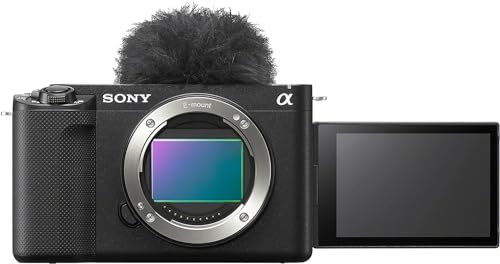
- 12.1MP full-frame sensor; AI processing unit; 5-axis in-body stabilisation; around 483 g; body only; no viewfinder, no hot shoe

- 26MP APS-C Super 35 sensor; BIONZ XR processor; 4K video with 6K oversampling; JPEG stills only, no RAW stills; no viewfinder, no mechanical shutter; body only
All 4 Picks at a Glance
| Product | Specs | Action |
|---|---|---|
| 1. Nikon Zf |
| Check price on Amazon |
| 2. Sony ZV-E1 |
| Check price on Amazon |
| 3. Sony FX30 |
| Check price on Amazon |
 4. Canon EOS R8 Kit |
| Check price on Amazon |
Key takeaways
- Sand spurrey is a low, sprawling pink flower on sandy ground. These five cameras handle close focus, wind, and bright sand for sharp photos.
Sand spurrey is easy to walk past and hard to forget once you have seen it well. The plant spreads low across sandy ground, sending out thin stems that carry small pink flowers no wider than a fingernail. It grows where the soil is thin and dry: coastal paths, sandy tracks, the edges of heaths, and bare patches in grassland. The flowers open in sun and close when cloud moves over, so a good session depends on light, timing, and a camera that can focus close without fuss.
This guide picks five cameras that suit that work. Each one takes a close-focusing lens, handles bright sand and moving air, and is honest about what it cannot do. The right choice depends on whether you want a full-frame sensor, a light body for long walks, or a video-first tool that also takes stills.
As an Amazon Associate, we earn from qualifying purchases.
What a Sand Spurrey Camera Needs
Sand spurrey flowers sit close to the ground, often no more than a few inches above the sand. That sets the whole brief. You need a camera that focuses close, holds focus on a small target while the wind moves it, and lets you work at ground level without lying flat in grit.
Close focus matters more than megapixels. The flower is small, and the plant sprawls, so the lens must get near enough to fill the frame with a single bloom or a small cluster. Every interchangeable-lens body in this guide needs a close-focusing lens before it is ready for tight sand spurrey work. A standard kit zoom that only focuses to half a metre will leave the flowers tiny in the frame. A macro lens, or a zoom with a short minimum focus distance, changes everything.
Wind is the second problem. Sand spurrey stems are thin, and a light breeze sets them swaying. A camera with fast, sticky autofocus helps, and so does a burst mode that lets you take a run of frames and keep the sharpest one. A tilting screen helps too, because it lets you frame from above the plant instead of pressing your face into the sand.
Bright sand is the third problem. Pale ground reflects a lot of light, and a camera meter can be fooled into darkening the whole scene. A good viewfinder or a bright screen lets you see what is happening, and exposure compensation lets you correct it. Weather sealing helps as well, because sand and salt air get into everything on a coastal path.
Weight is the last thing to weigh. Sand spurrey grows along paths, not beside car parks, so you will walk. A heavy body with a heavy lens becomes a burden by the third mile. The lightest camera here is under 500 grams, and the difference shows by the end of a long morning.## Sand Spurrey Is Not Red Campion
Sand spurrey and red campion share a family, Caryophyllaceae, and both carry pink flowers, so they are easy to confuse at a glance. They are different genera, and they grow in different places. Sand spurrey is Spergularia rubra. Red campion is Silene dioica. Knowing the difference changes where you look and how you shoot.
Sand spurrey is a low, sprawling plant. Its stems trail along the ground, its leaves are narrow and fleshy, and its flowers are small, pink, and five-petalled, carried on thin stalks. It likes open, sandy, well-drained ground and full sun. You find it on coastal paths, sandy tracks, and bare patches where little else grows.
Red campion is taller and bolder. It grows upright to knee height or more, with broader leaves and larger pink flowers that open wide. It likes hedgerows, woodland edges, and damp ditches, places with shade and richer soil. Where sand spurrey creeps, red campion stands.
The two plants also differ in habit. Sand spurrey flowers open in sun and close in cloud, and the plant often forms a loose mat. Red campion holds its flowers open through the day and forms clumps. If the plant in front of you is sprawling flat on sand with tiny pink blooms, it is sand spurrey. If it is standing tall in a hedgerow with big pink flowers, it is red campion.
1. Nikon Zf
- 24.5MP full-frame BSI sensor; EXPEED 7 processor; 8-stop in-body stabilisation; 96MP pixel shift mode; body only
The Nikon Zf is a full-frame camera with a retro body and modern internals. It pairs a 24.5MP BSI sensor with the EXPEED 7 processor, the same engine found in Nikon’s flagship bodies, and it offers up to 8 stops of in-body stabilisation. For sand spurrey, the stabilisation matters: it lets you shoot at slow shutter speeds while crouched low, and it steadies the frame when the wind moves the stems.
The Zf also offers a 96MP pixel shift mode, which combines a sequence of frames into one high-detail image. That mode needs a tripod and a still subject, so it suits a calm morning when the air is quiet, not a breezy afternoon. The camera has no built-in flash, and it is heavier than the lightest bodies here, so it suits a slow walk with a small bag rather than a long hike.
One honest limit: the Zf is sold body only, so you must add a close-focusing lens. A 40mm or 50mm macro lens suits it well. Stock of this body can vary, so check availability before you plan a trip around it.
2. Sony ZV-E1
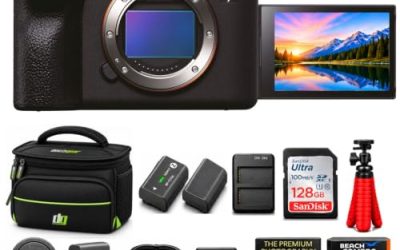
- 12.1MP full-frame sensor; AI processing unit; 5-axis in-body stabilisation; around 483 g; body only; no viewfinder, no hot shoe
The Sony ZV-E1 is the smallest full-frame camera in this guide, and its size is its main strength. At around 483 grams, it disappears into a small bag and stays out of the way on a long walk along sandy paths. It uses a 12.1MP full-frame sensor with an AI processing unit, and its autofocus locks onto small subjects and holds them while they move.
The low resolution is a fair trade. Twelve megapixels is enough for prints and for sharing online, but it gives less room to crop than the higher-resolution bodies here. A close-focusing lens solves that better than extra pixels.
The ZV-E1 has no viewfinder and no hot shoe, so you frame on the rear screen and you cannot add a flashgun or an external finder. On bright sand, the screen can be hard to see, so a shade or a hat helps. The camera is body only, and it needs a close-focusing lens for tight sand spurrey work.
3. Sony FX30
- 26MP APS-C Super 35 sensor; BIONZ XR processor; 4K video with 6K oversampling; JPEG stills only, no RAW stills; no viewfinder, no mechanical shutter; body only
The Sony FX30 is a cinema camera that also takes stills, and that split character shapes how it fits this plant. It uses a 26MP APS-C Super 35 sensor with a BIONZ XR processor, and it records 4K video with 6K oversampling. For a photographer who also films, it is a strong tool. For a stills-only shooter, it is a compromise.
Be clear about the limits. The FX30 shoots JPEG stills only, with no RAW stills, no viewfinder, and no mechanical shutter. That means less room to adjust exposure and colour after the fact, and framing happens on the rear screen. On bright sand, the screen can wash out, so you need to shade it or trust the histogram.
Where the FX30 earns its place is in movement. It handles video beautifully, and sand spurrey in a breeze is a fine subject for a short clip: stems swaying, light shifting, sand drifting. It also takes the same E-mount lenses as the ZV-E1, so a close-focusing lens works on both. It is body only, and it needs that lens before it is ready for tight sand spurrey work.
4. Canon EOS R8 Kit
- 24.2MP full-frame sensor; Dual Pixel CMOS AF II; RF 24-50mm f/4.5-6.3 IS STM kit lens included; model 5803C012; no in-body stabilisation; body around 461 g
The Canon EOS R8 kit is the only pick here that arrives ready to shoot. It pairs a 24.2MP full-frame body with the RF 24-50mm f/4.5-6.3 IS STM kit lens, and that lens focuses close enough for a full sand spurrey plant and a small cluster of flowers. It is the simplest way into this subject, and for many walkers it is the right one.
The R8 body is light, at around 461 grams, and its Dual Pixel CMOS AF II system tracks small subjects well. The sensor is full-frame, so low-light work at dawn and dusk is strong, and the colours from Canon’s full-frame bodies suit pink flowers against pale sand. The kit lens is compact and light, and it collapses for carrying.
Two limits deserve a plain note. The R8 has no in-body stabilisation, so steady hands or a faster shutter speed matter when the wind moves the stems. And while the kit lens focuses close, it is not a true macro lens: for a single tiny bloom filling the frame, you will still want a dedicated close-focusing lens. This is the kit listing, not the body-only listing, so the lens is included in the box.
5. Panasonic GH7
The Panasonic GH7 is a Micro Four Thirds camera built for video, and it brings serious tools to a small plant. It uses a 25.2MP BSI sensor with phase detection autofocus, and it records 5.7K video at up to 60 frames per second, with internal ProRes RAW recording. For a shooter who films sand spurrey as well as photographing it, the GH7 is the most capable video tool in this guide.
The Micro Four Thirds sensor is smaller than full frame, and that changes the look of the images. Depth of field is deeper at the same aperture, which helps when a sprawling plant has flowers at different distances, and the smaller sensor makes lenses lighter and shorter. The trade is more noise in low light and less background blur, though for a small plant on sand, deep focus is often what you want.
The GH7 is the heaviest body here, at around 805 grams with battery and card, and it is body only. It needs a close-focusing lens for tight sand spurrey work, and a Micro Four Thirds macro lens is light and easy to carry. If video matters to you, the GH7 is hard to beat. If stills alone matter, the full-frame bodies give more.
Specs
- 25.2MP Micro Four Thirds BSI sensor; phase detection autofocus; 5.7K/60p video; internal ProRes RAW recording; model DC-GH7BODY; body only; around 805 g
Field Notes for a Sand Spurrey Morning
Go early, when the light is low and the wind is calm. Sand spurrey flowers open in sun, so a bright morning suits them, but the best light is the first hour after dawn, when the sun is low and the sand is warm in tone. Work from the path and do not step onto the plants. The flowers are small, and a single careless foot can crush a whole patch.
Crouch rather than kneel, and use a tilting screen where the camera has one. A small beanbag or a folded jacket makes a steady rest for the camera at ground level. Take a run of frames when the wind moves the stems, and keep the sharpest. Watch the background: pale sand is clean and simple, and it suits a small pink flower better than a busy tangle of grass. Carry water and a hat, since sandy paths give no shade, and keep a lens cloth handy, because sand and salt air settle on glass.
Is sand spurrey the same as red campion?
No. Sand spurrey is Spergularia rubra, a low sprawling plant with small pink flowers on sandy ground. Red campion is Silene dioica, a taller plant with larger pink flowers that grows in hedgerows and woodland edges. They share the family Caryophyllaceae, but they are different genera with different habits and different homes.
Can I photograph sand spurrey with the kit lens?
Yes, for a whole plant or a small cluster. The R8 kit lens focuses close enough for that. For a single tiny bloom filling the frame, you need a dedicated close-focusing lens or a macro lens, whichever mount your camera uses.
Which camera is lightest for a long coastal walk?
The Sony ZV-E1, at around 483 grams, is the lightest body here. The Canon R8 body is close behind at around 461 grams, though its kit lens adds weight. The Panasonic GH7 is the heaviest, at around 805 grams with battery and card.
Do I need a tripod for sand spurrey?
Not usually. A tripod is useful for the Zf pixel shift mode on a calm morning, and for video, but most sand spurrey work is handheld at ground level. A small beanbag or a folded jacket makes a steadier rest than a tripod on soft sand.
More from Amazon
Programs that pair well with the guide above. Offers and eligibility are set by Amazon and may change.
Free shipping on eligible items, Prime Video and more. Eligible new members can start with a free trial.
Start a Prime free trialAudiobooks and podcasts to listen to on the go. Eligible new members can start with a free trial.
Try Audible freeAd-free music streaming. Eligible new subscribers can start with a free trial.
Try Music Unlimited freeA free business account with business pricing and bulk-buying tools for work, shop or home office.
Create a business accountAs an Amazon Associate we earn from qualifying purchases.