Our Short List of 3
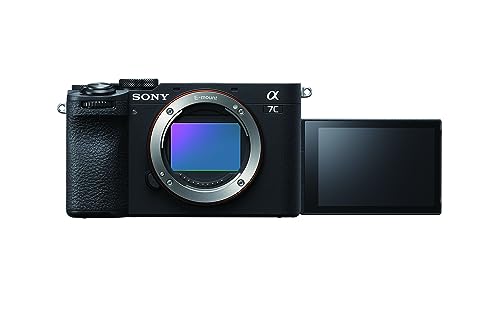
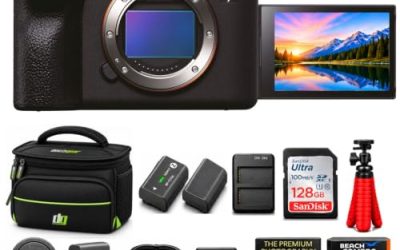
- 33MP full-frame Exmor R CMOS sensor, AI processing unit, 5-axis stabilisation, 10 fps continuous shooting, 4K 60p video, around 514 g with battery and card, body only, model ILCE7CM2/B.

- 33MP full-frame Exmor R back-illuminated CMOS sensor, 759-point Fast Hybrid AF, Real-time Eye AF, 5-axis SteadyShot stabilisation, 10 fps continuous shooting, 4K 60p video, dual card slots, around 658 g with battery and card, body only, model ILCE7M4/B.

- 24.5MP partially stacked full-frame CMOS sensor, EXPEED 7 processor, 20 fps RAW and 120 fps JPEG continuous shooting, 8-stop in-body stabilisation, 4,000-nit electronic viewfinder, 6K 60p N-RAW video, dual card slots, body only, model 1890.
All 4 Picks at a Glance
| Product | Specs | Action |
|---|---|---|
| 1. Sony A7C II |
| Check price on Amazon |
| 2. Sony A7 IV |
| Check price on Amazon |
| 4. Nikon Z6 III |
| Check price on Amazon |
 5. Fujifilm X100VI |
| Check price on Amazon |
Our Top Picks
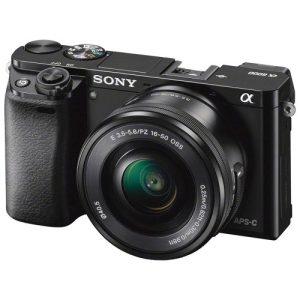
- Sony Alpha 7C II Full-Frame Interchangeable Lens Camera4.902.5 x 4.9 x 2.8 inches0.95 PoundsCheck on Amazon
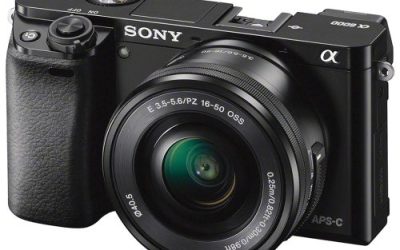
- Sony Alpha 7 IV Full-frame Mirrorless Interchangeable Lens5.45 x 3.80 x 2.83 inches9.6 x 6.5 x 6.7 inches2.2 PoundsCheck on Amazon
Laburnum turns an ordinary garden into a golden tunnel for a few short weeks each year. The tree carries its flowers in long hanging chains, and when the light catches them from behind, the whole canopy glows. It is one of the most generous subjects a garden photographer can find, and also one of the most demanding, because the flowers move in the breeze, the yellow can blow out in bright sun, and the best chains often hang just out of easy reach.
This guide looks at five cameras that handle laburnum well. Every one of them is listed with its real Amazon ASIN, and every one of them has an honest trade-off stated beside it.
As an Amazon Associate, we earn from qualifying purchases.
What a Laburnum Camera Needs
A laburnum chain is long, thin, and full of small flowers. A camera that only shoots wide will turn it into a yellow smear, while a camera that only shoots tight will lose the sense of the tree. The best laburnum camera gives you both: enough resolution to crop into a single chain, and a lens that can focus close enough to fill the frame with a handful of flowers.
Yellow is a hard colour to hold. In direct sun it clips easily, washing out the detail in the petals. A camera with good highlight control and a sensor that keeps colour in the bright tones will save more shots than a camera with a bigger burst rate. Look for a body that lets you dial in exposure compensation quickly, and one that shows a live histogram or a highlight warning in the viewfinder.
Laburnum flowers sway. A gentle breeze moves a whole chain by a few centimetres, which is enough to ruin focus at close range. Fast, sticky autofocus matters more here than raw speed. A body with subject detection that locks onto flowers and holds them while they drift will keep more frames sharp than a body that hunts every time the wind gusts.
Finally, remember that every interchangeable-lens body below needs a close-focusing lens before it is ready for tight laburnum work. None of these bodies ships with a lens that focuses close enough on its own. A short macro lens, or a zoom with a decent minimum focus distance, is part of the kit, not an optional extra.
Laburnum Is Not Broom
Laburnum and broom are easy to confuse at a glance, and they belong to the same family, Fabaceae, so the mix-up is understandable. They are different genera, though, and they look and grow very differently once you know what to watch for.
Laburnum, Laburnum anagyroides, is a small tree. It grows in gardens and parks, with a single woody trunk and a rounded crown. Its flowers hang down in long chains, sometimes thirty centimetres long, each chain carrying dozens of small yellow pea flowers.
Broom, Cytisus scoparius, is a shrub, not a tree. It grows on heathland and roadsides, with smooth green stems and no real trunk to speak of. Its yellow flowers sit singly along the stems, not in hanging chains, and the plant has a loose, open shape that looks nothing like a laburnum crown. Broom was covered in an earlier article in this series.
The practical difference for a photographer is height and habit. Laburnum flowers hang above head height, so you shoot upward, often against the sky. Broom flowers sit at waist height, so you shoot across or downward.
There is also a safety difference that matters more than any camera setting. Laburnum seeds are poisonous. Every part of the seed pod carries the toxin, and the pods look like small dark peas that a child might want to pick. Never pick laburnum flowers or pods, never eat any part of the tree, and photograph only from the path. The flowers are at their best from a few steps back anyway, where the whole chain fits in the frame.
1. Sony A7C II
- 33MP full-frame Exmor R CMOS sensor, AI processing unit, 5-axis stabilisation, 10 fps continuous shooting, 4K 60p video, around 514 g with battery and card, body only, model ILCE7CM2/B.
The Sony A7C II is the smallest full-frame camera in this guide, and that is its whole appeal. It packs a 33MP full-frame sensor into a body that weighs around 514 g with battery and card, so it disappears into a small bag and stays out of the way while you walk a garden looking for the best tree.
The AI processing unit is the feature that earns this camera its place. It recognises subjects and holds focus on them while they move, which is exactly what a swaying laburnum chain needs. Set the focus area wide, let the camera find the flowers, and it will track them through a gust without hunting. The 5-axis stabilisation helps too, steadying the frame when you are shooting upward at a slow shutter speed in the shade of the canopy.
The trade-off is the viewfinder. It is small, and on a bright day it can feel cramped when you are trying to judge exposure on a yellow chain against a bright sky.
2. Sony A7 IV
- 33MP full-frame Exmor R back-illuminated CMOS sensor, 759-point Fast Hybrid AF, Real-time Eye AF, 5-axis SteadyShot stabilisation, 10 fps continuous shooting, 4K 60p video, dual card slots, around 658 g with battery and card, body only, model ILCE7M4/B.
The Sony A7 IV is the hybrid workhorse of this group, and it is the camera to choose if you want one body that does everything well. Its 33MP full-frame sensor matches the A7C II on resolution, but the body is larger, the grip is deeper, and the controls fall more easily under your fingers when you are working quickly.
The autofocus is the strongest in this guide. With 759 phase-detection points and Real-time Eye AF, the A7 IV locks onto a flower cluster and stays there, even when the chain swings in the wind. The 5-axis SteadyShot system steadies the frame, and the dual card slots give you a backup copy of every frame, which matters when you have walked an hour to reach a tree that only flowers for a few weeks.
The trade-off is weight and bulk. At around 658 g with battery and card, the A7 IV is noticeably heavier than the A7C II, and with a macro lens attached it becomes a two-handed camera. That is a fair exchange for the handling and the autofocus, but if you want the lightest possible kit, the A7C II wins.
3. Nikon Z5 II
The Nikon Z5 II is the value pick in this guide, and it is also one of the most capable. Its 24.5MP full-frame BSI sensor is backed by the EXPEED 7 processor, the same engine found in Nikon’s flagship bodies, and the combination gives you clean files, quick autofocus, and 4K 60p video with 12-bit N-RAW.
For laburnum, the standout feature is the viewfinder. At 3,000 nits it is bright enough to judge exposure on a yellow chain in full sun, which is exactly the situation where most cameras struggle. The 7.5-stop in-body stabilisation steadies the frame when you are shooting upward at a slow shutter speed, and autofocus that works down to -10 EV keeps the camera useful in the deep shade under a laburnum crown.
The trade-off is resolution. At 24.5MP the Z5 II gives you less room to crop than the 33MP Sonys or the 40.2MP Fujifilm below, so you need to frame tighter in the field rather than fixing the composition later. With a good close-focusing lens that is rarely a problem, but it is worth knowing before you buy.
Specs
- 24.5MP full-frame BSI CMOS sensor, EXPEED 7 processor, AF down to -10 EV, 7.5-stop in-body stabilisation, 3,000-nit electronic viewfinder, 4K 60p video, 12-bit N-RAW, dual SD card slots, body only, model 1680.
4. Nikon Z6 III
- 24.5MP partially stacked full-frame CMOS sensor, EXPEED 7 processor, 20 fps RAW and 120 fps JPEG continuous shooting, 8-stop in-body stabilisation, 4,000-nit electronic viewfinder, 6K 60p N-RAW video, dual card slots, body only, model 1890.
The Nikon Z6 III is the speed pick in this guide. Its partially stacked 24.5MP sensor reads out far faster than a conventional sensor, and that speed shows up everywhere: 20 fps in RAW, 120 fps in JPEG, and an electronic viewfinder that stays bright and clear even when the flowers are moving in the wind.
For laburnum, the Z6 III shines when the breeze picks up. The fast readout keeps the viewfinder live and the autofocus locked while a chain swings, and the 8-stop stabilisation holds the frame steady when you are shooting at a slow shutter speed in the shade.
The trade-off is the same as the Z5 II: 24.5MP gives you less cropping room than the higher-resolution bodies here. The Z6 III also runs through its battery faster when you use the high-speed modes, so carry a spare if you plan a long morning in the garden.
5. Fujifilm X100VI
- 40.2MP APS-C X-Trans CMOS 5 HR sensor, fixed 23mm f/2 lens, 6-stop in-body stabilisation, 20 film simulations including REALA ACE, 6.2K 30p video, built-in 4-stop ND filter, model 16821822.
The Fujifilm X100VI is the odd one out in this guide, and it earns its place by being the most enjoyable camera to carry. It is a fixed-lens compact with a 40.2MP APS-C sensor, a 23mm f/2 lens, and twenty film simulations including REALA ACE, all in a body that slips into a jacket pocket.
For laburnum, the X100VI works best as a whole-scene camera. Its 23mm lens, roughly 35mm in full-frame terms, is wide enough to take in a whole laburnum tunnel, and the 40.2MP sensor gives you room to crop into a single chain when the light is right.
The trade-off is honest and absolute: the lens is fixed at 23mm, so you cannot zoom in on a distant chain or swap in a macro lens for a tight flower portrait. If you want to fill the frame with a single laburnum flower, this is the wrong camera. If you want to capture the whole tree, the path beneath it, and the light falling through the canopy, it is one of the most rewarding cameras you can carry.
How the Five Compare
The two Sonys are the natural pair in this group. The A7C II is the lighter, smaller body, and the A7 IV is the larger, better-handling one, and both share the same 33MP sensor and the same excellent autofocus. Choose the A7C II if you walk a long way and want the lightest kit, and choose the A7 IV if you want the deeper grip, the dual card slots, and the more confident handling.
The two Nikons are also a natural pair. The Z5 II is the value choice, with the bright viewfinder and the clean 24.5MP files, while the Z6 III is the speed choice, with the partially stacked sensor, the faster burst, and the brighter viewfinder. Both need a close-focusing lens for tight laburnum work, and both reward a photographer who frames carefully rather than cropping later.
The X100VI sits apart from the other four. It cannot do what an interchangeable-lens body can do, and it does not try to. What it offers instead is a camera you will actually carry everywhere, a lens that sees the whole scene, and colours that need almost no work after the fact.
Is laburnum the same as broom?
No. Laburnum is a small tree with hanging chains of yellow flowers, while broom is a shrub with single yellow flowers along green stems. Both belong to the Fabaceae family, but they are different genera, Laburnum and Cytisus, and they grow in different places and photograph very differently.
Can I pick a laburnum flower for a closer photo?
No. Laburnum seeds are poisonous, and picking damages the tree. Photograph from the path instead, using a close-focusing lens to fill the frame with a single chain without touching the plant.
Which camera is best for laburnum in low light?
The Nikon Z5 II and Z6 III handle low light well, with autofocus that works in deep shade and stabilisation that steadies slow shutter speeds. The Sony A7 IV is also strong here.
Do I need a macro lens for laburnum?
Not always, but it helps a great deal. A zoom with a short minimum focus distance can fill the frame with a single chain, while a true macro lens lets you photograph individual flowers. The X100VI is the exception in this guide: its fixed 23mm lens cannot focus close enough for a tight flower portrait, so it suits whole-scene shots instead.
Laburnum gives you a short window each year, and the cameras in this guide all make the most of it in different ways. Pick the one that matches how you like to walk, how you like to frame, and how close you like to get, then go and find a tree in full flower.
More from Amazon
Programs that pair well with the guide above. Offers and eligibility are set by Amazon and may change.
Free shipping on eligible items, Prime Video and more. Eligible new members can start with a free trial.
Start a Prime free trialAudiobooks and podcasts to listen to on the go. Eligible new members can start with a free trial.
Try Audible freeAd-free music streaming. Eligible new subscribers can start with a free trial.
Try Music Unlimited freeA free business account with business pricing and bulk-buying tools for work, shop or home office.
Create a business accountAs an Amazon Associate we earn from qualifying purchases.