Our Short List of 3
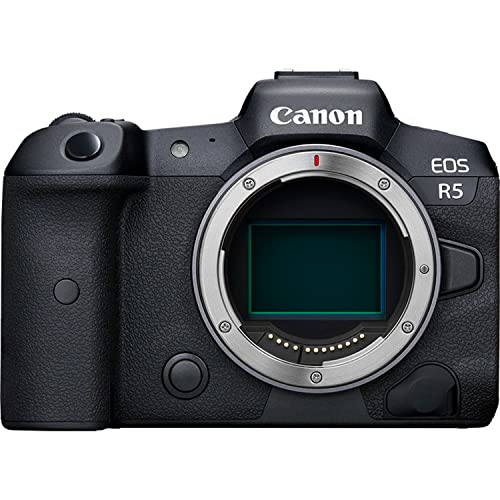
- 45MP full-frame CMOS sensor, DIGIC X processor, 20 fps electronic shutter, 8K 30p video, 8-stop in-body stabilisation, model 4147C002, body only, 738 g

- 50.1MP full-frame stacked CMOS sensor, BIONZ XR processor, AI processing unit, 30 fps continuous shooting, 8K video, body only, model ILCE-1M2

- 45.7MP full-frame stacked CMOS sensor, EXPEED 7 processor, 8.3K 60p N-RAW video, 120 fps burst, blackout-free electronic viewfinder, body only
All 5 Picks at a Glance
| Product | Specs | Action |
|---|---|---|
| 1. Canon EOS R5 |
| Check price on Amazon |
| 2. Sony A1 II |
| Check price on Amazon |
| 3. Nikon Z8 |
| Check price on Amazon |
 4. OM System OM-1 Mark II Kit |
| Check price on Amazon |
 5. Fujifilm X-H2S |
| Check price on Amazon |
Our Top Picks
Large bittercress is a plant that rewards patience. It grows where the ground stays damp all year, beside shaded streams and through wet woodland, and its large white four-petalled flowers open above leaves that shine after rain. A camera that suits this plant needs to focus close, hold detail in soft light, and keep working when the air is thick with moisture. This guide looks at five cameras that can do that job, with honest notes on what each one gives up in return.
As an Amazon Associate, we earn from qualifying purchases.
Large Bittercress at a Glance
Large bittercress, Cardamine amara, belongs to the Brassicaceae family, the same wide family that holds wild cabbage, charlock, and shepherd’s purse. It is a plant of wet places. You find it along stream banks, in damp woodland clearings, and on ground that never quite dries out. The plant grows taller than many of its bittercress cousins, with upright stems and leaves that carry a soft, fresh green through the spring and early summer.
The flowers are the reason to bring a camera. Each bloom is large for a bittercress, white with a faint lilac tint, and made of four broad petals. They open in loose clusters at the top of the stem, above dark green leaves that often show a purple flush on their undersides.
Photograph large bittercress from the path. The ground beside a stream is soft, and the plant’s roots sit in soil that is easy to damage. Keep your feet on firm ground, work with a long lens or a close-focusing lens from the bank, and never pick the plant. A picture taken with care lasts longer than a stem in a vase, and the next person to walk the path will find the flowers still there.
What a Camera Needs Beside a Shaded Stream
Damp woodland is not kind to cameras. The light is soft and often dim, the air is humid, and the ground underfoot is muddy. A good camera for large bittercress needs four things above all else: close focusing, clean files in low light, some defence against moisture, and a body you are happy to carry along a slippery bank.
Close focusing matters most. Large bittercress flowers are large for a bittercress, but they are still small flowers. A lens that cannot focus close will leave you with a wide view of the whole plant and no detail in the petals. Every interchangeable-lens camera in this guide needs a close-focusing lens for tight flower work, with one exception that we note below.
Low light matters next. Under a woodland canopy, the light can drop several stops below open daylight. A sensor that holds detail at higher ISO settings will let you keep the shutter fast enough to freeze a flower moving in a breeze.
Moisture defence is worth having, even if it is only basic sealing. Mist hangs in wet woodland, rain arrives without warning, and a camera that can shrug off a few drops will keep you shooting when a lesser body has to go back in the bag. None of the cameras here is a substitute for a rain cover in a downpour, but sealing buys you time.
1. Canon EOS R5
- 45MP full-frame CMOS sensor, DIGIC X processor, 20 fps electronic shutter, 8K 30p video, 8-stop in-body stabilisation, model 4147C002, body only, 738 g
The Canon EOS R5 is the resolution king of this group. Its 45 megapixel full-frame sensor records fine petal veins and the soft lilac tint of large bittercress flowers with room to crop, which matters when you cannot step closer to the plant.
The honest trade is bulk and files. The R5 is a full-frame body, and it needs a close-focusing lens for tight large bittercress work, which adds weight and cost to the bag. Its 45 megapixel files are large, so a morning beside a stream can fill a memory card faster than you expect.
Note that the R5 body in this guide is model 4147C002, not 4147C005, so check the model number on the listing before you order.
2. Sony A1 II
- 50.1MP full-frame stacked CMOS sensor, BIONZ XR processor, AI processing unit, 30 fps continuous shooting, 8K video, body only, model ILCE-1M2
The Sony A1 II is the most capable camera in this guide, and the most demanding of its owner. Its 50.1 megapixel stacked full-frame sensor pairs with an AI processing unit that recognises subjects with remarkable accuracy, and the autofocus holds a flower steady even when the light drops under a thick canopy. At 30 frames per second, it can catch a flower at the exact moment a gust of wind dies down.
The honest trade is complexity and weight. The A1 II is a flagship body with a flagship’s menu depth, and it rewards a photographer who is willing to learn it. It needs a close-focusing lens for tight large bittercress work, like every interchangeable-lens body here, and the full-frame glass that does the job best is heavy.
3. Nikon Z8
- 45.7MP full-frame stacked CMOS sensor, EXPEED 7 processor, 8.3K 60p N-RAW video, 120 fps burst, blackout-free electronic viewfinder, body only
The Nikon Z8 brings flagship speed to a body that costs less than a true flagship, and it is a strong pick for large bittercress. Its 45.7 megapixel stacked full-frame sensor records fine detail in the petals, and the blackout-free viewfinder makes it easy to follow a flower swaying in a breeze. The electronic shutter is silent, which suits quiet woodland, and it reaches 120 frames per second at reduced resolution for those moments when the wind will not settle.
The honest trade is size and appetite. The Z8 is a substantial body, and with a close-focusing lens attached it is a full bag on a muddy walk. Its files are large, and it gets through batteries faster than the lighter cameras in this guide, so pack a spare.
4. OM System OM-1 Mark II Kit
- 20.4MP Micro Four Thirds stacked CMOS sensor, TruePic X processor, M.Zuiko 12-40mm f/2.8 PRO II lens included, IP53 weather sealing, kit, model V210041BU000
The OM System OM-1 Mark II kit is the exception in this guide, and it may be the smartest pick for large bittercress. It ships with the M.Zuiko 12-40mm f/2.8 PRO II lens, and that lens already focuses close, so you can frame tight flower shots without buying anything else. The Micro Four Thirds sensor gives the lens twice the effective reach of its focal length, which helps when the best flowers grow on the far bank of a stream.
The honest trade is sensor size. A Micro Four Thirds sensor cannot match a full-frame sensor for clean files in very dim light, and its depth of field is deeper at the same aperture, which can make it harder to blur a messy background. But for a damp woodland walk, where light weight and close focusing matter more than absolute resolution, the OM-1 Mark II kit is hard to beat.
5. Fujifilm X-H2S
- 26.1MP APS-C X-Trans CMOS 5 HS sensor, X-Processor 5, 6.2K 30p video, 7-stop in-body stabilisation, body only, model 16756924
The Fujifilm X-H2S is the speed pick of this group, and it brings a different flavour to large bittercress work. Its 26.1 megapixel APS-C stacked sensor reads out fast, the X-Processor 5 keeps autofocus quick in dim woodland, and the 7-stop stabilisation lets you shoot handheld at shutter speeds that would blur on other bodies. The film simulations are a quiet joy too, giving woodland greens and pale flower whites a gentle, natural look straight out of the camera.
The honest trade is the lens. The X-H2S is a body-only camera, and it needs a close-focusing lens for tight large bittercress work. Fujifilm’s macro lenses are excellent, but they add to the cost of the kit. If you already own X-mount glass, the X-H2S is an easy recommendation; if you do not, budget for a close-focusing lens alongside the body.
How the Five Compare
Put side by side, the five cameras split into two groups. The Canon EOS R5, Sony A1 II, and Nikon Z8 are full-frame bodies with large sensors and superb files, and they reward photographers who want the finest detail and the cleanest low-light images. The OM System OM-1 Mark II kit and the Fujifilm X-H2S are lighter, smaller, and easier to carry along a muddy bank, and they give up some low-light performance in return.
The right pick depends on how you work. If you already own full-frame glass and a close-focusing lens, take the R5, the A1 II, or the Z8. If you want a complete kit that is ready for the stream bank on day one, take the OM-1 Mark II kit. If you want a light body with a larger sensor and you are willing to add a close-focusing lens, take the X-H2S.
Field Notes for a Damp Woodland Morning
Begin at first light, when the woodland is still and the flowers hold dew. Large bittercress looks its best in the soft light of early morning, before the sun climbs over the canopy and throws hard shadows across the stream.
Work from the path and let the lens do the reaching. A close-focusing lens or a short telephoto will frame a single flower without you stepping onto soft ground. Kneel on a dry patch if you must get low, and keep your bag on a rock or a dry log rather than on wet leaves. A small towel in the bag is worth its weight for wiping mist from the front element.
Watch the wind. A flower that sways in a breeze will blur at slow shutter speeds, so raise the ISO a little rather than fighting the movement. The stabilisation in these cameras helps, but it cannot freeze a moving stem. A burst of frames will often catch one sharp moment among several soft ones.
Telling Large Bittercress From Hairy Bittercress
Large bittercress is not hairy bittercress, and the two plants are easy to tell apart once you know what to look for. Both belong to the same genus, Cardamine, and both grow in damp places, but they are different species with different habits.
Large bittercress, Cardamine amara, is the taller plant. It grows beside streams and in wet woodland, with upright stems and large white four-petalled flowers that carry a faint lilac tint. The leaves are smooth and fresh green, and the plant stands out in its damp habitat because of the size of its blooms.
Hairy bittercress, Cardamine hirsuta, is a small early-spring plant. It grows low to the ground, often in gardens, on paths, and in bare soil, with hairy stems and small white flowers that are much smaller than those of large bittercress. It flowers early in the year and finishes before large bittercress reaches its best. There is no delivered generic bittercress article, and neither plant should be confused with the other.
Frequently Asked Questions
Can I photograph large bittercress without a close-focusing lens?
Yes, you can frame the whole plant and its setting with a standard zoom, and the pale flowers show well against dark woodland. For tight shots of a single flower, though, a close-focusing lens makes a real difference. The OM-1 Mark II kit is the exception here, because its included 12-40mm lens already focuses close.
Is large bittercress the same plant as hairy bittercress?
No. Large bittercress is Cardamine amara and hairy bittercress is Cardamine hirsuta. They share the genus Cardamine and the family Brassicaceae, but they are different species. Large bittercress is a taller damp-ground plant with larger lilac-tinged white flowers, while hairy bittercress is a small early-spring plant with hairy stems and small white flowers.
Which of the five cameras is lightest for a muddy woodland walk?
The OM System OM-1 Mark II kit keeps the whole bag light, because the body is compact and the included lens is small. The Fujifilm X-H2S is the next lightest body, though it needs a separate close-focusing lens. The three full-frame bodies are heavier, and their lenses add more weight still, so they suit photographers who drive to the site rather than walking a long muddy path.
Do I need weather sealing for large bittercress photography?
Sealing helps, because large bittercress grows in damp places where mist and drizzle are common. The OM-1 Mark II has the strongest sealing in this group, and the other four bodies all offer solid protection against light rain. In a real downpour, use a rain cover and keep the camera under your coat between shots.
Large bittercress asks little of a photographer: a path to walk, a lens that focuses close, and a camera that keeps working in damp air. Any of the five cameras in this guide can do the job. Pick the one that fits your bag, your hands, and the way you like to work, and the flowers beside the stream will do the rest.
More from Amazon
Programs that pair well with the guide above. Offers and eligibility are set by Amazon and may change.
Free shipping on eligible items, Prime Video and more. Eligible new members can start with a free trial.
Start a Prime free trialAudiobooks and podcasts to listen to on the go. Eligible new members can start with a free trial.
Try Audible freeAd-free music streaming. Eligible new subscribers can start with a free trial.
Try Music Unlimited freeA free business account with business pricing and bulk-buying tools for work, shop or home office.
Create a business accountAs an Amazon Associate we earn from qualifying purchases.