Our Short List of 3

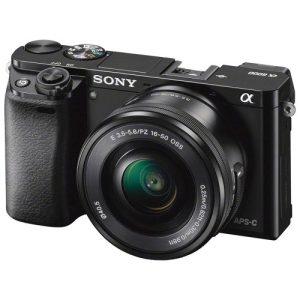
- 24.5MP full-frame BSI CMOS sensor; EXPEED 7 processor; Nikon Z mount; in-body stabilisation; 4K video oversampled from 6K; 96MP pixel-shift mode; vari-angle screen; dual card slots.
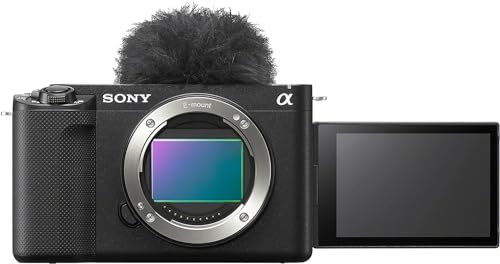
- 12.1MP full-frame Exmor R sensor; Sony E mount; 5-axis in-body stabilisation; 4K 60p with 10-bit 4:2:2; AI-based subject recognition autofocus; fully articulating screen; no viewfinder; no hot shoe.

- 26MP APS-C Super 35 BSI CMOS sensor; BIONZ XR processor; Sony E mount; Dual Base ISO; S-Cinetone; 4K video oversampled from 6K; JPEG stills only, no RAW stills; no viewfinder; no mechanical shutter.
All 4 Picks at a Glance
| Product | Specs | Action |
|---|---|---|
| 1. Nikon Zf |
| Check price on Amazon |
| 2. Sony ZV-E1 |
| Check price on Amazon |
| 3. Sony FX30 |
| Check price on Amazon |
 4. Canon EOS R8 Kit |
| Check price on Amazon |
Key takeaways
- Five cameras for bog stitchwort photography in 2026, compared for close focus, wet-ground handling, low light, and honest trade-offs on the bog.
Bog stitchwort is a small, quiet plant that rewards a slow morning and a camera that can work close to the ground. It grows low across wet, boggy ground, threading thin stems through sphagnum and damp grass, and its small white five-petalled flowers are easy to walk past without ever noticing them. A camera that works well at ground level and focuses close will bring out far more of this plant.
As an Amazon Associate, we earn from qualifying purchases.
Why Bog Stitchwort Rewards a Careful Camera
Bog stitchwort, Stellaria alsine, belongs to the family Caryophyllaceae, the pink family. It is a low, sprawling plant of wet places, found on boggy ground, in damp hollows, and along the soggy edges of moorland pools. Its stems are weak and trailing, often rooting where they touch the wet surface, and its narrow leaves sit in opposite pairs along the stem. The flowers are small and white, with five petals that are deeply split, so each petal looks almost like two.
The subject sits at ankle height or lower, the ground is wet, and the light is often soft and grey. A tilting or articulating screen lets you frame from ground level without lying flat in the wet, close focusing matters more than a long zoom, and weather sealing helps in damp air. Stay on paths, step only on firm ground, and never pick the plant.
Bog Stitchwort or Wood-Stitchwort: Telling the Two Apart
Bog stitchwort is not wood-stitchwort, and confusing the two is easy if you only know the shared part of the name. Bog stitchwort is Stellaria alsine. Wood-stitchwort is Stellaria nemorum. The two sit in the same genus, Stellaria, but they are different species, and they grow in different places and look different once you know what to check.
Bog stitchwort is a low, wet-ground plant. Its stems trail along the surface of boggy ground, its leaves are narrow, and its flowers are small white five-petalled blooms held close to the ground. Wood-stitchwort is a taller woodland plant. It grows upright in damp, shady woodland, often reaching knee height, with broader leaves and larger white flowers that stand well above the leaf litter. Open, wet bog means bog stitchwort. Deep shade under trees means wood-stitchwort. Wood-stitchwort has already been covered in an earlier article in a different batch.
What to Look for in a Camera for Bog Stitchwort
The first thing to check is close focusing. Every camera in this guide is an interchangeable-lens body, which means every one of them needs a close-focusing lens for tight bog stitchwort work. A body alone cannot fill the frame with a flower a few millimetres across. Consider a macro lens or a close-up attachment if you want the flower to fill the frame. The Canon kit lens focuses reasonably close at its wide end.
The second thing to check is the screen and the autofocus. A fully articulating screen, or at least a tilting one, lets you compose from ground level while kneeling on a dry mat beside the path. All five cameras here have screens that tilt or articulate. For autofocus, use a small, movable focus point placed on the flower, since modern subject detection is tuned for people and animals rather than small white blooms. The third thing to check is weather sealing and stabilisation. A bog morning brings mist, drizzle, and wet hands, so good sealing helps. In-body stabilisation is a real advantage at ground level with a slow shutter in soft light, and several of the cameras below offer it.
The Five Cameras
1. Nikon Zf
- 24.5MP full-frame BSI CMOS sensor; EXPEED 7 processor; Nikon Z mount; in-body stabilisation; 4K video oversampled from 6K; 96MP pixel-shift mode; vari-angle screen; dual card slots.
The Nikon Zf is a full-frame mirrorless camera with a retro design, built around a 24.5MP BSI CMOS sensor and the EXPEED 7 processor. It uses the Nikon Z mount, offers in-body stabilisation, and records 4K video oversampled from 6K.
For bog stitchwort, the Zf has two clear strengths: the full-frame sensor keeps detail and colour clean in soft, flat light, and the in-body stabilisation helps when shooting handheld at a low angle with a slow shutter. The trade-offs are honest ones. The Zf is sold as a body only, so you must add a close-focusing lens for tight work. Before ordering, confirm the seller on the listing, since this model has appeared through several different sellers and the listing details can vary.
2. Sony ZV-E1
- 12.1MP full-frame Exmor R sensor; Sony E mount; 5-axis in-body stabilisation; 4K 60p with 10-bit 4:2:2; AI-based subject recognition autofocus; fully articulating screen; no viewfinder; no hot shoe.
The Sony ZV-E1 is a compact full-frame vlogging camera built around a 12.1MP Exmor R sensor, with the Sony E mount, 5-axis in-body stabilisation, and 4K recording at up to 60p with 10-bit 4:2:2 colour. Its fully articulating screen flips around for low-angle framing. It is one of the smallest full-frame bodies available.
For bog stitchwort, the ZV-E1 has a clear strength in its size and its stabilisation. It is easy to hold at ground level, and the stabilisation helps in soft light. The 12.1MP sensor also performs well in low light, keeping noise down when the bog is under heavy cloud.
The trade-offs are equally clear. The ZV-E1 has no viewfinder and no hot shoe, so you will compose entirely on the rear screen and you cannot mount a flash or an accessory on a hot shoe. The 12.1MP resolution also limits how far you can crop into a small flower. Like every body here, it needs a close-focusing lens for tight bog stitchwort work.
3. Sony FX30
- 26MP APS-C Super 35 BSI CMOS sensor; BIONZ XR processor; Sony E mount; Dual Base ISO; S-Cinetone; 4K video oversampled from 6K; JPEG stills only, no RAW stills; no viewfinder; no mechanical shutter.
The Sony FX30 is a Super 35 cinema camera built around a 26MP APS-C BSI CMOS sensor and the BIONZ XR processor, with the Sony E mount, Dual Base ISO, and S-Cinetone colour. It records 4K video oversampled from 6K. For still photography it is an unusual choice, and that is worth saying plainly.
For bog stitchwort, the FX30 has one genuine strength for stills: its 26MP sensor records detailed JPEG stills, and the APS-C crop gives a little extra reach from any lens, which helps when you cannot step closer to a delicate plant.
The trade-offs are significant. The FX30 records JPEG stills only, with no RAW stills, so you have less room to adjust exposure and colour afterwards. It has no viewfinder, so all framing happens on the rear screen. It has no mechanical shutter, using an electronic shutter for stills instead. If you want a camera mainly for still photographs of bog stitchwort, the other four bodies in this guide are more straightforward choices.
4. Canon EOS R8 Kit
- 24.2MP full-frame CMOS sensor; DIGIC X processor; Canon RF mount; RF 24-50mm f/4.5-6.3 IS STM kit lens; 4K 60p oversampled from 6K; Dual Pixel CMOS AF II; about 461 gram body; no in-body stabilisation; single card slot.
The Canon EOS R8 kit pairs a 24.2MP full-frame CMOS sensor and DIGIC X processor with the RF 24-50mm f/4.5-6.3 IS STM lens, in one of the lightest full-frame kits available. The body weighs about 461 grams, and the kit lens keeps the whole package small enough to carry all morning.
For bog stitchwort, the R8 kit has two clear strengths. The included 24-50mm lens focuses reasonably close at its wide end, so you can fill more of the frame with a small flower without buying a second lens on the first day.
The trade-offs are honest ones. The R8 has no in-body stabilisation, so stabilisation comes only from the lens, and the kit lens is a slow variable-aperture zoom, which limits how much light it gathers in the soft light of a bog. The kit lens is also a general-purpose zoom rather than a true close-up lens, so for the tightest flower portraits you will still want a close-focusing lens later. Note that the kit listed here is the RF 24-50mm kit, model 5803C012, and the body-only version is a different listing that is not the one recommended here.
5. Panasonic GH7
The Panasonic GH7 is a Micro Four Thirds mirrorless camera built around a 25.2MP BSI CMOS sensor, with phase detection autofocus, Real-Time LUT, and internal ProRes RAW video recording. It supports 5.7K video at up to 60p and 4K at up to 120p, and its burst shooting reaches 14 frames per second. The body is weather sealed and uses dual card slots, with one CFexpress Type B slot and one SD slot.
For bog stitchwort, the GH7 has a strength that the full-frame bodies do not: the Micro Four Thirds crop factor doubles the effective focal length of any lens, which gives more reach and more depth of field from the same lens. That extra depth of field is genuinely useful for a small flower, because it keeps more of the bloom sharp in a single frame.
The trade-offs are honest ones. The smaller sensor gathers less light than a full-frame sensor, so image noise appears sooner in the soft, flat light of a bog, and you will need to be more careful with exposure. Like every body here, it needs a close-focusing lens for tight bog stitchwort work.
Specs
- 25.2MP Micro Four Thirds BSI CMOS sensor; phase detection autofocus; Real-Time LUT; internal ProRes RAW recording; 5.7K 60p and 4K 120p video; 14 frames per second burst; weather-sealed body; dual card slots.
How the Five Compare
The Nikon Zf, the Sony ZV-E1, and the Canon EOS R8 are full-frame bodies, which helps in soft light. The Sony FX30 and the Panasonic GH7 use smaller sensors, which gives them extra reach and extra depth of field from the same lens, at the cost of more noise in low light.
If you want the simplest path to good bog stitchwort photographs, the Canon EOS R8 kit is the easiest place to begin, because it arrives with a lens that focuses close enough for a first session. The Zf leads on stills quality, the ZV-E1 on lightness, and the GH7 on depth of field. The Sony FX30 belongs in the bag of someone who also wants to film the bog. Every one of the five needs a close-focusing lens for tight work, and that lens matters more than the differences between the bodies.
Field Notes for a Bog Morning
Arrive early, when the light is soft and the wind is low. Bog stitchwort flowers are small and light, and even a gentle breeze will move them enough to blur a close shot. Calm, early light suits the white petals.
Kneel on a dry mat or a folded waterproof jacket beside the path, and keep your bag on the path rather than on the bog surface. Use the articulating screen to frame from ground level, and place a single focus point on the nearest petal. Take a test shot and check at full magnification that the petals are sharp and the white has detail. Bring a small cloth for the front element and spare batteries, because mist settles on glass quickly and cold shortens battery life.
Frequently Asked Questions
Is bog stitchwort the same plant as wood-stitchwort?
No. Bog stitchwort is Stellaria alsine, a low wet-ground plant with small white five-petalled flowers that trails across boggy ground. Wood-stitchwort is Stellaria nemorum, a taller woodland plant with broader leaves and larger white flowers. The two share the genus Stellaria but are different species, and they grow in different habitats.
Which of these five cameras is best for a beginner photographing bog stitchwort?
The Canon EOS R8 kit is the easiest place to begin, because it arrives with the RF 24-50mm lens included, so you can photograph bog stitchwort on the first day without buying a second lens. A close-focusing lens is still worth adding later for the tightest flower portraits.
Do I need a macro lens for bog stitchwort?
You need a lens that focuses close, and a macro lens is the most direct way to get it. The flowers are only a few millimetres across, so a general-purpose lens that cannot focus close will leave them small in the frame. A macro lens, or a close-up attachment on a lens you already own, will let the flower fill the frame.
Can I photograph bog stitchwort in wet weather?
Yes, with care. Light rain and mist suit the subject, . Keep the camera under cover while you walk, use a cloth to keep the front element clear, and keep yourself and your bag on firm ground or on a path. Never step onto soft bog surface to get closer, and never pick the plant.
More from Amazon
Programs that pair well with the guide above. Offers and eligibility are set by Amazon and may change.
Free shipping on eligible items, Prime Video and more. Eligible new members can start with a free trial.
Start a Prime free trialAudiobooks and podcasts to listen to on the go. Eligible new members can start with a free trial.
Try Audible freeAd-free music streaming. Eligible new subscribers can start with a free trial.
Try Music Unlimited freeA free business account with business pricing and bulk-buying tools for work, shop or home office.
Create a business accountAs an Amazon Associate we earn from qualifying purchases.