Our Short List of 3

- 40.2MP APS-C X-Trans CMOS 5 HR sensor, X-Processor 5, 7-stop in-body stabilisation, 15 fps mechanical shutter, 6.2K/30p video, 557 g with battery and card, body only, model 16782301.

- 40.2MP APS-C X-Trans CMOS 5 HR sensor, X-Processor 5, 8K/30p video, 160MP pixel shift multi-shot, CFexpress Type B plus SD UHS-II slots, 660 g with battery and card, body only, model 16757045.

- 20.9MP DX CMOS sensor, 11 fps, uncropped 4K/30p video, fully articulating touchscreen, 350 g body, body only, no viewfinder, no in-body stabilisation.
All 4 Picks at a Glance
| Product | Specs | Action |
|---|---|---|
| Fujifilm X-T5 |
| Check price on Amazon |
| Fujifilm X-H2 |
| Check price on Amazon |
| Nikon Z30 |
| Check price on Amazon |
 Sony ZV-1 |
| Check price on Amazon |
Key takeaways
- Boxwood photography rewards patience and a close-focusing lens. Compare five cameras that handle dense green foliage, soft shade, and fine leaf detail.
Boxwood is a quiet subject. It does not bloom in bold colour, it does not tower overhead, and it does not move in the wind the way tall grasses do. A boxwood shrub sits still, dense and dark green, and asks the photographer to slow down and look closer. That is exactly why it makes a fine subject for a camera test: the challenge is not chasing the plant, but rendering its fine detail well.
As an Amazon Associate, we earn from qualifying purchases.
This guide covers five cameras that handle boxwood photography well, from a high-resolution Fujifilm body built for fine detail to a pocket Sony that slips into a jacket while you walk a garden path. Every pick below has been checked against a live Amazon listing, and every one carries an honest trade-off.
What Boxwood Looks Like in the Garden
Boxwood, Buxus sempervirens, belongs to the family Buxaceae. It is an evergreen shrub with small, smooth, oval leaves that grow in dense pairs along short stems. The leaves are a deep, glossy green, usually no longer than a thumbnail, and they pack together so tightly that a mature shrub looks solid from a distance. Only up close does the structure open up: layered branches, tiny leaf buds, and the soft shadows between them.
Gardeners love boxwood for hedges, borders, and topiary. A clipped hedge can run in a straight line for many metres, while a single rounded shrub can anchor a corner bed. In spring, boxwood produces tiny pale yellow-green flowers that attract early bees, but the subject the rest of the year is the foliage itself: texture, shape, and the play of light across a dense green surface.
Boxwood grows slowly, and a mature shrub may have been growing for decades. Stay on the paths, never break a branch for a clearer view, and never pick leaves or twigs. If a hedge shows bare patches or grey, dying leaves, keep your distance and do not touch it: boxwood blight is a real disease, and handling infected plants can spread it. Wash your hands after a session near any plant that looks unwell, and never eat boxwood leaves, which are toxic if swallowed.
Boxwood Is Not Holly
The most common mix-up in a winter garden is between boxwood and holly, and it is worth clearing up before you pick up a camera. Boxwood is Buxus, in the family Buxaceae. Holly is Ilex, in the family Aquifoliaceae. They are different plants in different families, and they look different once you know what to check.
Boxwood has small, smooth, oval leaves with no spines at all. Run a fingertip along a boxwood leaf and it feels flat and soft. The leaves sit in opposite pairs, and the shrub grows as a dense, twiggy mass with many thin stems. Holly has larger, glossy leaves with sharp spines along the edges, and its leaves grow alternately along the stem, not in neat pairs. In winter, a female holly carries bright red berries. Boxwood never carries red berries; its fruit is a small, dry, three-lobed capsule that most people never notice.
The confusion is understandable. Both are evergreen, both are common in gardens, and both appear in winter decoration. For photography, the difference matters: holly leaves catch hard light on their glossy spines and throw sharp highlights, while boxwood leaves are matte by comparison and reward soft, even light.
What a Boxwood Camera Needs
Boxwood photography is close work. The subject is a dense mass of small leaves, so the camera needs to focus close, hold fine detail, and keep green tones honest. A camera that is brilliant at distant landscapes may struggle here, because the challenge is not reach but resolution at short range and control over a dark, busy frame.
First, look for a body with a good autofocus system and a lens that focuses close. Every interchangeable-lens body in this guide needs a close-focusing lens before it is ready for tight boxwood work. A kit zoom will get you a good wide shot of a hedge, but for a single sprig of leaves filling the frame, a macro lens or a lens with a short minimum focus distance is the tool that makes the difference.
Second, look for a sensor that holds detail in deep green. Boxwood foliage is dark, and a camera that crushes shadows will turn a hedge into a flat green wall. A high-resolution sensor records the gaps between leaves and the fine veins on each leaf, and good in-body stabilisation lets you shoot at slower shutter speeds in the soft shade under a hedge without a tripod.
Third, think about the screen. Boxwood grows low, and the best angles are often at knee height or lower, looking up into a hedge or down along a border. A tilting or fully articulating screen saves your knees and your back, and it lets you compose without lying on wet grass. A viewfinder matters less here than it does for fast-moving subjects, which is why two of the cameras below have no viewfinder at all and still earn a place in this guide.
Fujifilm X-T5
- 40.2MP APS-C X-Trans CMOS 5 HR sensor, X-Processor 5, 7-stop in-body stabilisation, 15 fps mechanical shutter, 6.2K/30p video, 557 g with battery and card, body only, model 16782301.
The Fujifilm X-T5 is the most capable stills camera in this guide, and the natural first pick for a photographer who wants maximum detail from boxwood foliage. Its 40.2 megapixel APS-C sensor records the fine structure of a dense hedge with room to crop, and its seven-stop in-body stabilisation lets you work handheld in the soft shade where boxwood grows best. The classic dials on the top plate make exposure changes quick and physical, which suits the slow, deliberate rhythm of garden photography.
The trade-off is that the X-T5 arrives as a body only, so you must add a lens before it can photograph anything. For boxwood, a close-focusing lens is the right partner, and that lens is a real added cost. The three-way tilting screen is useful for low angles, though it does not flip fully forward for self-framing. None of that changes the core fact: for pure stills detail on a still subject, this is the strongest camera here.
Fujifilm X-H2
- 40.2MP APS-C X-Trans CMOS 5 HR sensor, X-Processor 5, 8K/30p video, 160MP pixel shift multi-shot, CFexpress Type B plus SD UHS-II slots, 660 g with battery and card, body only, model 16757045.
The Fujifilm X-H2 shares the same 40.2 megapixel sensor as the X-T5, but it wraps it in a larger body built for longer sessions and heavier video work. It records 8K video, offers pixel shift multi-shot for 160 megapixel stills, and takes both CFexpress Type B and SD UHS-II cards, so storage is never a bottleneck. For a photographer who wants to film a garden walk as well as photograph it, the X-H2 is the more complete tool.
The trade-off is size and stock. The X-H2 is the heaviest camera in this guide, and on a long garden walk that weight adds up. Check stock before ordering: the listing for this body is often sold by third-party sellers rather than Amazon directly, so confirm the seller and the return terms before you commit. Like the X-T5, it is a body only, so a close-focusing lens is a separate purchase.
Sony ZV-E10 II Kit
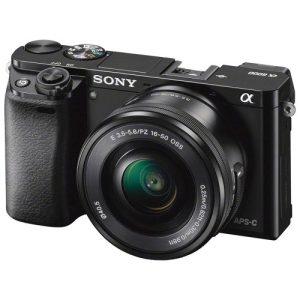
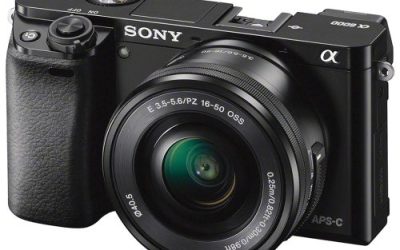
The Sony ZV-E10 II kit is the most approachable camera in this guide, and the only one that arrives ready to shoot out of the box. It comes with the E PZ 16-50mm f/3.5-5.6 OSS II zoom lens, a 26 megapixel back-illuminated sensor, and a fully articulating touchscreen that makes low-angle framing easy. At 292 grams, it is the lightest interchangeable-lens camera here, and it slips into a small bag with room to spare.
Specs
- 26MP APS-C Exmor R CMOS sensor, E PZ 16-50mm f/3.5-5.6 OSS II kit lens, 11 fps, 4K/60p video, fully articulating touchscreen, 292 g body, NP-FZ100 battery, model ZVE10M2KB.
The trade-off is the missing viewfinder and the missing in-body stabilisation. On a bright day, composing on the rear screen can be hard, and in soft shade you will lean on the lens stabilisation and a steady hand instead of sensor stabilisation. The kit zoom focuses close enough for a hedge, but for a single leaf filling the frame you will still want a dedicated close-focusing lens.
Nikon Z30
- 20.9MP DX CMOS sensor, 11 fps, uncropped 4K/30p video, fully articulating touchscreen, 350 g body, body only, no viewfinder, no in-body stabilisation.
The Nikon Z30 is the smallest and simplest camera in this guide, and it earns its place through sheer ease of use. Its 20.9 megapixel DX sensor is smaller in resolution than the Fujifilm bodies, but it is more than enough for boxwood, and its flip-out screen, light 350 gram body, and friendly controls make it a pleasure to carry on a garden walk. It records uncropped 4K video, which is useful if you want to film the same hedge you photograph.
The trade-off is the same as the Sony above, with one difference: the Z30 has no in-body stabilisation and no viewfinder, so you compose on the screen and rely on a steady hand or a lens with stabilisation. It is also a body only, so you need a lens before it can shoot, and a close-focusing lens is the right choice for boxwood.
Sony ZV-1
- 20.1MP 1-inch Exmor RS CMOS sensor, fixed 24-70mm f/1.8-2.8 ZEISS Vario-Sonnar T lens, 4K HDR video, flip-out touchscreen, 294 g, model DCZV1/B.
The Sony ZV-1 is not a main boxwood camera, and this guide says so plainly. It is a pocket companion with a fixed 24-70mm f/1.8-2.8 ZEISS lens, a 20.1 megapixel 1-inch sensor, and a 294 gram body that fits in a jacket pocket. It cannot change lenses, so it cannot take a true macro lens, and its smaller sensor cannot match the Fujifilm bodies for fine detail. For a photographer who already owns a main camera and wants a second body for quick notes and scouting shots, it is genuinely useful.
The trade-off is reach and resolution. The fixed lens cannot focus as close as a dedicated macro lens, and the 1-inch sensor shows its limits when you crop hard into a dense hedge. The battery is small, so carry a spare on a long session.
Which One to Choose
Choose the Fujifilm X-T5 if stills detail is your first concern and you are happy to buy a close-focusing lens to go with it. Choose the Fujifilm X-H2 if you also film your garden walks and want the most complete video tool here, and you do not mind the extra weight. Choose the Sony ZV-E10 II kit if you want a light, ready-to-shoot camera that needs nothing else on day one. Choose the Nikon Z30 if you want the simplest camera in this guide and you shoot mostly for sharing online. Choose the Sony ZV-1 only as a pocket companion alongside a main camera, never as your only boxwood camera.
Whatever you choose, remember the subject. Boxwood rewards patience, soft light, and a close lens. Walk the path, stay off the beds, never break a branch, and let the dense green foliage do the work. The camera is the tool; the looking is the craft.
Frequently Asked Questions
Is boxwood the same plant as holly?
No. Boxwood is Buxus, in the family Buxaceae, while holly is Ilex, in the family Aquifoliaceae. Boxwood has small, smooth, oval leaves with no spines, growing in opposite pairs. Holly has larger, glossy leaves with sharp spines and, on female plants, bright red berries in winter. They are different plants in different families, and they need different light and exposure thinking.
Can I photograph boxwood all year round?
Yes. Boxwood is evergreen, so its foliage is present in every season. Winter is a good time to photograph it, because the dark green leaves stand out against bare branches and pale light. Summer shade is soft and even, which suits the matte leaves well.
Do I need a macro lens for boxwood photography?
For tight shots of a single sprig or a single leaf, yes. Every interchangeable-lens body in this guide needs a close-focusing lens before it is ready for that kind of work. A kit zoom will handle a whole hedge or a garden view, but a macro lens or a lens with a short minimum focus distance is what lets you fill the frame with boxwood detail.
Is boxwood safe to touch while photographing?
Boxwood leaves are toxic if eaten, so never chew them and keep children and pets from nibbling. Touching healthy foliage is fine, but do not pick leaves or break branches, and keep your distance from any shrub with bare patches or grey, dying leaves, which may carry boxwood blight.
More from Amazon
Programs that pair well with the guide above. Offers and eligibility are set by Amazon and may change.
Free shipping on eligible items, Prime Video and more. Eligible new members can start with a free trial.
Start a Prime free trialAudiobooks and podcasts to listen to on the go. Eligible new members can start with a free trial.
Try Audible freeAd-free music streaming. Eligible new subscribers can start with a free trial.
Try Music Unlimited freeA free business account with business pricing and bulk-buying tools for work, shop or home office.
Create a business accountAs an Amazon Associate we earn from qualifying purchases.