Our Short List of 3
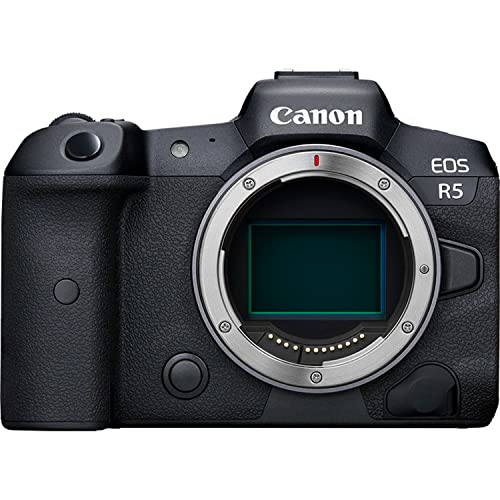
- 45MP full-frame CMOS sensor, DIGIC X processor, 20 fps electronic shutter, 8K 30p video, 8-stop in-body stabilisation, model 4147C002, body only.

- 50.1MP full-frame stacked CMOS sensor, BIONZ XR processor with AI unit, 30 fps electronic shutter, 8K 30p video, 8-stop in-body stabilisation, body only.

- 45.7MP full-frame stacked CMOS sensor, EXPEED 7 processor, 20 fps RAW burst, 8.3K 60p N-RAW video, blackout-free electronic viewfinder, body only.
All 5 Picks at a Glance
| Product | Specs | Action |
|---|---|---|
| Canon EOS R5 |
| Check price on Amazon |
| Sony A1 II |
| Check price on Amazon |
| Nikon Z8 |
| Check price on Amazon |
 OM System OM-1 Mark II Kit |
| Check price on Amazon |
 Fujifilm X-H2S |
| Check price on Amazon |
Our Top Picks
Meadow-saxifrage is a small, quiet plant, and that is exactly what makes it a good photographic subject. Saxifraga granulata grows in old meadows and on grassy banks, holding its small white five-petalled flowers above a rosette of rounded leaves in late spring. The flowers are modest, the plant is low, and the light in an open meadow changes by the minute. A camera that can focus close, hold detail in white petals, and keep up with shifting cloud light will do far better here than a camera chosen for reach alone. This guide looks at five cameras that cover that job from different angles, with honest trade-offs for each one.
As an Amazon Associate, we earn from qualifying purchases.
Finding Meadow-Saxifrage in the Field
Meadow-saxifrage favours unimproved grassland, old churchyards, and banks that have not been ploughed or heavily fertilised. It flowers from late April into June, and the best time to photograph it is in the morning, when the dew is still on the grass and the light is soft. Walk the paths and field edges, and look for the plant at the margins of the sward rather than in the middle of tall grass. The flower stems rise to around 30 cm, so you can work from a low crouch without lying flat in the meadow.
Do not pick the plant, and do not step into the middle of a flower-rich meadow to get closer. A short telephoto or a macro lens used from the path will bring the flowers to you. Take care to leave the plant as you found it, and keep dogs on a lead near livestock.
The white flowers are the main challenge for exposure. White petals against green grass can fool a meter into darkening the scene, so watch the histogram and add a little positive exposure compensation when the flowers look grey on the screen.
Meadow-Saxifrage or Golden-Saxifrage
Meadow-saxifrage is not golden-saxifrage, and the two plants are easy to tell apart once you know what to look for. Meadow-saxifrage, Saxifraga granulata, is an upright grassland plant with white flowers held on slender stems above a basal rosette. Golden-saxifrage, Chrysosplenium oppositifolium, is a low creeping plant of damp shady stream sides, with yellow-green flowers and rounded leaves that grow in opposite pairs along the stem. Both belong to the family Saxifragaceae, but they sit in different genera, and they grow in different places.
The confusion comes from the shared name. Burnet-saxifrage is a different matter again, and it is not part of this comparison. Burnet-saxifrage belongs to the family Apiaceae, a completely different family, and it shares only the name. If you are standing in a sunny meadow looking at white flowers on upright stems, you are looking at meadow-saxifrage. If you are beside a shaded stream looking at a low mat of yellow-green flowers, you are looking at golden-saxifrage.
For the photographer, the difference matters. Meadow-saxifrage stands tall enough to photograph from a crouch, and its white flowers need careful exposure. Golden-saxifrage hugs the ground in shade, and it needs a camera that can handle low light and damp conditions.
What a Camera Needs for Meadow-Saxifrage
The first requirement is close focus. Meadow-saxifrage flowers are small, around 15 mm across, and a lens that cannot focus close will leave them as white dots in a sea of grass. Every interchangeable-lens body in this guide needs a close-focusing lens for tight meadow-saxifrage work, and that is a cost and a weight you should plan for. A dedicated macro lens is the ideal tool, but a good 50 mm or 85 mm prime with a short minimum focus distance will also do the job.
The second requirement is resolution and dynamic range. White petals hold very little detail when they are overexposed, and a sensor with good dynamic range gives you room to recover highlights in editing. A high-resolution sensor also lets you crop into a flower head while keeping enough detail for a large print.
The third requirement is a viewfinder you can trust. Meadow light changes fast as clouds pass, and a viewfinder that shows the exposure live lets you adjust before the moment passes. A tilting screen helps too, because the best angle for a low plant is often at ground level.
Canon EOS R5
- 45MP full-frame CMOS sensor, DIGIC X processor, 20 fps electronic shutter, 8K 30p video, 8-stop in-body stabilisation, model 4147C002, body only.
The Canon EOS R5 is the most capable all-round camera in this guide, and it earns its place at the top of the list. Its 45-megapixel full-frame sensor captures fine detail in the small white flowers, and its in-body stabilisation helps when you are working handheld at a low crouch. Dual Pixel autofocus locks onto a flower head quickly, and the electronic viewfinder shows the exposure live, which matters when white petals are at risk of blowing out.
The R5 is a body-only camera, so you will need a lens, and for meadow-saxifrage that means a close-focusing lens. The RF 100mm f/2.8L Macro is the natural partner, and it focuses close enough to fill the frame with a single flower. The trade-offs are weight and bulk. At around 738 g for the body alone, the R5 is not a light camera, and with a macro lens attached it is a serious piece of kit to carry across a meadow.
Check the listing carefully when you order: the model number is 4147C002, not 4147C005. The two numbers look similar, and the wrong one has caught buyers out before.
Sony A1 II
- 50.1MP full-frame stacked CMOS sensor, BIONZ XR processor with AI unit, 30 fps electronic shutter, 8K 30p video, 8-stop in-body stabilisation, body only.
The Sony A1 II is a flagship camera built for speed, and it brings that speed to the meadow. Its 50.1-megapixel stacked sensor delivers the highest resolution in this guide, and its autofocus system is the most confident of the five, locking onto small subjects with ease. The electronic shutter can fire at 30 frames per second, which is far more than a flower needs, but it also means the camera never misses a moment when a breeze moves the stem.
The A1 II is a superb camera, and its main drawback for this job is that it is built for a different kind of photography. A flower does not move at 30 frames per second, and you will pay a flagship sum for speed you will rarely use in a meadow. The menu system is deep and takes time to learn, and the body is dense for its size.
Where the A1 II earns its place is in its autofocus and its viewfinder. The viewfinder is bright and detailed, and the subject detection is so good that it will hold focus on a flower head even as the stem sways in the wind.
Nikon Z8
- 45.7MP full-frame stacked CMOS sensor, EXPEED 7 processor, 20 fps RAW burst, 8.3K 60p N-RAW video, blackout-free electronic viewfinder, body only.
The Nikon Z8 packs the sensor and processor of the flagship Z9 into a smaller body, and it is the best value flagship in this guide. Its 45.7-megapixel stacked sensor gives superb detail, and its autofocus is fast and reliable. The blackout-free electronic viewfinder is a genuine help in the field, because you never lose sight of the flower while the shutter fires.
The Z8 is a large camera, and with a macro lens attached it is a handful on a long walk. The battery life is the weakest of the five here, and you should carry at least one spare for a morning in the meadow. The camera has no mechanical shutter, which is fine for flowers but worth knowing if you also shoot flash work.
What sets the Z8 apart is its handling. The grip is deep, the buttons fall under the fingers, and the camera feels balanced with a macro lens attached.
OM System OM-1 Mark II Kit
- 20.4MP Micro Four Thirds stacked CMOS sensor, TruePic X processor, M.Zuiko 12-40mm f/2.8 PRO II lens included, IP53 weather sealing, kit.
The OM System OM-1 Mark II is the lightest camera in this guide, and the kit lens makes it the most ready to use out of the box. The included 12-40mm f/2.8 PRO II lens focuses close enough for meadow-saxifrage without an extra purchase, which is the exception in this guide. The Micro Four Thirds sensor gives extra depth of field, which helps keep a whole flower head sharp when you are working close.
The trade-off is sensor size. A Micro Four Thirds sensor gathers less light than a full-frame sensor, and the files have less room for heavy cropping or aggressive highlight recovery. In good meadow light this rarely matters, but in dull conditions you will see the difference. The 20.4-megapixel resolution is the lowest in this guide, though it is still enough for large prints of a small flower.
What the OM-1 Mark II offers in return is portability and weather sealing. At around 599 g for the body, it is easy to carry, and the IP53 sealing means a damp morning will not trouble it.
Fujifilm X-H2S
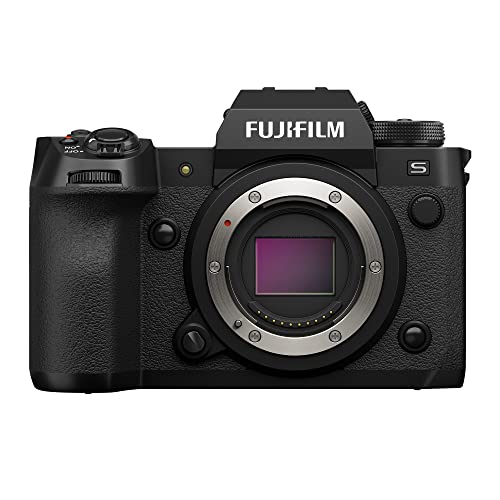
- 26.1MP APS-C X-Trans 5 stacked CMOS sensor, X-Processor 5, 40 fps electronic shutter, 6.2K 30p video, 7-stop in-body stabilisation, model 16756924, body only.
The Fujifilm X-H2S is the fastest APS-C camera in this guide, and it brings a different balance of size, speed, and image quality. Its 26.1-megapixel stacked sensor reads out quickly, the autofocus is confident, and the in-body stabilisation is rated to seven stops. The film simulations are a bonus for photographers who like to finish their images in camera, giving the white flowers a gentle rendering without heavy editing.
The X-H2S is a body-only camera, so it needs a close-focusing lens for tight meadow-saxifrage work, and the Fujifilm 80mm f/2.8 Macro is the natural partner.
Where the X-H2S stands out is in its handling and its speed. The dials and buttons are laid out for photographers who like direct control, and the camera responds quickly to every input.
How the Five Compare
The five cameras in this guide cover the same job from different directions. The R5 and the A1 II are the resolution leaders, with the A1 II offering the most pixels and the fastest autofocus, and the R5 offering the most balanced set of features. The Z8 matches them for image quality in a body that handles well, though its battery life is the weakest here. The OM-1 Mark II is the lightest and the only one that arrives ready to photograph meadow-saxifrage with its kit lens, while the X-H2S offers a middle path between size and performance.
One point applies to four of the five cameras: budget for a close-focusing lens. The R5, the A1 II, the Z8, and the X-H2S are all sold as bodies only, and none of them can photograph a small flower tightly without a macro or close-focusing lens. The OM-1 Mark II kit is the exception, and that alone makes it worth a close look if you want to photograph meadow-saxifrage without buying an extra lens.
Which camera is best for a beginner photographing meadow-saxifrage?
The OM System OM-1 Mark II kit is the easiest place to begin, because it arrives with a close-focusing lens and it is light enough to carry all morning. Its focus stacking mode helps with sharpness, and its weather sealing forgives a damp morning. A beginner will get good results faster with this kit than with a body-only flagship that still needs a macro lens.
How close do I need to get to meadow-saxifrage?
The flowers are around 15 mm across, so a macro lens or a close-focusing prime is needed for a frame-filling shot. A 90 mm or 100 mm macro lens lets you work from a comfortable distance without stepping into the meadow. If you only have a standard zoom, try the longest end of the zoom at its closest focus distance, and crop the image afterwards.
How do I tell meadow-saxifrage from golden-saxifrage?
Meadow-saxifrage is an upright grassland plant with white flowers on slender stems, while golden-saxifrage is a low creeping plant of damp shady stream sides with yellow-green flowers. Both belong to the family Saxifragaceae, but they sit in different genera, Saxifraga and Chrysosplenium, and they grow in different habitats. The place you are standing is often the best clue.
Can I photograph meadow-saxifrage in the middle of the day?
You can, but the light is harder. Midday sun can blow out the white petals and throw harsh shadows across the leaves, so look for shade or wait for cloud cover. An overcast morning gives the most forgiving light for white flowers, and a diffuser held above the plant can soften direct sun when there is no cloud.
More from Amazon
Programs that pair well with the guide above. Offers and eligibility are set by Amazon and may change.
Free shipping on eligible items, Prime Video and more. Eligible new members can start with a free trial.
Start a Prime free trialAudiobooks and podcasts to listen to on the go. Eligible new members can start with a free trial.
Try Audible freeAd-free music streaming. Eligible new subscribers can start with a free trial.
Try Music Unlimited freeA free business account with business pricing and bulk-buying tools for work, shop or home office.
Create a business accountAs an Amazon Associate we earn from qualifying purchases.