Our Top Picks
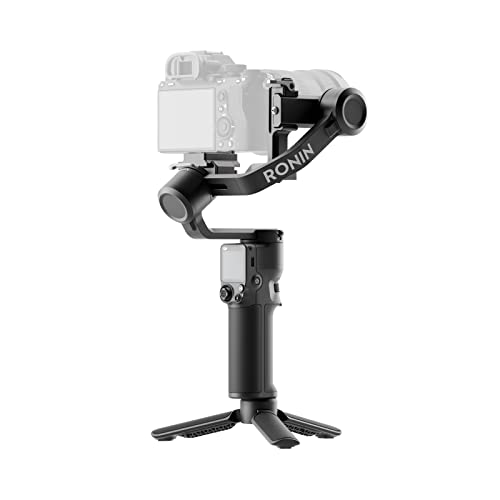

For most mirrorless shooters, the DJI RS 4 is the best overall gimbal on this list: it is rated for a 3 kg payload, has second-generation native vertical shooting and uses Teflon-coated axis arms that make balancing quicker. A gimbal for a mirrorless camera is a three-axis handheld stabilizer whose motors smooth out pan, tilt and roll while you walk, so what matters most is whether your camera, lens and accessories sit comfortably under the rated payload. If you want something lighter to travel with, the DJI RS 3 Mini and the FeiyuTech SCORP Mini-3-Pro cover the 2 kg class, while the SCORP 3 and Weebill S serve heavier full-frame setups.
Quick List
- DJI RS 3 Mini – best for compact mirrorless bodies and travel kits
- DJI RS 4 – best for full-frame mirrorless with a standard zoom
- FeiyuTech SCORP Mini-3-Pro – best for one gimbal across camera, phone and action camera
- FeiyuTech SCORP Mini 2 Kit – best for very light cameras and a built-in tracker with fill light
- FeiyuTech SCORP 3 Kit – best for heavier mirrorless and DSLR rigs with AI tracking
- Zhiyun Weebill S – best for a proven sling-style design with removable batteries
Which One Is Right for You?
| If you… | Choose |
|---|---|
| Shoot full-frame mirrorless with a 24-70mm f/2.8 class lens | DJI RS 4 |
| Want AI tracking and a gimbal that also holds a phone or action camera | FeiyuTech SCORP Mini-3-Pro |
| Carry a light APS-C or compact body and value the smallest folded size | DJI RS 3 Mini |
| Use a very light camera and want a built-in fill light and screen | FeiyuTech SCORP Mini 2 Kit |
| Need more payload than the 2 kg class for a larger lens or a small rig | FeiyuTech SCORP 3 Kit |
| Prefer a longer-established design with swappable cells | Zhiyun Weebill S |
Start with your total weight: camera body, lens, battery, filter and any microphone. Then match it to a gimbal rated well above that figure, because motors work best when they are not near their limit. If you are between two models, the one with the higher rating will usually balance and run more calmly.
Also decide what you will use the gimbal for. A photographer who films occasional clips has different needs from a wedding videographer who runs it all day, and the second user should favor battery life, build and a higher payload ceiling over the smallest size.
All 6 Picks in Detail
1. DJI RS 3 Mini – Best for compact mirrorless bodies and travel
As an Amazon Associate we earn from qualifying purchases at no extra cost to you.

The RS 3 Mini is DJI’s small-format gimbal for Canon, Sony, Nikon and Fujifilm mirrorless cameras. The listing states a 2 kg rated payload, native vertical shooting and Bluetooth shutter control. DJI’s specification page lists a weight of roughly 795 g in portrait mode and 850 g in horizontal mode with the quick-release plate, which is why photographers choose it for travel. Battery life is rated at about 10 hours, with charging taking roughly 2.5 hours.
The key idea is that the camera mounts directly onto a compact arm structure, so the whole gimbal stays compact and slides into a bag. It is a good fit for compact full-frame bodies with a lightweight lens and for APS-C kits. If your standard lens is a heavy f/2.8 zoom, check the rating margin carefully before you buy.
In daily use, the Mini class works best when you treat it as a walking-and-talking tool: vlogs, travel clips, family events and short documentary pieces. The small size encourages you to bring it along, and a gimbal in the bag is always more useful than a bigger one left at home. Plan to balance the camera carefully with the exact lens you intend to use, and avoid swapping to a much heavier lens mid-shoot because the balance will need to be reset.
- Rated payload: 2 kg (listing and DJI specification page)
- Native vertical shooting without extra brackets
- Bluetooth shutter control for supported cameras
- Gimbal weight around 795 to 850 g
- Battery life rated at about 10 hours
Pros
- Small and light enough for everyday carry
- Vertical mode suits social video
Cons
- Payload headroom is tighter with heavy lenses
- Fewer physical controls than larger gimbals
Compared with the RS 4, it is lighter and more portable but offers less spare capacity for larger lenses.
2. DJI RS 4 – Best for full-frame mirrorless with a standard zoom

The RS 4 steps up to a 3 kg rated payload and refines the formula used in earlier DJI gimbals. The listing highlights second-generation native vertical shooting, a two-mode switch joystick and Teflon-coated axis arms, and DJI’s specification page adds second-generation automated axis locks and a touchscreen. DJI lists a maximum battery runtime of about 12 hours under ideal conditions, and a larger optional grip battery exists for long days. The gimbal itself weighs a little over a kilogram before the handle, so expect a full setup to feel noticeably heavier than the Mini.
Weight is the cost of that capability. After an hour of handheld work, a 1.4 kg gimbal-and-camera package becomes tiring, and many operators switch to a two-handed grip or a support brace for longer takes. Think of it as a tool for planned shoots, such as events, interviews on the move, real estate walkthroughs and short films, rather than as an always-in-the-bag companion.
This is the gimbal for photographers who also shoot a lot of video with a full-frame body and a standard zoom, and who want room to add a microphone or monitor later. The 3 kg rating gives comfortable margin for typical mirrorless kits.
- Rated payload: 3 kg
- Second-generation native vertical shooting
- Teflon-coated axis arms for easier balance
- Two-mode switch joystick
- Battery rated up to about 12 hours under ideal conditions
Pros
- Comfortable payload margin for full-frame setups
- Faster balancing and axis locks reduce setup time
Cons
- Heavier and bulkier to carry than the Mini class
- Runtime drops when the gimbal moves with a heavy load
Against the SCORP 3, the RS 4 offers a similar capacity class, while the SCORP adds built-in AI tracking.
3. FeiyuTech SCORP Mini-3-Pro – Best for one gimbal across camera, phone and action cam

The SCORP Mini-3-Pro is a multi-device gimbal: the listing says it supports mirrorless, compact and action cameras as well as smartphones. It adds an AI tracking system with a stated tracking distance of about 18 meters, and a detachable remote handle. FeiyuTech’s own comparison table lists a 2 kg payload, a gimbal weight around 1 kg and a battery life of about 14 hours.
That versatility is the main reason to buy it. If you already use a phone for quick clips and a mirrorless camera for better footage, you do not need a separate gimbal for each. FeiyuTech notes that the 2 kg figure is a laboratory maximum, so check the official compatibility list for your exact camera and lens combination.
Because it also accepts phones and action cameras, it is an easy way to share one stabilizer between a household of creators. The detachable remote handle lets you extend the gimbal on a tripod or hold it away from your body for creative angles. The main watch-out is weight: heavier full-frame lenses can approach the upper end of the class, so use the manufacturer’s compatibility list as the final authority on your camera model.
- Payload of about 2 kg (4.4 lb) per the manufacturer
- AI tracking with a distance of about 18 m
- Detachable remote handle
- Works with mirrorless, compact and action cameras and smartphones
- Battery life of about 14 hours per the manufacturer
Pros
- One stabilizer for several devices
- Large battery for a mid-size gimbal
Cons
- Heavier lenses push the limit of the 2 kg class
- AI tracking works best with a clear, well-lit subject
Next to the DJI RS 3 Mini, it has a similar payload class, but adds tracking and phone support at the cost of extra weight.
4. FeiyuTech SCORP Mini 2 Kit – Best for very light cameras with a tracker and fill light

The SCORP Mini 2 Kit is the lightest-duty gimbal here. The listing describes a three-axis stabilizer with an AI tracker that includes a fill light, plus a small touch screen of about 1.3 inches, for mirrorless cameras and smartphones. FeiyuTech’s comparison table lists a payload of 1.2 kg, a weight of about 852 g and roughly 10 hours of battery life. That payload is modest for a mirrorless camera, so confirm that your body and lens combination fits.
It makes the most sense for compact mirrorless cameras with a small prime or a light kit zoom, and for creators who also use a phone. The built-in fill light is useful for vlogging in dim rooms, but it does not replace a proper video light.
Think of it as a starter gimbal for creators moving from phone to camera. It keeps the cost of entry down, the carry weight low and the learning curve gentle. If you already know you will upgrade to a full-frame body with a fast zoom, you will likely outgrow it, so consider the larger Feiyu or DJI options instead.
- Payload of about 1.2 kg per the manufacturer
- AI tracker module with fill light
- Roughly 1.3-inch touch screen
- Gimbal weight of about 852 g
- Battery life of about 10 hours
Pros
- Compact and affordable class of stabilizer
- Tracker and light help solo creators
Cons
- Limited payload for full-frame cameras and zooms
- Smaller motors need careful balancing
Compared with the Mini-3-Pro, it saves weight but gives up payload headroom and runtime.
5. FeiyuTech SCORP 3 Kit – Best for heavier mirrorless and DSLR rigs

The SCORP 3 Kit is aimed at larger cameras: the listing names DSLR and mirrorless models and includes AI tracking and a detachable handle for Sony, Canon, Nikon and Fujifilm cameras. FeiyuTech lists its payload at about 3.5 kg, a gimbal weight around 1.37 kg and a battery life of about 14 hours. Its tracking is described as camera-focused, so it targets face tracking more than the multi-device flexibility of the Mini models.
Choose it if your main body is a full-frame camera with a standard or short telephoto zoom, and you want tracking built in rather than as an add-on.
The larger kit also means larger motors, which handle front-heavy lenses and light accessories with more authority than the Mini class. Expect a heavier carry, a bigger case and longer setup, but also more tolerance for imperfect balance. It is a sensible tool for wedding and event shooters who want to keep a gimbal over their shoulder for hours with a reliable battery.
- Payload of about 3.5 kg per the manufacturer
- Gimbal weight of about 1.37 kg
- AI tracking built in
- Detachable handle
- Battery life of about 14 hours
Pros
- Highest stated payload in this list
- Tracking and long runtime in a single kit
Cons
- The largest and heaviest option
- Overkill for light compact cameras
Next to the RS 4, it has a higher stated payload, though the DJI option has a more established accessory family.
6. Zhiyun Weebill S – Best for a proven design with removable cells
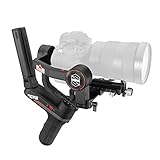
The Weebill S is an older Zhiyun design that remains on sale as a compact, high-payload option. Zhiyun lists a payload around 3 kg for mirrorless and lightweight DSLR cameras, a weight near 895 g per unit and a runtime of roughly 12 to 14 hours from two custom 18650 batteries. Zhiyun recommends using its own cells, so do not swap in generic ones.
Because it is not a recent release, check whether the listing includes the accessories you want, and confirm vertical-shooting and app features on the product page. It remains an interesting choice if you like a compact body with swappable batteries.
Buying an older platform has trade-offs. Firmware support, app polish and accessory availability may lag newer models, and some features that are standard on current gimbals could be missing or work differently. On the other hand, its design has been used by a lot of shooters, so setup guides and community tips are easy to find, and swappable batteries mean you can carry a spare instead of waiting on a charger.
- Payload of about 3 kg per the manufacturer
- Net weight of about 895 g
- Two removable custom 18650 batteries
- Pan 360 degrees, tilt and roll about 314 degrees
- Runtime up to about 14 hours
Pros
- Strong payload for the weight
- Swappable batteries
Cons
- Older platform with fewer modern conveniences
- Custom cells are required
Compared with the RS 4, it offers a similar rated payload in a smaller body, but with a less modern feature set.
Specs Compared
| Gimbal | Rated payload | Gimbal weight | Battery life (rated) | Vertical shooting | Tracking |
|---|---|---|---|---|---|
| DJI RS 3 Mini | 2 kg | About 795-850 g | About 10 hours | Native vertical | Confirm on listing |
| DJI RS 4 | 3 kg | About 1.07 kg | Up to about 12 hours | Native vertical, 2nd gen | Confirm on listing |
| FeiyuTech SCORP Mini-3-Pro | About 2 kg | About 1 kg | About 14 hours | Confirm on listing | AI tracking, about 18 m |
| FeiyuTech SCORP Mini 2 Kit | About 1.2 kg | About 852 g | About 10 hours | Confirm on listing | AI tracker with fill light |
| FeiyuTech SCORP 3 Kit | About 3.5 kg | About 1.37 kg | About 14 hours | Confirm on listing | AI tracking |
| Zhiyun Weebill S | About 3 kg | About 895 g | Up to about 14 hours | Confirm on listing | Not listed |
How We Chose These
This guide is research-based. We started with the six mirrorless gimbals in the current catalog set and compared each listing name with manufacturer specification pages and published product summaries. We focused on rated payload, weight, rated battery life, vertical shooting and tracking features, and we noted where a number comes from the manufacturer rather than from independent measurement. Where sources disagree or a listing leaves out a spec, we say to confirm it on the product page. No claim here comes from owning or personally operating these gimbals.
What to Look For
Payload and the 80 percent rule
Rated payload is the maximum weight a gimbal’s motors can hold under ideal laboratory conditions. As a rule of thumb, keep your loaded camera at or below about 80 percent of that figure. Add up the body with battery and card, the lens, any filter, a microphone and a cage. A typical full-frame mirrorless body weighs roughly 650 g and a 24-70mm f/2.8 zoom around 800 to 900 g, so a loaded setup lands near 1.5 to 1.8 kg. That fits a 2 kg gimbal on paper but leaves little margin, whereas a 3 kg gimbal runs calmly.
Balance and axis locks
Balance is the biggest factor in image quality and battery life. A balanced camera lets the motors do less work, so they run cooler and last longer. Look for gimbals with simple locking mechanisms and a tilt arm long enough to center your lens. Teflon-coated or smooth arms make adjustments easier, and automated axis locks help you pack up without breaking balance.
Vertical shooting and quick-release plates
Native vertical shooting rotates the camera on the gimbal’s plate so the stabilizer keeps working in portrait orientation. This matters for social video. Check whether the plate is Arca-compatible, because that lets you move from gimbal to tripod without repeated mounting.
Battery and charging
Rated runtimes assume the gimbal is stationary and balanced, so expect less in real use. Lithium batteries should be charged in the open on a hard surface, never left unattended, and kept out of heat. For flights, batteries of this size are generally allowed in carry-on luggage only, so check your airline’s rules. Gimbals with USB-C charging simplify travel.
Camera control and tracking
Many gimbals can trigger recording through a cable or Bluetooth, but support depends on the camera model. Check the manufacturer’s compatibility list before purchase. AI tracking modules follow a face or subject and work best in good light; they are a convenience feature, not a replacement for good framing.
Worked example: choosing for a real kit
Imagine a mirrorless body at 650 g, a 24-70mm f/2.8 at 880 g and a small shotgun microphone at 100 g. The total is about 1.63 kg. Eighty percent of a 2 kg rating is 1.6 kg, so that kit is already at the edge of the 2 kg class, while 80 percent of a 3 kg rating is 2.4 kg, which leaves comfortable room. If you swapped to a 35mm prime of about 400 g, the total drops to roughly 1.15 kg and the 2 kg class becomes comfortable. Always run the same arithmetic with your actual numbers before you decide.
Questions
How much payload do I need for a mirrorless camera?
Weigh your body, lens and accessories, then choose a gimbal rated for at least 25 percent more. A compact body with a small prime fits the 1.2 to 2 kg class, while a full-frame body with a f/2.8 zoom is more comfortable on a 3 kg class gimbal.
Can a gimbal stabilize a heavy telephoto lens?
Only if the combined weight and balance point are within the gimbal’s limits. Long, front-heavy lenses are hard to balance, so confirm that the arm length and rating suit your lens before you buy.
Do I need native vertical shooting?
If you publish short vertical video, yes. Native vertical shooting rotates the camera without a bracket and keeps stabilization working in portrait mode.
Are gimbals allowed in carry-on luggage?
Generally yes, but the lithium batteries are the key concern. Spare batteries usually must stay in carry-on bags and be under the airline’s watt-hour limit, so confirm with your carrier.
Is AI tracking reliable?
It works best with a clear subject, good light and a stable background. It can lose a subject in crowds or when someone turns away, so treat it as a helper for solo shooting.
Why does my gimbal motor overheat or beep?
The most common cause is poor balance or a payload that is too close to the limit. Rebalance all three axes, remove unnecessary accessories and check that the firmware is current.
Update History
- October 20, 2026 – Initial publication; product set drawn from current catalog listings.
- Check the product page for current specifications and availability before buying.
Sources
- Manufacturer product and specification pages for DJI, FeiyuTech and Zhiyun
- Retailer listing titles and specification fields for all six gimbals
- Published product reviews and photo retailer spec sheets for cross-checking payload, weight and battery figures