Our Top Picks


The Lowepro PhotoSport BP 15L AW III is the strongest all-round choice here for photographers who actually walk: it is a true hiking pack first, with a removable side-access camera insert, a hydration pocket and an all-weather cover. A hiking camera backpack differs from a studio or travel camera bag because it needs a stable harness, trail-friendly volume (roughly 15 to 25 liters) and quick access to the camera without dropping the pack in the dirt. If you carry more gear or a laptop, the PGYTECH OneMo TAC 25L and the K&F CONCEPT pack cover that bigger-kit end of the list, while the Think Tank Backlight Sprint suits fast, minimalist days.
Below you will find a quick list, a decision table, a detailed section on each of the six packs, a specs comparison and a short buying guide for choosing a camera backpack for the trail.
Quick List
- RAINSMORE Tactical Camera Backpack – best for rugged styling with a 15.6-inch laptop sleeve
- PGYTECH OneMo TAC 25L – best for large kits, two bodies and a tripod
- K&F CONCEPT Lightweight Camera Backpack – best for tripod carry on a light, simple pack
- Lowepro PhotoSport BP 15L AW III – best for real hiking with a mirrorless camera and a few lenses
- Think Tank Backlight Sprint – best for quick rear access and a slim, light profile
- Besnfoto Waterproof Camera Backpack – best for rainy travel days with a rain cover included
Which One Is Right for You?
| If you… | Choose |
|---|---|
| Walk several miles and want a hydration pocket plus a removable camera insert | Lowepro PhotoSport BP 15L AW III |
| Need a slim pack for a pro-style zoom trio and quick access | Think Tank Backlight Sprint |
| Carry two bodies, several lenses and a laptop on long travel days | PGYTECH OneMo TAC 25L |
| Want a lightweight pack with a tripod holder and a 14-inch laptop slot | K&F CONCEPT Camera Backpack |
| Prefer a tactical look and need to fit a 15.6-inch laptop | RAINSMORE Tactical Camera Backpack |
| Shoot in wet weather and want a bundled rain cover with a laptop compartment | Besnfoto Camera Backpack |
Think about the distance first and the gear second. Under about five miles, any of these packs will do the job. Past that, harness quality, hip support and weight begin to matter more than the number of dividers. Choose a pack sized to the camera you will really carry, not the kit you might buy next year.
All 6 Picks in Detail
1. RAINSMORE Tactical Camera Backpack – Best for a rugged look with laptop carry
As an Amazon Associate we earn from qualifying purchases at no extra cost to you.

The RAINSMORE is a tactical-style camera backpack marketed to DSLR, SLR and mirrorless shooters. Its listing highlights a 15.6-inch laptop capacity and a waterproof tactical build. That combination points to a bag aimed at photographers who commute or travel with a computer and then head out to shoot, rather than at long-distance trail walkers. Because the listing name does not spell out its volume, hip belt or harness details, confirm those on the product page before you count on it for a full-day trek.
In practice, a bag like this makes the most sense when your hike is short, your route stays close to the car and your priority is keeping a body, a couple of lenses and a notebook computer protected in one place. Treat it as a travel-and-shoot bag that can handle an easy trail rather than a pack for a long ridge walk, and weigh it against the packs below if elevation gain is part of the plan. Its tactical look also suits photographers who like external attachment points, though you should verify which ones the listing actually shows.
- Designed for DSLR, SLR and mirrorless camera systems
- Laptop compartment sized for up to 15.6 inches, per the listing name
- Waterproof tactical-style construction
- Photography backpack format with padded camera case compartments
- Volume, weight and strap details: confirm on listing
Pros
- Roomy laptop sleeve for work-and-shoot days
- Rugged, low-profile look that blends into travel settings
Cons
- Trail features such as a hip belt and hydration port are not stated in the listing name
- Likely heavier than a dedicated slim hiking pack
Compared with the K&F CONCEPT pack, the RAINSMORE offers the larger stated laptop size, but the K&F makes its tripod holder a headline feature.
2. PGYTECH OneMo TAC 25L – Best for big kits and long shooting days

The PGYTECH OneMo TAC is a 25-liter tactical daypack in a Dark Night Camo finish. PGYTECH describes it as holding two camera bodies and around six lenses, and it adds a laptop sleeve that the company says suits a 15.6-inch or 16-inch laptop. It uses a ventilated back panel with a frame system, a front tripod holder and a rain cover, and the exterior has MOLLE-style webbing for clipping accessories. It is the one pack here built for a heavy load rather than a minimal one.
The practical advice for a pack this size is discipline. Load the heaviest items, usually the laptop and the longest lens, close to your back and centered, keep the tripod low, and use the dividers to stop lenses from shifting. Because it is a 25-liter bag, plan to use the chest strap and, if you buy it, the optional waist belt that PGYTECH sells separately, so that the weight rides on your hips and not only on your shoulders. It is a strong choice for full-day location work and travel photography where the walk is moderate.
- 25-liter capacity with adjustable dividers
- Waterproof outer material and a bundled rain cover
- Laptop sleeve for roughly 15.6 to 16 inches (confirm exact fit on listing)
- Tripod holder and expandable front pocket
- Side access and a quick-release clip point for the camera
Pros
- Plenty of room for two bodies, multiple lenses and accessories
- Ventilated back panel and padded straps help on long days
Cons
- At 25 liters, it is easy to overpack and carry too much weight
- Published weight figures differ between sources, so confirm the weight on the listing
Next to the Lowepro, it carries roughly the volume of two PhotoSport packs, which is great for kit but less pleasant on a quick two-hour walk.
3. K&F CONCEPT Lightweight Camera Backpack – Best for a tripod on a light pack
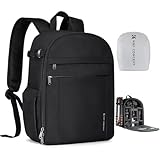
K&F CONCEPT positions this as a lightweight camera bag for DSLR, SLR and mirrorless shooters, with a tripod holder and a 14-inch laptop compartment. K&F offers a family of backpacks that share this layout of a padded camera section with dividers, a separate laptop pocket and external tripod straps or a side pocket. The brand lists comparable models around 1 kg, but the exact weight and liter capacity of this version should be confirmed on the product page.
For hikers, the appeal is simple: a lighter empty pack leaves more of your carrying budget for camera gear and water. A tripod holder that sits on the outside keeps the legs from crowding the padded section, and the separate laptop pocket means you can leave the computer at the hotel and use the space for a jacket on the trail. The trade-off is that bags in this category often use a lighter harness than purpose-built hiking packs, so keep the loaded weight moderate and check whether a chest strap or waist strap is included.
- Lightweight camera bag construction
- Dedicated tripod holder
- Laptop compartment for up to 14 inches
- Padded, adjustable dividers for DSLR or mirrorless gear
- Capacity and exact weight: confirm on listing
Pros
- Tripod holder is a headline feature rather than an afterthought
- Lighter feel than the large tactical packs
Cons
- 14-inch laptop limit excludes 15.6-inch and 16-inch machines
- Few trail-specific details such as a hip belt are mentioned in the listing name
Compared with the RAINSMORE, it gives up laptop size for a lighter feel and a clearer tripod story.
4. Lowepro PhotoSport BP 15L AW III – Best for day hikes with a mirrorless kit

The PhotoSport BP 15L AW III is a genuine outdoor pack. Lowepro lists a 15-liter volume and a weight of about 1.1 kg, with a removable camera insert that opens from the side so you can reach the camera without taking the pack off. A dedicated pocket accepts a hydration reservoir, which is not included, and the exterior has attachment points for a tripod or trekking poles. An all-weather cover is included, and Lowepro says much of the fabric is recycled.
The design logic is that the camera insert only takes the room it needs, and the rest of the pack works like a normal hiking daypack for a jacket, lunch and a map. That makes it easy to leave the insert out on days when you are not shooting, and it keeps the profile narrow on exposed or scrambly terrain. If you own a compact mirrorless body with a kit zoom and a small prime, this is the pack that best matches how most hikers really shoot.
- 15-liter total volume, roughly 1.1 kg
- Removable 2-liter camera insert with side access
- Hydration pocket (reservoir sold separately)
- Attachment points for a tripod or trekking poles
- All-weather cover for rain, snow and dust
Pros
- Built for walking: hydration pocket, accessory straps, slim shape
- Insert lifts out, so the pack doubles as an ordinary daypack
Cons
- The camera compartment is small; it suits a compact mirrorless body with one lens attached plus one or two small lenses
- Larger full-frame setups with a big zoom will not fit comfortably
Against the Think Tank Backlight Sprint, the Lowepro is the better hiking pack but the Sprint holds a larger camera system.
5. Think Tank Backlight Sprint – Best for fast access and a slim profile
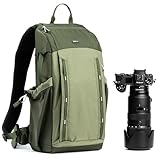
The Backlight Sprint is a 15-liter slim daypack from Think Tank, shown here in Montane Green. The company lists a weight of about 1 kg and describes space for a standard camera body plus a pro f/2.8 zoom trio, and for lenses up to a 300mm f/2.8 attached to a body. The back panel opens so you can get to the camera while the straps stay on your shoulders. Two side pockets take a large water bottle or carry a tripod, and the bag meets most carry-on size rules.
The Sprint is an interesting counterpoint to the PhotoSport because it is a camera-first design. The slim shape keeps the load close to your spine, which feels more stable than a deep, boxy bag when the trail gets uneven. It suits photographers who want a body and a few quality lenses within reach, plus a layer and a bottle, and who do not need a laptop or a big hydration bladder. For travel days that include flights, the carry-on friendly size is a practical bonus.
- 15-liter slim daypack, about 1 kg
- Rear-panel access to camera gear while the pack stays on
- Room for a body and three pro zooms, per the manufacturer
- Large side pockets for a bottle or tripod
- 2-liter front compartment for personal items
Pros
- Larger camera capacity than its volume suggests
- Back access keeps the dirty side of the pack off the ground
Cons
- Only 2 liters of personal storage, so it is a minimalist day pack
- No laptop sleeve is listed
Compared with the PhotoSport, it handles bigger lenses, while the PhotoSport adds a more explicit hydration setup.
6. Besnfoto Waterproof Camera Backpack – Best for wet-weather travel days

The Besnfoto is a satchel-style camera backpack for DSLR, SLR and mirrorless cameras. The listing names a waterproof build, a laptop compartment and a rain cover. Besnfoto sells several models whose capacity and laptop size vary, and the listings for this brand sometimes disagree with themselves, so confirm the volume and compartment sizes on the page. It is the most travel-oriented bag in the list and the least trail-specific.
That said, a rain cover plus waterproof fabric is a combination that suits coastal walks, waterfalls and shoulder-season outings where the weather turns quickly. If you mostly shoot from paved paths, overlooks and short loops, you may value a bag that also takes a notebook computer and looks like an ordinary pack in a town. Photographers planning multi-hour hikes with steep climbs should compare it carefully against the Lowepro or the Think Tank, which describe their trail features more directly.
- Waterproof camera bag construction
- Laptop compartment (size: confirm on listing)
- Rain cover included
- Padded, adjustable dividers
- Capacity and weight: confirm on listing
Pros
- Rain cover and waterproof fabric are both listed
- Laptop pocket suits mixed travel and shooting days
Cons
- Hip belt, hydration and trail features are not mentioned in the listing name
- Listing specifications for this brand can be inconsistent, so double check before buying
Against the K&F CONCEPT, it emphasizes weather protection over tripod carry.
Specs Compared
| Pack | Capacity | Laptop | Tripod carry | Weather protection | Notable feature |
|---|---|---|---|---|---|
| RAINSMORE Tactical | Confirm on listing | Up to 15.6 in | Confirm on listing | Waterproof build | Tactical styling |
| PGYTECH OneMo TAC 25L | 25 L | About 15.6-16 in (confirm) | Tripod holder | Waterproof material, rain cover | Frame, MOLLE webbing |
| K&F CONCEPT | Confirm on listing | 14 in | Tripod holder | Confirm on listing | Lightweight build |
| Lowepro PhotoSport BP 15L AW III | 15 L | None listed | Attachment points | All-weather cover | Hydration pocket, side-access insert |
| Think Tank Backlight Sprint | 15 L | None listed | Side pockets can carry one | Confirm on listing | Rear panel access |
| Besnfoto | Confirm on listing | Laptop compartment (size: confirm) | Confirm on listing | Waterproof, rain cover | Satchel-style design |
How We Chose These
This is a research-based roundup. We began with the six camera backpacks in the current catalog set and compared what each listing and manufacturer page states about volume, camera access, laptop size, tripod carry and weather protection. We favored packs that describe trail-relevant features, such as a hydration pocket, a stable harness or accessory attachment points, and we noted plainly where a listing leaves out the details a hiker needs. Where sources disagree on a figure, such as weight, we tell you to confirm it on the product page instead of choosing one. Opinions about fit are based on published specifications and general pack-design principles, not personal ownership of any model.
What to Look For
Volume and the load you actually carry
For day hikes, 15 to 25 liters is the practical range. A 15-liter pack such as the Lowepro or the Think Tank is enough for one mirrorless body, one or two lenses, a layer, snacks and a water bottle. Go to roughly 25 liters if you need a second body, a flash or a laptop. A useful rule of thumb: add up the camera gear first, then add 3 to 5 liters for clothing, food and water. If the total pushes past 20 liters, look for a pack with a real frame and hip support, since a camera system plus water easily climbs past 8 to 10 pounds before you add any extras.
Access: side, rear or top
Access style determines how often you take photos. Side-access systems, as on the PhotoSport, let you swing one strap off and reach the camera. Rear-access designs, as on the Backlight Sprint, keep the dirty back of the pack away from the ground and let you open the compartment while the shoulder straps stay on. Front-clamshell openings give the most visibility but force you to put the pack down. For trail work, side or rear access is worth more than extra dividers.
Harness, ventilation and hip support
Camera weight concentrates in the center of the back, so padded shoulder straps, a sternum strap and a hip belt matter once a pack goes over about 8 pounds. A ventilated back panel helps in warm weather. Many photographer-focused bags drop the hip belt to save weight, so check whether one is included or optional. If a listing does not state a hip belt, assume you may not get one.
Weather protection and tripod carry
Water-resistant fabric slows a shower but does not stop a downpour, so a bundled rain cover is a sensible backup. Zippers and seams matter as much as the fabric. For tripods, side pockets with a compression strap work for compact travel tripods up to about 55 centimeters folded; heavier tripods are better strapped to the front or bottom. Make sure the strap sits low so the load does not pull the pack backward.
Worked example
Suppose your kit is one mirrorless body, a 24-70mm f/2.8 and a small prime, a 1-liter water bottle and a rain shell. The kit itself fills about 6 to 8 liters of padded space, the shell and food add about 4 liters, and the bottle sits in a side pocket. A 15-liter pack covers it. Add a second body and a 70-200mm lens, and you cross into 20-plus liters, where the 25-liter class makes sense.
Fit, torso length and carrying comfort
Most photographer-oriented packs are sold in a single size, so fit depends on your torso length and the way the load sits. When you try a pack on, load it with the weight you really carry, then check that the shoulder straps wrap around the shoulders without gaps and that any sternum strap sits across the chest, not the throat. Women and shorter hikers often find the top of a tall, narrow pack pushing against the back of the head, so look for adjustable strap anchors or a shorter profile. A common rule of thumb is that no more than about 10 percent of your body weight should hang from your shoulders on a long day.
Questions
How big should a hiking camera backpack be?
For day hikes, 15 to 25 liters covers most photographers. Choose the smaller end for one body and a couple of lenses, and the larger end if you carry a laptop, a second body or a tripod.
Do I need a rain cover if the pack is waterproof?
A rain cover is still smart. Fabric treatments resist light rain, but zippers and seams are weak points in sustained downpours, and a cover protects the whole pack including the straps.
Can I carry a tripod on a camera backpack?
Yes, most packs here use side pockets or external straps. Compact travel tripods work best, while a heavy tripod can unbalance a small pack, so attach it low and close to your back.
Is a laptop sleeve necessary for hiking?
Not for the trail. It matters if the same bag does double duty for travel or commuting, in which case check the stated laptop size against your computer.
Can I use a camera insert in a regular hiking pack?
Often yes. A padded insert turns a regular daypack into a camera bag, though you lose purpose-built access and the dividers are usually less supportive than a dedicated design.
How do I keep camera gear safe on a long hike?
Pack the heaviest items closest to your spine, keep lenses capped and separated by dividers, and keep silica gel or a dry sack in humid conditions. Avoid overfilling so that the padding can do its job.
Update History
- October 20, 2026 – Initial publication; product set drawn from current catalog listings.
- Check the product page for current specifications and availability before buying.
Sources
- Manufacturer product and specification pages for Lowepro, Think Tank, PGYTECH and K&F CONCEPT
- Retailer listing titles and specification fields for all six packs
- Published camera-bag reviews and photo retailer spec sheets for volume, weight and capacity cross-checks