Key takeaways
- For most homes, choose a 20–24 cm, 10–14 cm-deep pot with a thick base, a secure thermometer position, and a 2–3 liter working oil capacity. Select a dedicated enamelled steel model when compactness and easy cleanup matter most. Choose a cast-iron Dutch oven when heat…
The best tempura pot for deep frying at home is a heavy, 20–24 cm (8–9.5 inch) pot that is at least 10 cm (4 inches) deep, holds roughly 2–3 liters of oil, and accepts a clip-on thermometer without crowding the food.
That combination gives tempura enough surface area to cook in small batches while limiting temperature swings and reducing the risk of oil splashing over the rim. A dedicated Japanese tempura pot is convenient, but a compact cast-iron Dutch oven can be the better all-round purchase if you also want to braise, bake, or fry other foods.
Our top picks


As an Amazon Associate we earn from qualifying purchases at no extra cost to you. Ratings are shown as listed on Amazon.
What to look for in a tempura pot
Diameter: wide enough, but not oversized
A 20 cm pot is a good fit for one or two people. It uses less oil and heats relatively quickly, but you may need to fry shrimp and vegetables in smaller batches. A 24 cm pot is more flexible for family portions and gives battered pieces room to separate.
Going much wider than 26 cm is rarely an advantage on a typical home hob. A wide, shallow oil surface loses heat quickly when food is added, requires more oil to reach a safe depth, and can be harder to control on a small burner.
Depth and usable oil level
Choose a pot with at least 10 cm of internal depth; 12–14 cm is more comfortable. The oil should normally fill only about one-third to one-half of the pot, leaving generous headroom for bubbling and food displacement. Never fill to the brim, and follow the manufacturer’s maximum-fill guidance if it is marked.
Depth matters more than total advertised capacity. A 3-liter pot may be ideal if 2 liters is the recommended working volume, whereas a broad 3-liter saucepan may leave too little space above the oil.
Heat retention versus responsiveness
Cast iron retains heat exceptionally well, which helps recover temperature after adding cold batter. Its drawback is slow adjustment: if the oil becomes too hot, reducing the burner will not cool it immediately. Thick carbon steel offers a useful middle ground, heating and cooling faster while still buffering temperature changes.
Thin stainless steel is responsive and easy to handle, but it benefits from a heavy base. Thin aluminum heats quickly yet can develop hot spots, especially on electric or induction hobs.
Thermometer compatibility
A thermometer is more useful than relying on visual clues. Look for a straight, stable rim where a clip can grip securely. The probe tip should sit in the oil without touching the bottom or side of the pot. A lid with a pouring lip or a very rounded rim can make clip-on thermometers awkward.
For most tempura, begin around 170–180°C (338–356°F). The exact setting depends on the batter and ingredient moisture, so temperature should be checked between batches rather than treated as a fixed number.
Best choices by cooking situation
| Situation | Recommended pot type | Useful target specifications | Why it fits |
|---|---|---|---|
| First-time fryer or occasional use | Dedicated enamelled steel tempura pot | 20–24 cm diameter; 2–3 L oil capacity; thermometer opening or straight rim | Moderate price, lighter than cast iron, and simple to store |
| Frequent frying and maximum temperature stability | Cast-iron Dutch oven, such as a Lodge 5-quart model | About 24–26 cm internal width; 10 cm or more of depth | Excellent heat retention and versatile for other cooking |
| Small kitchen or one- to two-person portions | Compact 20 cm Japanese-style tempura pot | 1.5–2 L working oil volume; footprint under 25 cm | Uses less oil and fits modest storage space |
| Large household | 24 cm thick carbon-steel or stainless-steel pot | 2.5–3 L working volume; at least 12 cm deep | Balances batch size, recovery speed, and manageable oil use |
| Induction hob | Induction-compatible steel or enameled pot | Magnetic base; flat bottom; 20–24 cm diameter | Provides reliable contact and avoids compatibility surprises |
Dedicated tempura pot or Dutch oven?
Dedicated enamelled steel pot
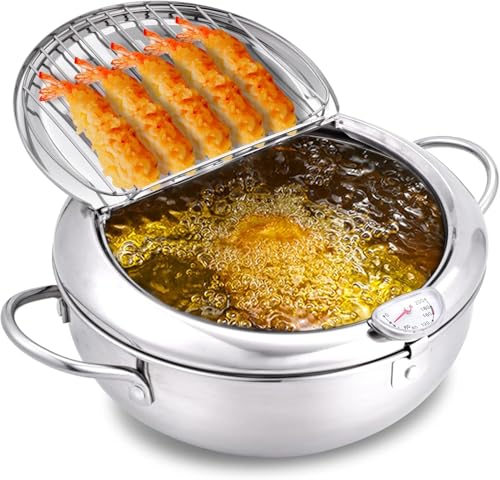
This is usually the most focused choice for tempura. Many are designed with a drain rack, oil-level markings, or a thermometer port. Their lower weight makes them easier to move once completely cool. Enamelled surfaces are also less reactive with acidic cleaning solutions than bare cast iron.
The compromises are limited versatility and potentially thinner walls. A lightweight model can lose heat noticeably when several chilled ingredients are added at once. Check that the included rack does not occupy too much of the usable cooking area.
Cast-iron Dutch oven
A Dutch oven is often the best value for a cook who fries several times a month. Lodge’s 5-quart cast-iron Dutch oven is a commonly available example of the size and construction to consider; enameled Dutch ovens from brands such as Le Creuset are another option. Their heavy walls stabilize oil temperature and their tall sides provide excellent splash protection.
Weight is the main ownership issue. A 5-quart cast-iron pot can weigh approximately 5–7 kg before oil and food are added, depending on the design. Do not carry it while the oil is hot. Bare cast iron also needs careful drying and a light protective oil film; enameled interiors avoid seasoning but can still chip if struck or overheated while empty.
Wok or ordinary saucepan
A wok can work, especially for larger batches, but its sloping sides reduce the effective cooking area and may leave a clip-on thermometer at an inconvenient angle. A shallow saucepan is a poor substitute: it offers little headroom and makes bubbling oil more likely to reach the rim.
How much oil does the right size actually need?
Use the intended working depth rather than the pot’s total capacity. For example, suppose a 22 cm pot needs an oil depth of 7 cm. The approximate volume is:
3.14 × 11 cm × 11 cm × 7 cm = about 2,660 cm³, or approximately 2.7 liters.
In practice, the pot’s curved base, displacement from a thermometer, and safety margin reduce the usable amount, so a pot with a nominal 3-liter capacity may be appropriate. If you fry only for one or two people, a 20 cm pot at a 6 cm oil depth requires roughly 1.9 liters before accounting for its shape.
Do not calculate capacity to the rim. Oil expands when heated, and wet batter can produce vigorous bubbling. The correct fill line is the level that leaves several centimeters of empty pot above the oil and remains below any manufacturer’s maximum.
A controlled tempura setup
- Place the pot on a stable burner with the handle turned away from the edge. Keep the thermometer probe suspended in the oil, not touching metal.
- Heat the oil gradually to about 175°C (347°F), then adjust the burner to hold a steady range rather than repeatedly switching between high and low.
- Dry ingredients thoroughly. Water on vegetables, seafood, or utensils causes splattering and rapidly degrades the oil.
- Fry in small batches. A useful starting point is to cover no more than one-half of the oil surface with food. Overcrowding can drop the temperature below 160°C and produce greasy batter.
- Wait for the oil to return to roughly 170–180°C before the next batch. The recovery time is a practical test of the pot: heavy walls recover more slowly at first but hold the temperature more consistently.
- Transfer food to a rack rather than stacking it on paper. This preserves crispness and lets excess oil drain away from the underside.
Cleanup and long-term ownership
Let the oil cool completely before filtering it through a fine strainer into a clean, labeled container. Discard oil that smells stale, foams unusually, smokes at normal frying temperatures, or contains extensive dark crumbs. Filtering after each use reduces burnt particles that accelerate deterioration.
Never pour cooking oil down a drain. Wipe a cooled pot with paper towels, then wash according to its material. Bare cast iron should not be left soaking; dry it immediately and apply a very thin layer of cooking oil. Enameled steel and enameled cast iron are easier to wash, but abrasive pads can dull or damage the surface.
The parts most likely to wear are thermometer clips, drain racks, enamel around the rim, and any nonstick coating. A removable rack is useful, but check its welds periodically. Avoid metal utensils against coated interiors, and never preheat an empty enamelled pot on maximum heat.
Bottom line
For most homes, choose a 20–24 cm, 10–14 cm-deep pot with a thick base, a secure thermometer position, and a 2–3 liter working oil capacity. Select a dedicated enamelled steel model when compactness and easy cleanup matter most. Choose a cast-iron Dutch oven when heat retention, splash protection, and all-purpose versatility justify the extra weight. The best tempura pot for deep frying is not the largest one: it is the pot that leaves safe headroom, keeps the oil temperature readable, and matches the batch size you can fry without overcrowding.