Our Short List of 3

- Best for: Photographers starting a modeling portfolio who want a compact body with reliable eye autofocus.
- 24.2MP APS-C CMOS sensor
- DIGIC X image processor
- RF-S 18-45mm f/4.5-6.3 IS STM kit lens
- 4K video recording

- Best for: Location shoots where a light kit and a forward-flipping screen matter.
- 20.9MP DX-format CMOS sensor
- 4K/30p video recording
- NIKKOR Z DX 16-50mm f/3.5-6.3 VR kit lens
- Vari-angle touchscreen

- Best for: Video-led modeling content and creators who already own an E-mount lens.
- 24.2MP APS-C Exmor CMOS sensor
- 4K video oversampled from 6K
- Real-time Eye AF for stills and video
- Vari-angle screen
All 4 Picks at a Glance
| Product | Specs | Action |
|---|---|---|
| Canon EOS R50 with RF-S 18-45mm Lens |
| Check price on Amazon |
| Nikon Z30 with 16-50mm Lens |
| Check price on Amazon |
| Sony ZV-E10 Body (White) |
| Check price on Amazon |
 Canon EOS R100 Body |
| Check price on Amazon |
Our Top Picks
- Canon EOS R50 Mirrorless Camera RF-S18-45mm F4.5-6.3 is2.71 x 4.58 x 3.37 Inches1 poundsCheck on Amazon
Modeling photography asks a camera to do two things at once: render skin tones and fabric faithfully, and lock focus on a moving subject without hunting. A body that misses focus on the model’s eyes or smears fine detail in a dress wastes a whole session, no matter how good the lighting is. The right camera keeps up with changing poses, holds detail in hair and textiles, and produces files that survive cropping and retouching without falling apart. A camera that handles all of that without fuss leaves you free to direct the model and shape the light.
This guide is for photographers building a modeling portfolio on a limited budget, for studio shooters who need dependable autofocus and clean files, and for beginners moving up from a phone or an older DSLR. Every camera below was chosen from the names and specifications shown on its Amazon product page, with attention to sensor size, autofocus behavior, video ability, and the kit lens each body ships with.
Quick Picks
As an Amazon Associate we earn from qualifying purchases
| Product | Best for | Key spec from title |
|---|---|---|
| Canon EOS R50 with RF-S 18-45mm Lens | Everyday modeling shoots | 24.2MP APS-C sensor |
| Nikon Z30 with 16-50mm Lens | Lightweight location work | 20.9MP DX sensor |
| Sony ZV-E10 Body (White) | Video-led modeling content | 4K video oversampled from 6K |
| Canon EOS R100 Body | First mirrorless camera | 24.1MP APS-C sensor |
How to Choose
Sensor Size and Image Quality
An APS-C sensor is the sensible starting point for modeling work at this level, because it gathers enough light for clean files in a studio while keeping the body and lenses compact. Larger sensors cost more and need larger glass, while smaller sensors struggle sooner in dim light. Look for a sensor with at least 20 megapixels so you can crop a portrait tighter without losing printable detail. Clean high-ISO performance matters too, since location shoots often run into shade, window light, or evening sessions. A sensor that holds skin tones smooth and fabric texture crisp at moderate sensitivities will save hours of retouching later.
Autofocus That Finds Eyes
Eye detection autofocus is the most useful feature for modeling photography, because a portrait lives or dies on sharp eyes. A camera that tracks a face through a turn of the head lets you concentrate on direction and light instead of focus points. Check whether eye detection works in stills and video, and whether it follows a subject that steps toward or away from the camera. Continuous autofocus should hold through a short walk or a spin without pulsing. A camera with slow or hesitant focus will force you to shoot more frames and sort through soft images later, so treat reliable eye tracking as a requirement, not a luxury.
Lenses for Portraits and Full Length
The kit lens that ships with a camera decides what you can shoot on day one, so read its focal range before anything else. A standard zoom that starts around 18mm and ends near 45mm or 50mm covers full-length shots, three-quarter portraits, and head-and-shoulders framing without a lens change. Wider apertures blur backgrounds more, but kit lenses are usually slow, so plan on clean backgrounds and good light rather than extreme blur. Check the mount, too, because the lenses you buy next must fit the same system. A mount with affordable portrait primes gives the kit room to grow as your modeling work develops.
Video, Screen, and Handling
Many modeling sessions now include short video clips for social feeds and casting reels, so a camera that records clean 4K footage earns its place. A flip or vari-angle screen lets you frame yourself or check a model’s pose from the front of the camera, which matters when you shoot alone. Weight matters on long location days, so a compact body with a comfortable grip beats a heavy one you leave at home. Battery life, card format, and Wi-Fi transfer all shape the working day as well. A camera that is pleasant to carry and quick to set up gets used more, and used cameras make better portfolios.
The 4 Best Options
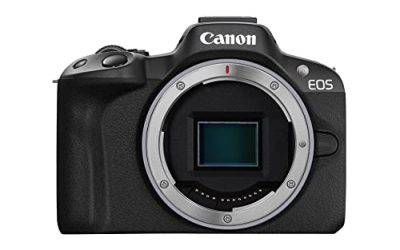
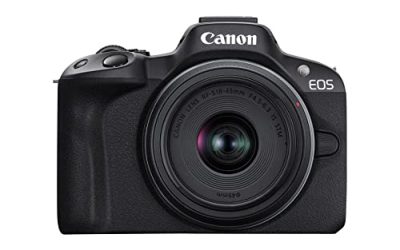
Canon EOS R50 with RF-S 18-45mm Lens
- Best for: Photographers starting a modeling portfolio who want a compact body with reliable eye autofocus.
- 24.2MP APS-C CMOS sensor
- DIGIC X image processor
- RF-S 18-45mm f/4.5-6.3 IS STM kit lens
- 4K video recording
Photographers starting a modeling portfolio who want a compact body with reliable eye autofocus.
The kit lens is slow at its long end, so background blur stays modest in dim light.
The EOS R50 pairs a 24.2-megapixel APS-C sensor with Canon’s DIGIC X processor, a combination that delivers clean files and quick autofocus in a body small enough to carry all day. Dual Pixel autofocus with eye detection holds focus on a model’s face through pose changes, while the included 18-45mm kit lens covers full-length and three-quarter framing without a swap. 4K video recording makes it a useful second tool for casting clips and behind-the-scenes footage. For a photographer starting a modeling portfolio, the R50 covers the core needs without demanding a larger body or a heavier bag.
Watch out for: The kit lens is slow at its long end, so background blur stays modest in dim light.
Nikon Z30 with 16-50mm Lens
- Best for: Location shoots where a light kit and a forward-flipping screen matter.
- 20.9MP DX-format CMOS sensor
- 4K/30p video recording
- NIKKOR Z DX 16-50mm f/3.5-6.3 VR kit lens
- Vari-angle touchscreen
Location shoots where a light kit and a forward-flipping screen matter.
There is no built-in viewfinder, so bright sunlight can make the rear screen harder to read.
The Z30 is Nikon’s smallest and lightest Z-series camera, built around a 20.9-megapixel DX sensor that records 4K video at 30 frames per second. Its vari-angle screen flips forward for self-framing, which helps when you shoot test sessions alone or record video introductions for a model. The included 16-50mm lens is slim when retracted, so the whole kit slips into a small bag for location work. Eye-detection autofocus keeps faces sharp as a model moves through a set, and the lightweight body stays comfortable through long outdoor shoots.
Watch out for: There is no built-in viewfinder, so bright sunlight can make the rear screen harder to read.
Sony ZV-E10 Body (White)
- Best for: Video-led modeling content and creators who already own an E-mount lens.
- 24.2MP APS-C Exmor CMOS sensor
- 4K video oversampled from 6K
- Real-time Eye AF for stills and video
- Vari-angle screen
Video-led modeling content and creators who already own an E-mount lens.
No kit lens is included, so you need a lens before the first shoot.
The ZV-E10 is built for creators who mix stills and video, with a 24.2-megapixel APS-C sensor and 4K video oversampled from 6K for detailed footage. Real-time eye autofocus tracks a model’s face in both stills and video, which keeps casting clips and portrait sessions sharp without constant refocusing. The vari-angle screen flips to the side for self-recording, and the E-mount opens the door to a wide range of portrait lenses. Sold as a body only, it suits a photographer who already owns a lens or plans to choose one for modeling work.
Watch out for: No kit lens is included, so you need a lens before the first shoot.
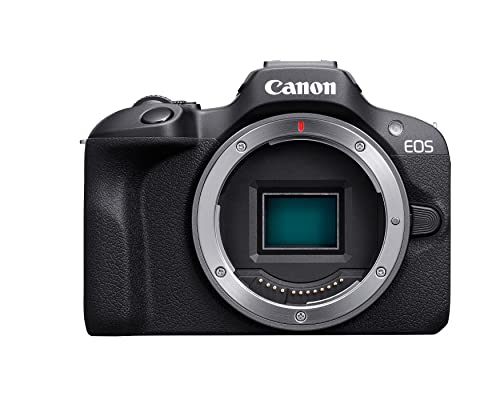
Canon EOS R100 Body
- Best for: A first mirrorless camera for modeling, especially for shooters who want a viewfinder.
- 24.1MP APS-C CMOS sensor
- DIGIC 8 image processor
- Dual Pixel CMOS AF with Eye Detection AF
- 4K 24p video, Full HD up to 60 fps
A first mirrorless camera for modeling, especially for shooters who want a viewfinder.
The 4K video uses a cropped area of the sensor, so wide framing needs a shorter lens.
The EOS R100 is the smallest and lightest body in Canon’s EOS R series, built around a 24.1-megapixel APS-C sensor and a DIGIC 8 processor. Dual Pixel autofocus with eye detection finds and holds a model’s eyes, while 4K video and Full HD at up to 60 frames per second cover short clips alongside stills. The 0.39-inch OLED viewfinder gives a clear view in bright light, which the screen-only bodies in this guide cannot match. As a first mirrorless camera for modeling work, the R100 keeps the kit simple, light, and easy to learn.
Watch out for: The 4K video uses a cropped area of the sensor, so wide framing needs a shorter lens.
Which One Fits Your Situation
Studio Portrait Sessions
A camera with dependable eye autofocus and a kit zoom that covers head-and-shoulders framing suits studio work best. The R50 and the R100 both hold focus through pose changes under studio lights, and their viewfinders or screens make it easy to check framing between shots. Bring a second lens later for tighter headshots, but the kit lens handles the first sessions.
Outdoor and Location Shoots
Light weight and a screen you can read outdoors decide a location kit. The Z30 is the lightest body here, and its forward-flipping screen helps with self-tests and video notes on site. A camera that fits in a small bag with one lens keeps you moving between spots, and a body that handles shade and evening light without noisy files saves the shoot.
Video and Social Content
When a session includes reels or casting clips, the ZV-E10 leads this group with 4K video oversampled from 6K and eye autofocus that works while recording. The Z30 also records 4K with a forward-facing screen, so it suits creators who film themselves between stills. Pick the body whose screen and autofocus behavior match the way you record.
First Camera for a New Model Photographer
A first camera should be easy to learn and forgiving to shoot with, and the R100 fits that brief with simple controls and a viewfinder that shows exposure as you shoot. The R50 adds a more capable autofocus system for the same kind of beginner, so choose the R100 for simplicity and the R50 when you want more headroom to grow into.
Common Mistakes
- Choosing a camera for its video specs alone and then finding its stills autofocus lags behind a model’s movement.
- Buying a body without a lens and discovering the first shoot needs glass you do not own yet.
- Ignoring the kit lens range and ending up too tight for full-length shots in a small studio.
- Shooting every frame at the widest aperture and losing sharpness on the model’s near eye.
- Skipping a spare battery and card, then cutting a session short when one runs out.
Frequently Asked Questions
Do I need a full-frame camera for modeling photography?
No. An APS-C camera with a sharp lens and reliable eye autofocus produces files that hold up for portfolios, casting submissions, and social use. Full-frame bodies add low-light margin and depth control, but they also demand larger lenses and a bigger budget, so start with APS-C and upgrade only when client work pays for it.
Which kit lens works best for modeling portraits?
A standard zoom that starts near 18mm and reaches 45mm or 50mm covers most modeling frames, from full length to head and shoulders. The Canon RF-S 18-45mm and Nikon 16-50mm both do this job, so pick the body you prefer and learn its lens before adding a portrait prime.
Is eye autofocus important for modeling shoots?
Yes, because a portrait with soft eyes rarely survives selection, even when everything else is right. Eye detection keeps focus on the model as poses change, which cuts the number of missed frames and lets you direct the shoot instead of chasing focus. Treat it as a core requirement when you compare bodies.
Can these cameras also record video for casting reels?
Yes. Every camera in this guide records 4K video, and the ZV-E10 and Z30 add forward-facing screens that help with self-recording. Keep clips short, lock exposure before you start, and record a few test seconds to check focus and sound before the model begins.
More from Amazon
Programs that pair well with the guide above. Offers and eligibility are set by Amazon and may change.
Free shipping on eligible items, Prime Video and more. Eligible new members can start with a free trial.
Start a Prime free trialAudiobooks and podcasts to listen to on the go. Eligible new members can start with a free trial.
Try Audible freeAd-free music streaming. Eligible new subscribers can start with a free trial.
Try Music Unlimited freeA free business account with business pricing and bulk-buying tools for work, shop or home office.
Create a business accountAs an Amazon Associate we earn from qualifying purchases.